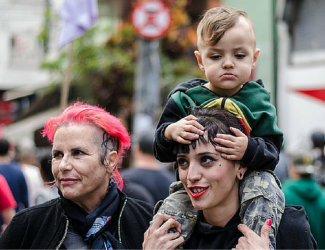
Flickr/Leonardo Veras (CC BY 2.0)

Protection of the Family

The Issue

Over the past few years, a troubling new trend at the international human rights level is being observed, where discourses on ‘protecting the family’ are being employed to defend violations committed against family members, to bolster and justify impunity, and to restrict equal rights within and to family life.

The campaign to "Protect the Family" is driven by ultra-conservative efforts to impose "traditional" and patriarchal interpretations of the family, and to move rights out of the hands of family members and into the institution of ‘the family’.

“Protection of the Family” efforts stem from:

  • rising traditionalism,
  • rising cultural, social and religious conservatism and
  • sentiment hostile to women’s human rights, sexual rights, child rights and the rights of persons with non-normative gender identities and sexual orientations.

Since 2014, a group of states have been operating as a bloc in human rights spaces under the name “Group of Friends of the Family”, and resolutions on “Protection of the Family” have been successfully passed every year since 2014.

This agenda has spread beyond the Human Rights Council. We have seen regressive language on “the family” being introduced at the Commission on the Status of Women, and attempts made to introduce it in negotiations on the Sustainable Development Goals.


Our Approach

AWID works with partners and allies to jointly resist “Protection of the Family” and other regressive agendas, and to uphold the universality of human rights.

In response to the increased influence of regressive actors in human rights spaces, AWID joined allies to form the Observatory on the Universality of Rights (OURs).  OURs is a collaborative project that monitors, analyzes, and shares information on anti-rights initiatives like  “Protection of the Family”.

Rights at Risk, the first OURs report, charts a map of the actors making up the global anti-rights lobby, identifies their key discourses and strategies, and the effect they are having on our human rights.   

The report outlines “Protection of the Family” as an agenda that has fostered collaboration across a broad range of regressive actors at the UN.  It describes it as: “a strategic framework that houses “multiple patriarchal and anti-rights positions, where the framework, in turn, aims to justify and institutionalize these positions.”
 

Related Content

ours chapter 5

Capítulo 5

Tácticas, estrategias e impactos anti-derechos

Los actores anti-derechos adoptan una estrategia doble. Además de atacar abiertamente al sistema multilateral, los actores anti-derechos también socavan los derechos humanos desde adentro. Se involucran con el fin de cooptar procesos, consolidar normativas regresivas, y erosionar responsabilidades.

Leer más

Clone of Snippet - WITM About the survey - ES

Acerca de la encuesta

  • GLOBAL Y DIVERSA: Reflexiona acerca de las realidades de la dotación de recursos entre las organizaciones feministas a escala mundial y desglosada por regiones.
  • CONTEXTUALIZADA: Se centra en las voces, perspectivas y experiencias de los movimientos feministas en toda su riqueza, audacia y diversidad, en sus respectivos contextos.
  • DE CREACIÓN CONJUNTA: Desarrollada y puesta a prueba en consulta estrecha con lxs afiliadxs y movimientos aliados de AWID.
  • COMPLEMENTARIA: Contribuye a la evidencia disponible acerca del estado de la dotación de recursos para las organizaciones feministas, por los derechos de las mujeres y la justicia de género por parte de activistas, donantes feministas y aliadxs, y la difunde.
  • PLURILINGÜE: Disponible en árabe, español, francés, inglés, portugués y ruso.
  • CONFIDENCIAL: Damos prioridad a tu privacidad y anonimato. En ningún caso, AWID divulgará información acerca de una organización en particular ni exhibirá información que permita identificar a una organización por su ubicación o características. Los detalles de nuestra política de privacidad se encuentran disponibles aquí.
  • ACCESIBLE: Es accesible a personas con distinto grado de capacidades auditivas, de movilidad, visuales y cognitivas, y responderla toma aproximadamente 30 minutos.
  • REPLICABLE: Es susceptible de ser replicada por los movimientos en sus respectivos contextos; las herramientas y los conjuntos de datos de la encuesta estarán disponibles al público como forma de apoyar una mayor investigación y la promoción colectiva.

Sara Hegazy

Sarah Hegazy, una audaz activista egipcia por los derechos LGBTQI+, vivía en una sociedad en la que lxs integrantes de su comunidad, sus cuerpos y sus vidas, enfrentan prejuicios letales a menudo. La resistencia de Sarah estaba arraigada en la deconstrucción del sistema dominante, opresor y patriarcal, y de sus actores antiderechos.

«[En Egipto], toda persona que no sea varón, musulmán, suní, heterosexual y partidario del sistema, es rechazada, reprimida, estigmatizada, arrestada, exiliada o asesinada. Este problema se relaciona con el sistema patriarcal en su conjunto, ya que el Estado no podría ejercer su represión contra lxs ciudadanxs, si no hubiera una opresión preexistente desde la infancia», escribió Sarah Hegazy el 6 de marzo de 2020

La supresión de la voz de Sarah por parte del gobierno egipcio alcanzó su pico más violento en 2017, cuando fue arrestada por alzar una bandera arcoíris en el recital de Mashrou’ Leila (una banda libanesa cuyo cantante principal es abiertamente gay) en El Cairo. Fue acusada de pertenecer a un grupo ilegal, y de «promover la desviación sexual y el libertinaje».

«Fue un acto de apoyo y solidaridad, no solamente con el cantante [de Mashrou’ Leila] sino con todas las personas oprimidas... Nos enorgulleció alzar la bandera. Nunca nos imaginamos la reacción de la sociedad y del Estado egipcio. Para ellos, yo era una criminal: alguien que buscaba destruir la estructura moral de la sociedad.» - Sarah Hegazy

Sarah estuvo encarcelada por tres meses, durante los cuales fue torturada y agredida sexualmente. En enero de 2018, después de ser liberada bajo fianza, pidió asilo en Canadá, donde estaba segura, pero seguía prisionera de los recuerdos del abuso y la violencia que su cuerpo y su alma habían sufrido.

«Salí de esta experiencia después de tres meses con un caso muy intenso y serio de TEPT [trastorno por estrés postraumático]. La prisión me mató. Me destruyó», dijo Sarah Hegazy a NPR.

Sarah se quitó la vida el 14 de junio de 2020, luego de dejar una nota escrita a mano en árabe:

«A mis hermanxs: traté de encontrar redención y fallé, perdónenme.
A mis amigxs: la experiencia [el viaje] fue muy dura y soy demasiado débil como para resistir, perdónenme.
Al mundo: has sido tremendamente cruel, pero perdono.»

Su legado y su coraje continuarán, llevados adelante por quienes la aman y creen en aquello por lo que Sarah luchó.

Tributos:

«A Sarah: Descansa, solo descansa, libre de esta violencia implacable, de este patriarcado letal impulsado por el Estado. Con rabia, con dolor, con extenuación, resistimos.» - Rasha Younes, investigadora sobre derechos LGBT de Human Rights Watch. Lee el texto completo

El vocalista de Mashrou’ Leila canta un tributo a Sarah Hegazy

Tributos en Twitter

Documental sobre la vida de Sarah Hegazy

Sitio web dedicado a Sarah Hegazy y a quienes (en especial voces LGBTQI) no pueden hacer su duelo en público

A Strategy, a Market and New Voices: Indigenous Women and the AWID Forums

Cover image for A Strategy, a Market and New Voices: Indigenous Women and the AWID Forums


The Forum was a key space for the Indigenous Women’s Movement (IWM) in its relationship to feminism. At AWID Forums, they developed engagement strategies that would then apply at other spaces like the United Nations. In that process, both indigenous women and feminists movements were transformed: new voices and issues emerged and feminists started to change their discourses and practices around land rights and spirituality, they understood collective rights better, and included the IWM in their events and agendas. Mónica Alemán and María Manuela Sequeira, from the IWM, shared this story of change.

Download this story


In their own voice: watch the interview with María Manuela Sequeira & Mónica Alemán


View all stories Download Full Report

I’ve never traveled before. What should I know?

We know that first time travel can be exciting but also stressful. In recognition of the many challenges involved, we will be providing more information and details about how to get to Bangkok when Registration opens early next year.

BD: La super-héroïne féministe qui déboulonne les mythes antidroits

BD: La super-héroïne féministe qui déboulonne les mythes antidroits

Dans cette BD illustrée par Sophia, suivez les aventures de notre super-héroïne féministe qui dément les récits des antidroits dans le monde entier et sauve la mise aux mouvements féministes.

Obtenir la BD!

WITM - Refreshed INFOGRAPHIC 3 EN

How feminists resource themselves

Feminist and women’s rights organizations don’t just rely on institutional funding, we resource ourselves. Our organizing is powered by passion, political commitment, solidarity and collective care.
These resources are self- generated and autonomous, and often invisible in our budgets, but they are the backbone of our organizing.

 Explore the data on autonomous resourcing

Présentez la candidature de féministes passionnant·es pour le Conseil d’administration de l’AWID

Chaque année, à l’AWID, nous visons à renouveler et enrichir les points de vue et expériences que reflète notre Conseil d’administration (CA) en accueillant d’autres membres.

Nous sommes actuellement à la recherche de personnes pour servir des mandats de trois ans au CA de l’AWID, à partir du début de l’année 2024. Il s’agit d’une occasion de contribuer à la gouvernance de notre organisation, et d’intégrer un groupe extraordinaire de féministes du monde entier.
 
Merci de nous aider à identifier avant le 10 août 2023 des candidatures de féministes à la fois réfléchi·es et engagé·es .

Transmettre la candidature

Merci de transférer également cette invitation aux candidat·es dans vos réseaux 

Qui recherchons-nous ?

Nous recherchons avant tout des candidat·es engagé·es en faveur de la mission de l’AWID, qui peuvent faire le lien entre les luttes locales et mondiales. Ces personnes seront également en mesure de nous aider à tirer, de manière intentionnelle, le meilleur parti du positionnement et des atouts de l’AWID dans un contexte en constante évolution. Les candidat·es doivent être disposé·es à assumer les fonctions et endosser les responsabilités juridiques du CA de l’AWID, dans l’intérêt supérieur de l’organisation.

Il s’agit d’une fonction bénévole, qui nécessite une implication et un engagement tout au long de l’année. Il est attendu des membres du CA une participation à 10 à 15 journées de réunion par an minimum, en personne ou en ligne, et qu’elles et ils contribuent de leur temps et leur expertise, selon les besoins du CA.
 
Nous souhaitons que le CA reflète la diversité des mouvements féministes du monde entier, tant en matière d’identités que de géographies, de contextes et d’affiliations. Nous recherchons, en outre, des membres du CA ayant de l’expérience dans l’un des domaines de travail de l’AWID.
 

Nous invitons vivement tous les candidats à postuler. Nous étudierons toutes les candidatures reçues, mais compte tenu de la composition du CA actuel, nous accorderons la priorité à :

des candidatures démontrant une solide expérience dans les domaines suivants :

  • droits et justice des personnes en situation de handicap
  • Les droits LGBTQI+, et en particulier les mouvements de droits trans

des candidatures des régions suivantes :

  • Amérique du Sud
  • Caraïbe

Ce que le Conseil d’administration apporte à l’AWID

Le Conseil d’administration joue un rôle déterminant au niveau de la définition de l’orientation stratégique de l’AWID et du soutien à l’organisation dans l’accomplissement de sa mission, en cohérence avec le monde dans lequel nous vivons et les besoins de nos mouvements.
 
Les membres du CA contribuent au fonctionnement de l’organisation de diverses manières : en apportant une expérience d’autres espaces, des perspectives de divers mouvements féministes et un savoir-faire conséquent dans des domaines pertinents alignés sur la stratégie de l’AWID.
 
Les candidates élues et candidats élus rejoindront le CA de l’AWID en 2024 et nous accompagneront tout au long du tant attendu Forum international de l’AWID et de la mise en œuvre de notre plan stratégique.

Connaissez-vous quelqu’un qui corresponde à ce profil ?

Transmettre la candidature

(Vous pouvez déposer votre candidature ou celle d’une autre personne, avec son consentement.)

Merci de partager également cette invitation à candidatures au sein de vos réseaux !

Si tout le monde peut proposer une candidature au Conseil d’administration de l’AWID, le vote, quant à lui, est réservé aux membres de l’AWID. Adhérez dès aujourd’hui !

D’avance, merci de votre aide à trouver les membres [MB2] extraordinaires de notre prochain Conseil d’administration, qui soutiendront l’AWID lors des étapes à venir !

¿Cuáles son los idiomas del Foro?

Los idiomas de trabajo de AWID son inglés, francés y español. El tailandés se agregará como idioma local, al igual que el lenguaje de señas y otras medidas de accesibilidad. Es posible que se añadan otras lenguas si la financiación lo permite, así que mantente atentx a las actualizaciones. Nos importa la justicia lingüística y trataremos de incluir tantos idiomas como sea posible y según nuestros recursos lo permitan. Esperamos crear múltiples oportunidades para que muchxs de nosotrxs podamos participar en nuestras lenguas y comunicarnos entre nosotrxs.

فقدان الكلام | كلمة العدد

كلمة العدد

فقدان الكلام

بدأنا التخطيط لعدد المجلّة هذا مع نانا داركوا قُبيل مهرجان «ابدعي، قاومي، غيٍّري: مهرجان للحراكات النسوية» لجمعية «حقوق المرأة في التنمية» AWID، وانطلقنا وقتها من سؤالٍ هو بالأحرى ملاحظة حول حالة العالم، ورغبة في تغيير الاعتقادات السائدة: لماذا لا تزال جنسانيّاتنا وملذّاتنا تخضع للترويض والتجريم مع أنّه يتمّ تذكيرنا مراراً وتكراراً بأنّها لا تأتي بأيّ قيمة أو تطوّر؟ واستنتجنا أنّ جنسانيّاتنا، لمّا تتجسّد، فيها ما يتعارض مع النظام العالمي الذي ما زال يتجلّى من خلال ضوابط الحدود، والتمييز العنصري في توزيع اللقاح، والاستعمار الاستيطاني، والتطهير العرقي، والرأسمالية المُستشرية. هل يمكننا إذاً القول إنّ لجنسانيّاتنا قدرةٌ تعطيليّة؟ وهل يصحّ هذا القول عندما ننظر إلى واقع حركاتنا التي يتمّ الاستيلاء عليها ومأسستها في سعيها للتزوّد بالموارد؟

Read more

Snippet - COP30 - Radical Democracy - EN

Radical Democracy and Climate Justice - the missing debate of COP30

As the world struggles with multiple intersecting crises, local communities and collectives of various kinds are resisting as also creating constructive alternatives.

📅 Wednesday, November 12, 2025
📍 Seminario Mar Nossa Sra Da Assunção, Pará, Brazil

More info here

Resourcing Feminist Movements

Banner image announcing that WITM Survey is live.


The “Where is the Money?” #WITM survey is now live! Dive in and share your experience with funding your organizing with feminists around the world.

Learn more and take the survey


Around the world, feminist, women’s rights, and allied movements are confronting power and reimagining a politics of liberation. The contributions that fuel this work come in many forms, from financial and political resources to daily acts of resistance and survival.


AWID’s Resourcing Feminist Movements (RFM) Initiative shines a light on the current funding ecosystem, which range from self-generated models of resourcing to more formal funding streams.

Through our research and analysis, we examine how funding practices can better serve our movements. We critically explore the contradictions in “funding” social transformation, especially in the face of increasing political repression, anti-rights agendas, and rising corporate power. Above all, we build collective strategies that support thriving, robust, and resilient movements.


Our Actions

Recognizing the richness of our movements and responding to the current moment, we:

  • Create and amplify alternatives: We amplify funding practices that center activists’ own priorities and engage a diverse range of funders and activists in crafting new, dynamic models  for resourcing feminist movements, particularly in the context of closing civil society space.

  • Build knowledge: We explore, exchange, and strengthen knowledge about how movements are attracting, organizing, and using the resources they need to accomplish meaningful change.

  • Advocate: We work in partnerships, such as the Count Me In! Consortium, to influence funding agendas and open space for feminist movements to be in direct dialogue to shift power and money.

Related Content

ours 2021 - chapter 2 es

Capítulo 2

Entender el contexto de las amenazas anti-derechos

El creciente poder de los actores anti-derechos no se está desarrollando en un vacío. Entender el auge del ultranacionalismo, del poder corporativo irrestricto, del incremento de la represión y de la disminución del espacio cívico resulta clave para contextualizar las amenazas anti-derechos que enfrentamos actualmente.

Leer más

Snippet Kohl - Panel | Liberated Land & Territories: A Pan-African Conversation

Globe-Liberated Land & Territories

with Luam Kidane, Mariama Sonko, Yannia Sofia Garzon Valencia, and Nomsa Sizani.

YOUTUBESOUNDCLOUD

Snippet - COP30 - Actions - ES

Eventos y acciones en la COP30

8-16 de noviembre de 2025

CFA 2023 - Hubs - ES

Nuevo

Participación en nodos: viaje espacial a través de las fronteras

Lxs participantes se reunirán físicamente en varios lugares fuera de la sede de Bangkok, en diferentes partes del mundo, durante cada día del Foro. Todos estos lugares autoorganizados se conectarán en forma virtual con la sede del Foro en Bangkok. Como en el caso de las personas que se conecten en línea, lxs participantes de los nodos podrán facilitar actividades, unirse a conversaciones y disfrutar de un programa rico y diverso.

En 2024, informaremos sobre las localizaciones de los nodos.