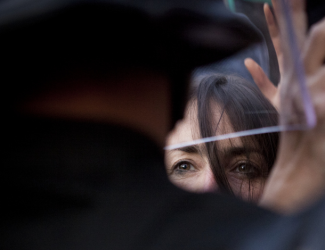
Philippe Leroyer | Flickr (CC BY-NC-ND 2.0)

Women Human Rights Defenders

WHRDs are self-identified women and lesbian, bisexual, transgender, queer and intersex (LBTQI) people and others who defend rights and are subject to gender-specific risks and threats due to their human rights work and/or as a direct consequence of their gender identity or sexual orientation.

WHRDs are subject to systematic violence and discrimination due to their identities and unyielding struggles for rights, equality and justice.

The WHRD Program collaborates with international and regional partners as well as the AWID membership to raise awareness about these risks and threats, advocate for feminist and holistic measures of protection and safety, and actively promote a culture of self-care and collective well being in our movements.


Risks and threats targeting WHRDs  

WHRDs are exposed to the same types of risks that all other defenders who defend human rights, communities, and the environment face. However, they are also exposed to gender-based violence and gender-specific risks because they challenge existing gender norms within their communities and societies.

By defending rights, WHRDs are at risk of:

  • Physical assault and death
  • Intimidation and harassment, including in online spaces
  • Judicial harassment and criminalization
  • Burnout

A collaborative, holistic approach to safety

We work collaboratively with international and regional networks and our membership

  • to raise awareness about human rights abuses and violations against WHRDs and the systemic violence and discrimination they experience
  • to strengthen protection mechanisms and ensure more effective and timely responses to WHRDs at risk

We work to promote a holistic approach to protection which includes:

  • emphasizing the importance of self-care and collective well being, and recognizing that what care and wellbeing mean may differ across cultures
  • documenting the violations targeting WHRDs using a feminist intersectional perspective;
  • promoting the social recognition and celebration of the work and resilience of WHRDs ; and
  • building civic spaces that are conducive to dismantling structural inequalities without restrictions or obstacles

Our Actions

We aim to contribute to a safer world for WHRDs, their families and communities. We believe that action for rights and justice should not put WHRDs at risk; it should be appreciated and celebrated.

  • Promoting collaboration and coordination among human rights and women’s rights organizations at the international level to  strengthen  responses concerning safety and wellbeing of WHRDs.

  • Supporting regional networks of WHRDs and their organizations, such as the Mesoamerican Initiative for WHRDs and the WHRD Middle East and North Africa  Coalition, in promoting and strengthening collective action for protection - emphasizing the establishment of solidarity and protection networks, the promotion of self-care, and advocacy and mobilization for the safety of WHRDs;

  • Increasing the visibility and recognition of  WHRDs and their struggles, as well as the risks that they encounter by documenting the attacks that they face, and researching, producing, and disseminating information on their struggles, strategies, and challenges:

  • Mobilizing urgent responses of international solidarity for WHRDs at risk through our international and regional networks, and our active membership.

Related Content

L’AWID est-elle une organisation féministe ?

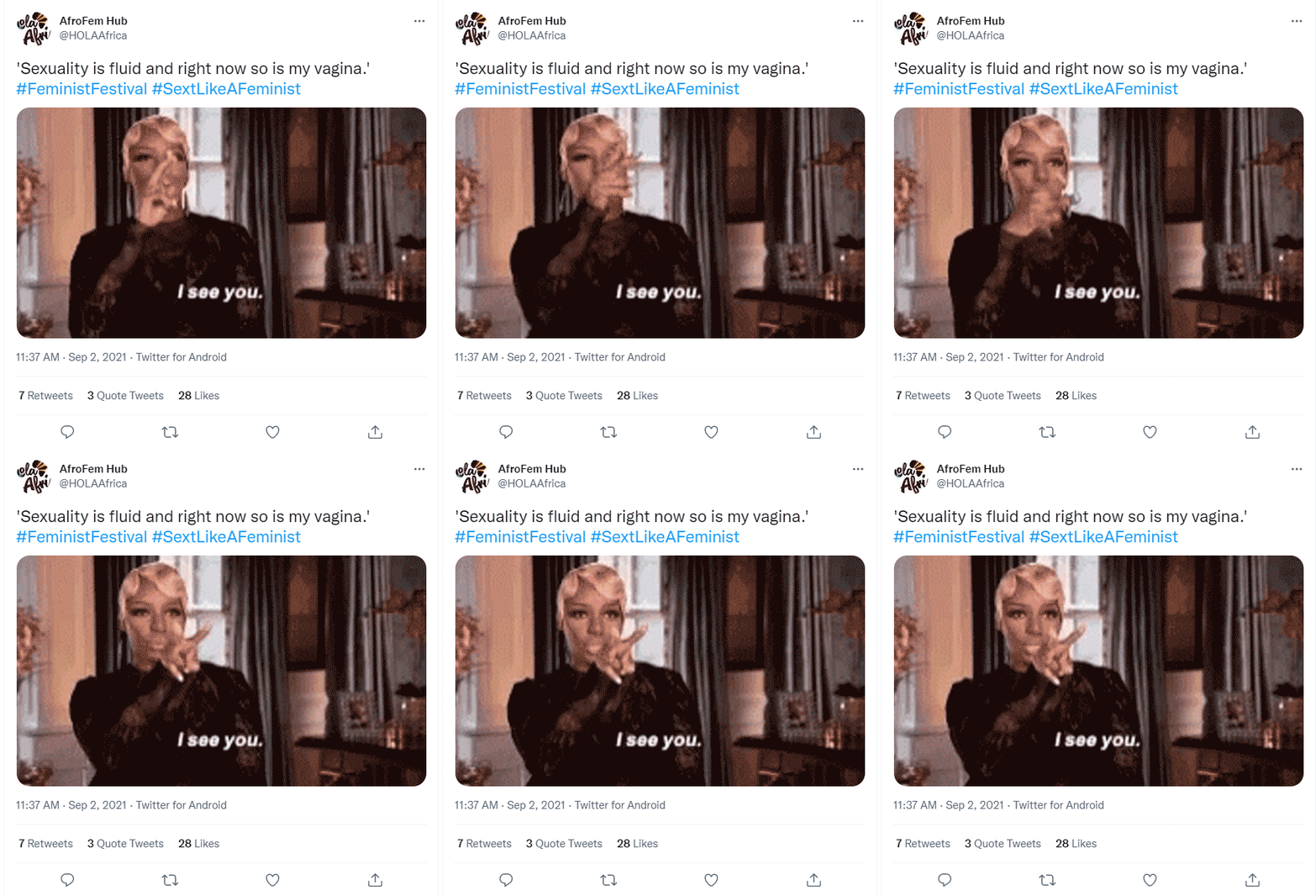
#3 - Sexting like a feminist Tweets Snippet AR

بصراحة…

Image of a tweet with a gif of a man saying "Yes daddy". Text says: No one: (blank). Me: Bae I wanna squeeze your ass like I wanna squeeze misogynists out of corporate hierarchies.

رغبتي في الانقضاض على جسدك تعادل رغبتي بالانقضاض على كراهية النساء المتجذرة في التسلسلات الهرمية للشركات

Do you produce an annual report?

Yes, we do produce annual reports.

All our annual reports are accessible online.

See all annual reports from AWID

Upasana Agarwal

Upasana Agarwal

Upasana es unx ilustradorx y artista no binarie de Calcuta, India. Su obra explora narrativas identitarias y personales, que empean restos o evidencias visuales de los contextos con los que trabaja. Le atraen especialmente los diseños en patrones que, para ellx, comunican verdades complejas sobre el pasado, el presente y el futuro. Cuando Upasana no está ilustrando, organiza y dirige un centro de arte comunitario queer y trans de la ciudad. 

Visitar la exposición

Escribí un artículo sobre un asunto relacionado con los derechos de las mujeres y el desarrollo. ¿Cómo puedo compartirlo con la membresía de AWID?

Beijing sans Entraves: le Pouvoir des Jeunes Mouvements Féministes

En partenariat avec de jeunes activistes féministes et des organisations dirigées par des jeunes, l'AWID co-organise Beijing sans Entraves en parallèle et indépendamment de Beijing + 25. 

Lire plus

Le processus de proposition d’activités en ligne est-il différent de celui des activités en présentiel ?

Le processus et la date limite de soumission sont exactement les mêmes. Merci d’utiliser le même formulaire, que l’activité proposée ait lieu en personne, en ligne ou un mélange des deux (format hybride).

2003: le premier Dialogue de haut niveau a lieu

Premier Dialogue de haut niveau sur le financement du développement, 29-30 octobre 2003.

Les  dialogues de haut niveau  de l’Assemble générale des Nations Unies sur le financement du développement, tenus tous les deux ans, sont l’un des mécanismes de suivi de la Conférence de Monterrey. À la suite de ce premier dialogue, huit tables rondes ont été organisées  autour de différentes questions comprenant les subventions agricoles, le commerce, l’allègement de la dette et le financement des OMD. Toutes les discussions se concentraient sur les manières de faire face aux  obstacles structurels qui pesaient sur ces questions et défavorisaient  les nations « en développement ».

D'autres mécanismes de suivi de la Conférence de Monterrey :

  • Les réunions spéciales de haut niveau du Conseil économique et social des Nations Unies (ECOSOC)  tenues  chaque année sur le thème du suivi du Consensus de Monterrey et sous la direction  de la Banque mondiale, du Fonds monétaire international, de l’Organisation mondiale du commerce et de la CNUCED. En outre, au cours de chacune de ses sessions de fond, l’ECOSOC consacre jusqu’à deux jours à des  délibérations portant sur les priorités du FdD.
  • L’organe des Nations Unies consacré aux questions fiscales, le Comité d'experts de la coopération internationale en matière fiscale, traite des différentes questions relatives aux politiques fiscales qui ont été identifiées dans le Consensus de Monterrey. Il constitue un cadre de dialogue visant à améliorer et à encourager la coopération fiscale internationale entre les autorités fiscales nationales.

Snippet Welcome Message_Fest (EN)

Welcome message

Hakima Abbas, AWID

"We're using the tools that we have to share our resistance, strategies and continue to build our power to take action and create new brave and just worlds."

watch opening

CFA 2023 - Intro FAQ - thai

การประชุมนานาชาติ AWID ครั้งที่ 15

เวทีการประชุมนานาชาติ AWID เป็นทั้งกิจกรรมชุมชนระดับโลกและพื้นที่ของการเปลี่ยนแปลงของปัจเจก บุคคลอย่างสิ้นเชิง เป็นการประชุมที่ไม่เหมือนใคร คือเป็นที่รวบรวมนักสตรีนิยม นักปกป้องสิทธิสตรี ความยุติธรรมทางเพศ LBTQI+ และพันธมิตรในขบวนการเคลื่อนไหวเพื่อมนุษยชาติอันหลากหลาย เพื่อเชื่อมต่อ เยียวยาและเติบโต     เวทีนานาชาตินี้เป็นพื้นที่ที่นักสตรีนิยมจากทั่วทุกมุมโลก รวมถึงจากประเทศในกลุ่มโลกใต้ และชุมชนชายขอบที่ไม่ได้รับการเหลียวแลมาอย่างยาวนาน เป็นศูนย์กลางในการวาง ยุทธศาสตร์ร่วมกัน และเคลื่อนไหวเพื่อความยุติธรรมทางสังคม เพื่อเปลี่ยนอำนาจ สร้างพันธมิตร และ สร้างโลกที่แตกต่างและดีขึ้น

เมื่อผู้คนทั่วโลกมารวมตัวกันทั้งในฐานะปัจเจกบุคคลและองค์กรเคลื่อนไหว เราสามารถสร้างพลังอันยิ่งใหญ่ จึงขอเชิญท่านร่วมกิจกรรมกับเราที่กรุงเทพฯ ประเทศไทยในปี 2567  มาร้องเพลง เต้นรำ วาดฝัน และลุกขึ้นพร้อมกัน

วันที่:        2–5 ธันวาคม 2567
สถานที่:     กรุงเทพฯ ประเทศไทย; และทางออนไลน์
ผู้เข้าร่วม: นักสตรีนิยมจากทั่วโลกเข้าร่วมด้วยตนเอง ณ สถานที่จัดงานประมาณ  2,500 คน และเข้าร่วม
ทางออนไลน์ 3,000 คน

2011: The fifth High-level dialogue kick starts Post-2015 discussions

The Fifth High- Level Dialogue on Financing for Development, 7 – 8 December 2011, marked the beginning of the Post 2015 development agenda discussions, and the link to financing for development. The conference gave a special focus to increasing aid to finance the MDG’s. In his closing remarks, the Secretary General called on members to begin to consider the post-2015 development framework. 

Snippet Caribbean Feminist Spaces_Fest (ES)

Espacios feministas, expresiones creativas, y prácticas espirituales para la construcción de comunidad en el Caribe

Tonya Haynes, CAISO
Angelique V. Nixon, CAISO

divider

CFA FAQ - Registration - Thai

การลงทะเบียน