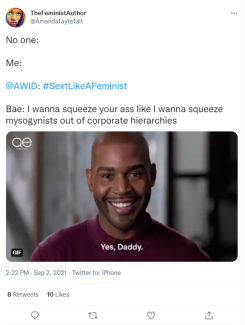
Lesbia Yaneth Urquía Urquía
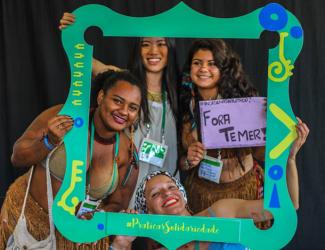
Young feminist activists play a critical role in women’s rights organizations and movements worldwide by bringing up new issues that feminists face today. Their strength, creativity and adaptability are vital to the sustainability of feminist organizing.
At the same time, they face specific impediments to their activism such as limited access to funding and support, lack of capacity-building opportunities, and a significant increase of attacks on young women human rights defenders. This creates a lack of visibility that makes more difficult their inclusion and effective participation within women’s rights movements.
AWID’s young feminist activism program was created to make sure the voices of young women are heard and reflected in feminist discourse. We want to ensure that young feminists have better access to funding, capacity-building opportunities and international processes. In addition to supporting young feminists directly, we are also working with women’s rights activists of all ages on practical models and strategies for effective multigenerational organizing.
We want young feminist activists to play a role in decision-making affecting their rights by:
Fostering community and sharing information through the Young Feminist Wire. Recognizing the importance of online media for the work of young feminists, our team launched the Young Feminist Wire in May 2010 to share information, build capacity through online webinars and e-discussions, and encourage community building.
Researching and building knowledge on young feminist activism, to increase the visibility and impact of young feminist activism within and across women’s rights movements and other key actors such as donors.
Promoting more effective multigenerational organizing, exploring better ways to work together.
Supporting young feminists to engage in global development processes such as those within the United Nations
Collaboration across all of AWID’s priority areas, including the Forum, to ensure young feminists’ key contributions, perspectives, needs and activism are reflected in debates, policies and programs affecting them.
Le thème du Forum − S'élever ensemble − est une invitation à nous engager avec tout notre être, à nous connecter les un.e.s aux autres de manière ciblée, bienveillante et courageuse, afin que nous puissions sentir le battement de cœur des mouvements mondiaux et nous élever ensemble pour relever les défis de notre époque.
Les mouvements féministes, de défense des droits des femmes, de justice basée sur le genre, LBTQI+ et autres mouvements apparentés du monde entier se trouvent à un tournant décisif, confrontés à un puissant revers/recul sur les droits et libertés précédemment acquis. Ces dernières années ont été marquées par la montée rapide des autoritarismes, la répression violente de la société civile et la criminalisation des femmes et des défenseuses.eurs des droits humains, l'escalade des guerres et des conflits dans de nombreuses régions du monde, la perpétuation des injustices économiques et les crises sanitaires, écologiques et climatiques qui s'entrecroisent.
Nos mouvements sont ébranlés et, en même temps, ils cherchent à construire et à maintenir la force et le courage nécessaires pour le travail à venir. Nous ne pouvons pas faire ce travail seul.e.s, dans nos bulles. La connexion et la guérison sont essentielles pour transformer les déséquilibres de pouvoir persistants et les lignes de faille au sein de nos propres mouvements. Nous devons travailler et élaborer des stratégies de manière interconnectée, afin de pouvoir prospérer ensemble. Le Forum de l'AWID favorise cet ingrédient vital qu'est l'interconnexion dans la pérennité, la croissance et l'influence transformatrice de l'organisation féministe à l'échelle mondiale.
Le 2 septembre 2021, les géniales féministes et activistes pour la justice sociale du festival de l’AWID Crear | Résister | Transform se sont retrouvées, non seulement pour mettre en commun leurs stratégies de résistance, cocréer et transformer le monde, mais également pour parler crûment sur Twitter.
Nana Darkoa Sekyiamah, cofondatrice du blog Adventures From The Bedrooms of African Women et autrice de The Sex Lives of African Women, menait l’exercice, épaulée par la plateforme numérique panafricaine womanist queer AfroFemHub, pour poser la question suivante : Comment pouvons-nous, de manière sûre et consensuelle, explorer notre plaisir, nos désirs et nos fantasmes par textos?
Je pense que c’est une question de très haute importance, parce qu’elle porte sur la question plus large de la navigation en ligne selon un point de vue féministe. Avec le capitalisme, le langage autour des corps et du sexe peut être déshumanisant et perturbant, et aborder le plaisir sexuel sur le numérique peut sembler devoir prendre une tournure performative. Donc, trouver des manières d’examiner comment nous faisons part de notre désir, qu’elles soient à la fois affirmatives et enthousiastes, peut repousser les modèles dominants de présentation et de consommation, et se réapproprier ces espaces comme autant de lieux d’un engagement authentique, prouvant que les sextos devraient tous être justement ça : féministes.
En outre, permettre aux conversations féministes d’incarner leur côté ludique dans les conversations en ligne contribue à recadrer le récit populaire selon lequel les interventions féministes sont tristes et austères. Mais nous le savons bien : s’amuser fait partie de notre politique, et est inhérent à ce qu’être féministe veut dire.
À l’aide du mot-dièse #SextLikeAFeminist des universitaires et des activistes du monde entier se sont donné rendez-vous pour partager leurs tweets féministes les plus affamés, et voici mes dix favoris.
Comme ces tweets le montrent, sextoter comme une féministe est à la fois sexy, drôle – et chaud. Mais sans jamais perdre de vue son engagement en faveur de l’équité et de la justice.
Across the globe, feminist, women’s rights and gender justice defenders are challenging the agendas of fascist and fundamentalist actors. These oppressive forces target women, persons who are non-conforming in their gender identity, expression and/or sexual orientation, and other oppressed communities.
Discriminatory ideologies are undermining and co-opting our human rights systems and standards, with the aim of making rights the preserve of only certain groups. In the face of this, the Advancing Universal Rights and Justice (AURJ) initiative promotes the universality of rights - the foundational principle that human rights belong to everyone, no matter who they are, without exception.
We create space for feminist, women’s rights and gender justice movements and allies to recognize, strategize and take collective action to counter the influence and impact of anti-rights actors. We also seek to advance women’s rights and feminist frameworks, norms and proposals, and to protect and promote the universality of rights.
Te animamos a usar este material para fortalecer tu labor de incidencia.

As these tweets show, it turns out that sexting like a feminist is sexy, funny – and horny. Yet, it never loses sight of its commitment to equity and justice.
Lisez nos recherches sur le financement, sur les défenseuses des droits humains, sur la création de mouvements, sur les fondamentalismes, la justice économique et beaucoup plus
นับเป็นครั้งแรกที่เวทีประชุม AWID จะเสนอรูปแบบการมีส่วนร่วม 3 รูปแบบ
ผู้เข้าร่วมสามารถเดินทางเข้าร่วมด้วยตัวเอง ที่กรุงเทพฯ ประเทศไทย ซึ่งเราจะตั้งหน้าตั้งตาคอยท่านอยู่!

Lindiwe Rasekoala est une coach de vie spécialisée dans ce qui touche à l’intimité et au bien-être relationnel. Elle est passionnée de santé sexuelle et contribue à des contenus en ligne. Au travers de ses propres expériences et de méthodes de recherche non conventionnelles, elle pense pouvoir combler le fossé éducatif et le manque d’accès à l’information qui existent autour du bien-être sexuel. Elle contribue à diverses émissions de radio et de télévision et a suivi une formation de coach auprès de la Certified Coaches Alliance. La mission de Lindiwe est d’éradiquer les obstacles qui entravent les conversations autour du bien-être sexuel et de donner à ses client·e·s les moyens de mieux se comprendre afin qu’ils·elles puissent avoir un mode de vie et des relations plus saines et holistiques.
Hosted by MADRE, Fondo Semillas and Feminist Church
📅 Wednesday, April 29
🕒 4.00-5:30pm
🏢 Melbourne Convention and Exhibition Centre, Room #204
Yes! Please read the Call for Activities and apply here. Deadline is 15 January 2024