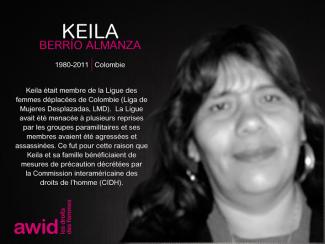
Keila Almanza
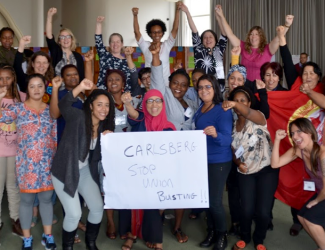
Defensoras de derechos humanos de todo el planeta defienden sus tierras, medios de subsistencia y sus comunidades ante las industrias extractivas y el poder corporativo. Ellas hacen frente a fuertes intereses económicos y políticos que promueven el robo de tierras, el desplazamiento de comunidades, la pérdida de los medios de subsistencia y la degradación del medioambiente.
El extractivismo es un modelo económico y político de desarrollo que mercantiliza la naturaleza y prioriza la ganancia por sobre los derechos humanos y el medioambiente. Arraigado en la historia colonial, refuerza las desigualdades sociales y económicas tanto a nivel local como global. Muchas veces, las mujeres negras, rurales e indígenas son las más afectadas por el extractivismo, y además son notablemente excluidas de la toma de decisiones. Desafiando estas fuerzas patriarcales y neocoloniales, las mujeres se alzan en defensa de los derechos, las tierras, las personas y la naturaleza.
Las defensoras que enfrentan a las industrias extractivas, experimentan una diversidad de riesgos, amenazas y violaciones, incluidas la criminalización, la estigmatización, la violencia y laintimidación. Sus historias dan cuenta de marcados aspectos de violencia sexual y de género. Entre los perpetradores se incluyen autoridades estatales y locales, las corporaciones, la policía, el ejército, las fuerzas paramilitares y de seguridad privada, y en algunos casos, sus propias comunidades.
AWID y la Coalición Internacional de Mujeres Defensoras de Derechos Humanos (WHRDIC por su sigla en inglés) tienen el placer de anunciar «Defensoras de derechos humanos confrontado al extractivismo y al poder corporativo»; un proyecto interregional de investigación que documenta las experiencias vividas por las defensoras de Asia, África y América Latina.
Alentamos a activistas, integrantes de movimientos sociales, la sociedad civil organizada, donantes y responsables de políticas públicas, a leer y utilizar estas producciones para el trabajo de incidencia, con fines educativos y como fuente de inspiración:
«Defensoras de derechos humanos confrontando a las industrias extractivas: un panorama de los riesgos críticos y las obligaciones en materia de derechos humanos» es un informe sobre políticas desde la perspectiva de género (en inglés, pronto disponible en español). Analiza las formas de violaciones y los tipos de perpetradores, hace referencia a las obligaciones relevantes en derechos humanos e incluye recomendaciones de políticas para los estados, corporaciones, la sociedad civil y donantes.
«Tejiendo la Resistencia a través de la Acción: Las Estrategias de las Defensoras de Derechos Humanos contra a las Industrias Extractivas» es una guía práctica que expone formas creativas y deliberadas de acción, tácticas exitosas e inspiradoras historias de resistencias.
El video «Defendiendo a las Personas y al Planeta: Mujeres Confrontando a las Industrias Extractivas» está protagonizado por defensoras de derechos humanos de África, Asia y América Latina, que comparten sus luchas por la tierra y la vida, y hablan de los riesgos y desafíos que enfrentan en su activismo.
«Desafiar al poder corporativo: Las luchas por los derechos de las mujeres, la justicia económica y de género» es un informe de investigación que explica los impactos del poder corporativo y ofrece ideas sobre estrategias de resistencia.
AWID reconoce con gratitud las invaluables contribuciones de cada Defensora de Derechos Humanos que ha sido parte de este proyecto. Esta guía ha sido posible gracias su generosidad y apertura al compartir sobre sus experiencias y lecciones. Su coraje, creatividad y resiliencia son una inspiración para todxs nosotrxs. ¡Muchas gracias!
Existem várias razões pelas quais a sua resposta ao inquérito WITM é importante. Por exemplo, tem a oportunidade de partilhar a sua experiência vivida com a mobilização de financiamento para apoiar a sua organização; de reivindicar o seu poder como especialista sobre como o dinheiro circula e os bolsos em que entra; e de contribuir para a defesa coletiva e consistente junto de financiadores para mover mais recursos de maior qualidade. Ao longo das últimas duas décadas, o inquérito WITM da AWID tem-se revelado um recurso fundamental para ativistas e financiadores. Convidamo-lo a juntar-se a nós na sua terceira edição para destacar o estado efetivo do financiamento, desafiar soluções falsas e apontar a forma como o financiamento precisa de mudar para que os movimentos prosperem e enfrentem os desafios complexos do nosso tempo.
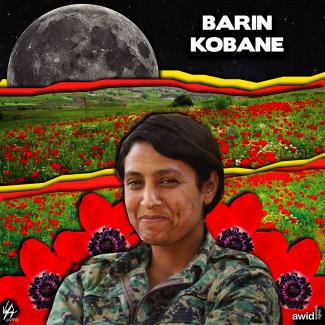
Barin était membre de l’unité de combat exclusivement féminine des Unités de protection du peuple kurde (YPG).
Elle a été tuée alors qu’elle était en service actif.
La journaliste libanaise Hifaa Zuaiter a écrit : « Barin représente tout ce que nous avons entendu à propos du courage des femmes kurdes et sa mort représente bien plus que le meurtre d’un-e rival-e ou une perte résultant d’une lutte politique ou ethnique. L’exhibition monstrueuse de sa dépouille par un groupe de rebelles syriens provient du fait qu’en tant que femme combattant sur un champ de bataille réservé aux hommes, elle a osé menacer l’hégémonie masculine ».
Les ultraconservateurs ont développé un certain nombre d’arguments relatifs aux droits humains sur le plan international, lesquels instrumentalisent la religion, la culture, la tradition et la souveraineté nationale dans le but de porter atteinte aux droits liés au genre et à la sexualité. Les acteurs anti-droits s’éloignent de plus en plus d’un langage explicitement religieux.
Nous constatons de plus en plus fréquemment que des acteurs rétrogrades – qui dénigraient auparavant le concept des droits humains – tentent désormais de le récupérer et de le manipuler pour atteindre leurs objectifs.
Ce discours émergent qui prospère actuellement semble inoffensif, mais il fonctionne comme un cadre général abritant de multiples positions patriarcales et anti-droits.
Le thème de la « protection de la famille » est donc un exemple particulièrement parlant de l’évolution de la stratégie de certains acteurs rétrogrades que utilisent désormais un plaidoyer holistique et intégré.
L’argumentaire sur la « protection de la famille » est utilisé pour déplacer le sujet de droits humains de l’individu vers des institutions déjà puissantes.
Il prône également une conception unitaire, hiérarchique et patriarcale de la famille qui suppose une discrimination à l’égard des formes familiales situées en dehors de ces limites rigides. Il tente également d’atténuer l’importance actuellement accordée à la reconnaissance et à la protection des droits des membres vulnérables de la famille pour privilégier la non-discrimination, l’autonomie et l’absence de violence dans le contexte des rapports familiaux.
Le Saint-Siège et un certain nombre de groupes chrétiens de défense des droits cherchent à s’approprier la notion de droit à la vie pour servir leur lutte contre l’avortement. En introduisant la doctrine religieuse conservatrice dans le langage des droits humains, ils soutiennent l’idée qui veut que le droit à la vie, tel qu’énoncé dans la Déclaration universelle des droits de l’homme et dans le Pacte international relatif aux droits civils et politiques, s’applique dès le moment de la conception.
Aucun des instruments universels relatifs aux droits humains ne vient étayer ce discours. Pourtant, c’est une stratégie attrayante pour les acteurs anti-droits dans la mesure où le droit à la vie ne peut être violé en aucune circonstance et qu’il constitue une norme juridiquement contraignante.
Les acteurs anti-droits utilisent un certain nombre d’arguments dans leur campagne pour porter atteinte aux droits sexuels. Ils soutiennent que les droits sexuels n’existent pas ou qu’il s’agit de « droits nouveaux » nuisibles aux enfants et à la société et/ou que ces droits sont en opposition avec la culture, la tradition ou le droit national.
Dans le cadre onusien, les conservateurs plaident contre le droit à une éducation sexuelle complète (ESC) en attaquant ce concept à plusieurs niveaux. Ils prétendent que l’ESC viole les « droits parentaux », qu’elle nuit aux enfants et qu’il s’agit d’un endoctrinement idéologique plutôt que d’une forme d’éducation. Ils affirment également que cette éducation sexuelle complète est imposée aux enfants, aux parents et aux Nations Unies par de puissants lobbyistes qui cherchent à tirer profit des services qu’ils fournissent aux enfants et aux jeunes.
Les tentatives visant à invalider les droits relatifs à l’orientation sexuelle et à l’identité de genre prolifèrent. Les ultraconservateurs font valoir le fait que l’application des principes et du droit relatifs aux droits humains – qui existent pourtant depuis longtemps – consiste en fait à créer de « nouveaux droits ». Ils prétendent enfin que le contenu des droits devrait varier radicalement parce que ceux-ci devraient être interprétés à l’aune de la « culture » ou des « particularismes nationaux ».

Les organisations de la droite chrétienne se mobilisent depuis longtemps contre les droits reproductifs, aux côtés du Saint-Siège et d’autres alliés anti-droits. Elles affirment souvent que les droits reproductifs sont en fait une forme de contrôle de la population imposée par l’Occident aux pays du Sud global. Paradoxalement, ce discours émane le plus souvent d’acteurs issus des États-Unis et de l’Europe occidentale, dont beaucoup travaillent activement pour exporter leur rhétorique et leurs politiques fondamentalistes.
Ces acteurs rétrogrades reprennent également des arguments « scientifiques » élaborés par des groupes de réflexion ultraconservateurs et citent des sources usant de méthodologies de recherche peu fiables pour montrer que l’avortement a de nombreux effets secondaires psychologiques, sexuels, physiques et relationnels.
Les acteurs anti-droits visent à promouvoir le concept de « protection de la famille », mais ils tentent également de créer une nouvelle catégorie de « droits parentaux » à laquelle les normes existantes relatives aux droits humains ne donnent aucun fondement.
Paradoxalement, ce discours tente de dévoyer les systèmes de protection des droits dont les enfants jouissent par principe, tels qu’énoncés dans la Convention relative aux droits de l’enfant, pour renforcer les droits des parents à exercer un contrôle sur leurs enfants et à limiter leurs droits.
Les acteurs anti-droits tentent de plus en plus fréquemment de s’approprier et de subvertir les références et les arguments défendus par les défenseuses des droits humains, et notamment la notion de violence contre les femmes (VCF).
Dans le cadre de la Commission sur la condition de la femme ainsi que dans d’autres espaces, ces acteurs utilisent notamment la technique rhétorique suivante : ils abordent la violence contre les femmes comme un cadre dans lequel il est possible d’intégrer des arguments hostiles aux droits reproductifs et de nature patriarcale.
Les ultraconservateurs, par exemple, défendent l’idée qui veut que les relations intimes entre partenaires qui ne sont ni hétéronormatives ni traditionnelles constituent un facteur de risque de violence. Ils soulignent que les pères sont nécessaires à la protection des familles contre la violence.
Le Saint-Siège se livre à une critique incessante du genre, de l’« idéologie du genre », des « radicaux du genre » et de la théorie du genre. Les acteurs anti-droits interprètent souvent le terme « genre » comme un code caché pour parler des droits des personnes LGBT*Q. La droite religieuse utilise le concept de genre comme un outil transversal qui relie beaucoup de ses thèmes de prédilection. De plus en plus souvent, les opposant-e-s acharné-e-s à ces notions de genre se braque sur les questions relatives à l’identité de genre et aux droits des personnes trans*.
À l’heure actuelle, un certain nombre d’ultraconservateur utilisent la rhétorique de la complémentarité des sexes. Leur argumentaire est structuré autour de l’hypothèse de la différence entre les sexes : les hommes et les femmes sont censés jouer des rôles différents mais complémentaires dans le mariage et la vie familiale, mais aussi dans leur engagement dans la vie communautaire, politique et économique.
La référence aux rôles « naturels » vise à rejeter fondamentalement le caractère universel des droits humains en matière d’égalité et de non-discrimination.
Cet argument est également utilisé pour justifier les violations de ces droits par les États et les acteurs non étatiques. Il contribue en outre au non-respect de l’obligation faite aux États de lutter contre les préjugés et les pratiques fondés sur des rôles stéréotypés attribués aux hommes et aux femmes.
Ce discours suggère que les gouvernements nationaux sont injustement ciblés par les organes des Nations Unies ou par d’autres États agissant par l’intermédiaire de l’ONU. Il s’agit d’une tentative de déplacer le sujet des droits humains de l’individu ou de la communauté marginalisée qui subit une violation de ses droits vers une institution puissante et/ou rétrograde, à savoir l’État, dans le but de justifier des exceptions nationales aux droits universels, voire de soutenir l’impunité des États.
Les acteurs anti-droits ont récupéré la rhétorique de la liberté de culte pour justifier les violations des droits humains. Mais les ultraconservateurs se réfèrent à la liberté de culte d’une manière qui contredit frontalement l’objectif de ce droit humain et est en opposition fondamentale avec le principe de l’universalité des droits.
Le raisonnement avancé est que la liberté de culte est menacée et compromise par la protection des droits humains, en particulier de ceux liés au genre et à la sexualité.
Selon l’argument central des conservateurs, le droit à la liberté de culte est destiné à protéger une religion plutôt que la liberté des personnes d’avoir ou de ne pas avoir de croyances religieuses.
Pourtant, en vertu du droit international relatif aux droits humains, le droit protège les croyants plutôt que les croyances, et le droit à la liberté de religion, de pensée et de conscience comprend le droit de ne pratiquer aucune religion ou de ne pas adhérer à une croyance, mais aussi celui de changer de religion ou de conviction.
Les acteurs anti-droits utilisent communément des tactiques fondées sur les références à la culture et aux traditions pour saper les droits humains, dont le droit à l’égalité. Présentée comme monolithique, statique et immuable, la culture apparaît souvent comme une réalité en totale contradiction avec les « normes occidentales ».
Dans les débats politiques internationaux, les acteurs anti-droits font allusion à la culture pour saper l’universalité des droits : ils préconisent un relativisme culturel qui éclipse ou limite les revendications en matière de droits. Ces acteurs font également un usage rétrograde de la notion de droits culturels, qui repose sur une représentation volontairement faussée du concept de droit humain. Les États doivent veiller à ce que les pratiques traditionnelles ou culturelles ne soient pas détournées pour justifier certaines violations du droit à l’égalité.
Le droit relatif aux droits humains prévoit en effet l’égalité d’accès, de participation et de contribution à tous les aspects de la vie culturelle pour tous et toutes, y compris les femmes, les minorités raciales et religieuses ainsi que les personnes dont le genre et la sexualité sont non conformes.
Les acteurs anti-droits engagés dans les espaces politiques internationaux manipulent de plus en plus fréquemment les références à l’universalité des droits humains fondamentaux pour inverser le sens de l’universalité des droits.
Plutôt que d’utiliser le terme universel pour décrire l’ensemble des droits humains indivisibles et interdépendants, les ultraconservateurs délimitent et décrivent un sous-ensemble de droits humains « véritablement fondamentaux ».
Les autres droits considérés comme des « droits nouveaux » et facultatifs, seraient donc laissés à la discrétion des États. Cette rhétorique est particulièrement efficace dans la mesure où le contenu de la catégorie des droits véritablement universels reste implicite, ouvrant ainsi la porte à des variations dans l’interprétation.
Télécharger le chapitre complet (en anglais)

كلا. نقدّر عملكم/ن لكننا لا نطلب في هذه المرحلة من الصناديق النسوية والنسائية تعبئة الاستطلاع. نشجعكم/ن على مشاركة الاستطلاع مع شركائكم/ن و شبكاتكم/ن النسوية.
Anna grew up in Lewes, Sussex (UK) and, after deciding not to pursue her English degree at Sheffield University, she moved to Bristol and became a plumber.
She spent much of her time defending the marginalised and under-privileged, attending anti-fascist rallies, and offering support to the women of Dale Farm when they were threatened with eviction. A vegan and animal lover, she attended hunt sabotages and her name is honoured on PETA's 'Tree of Life' Memorial. Anna went to Rojava in May 2017 with a strong commitment to women's empowerment, full representation of all ethnicities and protection of the environment.
Anna died on March 15, 2018 when she was hit by a Turkish airstrike in the town of Afrin, northern Syria. Anna was fighting with the Women's Protection Forces (YPJ), when she was killed.

News compilation regarding AWID's work and organization.
Press kits and statements
| Impunity for violence against women defenders of territory, common goods, and nature in Latin America March 16, 2018 |
Rural women's resistance to closing civic space March 15, 2018 |
|
| Empowering rural women in mining affected environments March 13, 2018 |
Feminist Perspectives on Accountability March 13, 2018 |
Gender Perspectives on Corporate Accountability March 12, 2018 |

Al unirte a AWID, te sumas a un proceso organizativo feminista mundial, un poder colectivo surgido del trabajo entre movimientos y basado en la solidaridad.
На данный момент опрос в KOBO доступен на арабском, английском, французском, португальском, русском и испанском языках. В начале опроса у вас будет возможность выбрать нужный вам язык.
Conocida como «Ate Liza», Annaliza era la presidenta del Consejo de la Reforma Agraria para lxs Pionerxs de Mindanao, un grupo coodinador general en Tacurong City, Filipinas.
Querida madre de cuatro hijxs, maestra y líder comunitaria, Annaliza es recordada por su comunidad como «la que lidera cuando nadie quiere liderar, la que habla cuando nadie quiere hablar, la que se puso de pie con coraje para ayudar a lxs beneficiarxs de la reforma agraria a ser dueñxs de sus tierras».
Atacantes desconocidos la ultimaron a balazos en frente de la Universidad Estatal Sultán Kudarat (SKSU), mientras se dirigía a la Escuela Secundaria Nacional Salabaca, en Esperanza.
Su familia ha dicho: «Naghihintay pa rin kami ng hustisya para sa kanya» (todavía estamos esperando justicia para ella).

En savoir plus sur les réalités féministes
N'hésitez pas à nous contacter.
Nous avons le plaisir de vous présenter Sopo Japaridze, féministe féroce, dirigeante syndicale et présidente du syndicat de service indépendant Réseau de Solidarité.
Elle a quitté le pays très jeune pour les États-Unis, où elle est devenue politiquement active en tant qu'organisatrice syndicale. Elle a toujours gardé la Géorgie à l'esprit pendant tout ce temps, jusqu'au jour où, 20 ans plus tard, elle a décidé de revenir.
La confédération syndicale géorgienne existante à cette époque était loin d'être idéale. C’est pourquoi, armée de ses compétences, de ses connaissances et de son expérience en matière de syndicalisation, Sopo est retournée en Géorgie et a formé son propre syndicat.
Elle est aussi une chercheuse passionnée et une écrivaine. Elle étudie les relations de travail et les relations sociales, écrit pour diverses publications et est co-éditrice de Left East, une plate-forme analytique d'Europe de l'Est. Elle a également cofondé l'initiative et le podcast d'histoire politique, Réimaginer la Géorgie Soviétique, où elle explore les complexités et les nuances des expériences du pays sous l'Union soviétique, pour mieux comprendre son passé et construire un avenir meilleur.
