Confrontando al extractivismo y al poder corporativo
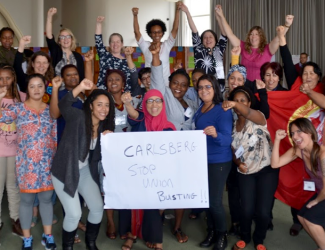
Defensoras de derechos humanos de todo el planeta defienden sus tierras, medios de subsistencia y sus comunidades ante las industrias extractivas y el poder corporativo. Ellas hacen frente a fuertes intereses económicos y políticos que promueven el robo de tierras, el desplazamiento de comunidades, la pérdida de los medios de subsistencia y la degradación del medioambiente.
¿Por qué resistir a las industrias extractivas?
El extractivismo es un modelo económico y político de desarrollo que mercantiliza la naturaleza y prioriza la ganancia por sobre los derechos humanos y el medioambiente. Arraigado en la historia colonial, refuerza las desigualdades sociales y económicas tanto a nivel local como global. Muchas veces, las mujeres negras, rurales e indígenas son las más afectadas por el extractivismo, y además son notablemente excluidas de la toma de decisiones. Desafiando estas fuerzas patriarcales y neocoloniales, las mujeres se alzan en defensa de los derechos, las tierras, las personas y la naturaleza.
Riegos críticos y violencia específica de género
Las defensoras que enfrentan a las industrias extractivas, experimentan una diversidad de riesgos, amenazas y violaciones, incluidas la criminalización, la estigmatización, la violencia y laintimidación. Sus historias dan cuenta de marcados aspectos de violencia sexual y de género. Entre los perpetradores se incluyen autoridades estatales y locales, las corporaciones, la policía, el ejército, las fuerzas paramilitares y de seguridad privada, y en algunos casos, sus propias comunidades.
Actuar juntxs
AWID y la Coalición Internacional de Mujeres Defensoras de Derechos Humanos (WHRDIC por su sigla en inglés) tienen el placer de anunciar «Defensoras de derechos humanos confrontado al extractivismo y al poder corporativo»; un proyecto interregional de investigación que documenta las experiencias vividas por las defensoras de Asia, África y América Latina.
Alentamos a activistas, integrantes de movimientos sociales, la sociedad civil organizada, donantes y responsables de políticas públicas, a leer y utilizar estas producciones para el trabajo de incidencia, con fines educativos y como fuente de inspiración:
-
«Defensoras de derechos humanos confrontando a las industrias extractivas: un panorama de los riesgos críticos y las obligaciones en materia de derechos humanos» es un informe sobre políticas desde la perspectiva de género (en inglés, pronto disponible en español). Analiza las formas de violaciones y los tipos de perpetradores, hace referencia a las obligaciones relevantes en derechos humanos e incluye recomendaciones de políticas para los estados, corporaciones, la sociedad civil y donantes.
-
«Tejiendo la Resistencia a través de la Acción: Las Estrategias de las Defensoras de Derechos Humanos contra a las Industrias Extractivas» es una guía práctica que expone formas creativas y deliberadas de acción, tácticas exitosas e inspiradoras historias de resistencias.
-
El video «Defendiendo a las Personas y al Planeta: Mujeres Confrontando a las Industrias Extractivas» está protagonizado por defensoras de derechos humanos de África, Asia y América Latina, que comparten sus luchas por la tierra y la vida, y hablan de los riesgos y desafíos que enfrentan en su activismo.
-
«Desafiar al poder corporativo: Las luchas por los derechos de las mujeres, la justicia económica y de género» es un informe de investigación que explica los impactos del poder corporativo y ofrece ideas sobre estrategias de resistencia.
¡Comparte tu experiencia y tus preguntas!
Cuéntanos cómo estás utilizando la herramienta sobre las defensoras que confrontan a las industrias extractivas y al poder corporativo.
◾️ ¿De qué manera estos recursos pueden ayudarte en tu activismo y tu trabajo de defensa?
◾️ ¿Qué informaciones o conocimientos adicionales necesitas para la mejor utilización de estos recursos?
◾️ ¿De qué manera estos recursos pueden ayudarte en tu activismo y tu trabajo de defensa?
◾️ ¿Qué informaciones o conocimientos adicionales necesitas para la mejor utilización de estos recursos?
¡Gracias!
AWID reconoce con gratitud las invaluables contribuciones de cada Defensora de Derechos Humanos que ha sido parte de este proyecto. Esta guía ha sido posible gracias su generosidad y apertura al compartir sobre sus experiencias y lecciones. Su coraje, creatividad y resiliencia son una inspiración para todxs nosotrxs. ¡Muchas gracias!
Contenido relacionado
AWID IN 2015: Building Collective Impact

In 2015 AWID grew and diversified.
We ramped up preparations for the 13th AWID international Forum, focused a lot of energy on the Post 2015 Development Agenda and Financing for Development processes, and continued the core work of our priority areas:
- Challenging Religious Fundamentalisms
- Women Human Rights Defenders
- Economic Justice
- Resourcing Women’s Rights
- Young Feminist Activism
A sneak peak inside the report
The context
- We continue witnessing the rapid breakdown in democracy and democratic institutions, with spaces for dissent shrinking.
- Multiple and concurrent systemic crises (energy, food, finance and climate) continue to deepen inequalities and pose major challenges.
- Corporations are a leading power in determining the development agenda.
- Violence against WHRDs remains an urgent problem.
- Religious fundamentalisms are pervasive and increasingly powerful.
- New forms of online gender-based violence have emerged.
In response, we are moving out of our silos.
Increasingly, women’s rights and other movements worldwide are articulating the systemic and intersectional nature of these and other problems. We are making better connections with the agendas of other social and environmental movements for solidarity, alliance building and collective responses. We are also seeing greater visibility of these movements fighting for justice on the ground.
Our Impact
- For effective strategizing and advocacy, we need facts
- To exchange knowledge and join hands in solidarity, we need a strong online community
- To build our collective power, we need to work together
- To influence international processes, we need to increase our access and voice
- To reposition power we need to give visibility and emphasize the important role that feminist and women’s rights movements are already playing
Our Members
As at 31st December, 2015 we had:

Read the full report
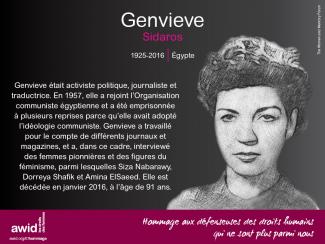
Genvieve Sidaros
CFA 2023 - Call for Activities is live- ES
¡Comienza la Convocatoria para Actividades!
La fecha límite para proponer actividades se extiende hasta el 1ero de Febrero de 2024.
En el espíritu del tema del Foro, invitamos a proponer una diversidad de tópicos y formatos para actividades que:
- Faciliten la conexión e interacción genuina entre lxs participantes;
- Promuevan la sanación y regeneración de distintas formas, como personas individuales, comunidades y movimientos;
- Nos inspiren y desafíen para florecer juntxs como comunidades y movimientos.
Snippet 5 - What's happening at HRC61 Intro
Interactive Dialogues and Reports related to Gender and Sexuality
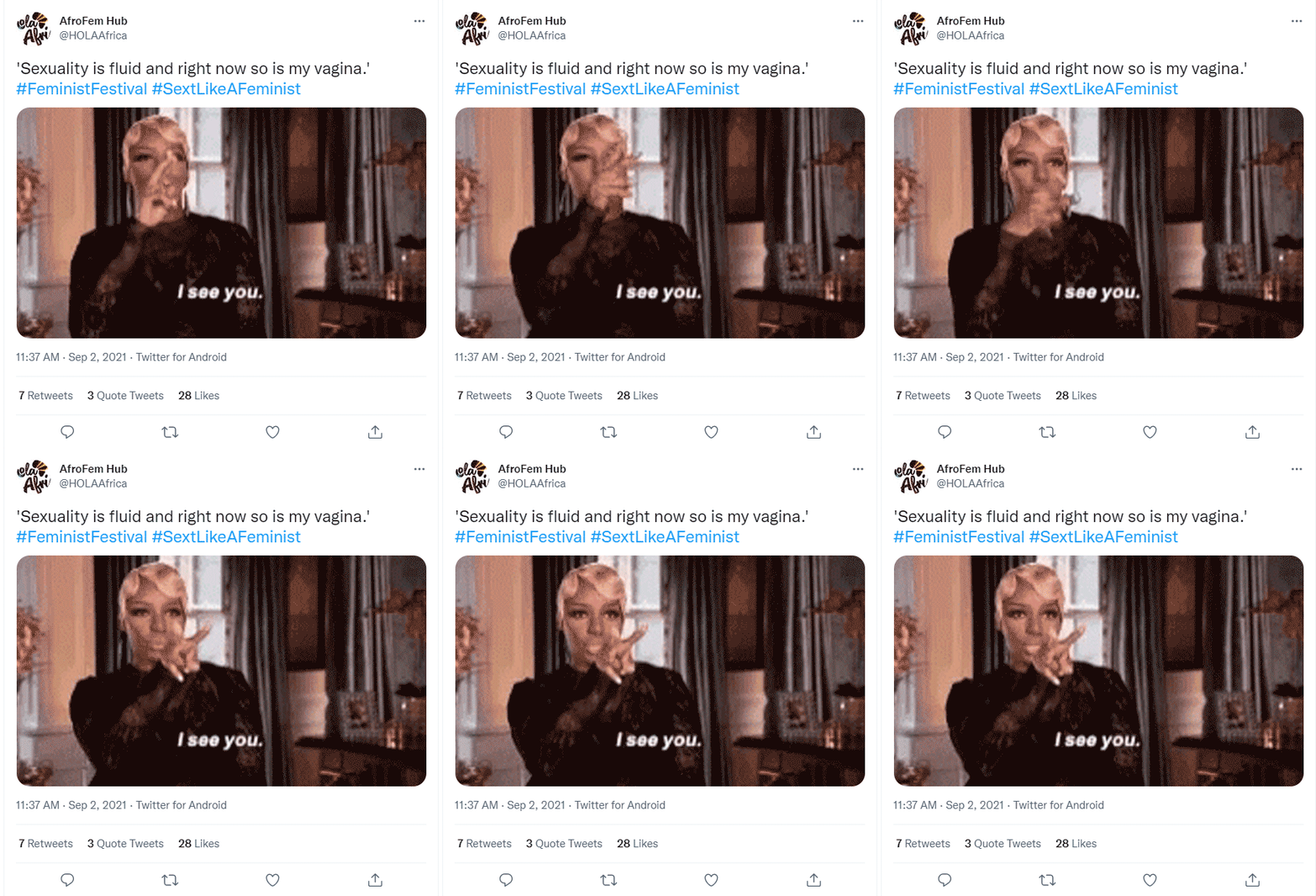
#1 - Sexting like a feminist Tweets Snippet ES
Y mi número 1: porque sabes que la cosa va en serio cuando se invoca a los poderes superiores
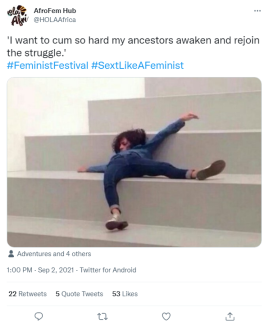
‘Quiero acabar/venirme/correrme tan fuerte que despierte a mis ancestrxs y haga que vuelvan a sumarse a la lucha’
Annual Report 2010
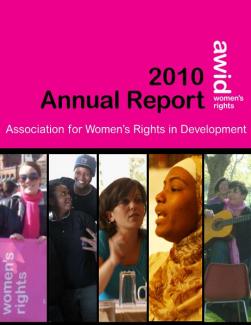
Our 2010 Annual Report highlights the major accomplishments of each of our strategic initiatives during the year.
Along with activity highlights, we include a brief analysis of the impact of our initiatives as well as reflections from our members and partners that further illustrate the relevance of AWID’s work and its connection to broader women’s rights movements.
This interactive document is complete with links to our websites and recent publications with in-depth information on the issues we address in the report.
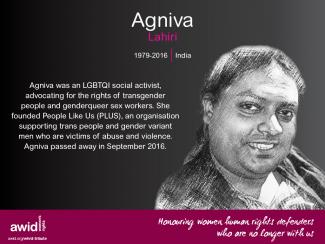
Agniva Lahiri
CFA 2023 - Submit Button - ES
Snippet - WID2026 - Join the Global _ES
¡Únete a la comunidad feminista global!
Regístrate para ser miembrx de AWID y conectar con más de 9,600 movimientos feministas globales y co-crear una variedad de plataformas y espacios diseñados especialmente para activistas y organizaciones, desde espacios de aprendizaje hasta espacios de solidaridad y encuentros entre miembrxs.
La comunidad de membresía de AWID está disponible como una app. Descarga la app y comienza a conectar con movimientos!
 |
 |
Intro to tweets snippet FR
Comme ces tweets le montrent, sextoter comme une féministe est à la fois sexy, drôle – et chaud. Mais sans jamais perdre de vue son engagement en faveur de l’équité et de la justice.
Demo article
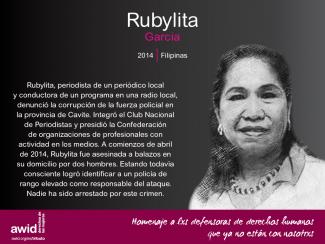
Rubylita Garcia
CFA 2023 - Online and Hybrid - thai
ใหม่
การประชุมออนไลน์และแบบผสมผสานรูปแบบ
ผู้เข้าร่วมประชุมออนไลน์สามารถดำเนินรายการในโปรแกรมต่างๆ เชื่อมต่อและสนทนากับผู้อื่น และสัมผัสประสบการณ์ความคิดสร้างสรรค์ ศิลปะ และการเฉลิมฉลองของเวที AWID ได้โดยตรง ผู้เข้าร่วม ที่เชื่อมต่อออนไลน์จะได้พบกับกับโปรแกรมที่เข้มข้นและหลากหลาย ตั้งแต่การประชุมเชิงปฏิบัติการ การอภิปราย ไปจนถึงโปรแกรมกิจกรรมเยียวยาและการแสดงดนตรี โดยที่กิจกรรมบางอย่างจะเน้น การเชื่อมต่อระหว่างผู้เข้าร่วมออนไลน์ด้วยกัน ในขณะที่กิจกรรมอื่นๆจะเป็นการเชื่อมต่อแบบผสมผสาน เพื่อการมีปฏิสัมพันธ์กันระหว่างผู้เข้าร่วมออนไลน์และผู้ที่อยู่กรุงเทพฯ
Snippet - WD2026 - Resourcing Hub_ES
Nodo de Financiamiento en Women Deliver
Organizado por la Alianza para los Movimientos Feministas con AWID, Prospera y el Consorcio Walking the Talk.
🎧 Habrá interpretación disponible con Wordly. ¡No olvides traer tus auriculares!
🏢
Resourcing Hub (Sala de exposiciones).
Sesión 1: Financiar la solidaridad en tiempos de transición
📅 Martes, 28 de abril | 3:30 - 4:30 pm
Sesión 2: Financiamiento autónomo: Cómo los movimientos feministas se sostienen a sí mismos
📅 Miércoles, 29 de abril | 9:30 - 11:00 am
Sesión 3: Financiando futuros feministas: Un programa de conversación sobre lo que sigue para el financiamiento de los movimientos
📅 Jueves, 30 de abril | 10:30 - 11:30 am
#2 - Sexting like a feminist Tweets Snippet EN
Who doesn’t like a visual cue?
Margarita Salas Guzmán
Biography
Margarita is a feminist and LGBTIQA activist from Latin America; her passion is social transformation and collective wellbeing. She holds degrees in Psychology, Communications and Public Administration, as well as certificates in Public Policy, Leadership, Management & Decision Making. In her professional capacity, Margarita has had extensive experience with grassroots organizations, national and regional NGOs, universities and the public sector, developing facilitation, capacity building, political advocacy, communications & policy assessment.
Position
Special Projects Manager
Add to stories
Off
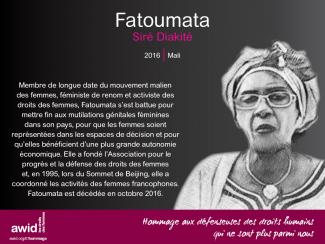
Fatoumata Siré Diakité
CFA 2023 - Submit Button - thai
Snippet - WD2026 - Fiji Hub - FR
📍 Hub aux Fidji : DIVA for Equality Fiji
📅 Du 27 au 28 avril
De Nami à Naarm est un rassemblement féministe intensif de deux jours visant à créer des ponts entre les féministes du Pacifique, aux Fidji, et la conférence Women Deliver. Leur programme comprendra des sessions de stratégie et d’apprentissage axées sur la justice de genre et environnementale, s’appuyant sur leur programme Power to Poverty ainsi que sur le travail des petit·e·s agriculteur·rice·s locaux·ales et des défenseur·euse·s des terres.
Manal Tamimi | Snippet ES
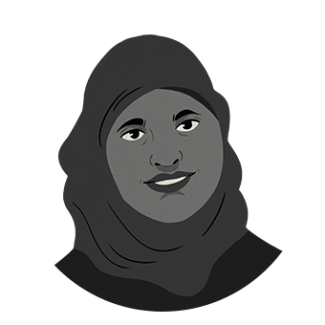
Manal Tamimi es una activista y defensora de los derechos humanos palestina. Tiene cuatro hijxs y posee una maestría en derecho humanitario internacional. Debido a su activismo, fue arrestada en tres ocasiones y sufrió más de una herida, incluso balas explosivas reales, algo prohibido en el plano internacional. Su familia también es blanco de agresiones: sus hijxs han sido arrestados y sufrido heridas con munición activa más de una vez. El último hecho fue un intento de asesinato contra su hijo Muhammad, quien recibió un disparo en el pecho cerca del corazón, unas semanas después de ser liberado de las prisiones de la ocupación en las que había estado dos años. Su filosofía de vida: si tengo que pagar un precio por ser palestina y no por un delito que haya cometido, me niego a morir callada.