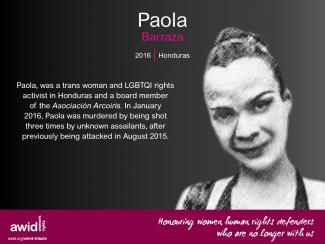
Paola Barraza
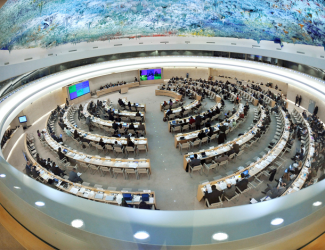
El Consejo de Derechos Humanos (CDH) es el cuerpo intergubernamental del sistema de las Naciones Unidas responsable de la promoción y protección de todos los derechos humanos en todo el mundo. El HRC se reúne en sesión ordinaria tres veces al año, en marzo, junio y septiembre. La La Oficina del Alto Comisionado para los Derechos Humanos (ACNUDH) es la secretaría del Consejo de Derechos Humanos.
Debate y aprueba resoluciones sobre cuestiones mundiales de derechos humanos y el estado de los derechos humanos en determinados países
Examina las denuncias de víctimas de violaciones a los derechos humanos o las de organizaciones activistas, quienes interponen estas denuncias representando a lxs víctimas.
Nombra a expertos independientes que ejecutarán los «Procedimientos Especiales» revisando y presentado informes sobre las violaciones a los derechos humanos desde una perspectiva temática o en relación a un país específico
Participa en discusiones con expertos y gobiernos respecto a cuestiones de derechos humanos.
A través del Examen Periódico Universal, cada cuatro años y medio, se evalúan los expedientes de derechos humanos de todos los Estados Miembro de las Naciones Unidas
Se está llevarando a cabo en Ginebra, Suiza del 30 de junio al 17 de julio de 2020.
AWID trabaja con socios feministas, progresistas y de derechos humanos para compartir conocimientos clave, convocar diálogos y eventos de la sociedad civil, e influir en las negociaciones y los resultados de la sesión.
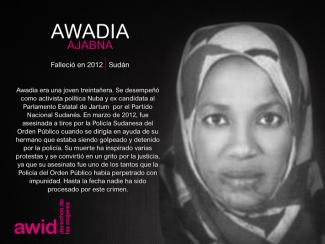
Sanyu est une féministe panafricaine basée à Nairobi, au Kenya. Elle a passé la dernière décennie à soutenir les mouvements syndicaux, féministes et de défense des droits humains en faveur de la redevabilité des entreprises, de la justice économique et de la justice de genre. Elle a travaillé avec le Business & Human Rights Resource Centre, IWRAW Asia Pacific et la Commonwealth Human Rights Initiative. Elle est titulaire d’un master en droits humains et d’une licence en droit de l’Université de Nottingham. Ses écrits ont été publiés dans le Business and Human Rights Journal, Human Rights Law Review, Open Global Rights, Open Democracy et d’autres encore. Pendant son temps libre, elle adore se promener en forêt et chasser les papillons.
Moriviví est un collectif de jeunes femmes artistes qui travaille sur l'art public depuis Avril 2013. Basé·e·s à Porto Rico, nous sommes reconnu·e·s pour la création de fresques et d'arts dirigés par la communauté.
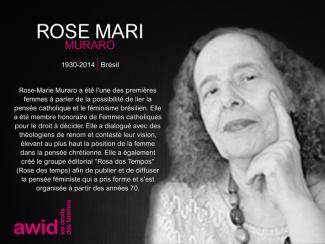
Eni Lestari is an Indonesian domestic worker in Hong Kong and a migrant rights activist. After escaping her abusive employer, she transformed herself from a victim into an organizer for domestic workers in particular, and migrant workers in general. In 2000, she founded the Association of Indonesian Migrant Workers (ATKI-Hong Kong) which later expanded to Macau, Taiwan, and Indonesia. She was the coordinator and the one of the spokesperson of the Asia Migrants Coordinating Body (AMCB) - an alliance of grassroots migrants organisations in Hong Kong coming from Indonesia, Philippines, Thailand, Nepal and Sri Lanka. She is also the current chairperson of International Migrants Alliance, the first-ever global alliance of grassroots migrants, immigrants, refugees, and other displaced people.
She has held important positions in various organizations including and current Regional Council member of Asia Pacific Forum on Women, Law and Development (APWLD), former Board Member of Global Alliance Against Traffic in Women (GAATW), spokesperson for Network of Indonesian Migrant Workers (JBMI), advisor for ATKI-Hong Kong and Macau as well as the Association of Returned Migrants and Families in Indonesia (KABAR BUMI). She has been an active resource person in forums organized by academics, interfaith groups, civil societies, trade unions and many others at national, regional, and international arenas.
She has actively participated in United Nations assemblies/conferences on development and migrants’ rights and was chosen as a speaker at the opening of the UN General Assembly on Large Movement of Migrants and Refugees in 2016 in New York City, USA. She received nominations and awards such as Inspirational Women by BBC 100 Women, Public Hero Award by RCTI, Indonesian Club Award, and Non-Profit Leader of Women of Influence by American Chamber Hong Kong, and Changemaker of Cathay Pacific.
In partnership with young feminist activists and youth-led organizations, AWID co-organized Beijing Unfettered in parallel to and independently from Beijing+25.
Caroline a travaillé régulièrement pour l'AWID, organisant auparavant les forums de 2005 et 2008 à Bangkok et au Cap, et à travers d'autres fonctions au sein de l'organisation. Avant de rejoindre l'AWID, elle a enseigné l'anglais en licence, puis a quitté l’université pour diriger le Reel Asian International festival de film de Toronto et travailler sur d'autres projets. Plus récemment, elle a occupé le poste de responsable des opérations chez Spring Strategies. En dehors du travail, Caroline se retrouve généralement dans son jardin, communiant avec ses chères plantes et faisant la paix avec les insectes et les rongeurs qui s’invitent.
It is exactly the same process and same deadline. Please use the same form to submit your activity, whether it is in-person, online, or both (hybrid).
Brenda Salas Neves is a feminist queer strategist born and raised in the southern Andes. They organize to shift narratives and mobilize resources to support racial and climate justice movements around the world. They have produced media projects to uplift migrant power and rise against U.S. military intervention across Latin America, with Deep Dish TV and the Portland Central America Solidarity Committee. They are a proud member of the Audre Lorde Project and a graduate of the United World Colleges (UWC) movement.
Felogene Anumo, AWID
Dr. Vandana Shiva, India
Dr. Dilar Dirik, Kurdistan
Nana Akosua Hanson, Ghana
¡Sí! En este momento el formulario requiere que se completen los nombres de lxs presentadorxs aun si no están confirmadxs todavía. Entendemos que es probable que se produzcan cambios durante el año.
Alejandra is passionate about women’s rights and gender justice. She dreams of creating a world that centers care – for people and nature. As a feminist human rights expert, she’s worked at the intersections of gender, climate, social and economic justice at various international organizations. Her areas of expertise include knowledge building and co-creation, research, facilitation, and advocacy. She holds a MA in Human Rights from the University of Essex and has authored and co-developed many publications, including the article “Enraged: Women and Nature”. The campaign Feminist Activism Without Fear draws on interviews and research carried out by Alejandra.
Originally from Argentina, she has lived and worked in several countries in Europe and Latin America over the past two decades. Alejandra loves photography, the sea, baking with her daughter, and enjoying food from around the world. As a mother, she aims to be a cycle breaker. Alejandra draws energy and inspiration from the amazing women in her life, who are spread in many corners of the world.
Coumba Toure
Cindy Clark, AWID
DJ Miss Ray
DJ Luana Flores
Phoenix Inana
لغات العمل في جمعية حقوق المرأة في التنمية هي الإنجليزية والفرنسية والإسبانية. ستتم إضافة اللغة التايلاندية كلغة محلية، بالإضافة إلى لغة الإشارة وإجراءات الاتصال الأخرى. يمكن إضافة لغات أخرى إذا سمح التمويل بذلك، لذا تحقق/ي مرة أخرى بانتظام للحصول على التحديثات. نحن نهتم بالعدالة اللغوية وسنحاول تضمين أكبر عدد ممكن من اللغات بقدر ما تسمح به مواردنا. نأمل في خلق فرص متعددة للكثيرين/ات منا للتواجد بلغاتنا والتواصل مع بعضنا البعض.
El trabajo de AWID es posible gracias al apoyo financiero de una amplia gama de donantes, incluyendo agencias multilaterales y bilaterales, fundaciones privadas y fondos de mujeres.