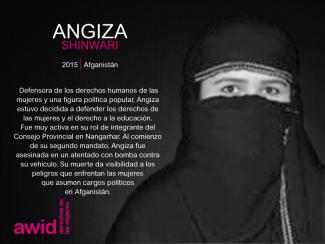
Angiza Shinwari
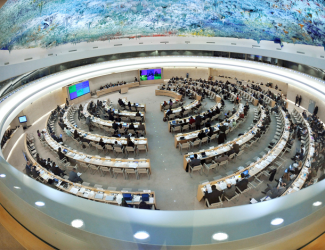
El Consejo de Derechos Humanos (CDH) es el cuerpo intergubernamental del sistema de las Naciones Unidas responsable de la promoción y protección de todos los derechos humanos en todo el mundo. El HRC se reúne en sesión ordinaria tres veces al año, en marzo, junio y septiembre. La La Oficina del Alto Comisionado para los Derechos Humanos (ACNUDH) es la secretaría del Consejo de Derechos Humanos.
Debate y aprueba resoluciones sobre cuestiones mundiales de derechos humanos y el estado de los derechos humanos en determinados países
Examina las denuncias de víctimas de violaciones a los derechos humanos o las de organizaciones activistas, quienes interponen estas denuncias representando a lxs víctimas.
Nombra a expertos independientes que ejecutarán los «Procedimientos Especiales» revisando y presentado informes sobre las violaciones a los derechos humanos desde una perspectiva temática o en relación a un país específico
Participa en discusiones con expertos y gobiernos respecto a cuestiones de derechos humanos.
A través del Examen Periódico Universal, cada cuatro años y medio, se evalúan los expedientes de derechos humanos de todos los Estados Miembro de las Naciones Unidas
Se está llevarando a cabo en Ginebra, Suiza del 30 de junio al 17 de julio de 2020.
AWID trabaja con socios feministas, progresistas y de derechos humanos para compartir conocimientos clave, convocar diálogos y eventos de la sociedad civil, e influir en las negociaciones y los resultados de la sesión.
Since coming into myself, I have refused to pray in jamaat with my family. Joining in the ranks of hierarchy, “women” behind “men” irks me. It grates my skin and teeth to the degree where I can’t focus, and the standing, bowing, and kneeling feels like a battle against my true being. Each second listening, a betrayal of my nature. Instead, I pray by myself in my own way.
Yet this Ramadan, I feel different. Back in my childhood home after many years, I am choosing to fast. I choose suhoor with my family, and praying together feels like a natural extension of eating together. After eating, my mother, father, brother and I line up for fajr.
I pray behind Baba, but my prayer is my own. I close my eyes, staying with my breath and my body.
My eyes closed, I open my inner sight to a wide open window on a vista of mountains, bright sun spreading over a light mist of clouds. This was the view I had while praying in jamaat at a queer Muslim wedding I attended in the mountains of the South of France last September.
I lined up with the wedding guests, queer and trans folks of North and West African, Arab, and European descent. Folks of all faiths joined while some chose to stand in respect at the sides or behind. The groups did not fall along fault lines of “Muslim” or “non-Muslim,” “religious” or “non religious.” The two lovers marrying each led us in prayer, and so did the Muslim woman officiating the nikkah. Each of the three led us in two rounds of prayers, two raqat.
I showed up as I was, my body uncovered. I had not washed. I only passed my camera to a friend who chose to stand at the side.
In the first sujood, I broke down crying. I wore a jean dress that loves my body, one found at a thrift store my ex-girlfriend pointed me to.
The sobs come through my whole body during the prayer, and I put my head to the earth with my community like a homecoming. A return to the embrace of love both intensely personal and communal, and I am held.
It feels like swimming in the sea with multiple people: joyful togetherness. But when you go beneath the water, it’s just you and the current.
Like a dozen people buried in the same graveyard. Separate, but sharing the same soil. Becoming one with the growing earth.
That was how it felt to pray in communion at a queer Muslim wedding.
I welcomed the light of acceptance while showing up as myself that day, with a group of people who had also chosen to claim all the parts of themselves in love. That light made a home in me, and it illuminates my heart in the dark living room at fajr this Ramadan morning. Though I pray with my birth family who do not accept all of me, I see myself praying in jamaat at that glorious wedding with all of my queer Muslim ancestors, my queer angels, my lineage, my soul family, my queer Muslim family, all standing in prayer. Bowing as one.
My family’s home does not always feel like my own, though I am here now. I take the bukhoor from room to room, barefoot. Smolder from the censer, an incense that says, “Here I am.” Baraka, blessings from the source of all, Allah and the Goddess to each room in the house, bidding good and dispersing the unbidden.
As I write this the sky turns the same royal blue I am familiar with from exiting the club and pulling all-nighters. It is the gradient of morning I step into as I go to sleep.
Ramadan: the Muslim holy month, traditionally observed with 29 days of fasting without food or water during daylight hours
Keffiyah: a patterned scarf common in the SWANA region. The black and white version referred to here is associated with the Palestinian liberation movement
Pray in jamaat: Islamic ritual prayer in a group. Participants follow one person, traditionally male, who calls the prayer aloud.
Suhoor: the meal before the fast starts at dawn
Fajr: the dawn prayer
Baba: father
Raqat: one round of prayer consisting of standing, bowing, kneeling, and pressing the head to the ground
Sujood:the prayer position when one presses one’s head to the earth
Nikkah: the religious marriage ceremony
Bukhoor: an Arabic incense, woodchips soaked in resin
Baraka: blessing
Pictures of angels in my life, just some women and non-binary people of color hanging out, taking care of themselves and expressing love to each other. It's these simplest moments that are the most empowering.


< Freeing the Church, Decolonizing the Bible for West Papuan Women
Janet Benshoof était une avocate des droits humains oeuvrant aux États-Unis et défenseure de l’égalité des femmes et de leurs droits sexuels et reproductifs.
Elle a milité pour l’élargissement de l’accès à la contraception et à l’avortement dans le monde entier, et s’est battue contre des décisions anti-avortement dans le territoire américain de Guam. Arrêtée en 1990 pour son opposition à la loi anti-avortement la plus restrictive de son pays, elle a remporté une mise en demeure [MB1] au tribunal local à Guam qui a bloqué la loi, pour ensuite remporter l’affaire devant la Cour d’Appel de Ninth Circuit, décision qui devait supprimer définitivement celle-ci.
« Les femmes à Guam sont dans une situation absolument dramatique. Je n’ai nullement l’intention d’arrêter d’en parler », Janet Benshoof pour People Magazine
Janet a créé plusieurs précédents juridiques, dont l’approbation par l’US Food and Drug Administration de la contraception d’urgence, ainsi que l’application du droit international afin de garantir leurs droits aux victimes de viol lors des poursuites pour crimes de guerre de l’époque de Saddam Hussein, devant la Cour Suprême iraqienne.
Janet était présidente et fondatrice du Global Justice Center, ainsi que fondatrice du Center for Reproductive Rights, la première organisation internationale pour les droits humains, centrée sur le choix reproductif et l’égalité. Elle a siégé pendant 15 ans en tant que directrice du projet pour les droits reproductifs de l’American Civil Liberties Union, où elle a mené de nombreuses procédures juridiques qui ont contribué à façonner la loi constitutionnelle des États-Unis sur l’égalité de genre, la liberté d’expression et les droits reproductifs.
« Janet était connue pour son brillant esprit juridique, son sens de l’humour vif et son courage face à l’injustice », Anthony D. Romero.
Nommée l’une des « 100 avocat·e·s les plus influent·e·s d’Amérique » par le National Law Journal, Janet a reçu de nombreux prix et distinctions.
Née en mai 1947, Janet est décédée en décembre 2017.

L’AWID a le plaisir de partager son rapport annuel 2014.
Du renforcement des connaissances sur les enjeux liés aux droits des femmes à l’élaboration de réponses plus efficaces aux violences perpétrées contre les défenseuses des droits humains, nos efforts de l’an dernier n’ont cessé de poursuivre la consolidation des mouvements féministes et de droits des femmes du monde entier.
Consultez le rapport pour en apprendre davantage sur la façon dont nous avons renforcé les capacités de nos membres et plus largement de notre public , exercé de fortes pressions pour que les droits des femmes demeurent au premier plan des principaux processus internationaux relatifs au développement et aux droits humains, et contribué à améliorer la couverture médiatique des problématiques des droits des femmes et des processus organisationnels qui y sont liés. Le rapport propose une vue panoramique de nos projets ainsi que certains chiffres qui témoignent concrètement de notre impact.
La collaboration est au cœur de toutes nos actions et nous anticipons avec enthousiasme une autre année de travail ensemble afin de mener nos mouvements vers un niveau supérieur.
Dans un contexte de plus en plus exigeant, nous pouvons néanmoins discerner d’importants signes d’espoir de voir les priorités relatives aux droits des femmes progresser. Les activistes des droits des femmes jouent toujours un rôle crucial dans la création d’espaces au sein desquels il est possible d’exiger des changements structurels, de soutenir les communautés, de s’opposer à la violence et de préserver les acquis essentiels/ importants/majeurs. Il y a en effet des occasions à saisir pour influencer les nouveaux acteurs et mobiliser des ressources plus abondantes en faveur des organisations de droits des femmes.
Pour ce faire, il est essentiel de mener de solides actions collectives et de renforcer le processus d’organisation des activistes des droits des femmes.

Je suis sincèrement enchantée par tout ce qu’a réalisé l’AWID depuis 1982 et j’espère être en mesure d’apporter ma contribution, même modeste, à ce dur labeur en faveur des femmes et de l’égalité de genre. » — Aleksandra Miletic-Santic, Bosnie Herzégovine

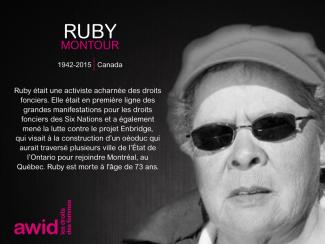
Bienvenue à Crear | Résister | Transform : un festival dédié aux mouvements féministes !
L'AWID s'engage à créer un espace en ligne qui nous invite et nous pousse tou·te·s à faire preuve de courage, de curiosité, de générosité et de responsabilité partagée.
Nous vous invitons à créer à nos côtés des espaces sans harcèlement ni violence, où chacun·e est respecté·e dans son identité et son expression de genre, sa race, ses capacités, sa classe, sa religion, sa langue, son ethnicité, son âge, sa profession, son type d'éducation, sa sexualité, sa taille et son apparence physique. Des espaces où nous reconnaissons les inégalités de notre monde et où nous nous efforçons de les transformer au gré de nos propres interactions avec les autres.
Soyez là les un·e·s pour les autres en étant activement à l’écoute. Essayons de nous sentir proches, même si tout est virtuel. Pour cela, vous aurez accès à l’interprétation de la discussion et à des moyens de communications ouverts (comme la boîte de dialogue et autres outils) pour réagir et échanger. Nous vous recommandons de porter des écouteurs ou un casque pendant la séance pour mieux entendre les autres et vous faire entendre. Dans la mesure du possible, essayez de fermer votre messagerie électronique ou toute autre distraction pendant que vous prenez part à la discussion.
Célébrons les multiples façons dont le savoir se manifeste dans nos vies. Nous vous invitons à aborder la conversation avec curiosité et ouverture d’esprit pour apprendre des autres, en se permettant de désapprendre et de réapprendre à travers ces échanges, comme une manièrede commencer à construire collectivement des connaissances.
Nous nous engageons à adopter une approche holistique de l'accessibilité en tenant compte des différents besoins physiques, linguistiques, mentaux et de sécurité. Nous voulons un espace qui accueille des personnes d'origines, de croyances, de capacités et d'expériences différentes. Nous anticiperons au mieux mais vous demanderons également de nous communiquer vos besoins, et nous ferons de notre mieux pour y répondre.
Nous nous engageons tou·te·s individuellement et collectivement à respecter la vie privée de chacun·e· et à demander le consentement des autres avant de partager des images ou du contenu qui les concerne, générés au cours de la conversation.
Créer un environnement sécurisé, respectueux et agréable durant ces conversations est la responsabilité de tou·te·s .
Si vous remarquez qu'une personne a un comportement discriminatoire ou offensant, veuillez contacter la personne de référence qui vous sera indiquée en début de session.
Tout·e participant·e qui utilisera un langage ou des images abusives sera exclu·e de la conversation et ne sera pas réadmis·e. Nous n’aurons plus de relations avec cette personne de quelque manière que ce soit.
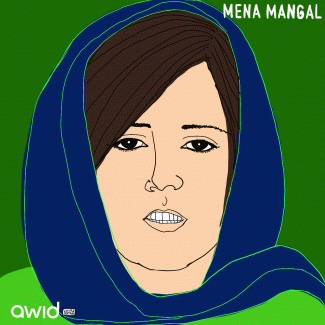
Mena Mangal was a prominent TV journalist, women’s rights advocate and cultural adviser to Wolesi Jirga, the lower house of Afghanistan's national parliament.
For more than a decade, she worked for Ariana TV, Tolo TV's Pashto-language channel Lamar, and the private Afghan national television broadcaster Shamshad TV. As a presenter, Mena focused on women’s rights and cultural talk shows.
"Women's rights activist Wazhma Frogh said Mangal "had a loud voice" and actively spoke out as an advocate for her people."
Off-screen, she also ran popular social media pages that advocated for the rights of Afghan girls and women to education and work. In terms of her private life, Mena wrote extensively about being forced into an arranged marriage in 2017 and the process she had to go through to finally obtain a divorce.
In a Facebook post, Mena wrote she was receiving death threats from unknown sources but would continue to carry out her work.
On 11 May 2019, she was attacked by unknown gunmen and shot dead in broad daylight in a public space in Southeast Kabul.
"We are concerned about the situation because it has a direct impact on women who work outside their homes...Female journalists are changing their professions due to the increasing risks they are facing." - Robina Hamdard, Kabul-based women’s rights activist.
NOUS SOMMES LA SOLUTION
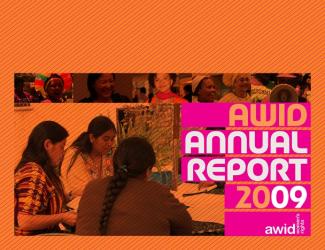
Our 2009 Annual Report includes highlights of another busy year of action and reflection at AWID as we implement our commitment to boldly, creatively and effectively contribute to the advancement of women’s rights and gender equality worldwide.
In the report you can find out about our programmatic achievements, membership, finances, what to watch out for in 2010, as well as information about our Board and Staff.
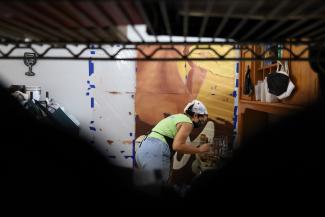
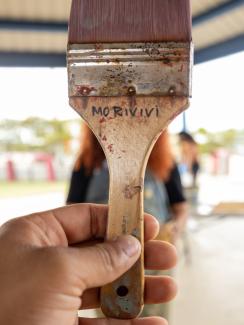
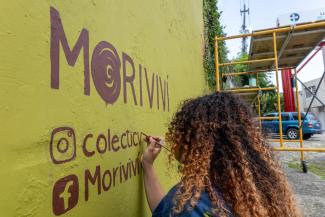
Colectivo Moriviví is an all women artistic collective. Our artistic production consists of muralism, community-led muralism, and protest performance/actions. Our work is about democratizing art and bringing the narratives of Puerto Rican communities to the public sphere to create spaces in which they are validated. We believe that through artivism we can promote consciousness on social issues and strengthen our collective memory.
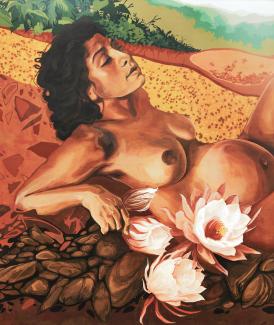
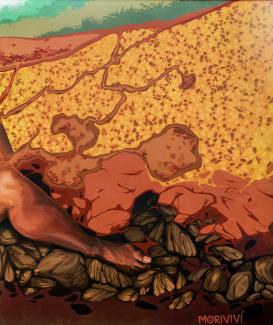
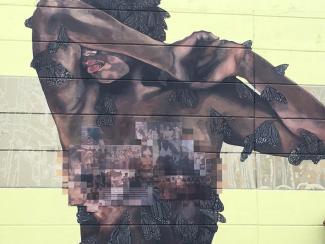
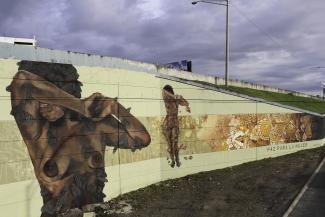
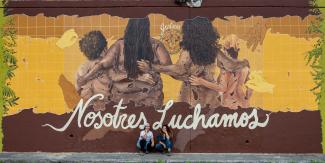
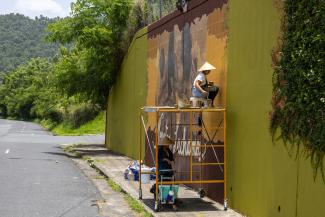
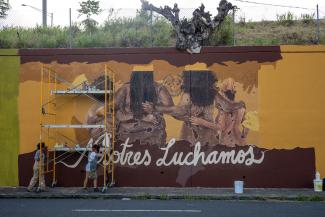
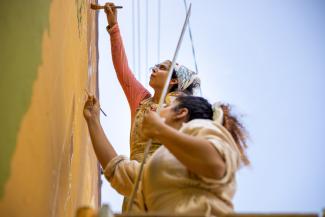
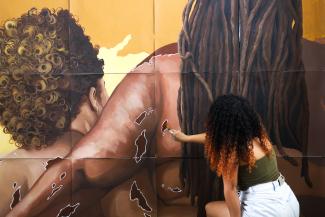
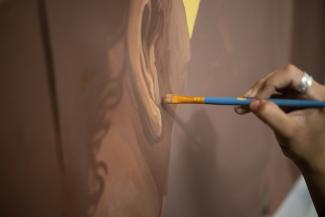
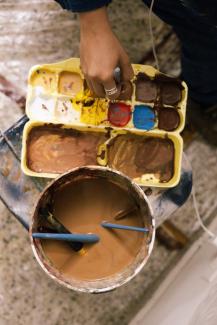
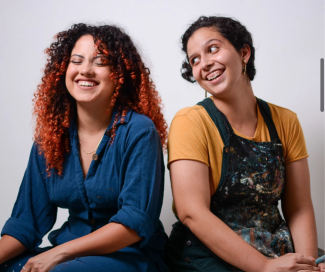
As part of their participation in AWID’s Artist Working Group, Colectivo Morivivi gathered a diverse group of members, partners and staff to facilitate a collaborative process of dreaming into, informing, and deciding on the content for a community mural through a multi-stage co-creation process. The project began with a remote conceptualization with feminists from different parts of the planet brought together by AWID, and then it evolved to its re-contextualization and realization in Puerto Rico. We were honored to have the input of local artists Las Nietas de Nonó(@lasnietasdenono), the participation of local women in the Community Painting Session, the logistics support from the Municipality of Caguas, and FRIDA Young Feminist Fund’s additional support to the collective.
The mural explores the transcendence of borders by presenting bodies like a map, in an embrace that highlights the intersection of the different feminist manifestations, practices and realities.
We also thank Kelvin Rodríguez, who documented and captured the different stages of this project in Puerto Rico:

Filter your search by funders from different sectors i.e., philanthropic foundations, multilateral funders, women’s and feminist funds
«Quiero transmitir el siguiente mensaje a todos los tunecinos y tunecinas: Tenemos que unirnos para decir no a la censura y a los juicios contra el derecho a opinar.» - Lina Ben Mhenni (entrevista de 2013)
«Es cierto que la información y la Internet son importantes, pero para hacer una revolución es crucial estar en el territorio. Algunas personas aquí en Túnez piensan que el cambio se dará mediante un simple “me gusta” en Internet. Yo creo que hay que estar activxs en el terreno. Y, por supuesto, que hay que combinar las acciones en el terreno con la acción en las redes.» - Lina Ben Mhenni (entrevista en POCIT)
En 2010 co-organizó una protesta que desafió la decisión gubernamental de suprimir medios de comunicación e instalar la censura de Internet. Lina era muy conocida por su blog «A Tunisian Girl», y por su trabajo durante la revolución tunecina de 2011. En su blog, difundió la información sobre el levantamiento, compartió imágenes que documentaban las protestas, y fue una de las pocas voces que hablaron sobre los asesinatos y la represión de lxs manifestantes de Sidi Bouzid. Lina publicaba en su blog utilizando su nombre real en lugar de un seudónimo que protegiera su identidad, y fue una de lxs pocxs bloguerxs en hacerlo.
«Nuestra libertad de expresión corre verdadero peligro. Me temo que estamos perdiendo los extraordinarios frutos de la revolución: la desaparición del miedo y nuestra libertad de expresión. Tenemos que seguir luchando para proteger y preservar este derecho.» - Lina Ben Mhenni (entrevista de 2013)
Lina tenía solamente 36 años cuando falleció, el 27 de enero de 2020, debido a complicaciones derivadas de una enfermedad autoinmune.
«Libertad, mejor educación y mejor salud—eso era lo que todxs queríamos. Cuando fracasábamos, ella nos empujaba.» - Hala, maestra de Lina
Nous avons le plaisir de vous présenter Mariama Sonko, agricultrice rurale, éco-féministe et défenseuse des droits humains, vivant actuellement à Niaguis, une ville du sud-ouest du Sénégal.
Ayant grandi dans une famille et une communauté rurale d’agriculteur·rices, elle a été témoin du rôle essentiel des femmes dans la production alimentaire et la conservation des semences depuis son plus jeune âge, tout en étant immergée dans le travail de la terre.
Mariama défend les savoirs agricoles locaux et les pratiques paysannes depuis les années 90. En tant que mère de 5 enfants, la nourriture qu'elle cultive elle-même est la principale source de subsistance de sa famille.
Elle est actuellement présidente de Nous Sommes la Solution et s'engage à promouvoir les pratiques agroécologiques et l'agriculture familiale, à encourager la souveraineté alimentaire, la biodiversité et la préservation des semences paysannes, et à exiger un accès équitable aux ressources et à la terre à travers l'Afrique de l'Ouest.
Source: AWID’s Feminist Realities Festival Crear | Résister | Transform - Day 2/ 2ème jour/ 2º día
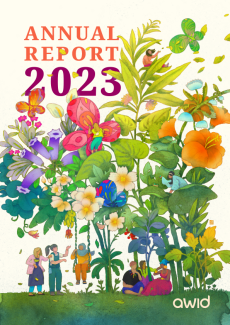
For us at AWID, 2023 was the first year of our new Strategic Plan, “Fierce Feminisms: Together We Rise”, which speaks to the unapologetic drive needed to change the world, and the plurality of feminisms and movements in our ecosystem.
In the course of 2023, the volatile situation in Sudan has escalated greatly. The unspeakable genocide in Gaza, in the context of ongoing colonization and occupation of Palestine, continues as we write these lines. Climate crises, militarization, and extractivism all persist as threats to people and the planet. Building stronger movements and people power is a vision to which we contribute daily, through AWID membership, teach-ins, resourcing advocacy and more.
Download the full 2023 Annual Report
From centering climate in feminist economies to advocating for resourcing feminist movements - an urgent task, given the chronic underfunding of feminist, indigenous and Global South movements who are on the frontlines of climate crisis - we are finding solutions.
Los actores anti-derechos adoptan una estrategia doble. Además de atacar abiertamente al sistema multilateral, los actores anti-derechos también socavan los derechos humanos desde adentro. Se involucran con el fin de cooptar procesos, consolidar normativas regresivas, y erosionar responsabilidades.
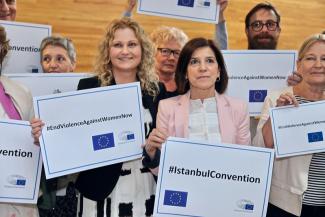
El involucramiento de los actores anti-derechos en espacios internacionales de derechos humanos tiene un objetivo principal: socavar el sistema y su capacidad de respetar, proteger y satisfacer los derechos humanos para todas las personas, y de exigir rendición de cuentas a los Estados miembro por su violación. Algunas tácticas anti-derechos operan por fuera de la ONU, e incluyen la deslegitimación y la presión política para desfinanciar a la ONU, o para que ciertos Estados miembro se retiren de acuerdos internacionales sobre derechos humanos. En los últimos años, algunos actores antiderechos han logrado una creciente influencia dentro de la ONU. Sus tácticas internas incluyen la capacitación de representantes, la distorsión de los marcos de derechos humanos, el debilitamiento de acuerdos sobre derechos humanos, la infiltración en comités de organizaciones no gubernamentales, las solicitudes de ingreso al Consejo Económico y Social bajo nombres neutrales, la infiltración en los espacios de la juventud, y las presiones para ubicar a actores antiderechos en posiciones clave.