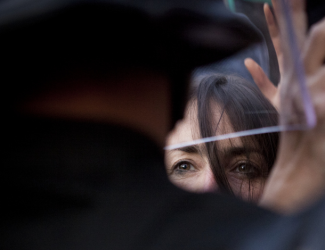
Philippe Leroyer | Flickr (CC BY-NC-ND 2.0)

Análisis Especiales

AWID es un organización feminista internacional de membresía, que brinda apoyo a los movimientos que trabajan para lograr la justicia de género y los derechos de las mujeres en todo el mundo.

Defensorxs de Derechos Humanos

Lxs defensorxs se identifican a sí mismas como mujeres y personas lesbianas, bisexuales, transgénero, queer e intersex (LBTQI) y otrxs que defienden derechos y que debido a su trabajo en derechos humanos están bajo riesgos y amenazas específicos por su género y/o como consecuencia directa de su identidad de género u orientación sexual.

Lxs defensorxs son objeto de violencia y discriminación sistemáticas debido a sus identidades y su inclaudicable lucha por derechos, igualdad y justicia.

El Programa Defensorxs colabora con contrapartes internacionales y regionales así como con lxs afiliadxs de AWID para crear conciencia acerca de estos riesgos y amenazas, abogar por medidas de protección y de seguridad que sean feministas e integrales, y promover activamente una cultura del autocuidado y el bienestar colectivo en nuestros movimientos.


Riesgos y amenazas dirigidos específicamente contra lxs defensorxs

lxs defensorxs enfrentan los mismos tipos de riesgos que todxs lxs demás defensorxs de derechos humanos, de comunidades y del medio ambiente. Sin embargo, también están expuestas a violencia y a riesgos específicos por su género porque desafían las normas de género de sus comunidades y sociedades.

Por defender derechos, lxs defensorxs están en riesgo de:

  • Ataques físicos y muerte
  • Intimidación y acoso, incluso en los espacios virtuales
  • Acoso judicial y criminalización
  • Agotamiento

Un enfoque integral y colaborativo de la seguridad

Trabajamos de manera colaborativa con redes internacionales y regionales y con nuestrxs afiliadxs

  • para crear conciencia de las violaciones de derechos humanos contra lxs defensorxs y de la violencia y discriminación sistemáticas que enfrentan
  • para fortalecer los mecanismos de protección y asegurar respuestas más oportunas y efectivas para lxs defensorxs que están en riesgo

Trabajamos para promover un enfoque integral de la protección que incluya:

  • remarcar la importancia del autocuidado y el bienestar colectivo, y reconocer que el significado de cuidado y bienestar puede variar entre las diferentes culturas;
  • documentar las violaciones dirigidas contra lxs defensorxs usando una perspectiva feminista interseccional;
  • promover el reconocimiento y celebración social del trabajo y la resiliencia de lxs defensorxs; y
  • construir espacios ciudadanos que conduzcan al desmantelamiento de las desigualdades estructurales sin restricciones ni obstáculos.

Nuestras acciones

Nos proponemos contribuir a un mundo más seguro para lxs defensorxs, sus familias y comunidades. Creemos que actuar por los derechos y la justicia no debe poner en riesgo a lxs defensorxs, sino que debe ser valorado y celebrado.

  • Promoviendo la colaboración y coordinación entre organizaciones de derechos humanos y organizaciones de derechos de las mujeres en el plano internacional para fortalecer la capacidad de respuesta en relación a la seguridad y el bienestar de lxs defensorxs.

  • Apoyando a las redes regionales de defensorxs y de sus organizaciones, tales como la Iniciativa Mesoamericana de Mujeres Defensorxs de Derechos Humanos y la WHRD Middle East and North Africa  Coalition [Coalición de Defensorxs de Derechos Humanos de Medio Oriente y África del Norte], promoviendo y fortaleciendo la acción colectiva para la protección, poniendo el énfasis en establecer redes de solidaridad y protección, promover el autocuidado y la incidencia y movilización por la seguridad de lxs defensorxs.

  • Aumentando la visibilidad y el reconocimiento de lxs defensorxs y sus luchas, así como de los riesgos que enfrentan, a través de la documentación de los ataques que sufren, e investigando, produciendo y difundiendo información sobre sus luchas, estrategias y desafíos.

  • Movilizando respuestas urgentes de solidaridad internacional para lxs defensorxs que están en riesgo a través de nuestras redes internacionales y regionales y de nuestrxs afiliadxs activxs.
Contenido relacionado

Posso realizar o inquérito fora do KOBO e partilhar as minhas respostas convosco por e-mail?

Somente no caso de problemas de acessibilidade e/ou se realizar o inquérito noutro idioma; caso contrário, encorajamo-lo a utilizar o KOBO para a recolha e análise padronizadas de dados do WITM.

Download your faciliation guide:

"A Feminist Approach to Understanding Illicit Financial Flows and Redirecting Global Wealth"

IFF Toolkit

Download your facilitation guide in English

This Guide is also available in Spanish and Russian


Thanks to the co-creators of this facilitation guide:

  • Daniela Fonkatz and Ana Ines Abelenda (AWID)
  • Zenaida Joachim (Mesoamericanas en Resistencia - El Salvador)
  • Olga Shnyrova (Ivanovo Center for Gender Studies - Russia)
  • Leah Eryenyu (Akina Mama Wa Afrika - Uganda)
  • Daryl Leyesa (Oriang and PKKK/National Rural Women Congress - the Philippines)

Our values - esponsibility, Accountability, and Integrity

Responsibility, Accountability, and Integrity

We strive for transparency, responsible use of our resources, fairness in our collaborations and accountability and integrity with our members, partners, funders and the movements with(in) which we work. We are committed to reflecting on our experiences, sharing our learnings openly, and striving to change our practices accordingly.

Fahmida Riaz

“Afterwards
After love the first time,
Our naked bodies and minds
A hall of mirrors,
Wholly unarmed, utterly fragile,
We lie in one another's arms
Breathing with care,
Afraid to break
These crystal figurines.” - Fahmida Riaz

Fahmida Riaz broke social taboos by writing about female desire in her poetry, creating alternative narratives about women’s bodies and sexuality, and setting new standards in Urdu literature.

Her work faced harsh criticism from conservatives, who accused her of using erotic and “pornographic” expressions in her poetic language. 

Fahimida was eventually blacklisted and charged with sedition under Section 124A of the Pakistan Penal Code) during the dictatorship of Zia Ul Haq. Forced into exile in 1981, she spent almost seven years in India before returning to Pakistan. 

As part of the preface to “Badan Dareeda” ('The Torn-Bodied'), a collection of poetry published in 1974, she wrote: 

If, indeed, I am forced to stand before this maqtal today and face the gallows, I should face them with my head held high. My poems are the trace of a mangled head: emanating sounds even as it is suspended from ropes... A Body Torn has taken the form of a razmia, or the sound of rupture. And if such rupture indeed shocks a people, then consider the poet as having achieved her purpose: she has managed to disturb them. (translation from Urdu by Asad Alvi)

The brilliance of Fahmida was in defying any singular logic or categories of gender, nation, religion or culture. She refused to be put in the role of a ‘woman poet’, breaking with traditional definitions of feminine poetry and concepts and themes (ranging from political consciousness, body, culture, desire, religion, home) and knocking down inhibitions put on her gender. 

“You have to understand that culture can have no essence. Cultures move, flowing into one another, forming new cultures. Culture is born this way. There is no clash of cultures.” 

Fahmida authored more than 15 books on poetry and fiction including her poem ‘Taaziyati Qaraardaaden’ (‘Condolence Resolutions’) that might serve as an appropriate tribute to her life and legacy and a collection of poems (Apna Jurm To Saabit He ‘My Crime Stands Proven’) published in 1988 during her time in exile. 

Fahmida Riaz was born in Meerut, India on 28 July 1946 and passed away on 21 November 2018 in Lahore, Pakistan.

Body

Snippet FEA Union Otras Photo 5 (ES)

Foto de personas sentadas en sillas rojas en una sala de conferencias

كم سؤال في الاستطلاع؟

هنالك 47 سؤال في الاستطلاع، منها 27 سؤال اجباري* والعشرين الباقين هي أسئلة اختيارية. أغلب الأسئلة هي أسئلة متعددة الخيارات. ندعوكم/ن للإجابة على جميع الأسئلة.

Holding up the Skies

A Film Series on Feminist Realities from Africa and the African Diaspora

by Gabrielle Tesfaye

When I created my short animation film, The Water Will Carry Us Home, my mind was plugged into a magical world of fearless resilience and ancestral mermaids who transformed their deepest scars into a new generation of life. Set during the time of the transatlantic slave trade, I was pulled to show this history of African enslavement in a different way than it has ever been told on screen. I wanted to give my ancestors the commemoration they never received. I was motivated to reclaim the history that continues to paint us as helpless victims. Essentially, I wanted to tell the truth. To reclaim and reimagine our history and perspective, means to simultaneously heal our generational traumas that exist today. It is this important work that so many women through the African continent and the African diaspora are doing today, igniting our collective Feminist Realities. 

In the making of the film I researched religiously, and in what was written, I saw what was not. There were many times I felt I was hitting a wall trying to find something that was not there, and it was in those voided places that I realized the storytellers of today are filling the voids. I found the most useful stories in contemporary art, film, and African diaspora folklore. 

“... a truly unique, raw and representation of feminist power in action.”
 
    - Hers is Ours Collective, organizers of the Outsider Moving Art & Film Festival

The Water Will Carry Us Home carried itself around the world into the hearts of the Diaspora. It also led me here, as the curator of the African and Diaspora film screenings of AWID’s Co-Creating Feminist Realities initiative. Whilst curating this collection of films, I looked for stories that were completely unique, raw and representational of feminist power in action. Consisting of three shorts and one feature, they reveal stories through many communities in Africa and the diaspora, including Ethiopia, Uganda, The Democratic Republic of Congo, South Africa and Kenya. These films reposition African women as what they truly are- self governing and empowered through the unfiltered lens of their work. 

“An incredibly beautiful, attentive, finely observed telling of the connection between Africa and its Diaspora formed form the trans Altantic slave trade. The visual universe it creates is just gorgeous… an echo of the fusion of spiritual traditions and non-linear time that speak to how we are still experiencing the moments of the past that formed 'new' worlds of diaspora blackness.”
 
    - Jessica Horn, PanAfrican feminst strategist, writer and co-creator of the temple of her skin


Our short documentary film, Women Hold Up the Sky, created by the WoMin African Alliance, tells the story of women activists in Uganda and the Democractic Republic of Congo who are actively reclaiming their land rights, threatened by mining and other extractives in their homes. The film not only exposes the corruption of extractivism, but finally shares what we have been missing on screen - how grassroots African women are actively organizing, strategizing, and analyzing within their communities to create women-centred and community-driven alternatives. Margaret Mapondera of WoMin explains it beautifully, that they are the “custodians of lands, forests, waters, rivers and territories; the ways in which women hold and transmit the stories / herstories of our past and our futures; the powerful and transformative ways of being that women embody in their relationships to each other, to the environment and in themselves.” 

“A refreshing and much-needed piece of cinema highlighting the many ways African women are coming together to create women-led and community-driven alternatives… The fight is on and
women hold the key.”
 
    - Hers is Ours Collective, organizers of the Outsider Moving Art & Film Festival


Pumzi, created by critically acclaimed director Wanuri Kahiu, bridges Africa and science fiction around climate and environmentalism. Pumzi imagines a futuristic world where humankind has been forced to settle on another planet. While Pumzi seems afro-futuristic and new for Africa on the surface, Kahiu reveals the truth that science fiction and fantasy is something that has always existed in African storytelling, but never recognized. Kahiu creates a world where women are truth seekers and heroes who pioneer us into a new world, the opposite of images that position Africans as victims of war and destruction. Instead, Pumzi writes the narrative of African women being their own saviors and problem solvers, who stop at no cost to follow the cryptic visions they channel in their dreams. 

“A pioneering African sci-fi film, situating women as scribes of the future and opening up our visions about other worlds, other universes we might occupy as Africans - always an important exercise as we imagine our way out of present crises.”
 
       - Jessica Horn, PanAfrican feminst strategist, writer and co-creator of the temple of her skin


Our feature film of the program, Finding Sally is set in 1970’s Ethiopia during the time of The Red Terror war, documenting the striking history of director Tamara Mariam Dawit’s activist aunt, Sally Dawit. Throughout the film we learn of Sally’s incredible journey as a young and courageous woman activist navigating one of the most violent times of Ethiopian history. Sally’s story not only reveals the gravity of this time, but the reflection of her own personal evolution as a young woman. Dawit was intentional to tell the film through the lens of women, untouched by male voices. Due to so much Ethiopian history being told by men, the making of this powerful story preserved its reality of honoring the feminist perspective. Dawit explains, “Women in revolution and war are often only included as someone's spouse or someone who did cooking or typing work. I wanted to look at the activism around the revolution only through the memories and voices of women.” Finding Sally demonstrates the reclamation of history sought by current filmmakers today. It is an igniting of feminist power and our connected realities throughout time.   

“The responsibility falls on us, to remember these women that came before us and their brilliant work so they are not forgotten like the thousands of women already forgotten while fighting the good fight. Sally is such a woman and may she never be forgotten.”

     - Hers is Ours Collective, organizers of the Outsider Moving Art & Film Festival

Register here to watch this film from June 18-22


These films have became a part of my own psyche, empowering me to continue building powerful alternatives towards justice from within. They affirm that I am a woman among a world of women, holding up the skies and actively building indestructible Feminist Realities. These films are more than stories of African women - they are globally relatable, inspiring and set the example of Feminist Realities for all of us around the world. 


Gabrielle Tesfaye:

Gabrielle Tesfaye is an interdisciplinary artist versed in painting, animation, film, puppetry and interactive installation. Her work is rooted in the African diaspora, Afro-futurism, ancient art practices and cultural storytelling.

Follow us on Social Media to receive news about upcoming events and screenings:

Facebook: @AWIDWomensRights
Instagram: @awidwomensrights
Twitter ENG: @awid
Twitter ES: @awid_es
Twitter FR: @awid_fr
LinkedIn: Association for Women's Rights in Development (AWID)

14th AWID international Forum is cancelled (forum page)

El 14°Foro Internacional de AWID ha sido cancelado

Dada la situación global, nuestra Junta Directiva tomó la difícil decisión de cancelar el Foro que estaba programado en 2021, enTaipei.

Lee más

Navleen Kumar

"No era una persona. Era una potencia". - Así recuerda unx compañerx activista a Navleen Kumar.

Nacida el 15 de octubre de 1994, Navleen Kumar fue una ferviente activista por el derecho a la tierra y la justicia social de la India.

Con integridad y compromiso, trabajó durante más de una década para proteger y restaurar las tierras de los pueblos indígenas (adivasi) en el distrito de Thane, un área arrebatada por los propietarios y promotores inmobiliarios a través de medios como la coerción y la intimidación. Luchó contra esta injusticia y estos crímenes a través de intervenciones legales en diferentes tribunales, y descubrió que la manipulación de los registros de las tierras era una característica recurrente en la mayoría de los casos de adquisición de terrenos. En uno de los casos, el de los Wartha (una familia tribal), Navleen descubrió que la familia había sido engañada con la complicidad de funcionarixs gubernamentales.

Así, a través de su trabajo, ayudó a restituir la tierra a la familia Wartha, y siguió dedicándose a otros casos de transferencias de tierras adivasi.
 
"Su  artículo sobre el impacto de la alienación de la tierra en las mujeres y las niñas y niños adivasi traza la historia y las complejidades de la alienación tribal desde la década de los 70, cuando las familias de clase media comenzaron a trasladarse a los suburbios de Mumbai, que se extendían mientras el valor de la propiedad en la ciudad aumentaba de forma exponencial.

Los complejos de viviendas proliferaron en estos suburbios, y lxs integrantes de las comunidades tribales, que eran analfabetxs, pagaron el precio por ello. El costo de las tierras de primera, cerca de las líneas de ferrocarril, alcanzó un precio elevado y los constructores se abalanzaron sobre este cinturón como buitres, arrebatando de forma ilegal las tierras a las comunidades tribales y otrxs residentes locales ". - Jaya Menon, Comisión de Justicia y Paz.

Durante el curso de su activismo, Navleen recibió numerosas amenazas y sobrevivió a varios atentados contra su vida. A pesar de ello, siguió trabajando no sólo en lo que era importante para ella, sino que además contribuyó a cambiar la vida y la realidad de las muchas personas a las que apoyó en su lucha por la justicia social.

Navleen murió apuñalada el 19 de junio de 2002 en su edificio de departamentos. Dos gánsteres locales fueron arrestados por su asesinato.

Body

Snippet FEA Principles of Work S4 (FR)

Quatre mains se tenant aux poignets, formant un carré.

HORIZONTALITÉ

Как вы будете представлять и обрабатывать данные, собранные в ходе опроса?

Данные будут обработаны в статистических целях, чтобы осветить состояние ресурсного обеспечения феминистских движений во всем мире, и представлены будут только в обобщенном виде. AWID не будет публиковать информацию о конкретных организациях или отображать информацию, которая позволила бы идентифицировать организации по их местоположению или характеристикам, без их согласия.

#MeToo in China

En China, el movimiento #MeToo [«Yo También»] se encendió en enero de 2018, empujado por el ímpetu del movimiento #MeToo de todo el planeta. Fue una respuesta a los problemas culturales y sistémicos relacionados con el género y el poder dentro de China. Las bases del movimiento habían sido establecidas durante décadas, y los muchos años de debate y promoción de la igualdad de género, finalmente, hicieron erupción con tremenda fuerza en toda la sociedad. El movimiento #MeToo fue impulsado fundamentalmente por jóvenes, que incluyen a innumerables mujeres anónimas y sus aliadxs, en busca de oportunidades para hacer realidad el principal «sueño chino»: transformar a China en un país con igualdad de género.
 
En China, el contexto para el movimiento #MeToo es extremadamente adverso: el Estado de derecho, la justicia y la transparencia de las acciones gubernamentales y la libertad de expresión no pueden darse por descontados, pero estos son precisamente los objetivos por los cuales lucha el movimiento. Ha sido, desde el principio, una lucha intensa, y cada víctima o activista que se visibiliza corre enormes riesgos: desde ser silenciadx o humilladx o de sufrir represalias hasta poner en peligro su seguridad. Todos los éxitos del movimiento #MeToo han sido logrados por quienes son lo suficientemente valientes como para asumir los costos de manifestarse y desafiar la censura.
 
La exhibición «#MeToo in China» fue inaugurada en 2019 y recorrió cinco ciudades. Su objetivo es dar mayor prominencia  a las experiencias personales de lxs víctimas y lxs activistas, para inspirar al público a unirse a la lucha a través del contacto con estas historias. La exposición misma se ha convertido en parte de la lucha #MeToo: ha debido enfrentar desafíos en su itinerario por toda China y, en más de una ocasión, fue amenazada con la clausura.

#MeToo China Image
#MeToo China Image
#MeToo China Image

“Where is the Money for Women’s Rights?" AWID’s WITM Toolkit (landing page intro) FR

Une nouvelle édition de la recherche Où est l'argent ? est en cours.

En savoir plus

Une méthodologie de recherche autogérée

Women leaders
© UN Women/Ashutosh Negi (CC BY-NC-ND 2.0) [https://creativecommons.org/licenses/by-nc-nd/2.0/]

L’AWID propose la Boîte à outils  « Où est l’argent pour les droits des femmes? » (« Where Is The Money for Women's Rights? », WITM) pour soutenir les individus et les organisations qui souhaitent mener leur propre recherche sur les tendances de financement en adaptant la méthodologie de recherche de l’AWID à une région, une question ou une population spécifique.


La Boîte à outils WITM de l’AWID est le produit de dix ans de recherches. La rméthologie WITM de l’AWID proposent une démonstration politique et pratique des ressources et des étapes qu’exige une solide recherche-action.

L’équipe 'Ressources des mouvements féministes' offre également un soutien technique et politique, avant et pendant le processus de recherche. Parcourez la boîte à outils et contactez fundher@awid.org si vous souhaitez plus de renseignements.

Nadyn Jouny

« Le privé est politique » - tel est le mantra féministe que personnifiait la fougueuse et courageuse Nadyn Jouny. Nadyn avait personnellement vécu la douleur de la violence structurelle des systèmes juridiques qui refusent aux femmes de jouir de leurs droits.

Lorsqu’elle décide de demander le divorce, les tribunaux religieux chiites – conformément aux lois relatives au statut personnel du Liban – lui refusent la garde de son jeune fils Karam. Comme tant d’autres femmes au Liban et d’autres pays, Nadyn s’est retrouvée dans la situation douloureuse et insoutenable de devoir abandonner ses droits sur son enfant pour pouvoir quitter une relation abusive et non voulue. Mais Nadyn s’est battue, jusqu’au dernier jour.

Elle s’est servie de ses compétences médiatiques pour devenir la voix de celles qui n’en ont pas dans leur combat contre un droit de la famille discriminant, tant au Liban qu’à l’étranger. Nadyn a cofondé le groupe autofinancé « Protecting Lebanese Women » (PLW) et s’est alliée à d’autres mères libanaises vivant des situations similaires. Ensemble, elles ont cherché à sensibiliser la société en manifestant pour leurs droits devant les tribunaux religieux et attirant l’attention des médias sur les très grandes injustices qu’elles subissaient.

Nadyn a également collaboré avec ABAAD – Resource Center for Gender Equality, une autre organisation libanaise pour les droits des femmes, à l’occasion de campagnes pour la défense des droits des femmes, l’égalité dans le droit de la famille et la garde des enfants, et contre le mariage forcé et précoce.

Pour nombre de ses collègues, elle « symbolisait le combat d’une mère libanaise contre toutes les formes de répression et de misogynie » (en anglais), utilisant « son expérience personnelle et sa propre trajectoire d’autonomisation pour donner aux autres l’espoir qu’elles peuvent être des catalyseuses de changement positif ». - ABAAD – Resource Center for Gender Equality, Liban

Nadyn a tragiquement perdu la vie dans un accident de voiture le 6 octobre 2019, alors qu’elle se rendait à une manifestation contre les augmentations de taxes injustifiées, dans un pays qui connaît déjà une crise financière croissante. Nadyn Jouny n’avait que 29 ans au moment de son décès.