Left
Half
Left

Análisis Especiales

AWID es un organización feminista internacional de membresía, que brinda apoyo a los movimientos que trabajan para lograr la justicia de género y los derechos de las mujeres en todo el mundo.

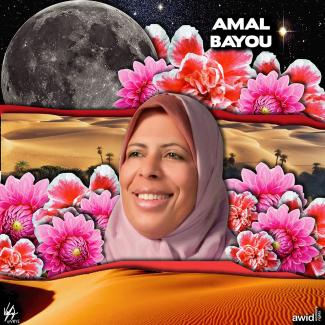
La memoria como resistencia: Un Tributo

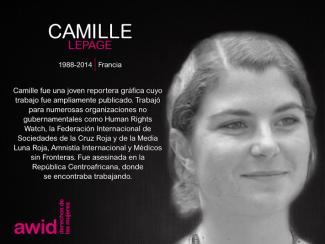
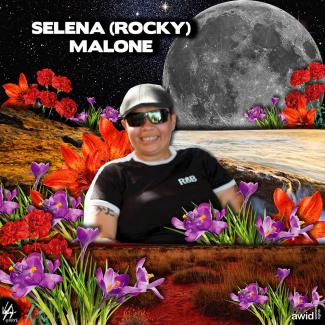
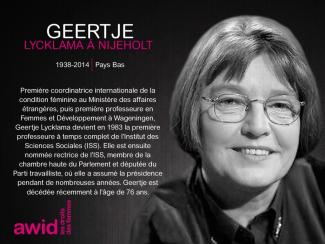
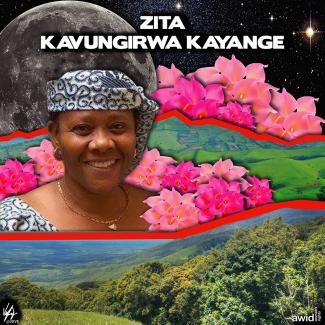
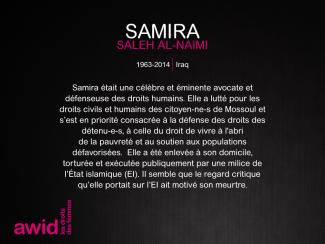
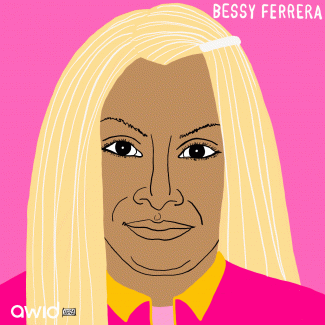
El Tributo de AWID es una exhibición de arte que honra a feministas, a activistas por los derechos de las mujeres y de la justicia social de todo el mundo que ya no están con nosotrxs. 


En 2020, hacemos un cambio

El Tributo de este año cuenta y comparte las historias y narraciones de quienes crearon conjuntamente realidades feministas, ofrecieron visiones de alternativas a los sistemas y actores que nos oprimen, y propusieron nuevas formas de organizarnos, de movilizarnos, de luchar, de trabajar, de vivir y de aprender.

Se agregan a la galería 49 retratos nuevos de feministas y defensorxs de derechos humanos. Aunque muchxs feministas y defensorxs han fallecido debido a edad avanzada o enfermedad, muchísimxs han sido asesinadxs debido a su trabajo y por ser quienes eran. 

Esta violencia creciente (de parte de Estados, empresas transnacionales, crimen organizado, sicarios no identificados, etc.) no se dirige solo a activistas individuales sino a nuestro trabajo común y a las realidades feministas. 

Al compartir las historias de lxs activistas en este Tributo,  mantenemos vivo su legado y nos inspiran para el trabajo futuro de nuestros movimientos. 

Visita nuestra exhibición en línea

Lors retratos de 2020 fueron diseñados por la ilustradora y animadora galardonada, Louisa Bertman

En AWID nos gustaría agradecer a las familias y organizaciones que nos compartieron sus historias personales, y así haber contribuido a este memorial. Nos unimos a ellxs para continuar el extraordinario trabajo de estxs activistas y defensorxs, y en el esfuerzo para asegurarnos de que se logre justicia en los casos que permanecen en la impunidad

"Ellos trataron de enterrarnos pero no sabían que éramos semillas."‐ Proverbio Mexicano


Presentamos el Tributo por primera vez en 2012

Primero tomó forma como una exposición física de retratos y biografías de feministas y activistas que habían fallecido, en el 12º Foro Internacional de AWID, en Turquía. Ahora vive como una galería en línea, que actualizamos cada año. 

Desde 2012 hemos presentado más de 467 feministas y defensorxs.

Visita nuestra exhibición en línea
Contenido relacionado

¿En qué será diferente este Foro?

Siempre hemos trabajado para garantizar que nuestros Foros sean desarrollados conjuntamente con nuestrxs afiliadxs, los movimientos, y nuestros colectivos prioritarios.

Para el Foro 2020 queremos profundizar y fortalecer este espíritu y esta práctica de creación conjunta y colaboración. También reconocemos la necesidad de mejorar el equilibrio entre la inclusión de muchas voces y experiencias y el espacio para que lxs participantes y el equipo respiren, se tomen una pausa, y disfruten de un poco de tiempo de inactividad.

Este Foro será diferente en cuanto a que:

  • Tendremos muchas menos actividades organizadas, porque queremos que la gente tenga tiempo para relacionarse y hablar entre sí, experimentar, procesar, etc. Es fundamental que sepas que puedes venir al Foro, participar y ser muy activx, y no facilitar ninguna actividad organizada (o «sesión»).
  • Tendremos Espacios Abiertos (al menos una tarde entera sin ninguna actividad organizada), y también espacios físicos disponibles durante todo el Foro para que la gente organice sus propias reuniones.
  • Tendremos un Comité de Contenido y Metodología compuesto por feministas de distintas regiones con experiencia en metodologías participativas, para apoyar al equipo de AWID y a quienes lideren actividades en el Foro en el uso de formatos creativos e interesantes para las actividades del Foro.

Snippet FEA Georgia this is only the beginning (EN)

Georgia

Solidarity Network


THIS IS ONLY THE

BEGINNING

Background

Why this resource?

While active participants on the front lines of protests and uprisings in the Middle East and North Africa (MENA), women became invisible, absent from processes of formation of the new states, and excluded from decision-making roles, responsibilities, and positions in the aftermath of the uprisings. Except in rare cases, men dominated leadership positions in transitional structures, including the constitutional reform and electoral committees[i]. Subsequent elections brought very few women to parliamentary and ministerial positions.

Additionally, a strong and immediate backlash against women and women’s rights has clearly emerged in the aftermath. The rise of new religious fundamentalist groups with renewed patriarchal agendas aiming to obliterate previous gains of the women’s movements even in countries with longer histories of women’s rights, such as Tunisia, has been very alarming.

The varying contexts of governance and transition processes across the MENA countries presents an important opportunity for women human rights defenders to shape the future of these democracies. However, the lack of prioritization of women’s rights issues in the emerging transitions and the aforementioned backlash have posed a variety of complex challenges for the women’s movements. Faced with these enormous challenges and possibilities, women’s rights activists have been struggling to forge ahead a democratic future inclusive and only possible with women’s rights and equality. The particular historical and contextual legacies that impact women’s movements in each country continue to bear on the current capacities, strategies, and overall preparedness of the women’s movements to take on such a challenge. Burdened with daily human rights violations in one context, with lack of resources and tools in another, with organizational tensions in a third, in addition to the constant attacks on them as activists, women human rights defenders have voiced their desire to be more equipped with knowledge and tools to be effective and proactive in engaging with these fast-changing environments. Conceptual clarity and greater understanding of notions and practices of democratization, transitional justice tools and mechanisms, political governance and participation processes, international and local mechanisms, movement building strategies, constitutional reform possibilities, and secularization of public space and government are important steps to defining future strategic action.

It is clear that feminists and women’s rights activists cannot wait for women’s rights to be addressed after transitions – issues must be addressed as the new power configurations are forming. Experiences of earlier moments of transition, namely from colonial rule, have clearly demonstrated that women’s rights have to be inherently part of the transition movement towards a more just and equal society.

What is included?

This publication represents a research mapping of key resources, publications and materials on transitions to democracy and women’s rights in different countries of the world that have undergone such processes, such as: Indonesia, Chile, South Africa, Nepal, Mexico, Argentina, Poland, Ukraine, as well as within the Middle East and North Africa (MENA). It provides bibliographic information and short summaries of resources which succinctly identify the contextual changes and challenges facing women in those particular transitional moments, as well as clearly delineates the ways in which women’s rights activists sought to confront those challenges and what lessons were learned.

A key criterion in the selection process was the primacy of a women’s rights/feminist perspective; the few exceptions to this rule offer a unique and, we hope, useful, perspective on the issues that women’s rights organizations and activists face in the region.  The texts have been selected to provide a wide range of information, relevant to women human rights defenders working from the grassroots to the international level, across issues (including different case studies and examples), from different perspectives (international human rights bodies, academic institutions, NGO contributions, activists’ experiences, etc.), and at a wide range of levels of complexity, in order to respond to the needs of as many readers as possible.

The mapping clusters resources under six major categories:

  • Transitions to Democracy
  • Political Participation
  • Movement Building
  • Transitional Justice
  • Constitutional/Legal Reform
  • Responses to Fundamentalisms


[i]This and other context points are drawn from the report from Pre AWID Forum meeting on Women’s Rights in Transitions to Democracy: Achieving Rights, Resisting Backlash, collaboratively organized by AWID, the Equality Without Reservation Coalition, Global Fund for Women and Women’s Learning Partnership

Snippet - WITM about research - AR

عن استطلاع "أين المال"

استطلاع "اين المال" (أين التمويل للتنظيمات النسوية) هو ركيزة أساسية للنسخة الثالثة لأبحاثنا الموجهة نحو العمل. سيتم بحث وتوسيع نتائج الاستطلاع من خلال المحادثات العميقة مع النشطاء/ الناشطات والممولين/ات وسيتم مقارنة النتائج مع تحليلات وبحوث أخرى عن وضع التمويل للحركات النسوية وحركات العدالة الجندرية.

سيتم نشر تقرير أين المال للتنظيمات النسوية في العام 2026.

لمعرفة المزيد عن كيف تسلّط جمعية حقوق المرأة في التنمية الضوء على على تمويل التنظيمات النسوية أو ضدها، انظروا إلى قصة "أين المال" وتقارير سابقة هنا

Kagendo Murungi

Kagendo es cariñosamente recordada por su familia y amigxs como una férrea activista feminista africana, artista y realizadora cinematográfica

Dedicó más de 20 años a defender los derechos y la dignidad de las personas LGBTIQ y de género no normativo de África. Lxs colegas de Kagendo la recuerdan como alguien con una personalidad jovial, convicciones férreas y amor a la vida. Kagendo murió por causas naturales en su hogar de Harlem, el 27 de diciembre de 2017.

Al producirse su fallecimiento, la escritora y activista keniata Shailja Patel destacó «el compromiso de toda la vida de Kagendo para establecer una relación entre todas las formas de opresión, mostrando de qué manera el colonialismo alentó la homofobia en el continente africano, para convertir así a Kenia en un país donde las personas queer y las mujeres libres puedan vivir y progresar».


Kagendo Murungi, Kenya

¿Cómo puedo financiar mi participación en el Foro de AWID? Muchxs activistas no podrán costearse el Foro: ¿AWID está haciendo algo para brindar asistencia?

Por favor consulta la página «Financiamiento» para obtener algunas ideas sobre cómo puedes financiar tu participación en el próximo Foro. Esto incluye el limitado apoyo que AWID podrá brindar.

Snippet FEA Workers demonstrations in Georgia 1 (ES)

Cuatro personas con carteles durante una manifestación y, en medio, una mujer con un megáfono hablando.

Twitter Test

Por que devo considerar responder ao inquérito?

Existem várias razões pelas quais a sua resposta ao inquérito WITM é importante. Por exemplo, tem a oportunidade de partilhar a sua experiência vivida com a mobilização de financiamento para apoiar a sua organização; de reivindicar o seu poder como especialista sobre como o dinheiro circula e os bolsos em que entra; e de contribuir para a defesa coletiva e consistente junto de financiadores para mover mais recursos de maior qualidade. Ao longo das últimas duas décadas, o inquérito WITM da AWID tem-se revelado um recurso fundamental para ativistas e financiadores. Convidamo-lo a juntar-se a nós na sua terceira edição para destacar o estado efetivo do financiamento, desafiar soluções falsas e apontar a forma como o financiamento precisa de mudar para que os movimentos prosperem e enfrentem os desafios complexos do nosso tempo.

Benoîte Groult

Benoîte était une journaliste, écrivaine et militante féministe française.

Elle a publié plus de 20 romans et de nombreux essais sur le féminisme

Son premier livre « Ainsi Soit-Elle » a été publié en 1975. Le livre explore l’histoire des droits des femmes ainsi que la misogynie et la violence à l’égard des femmes.

Son dernier livre, « Ainsi Soit Olympe de Gouges», a exploré la question des droits des femmes pendant la Révolution française, se concentrant sur la figure de l’ancienne féministe française Olympe de Gouges. De Gouges fut guillotinée en 1793 pour avoir défié l'autorité des hommes et publié la « Déclaration des droits de la femme et de la citoyenne » deux ans auparavant. 


Benoïte Groult, France

¿Habrá esta vez reuniones pre-Foro?

Nuestrxs asociadxs globales y regionales nos han contactado con algunas ideas para reuniones pre-Foro, y pronto compartiremos más información sobre estas ideas.

Si planeas organizar una reunión antes del Foro, ¡por favor avísanos!

Contactanos


Muchas cosas hermosas surgieron del Foro de Feminismos Negros (BFF) de 2016, organizado por un Grupo Asesor y financiado por AWID. Parte del activismo independiente que surgió del BFF incluye al activismo feminista negro de Brasil. Si bien este año no tendremos otro BFF, seguimos comprometidxs a compartir algunas de las enseñanzas fundamentales con cualquier persona interesada en continuar el trabajo sobre el activismo feminista negro.

Snippet FEA collaborator and allies Photo 5 (FR)

La photo représente un groupe de quinze travailleur.euse.s assis.e.s ensemble dans un salon aux murs blancs. Certain.e.s dorment, d'autres sont debout, discutent entre elleux ou regardent leur téléphone.

Funding Ideas

This page provides ideas and inspiration for how you can fund your participation at the 14th AWID International Forum. 

As you plan the activity you would like to do at the Forum, please also consider how you will fund your participation. Typical Costs include: accommodation, travel, visa, forum registration fees, etc.

It is important to note that this Forum will have many ‘open spaces’ and moments for movements to learn and exchange, but fewer formal sessions. (See “Ways to describe the Forum in your fundraising” below for language to use in your outreach.) 

Work with your current funders:

Reach out to your current donors first : Your best option is always a current funder that you have.

Make sure to do it in advance : We recommend contacting them by early 2020 at the latest. Many funders who support feminist organizations have some budget allocated for Forum travel. Others may be able to include it in renewal grants or through other travel funds.

If your group has funders, tell them that you want to attend the AWID Forum to learn, experience, exchange and network- even if your activity does not get selected for the final program. In order to be able to support your participation, your donors will need to know about it well in advance so tell them right away! (they are already deciding which funds they will distribute in 2020).

Seeking new funders:

If you do not currently have donor support or are not able to secure grants for Forum travel, consider reaching out to new donors. 

Deadlines and requirements vary by funder, and a  grant review process can take many months. If you’re considering applying for new grants, do so as soon as possible.

Creative inspiration:

Feminist movements have long gotten creative with funding our own activism. Here are some ideas that we have gathered to inspire alternative ways of fundraising:

  • Mobilize your community to support participation: fundraise with small contributions from members through community dinners, dance parties, and local shows, events and tours
  • Mobilize your networks by organizing giving circles and crowdsourcing using various online tools like gofundme, indiegogo, plumfund, or kickstarter
  • Cultivate local sources of income, including from individual donors and membership dues    
  • Consider co-funding through strategic partnerships with other community and social justice groups.

For more inspiration, see AWID’s ongoing series on autonomous resourcing, including specific ideas for conference raising participation funds. 

Access Fund:

AWID strives to make the Forum a truly global gathering with participation from diverse movements, regions and generations. To this end, AWID mobilizes resources for a limited Access Fund (AF) to assist Forum participants with the costs of attending the Forum.

AWID’s Access Fund will provide support to a limited number of Forum participants and session/activity facilitators. You can indicate in your application if you would like to apply to the AWID Access Fund. This is not guaranteed, and we strongly encourage you to seek alternative funding for your participation and travel to the Forum.

Even if you apply for the AWID Access Fund, we encourage you to continue to explore other options to fund your participation in the Forum.  Access Fund decisions will be confirmed by the end of June 2020. Please remember that these resources are very limited, and we will be unable to support all applicants. 


Ways to describe the Forum in your fundraising: 

As you reach out to funders or your own networks, here is some sample messaging that may be helpful. Feel free to adapt it in whatever way is useful for you!

The AWID Forum is a co-created feminist movement space that energizes participants in their own activism, and strengthens connections with others across multiple rights and justice movements. Participants get to draw from wells of hope, energy and radical imagination, as well as deepen shared analysis, learning, and build cross-movement solidarity to develop more integrated agendas and advance joint strategies.

Our organization is seeking funds to attend the Forum in order to connect with other activists and movements from around the world, strengthen our strategies, and share our work. We are inspired by past participants, who have described the power of this global feminist gathering:

“Over four days … voices weaved together into a global perspective on the state of gender equality. And when I say global, I mean simultaneous translation into seven languages kind of global  ....”

“It was reminding us that we are not alone. The Forum provided a means of translating collectivity into our movements. Whether across ideologies, identities or borders, our strength is in our vision and our support of one another.”

It is important to note that this Forum will have many ‘open spaces’ and moments for movements to learn and exchange, but fewer formal sessions. While many attendees will not be presenting in formal sessions, there will be invaluable space to learn, strategize, and experience feminist movements’ collective power in action.

Budget considerations: 

When calculating your costs and how much you need to raise, it is important to factor in costs that may come up. Here’s an example of key items to consider:

  • Airfare
  • Forum registration fees (please note that even if you are granted Access Funds by AWID, you will have to cover your registration fee yourself)
  • Visa costs
  • Travel health insurance
  • Local travel to and from the airport (taxis or other transportation)
  • Layover costs, such as hotels and meals if your plane travel requires a long layover
  • Accommodation, including giving yourself a day to recover on either end if you have traveled far
  • Technology, including WiFi access or fees for international communication as needed during travel (AWID will provide WiFi during the Forum)
  • Materials costs for any items (visuals, reports, artwork!) you want to bring, share, or exchange at the Forum 
  • Incidentals and/or per diems to cover food and other items that come up (all lunches and coffee/tea breaks, plus one dinner will be provided by AWID during Forum days) 
  • Accessibility, such as any additional support that may be important to make your travel more comfortable, safe, and secure

We look forward to seeing you at the Forum!


The Forum is a collaborative process

The AWID Forum will now take place 11-14 January 2021 in Taipei .

It is more than a four-day convening. It is one more stop on a movement strengthening journey around Feminist Realities that has already begun and will continue well beyond the Forum dates.

Join us on this journey!

نحن نعيد إعطاء المال لشركائنا/شريكاتنا ونعرّف عن أنفسنا كنسويات و\ أو صندوق نسائي. هل علينا تعبئة الاستطلاع؟

كلا. نقدّر عملكم/ن لكننا لا نطلب في هذه المرحلة من الصناديق النسوية والنسائية تعبئة الاستطلاع. نشجعكم/ن على مشاركة الاستطلاع مع شركائكم/ن و شبكاتكم/ن النسوية.

Stella Mukasa

Stella began her career at the Ministry of Gender and Community Development in Uganda engaging with policymakers for law reform, including the 1995 Ugandan Constitution, which established some of the most progressive reforms for women in the region.

She is revered throughout the region for her tireless efforts to create and enforce gender-responsive laws and policies. She played a key role in drafting Uganda’s Domestic Violence Act and in mobilizing support for gender-responsive constitutions in both Uganda and in Rwanda.

Through her work with International Center for Research on Women (ICRW), she worked on violence against children, and worked to strengthen the capacities of grassroots organizations addressing gender-based violence. She was a lecturer on gender rights and the law at Makerere University and served on the boards of Akina Mama wa Afrika, ActionAid International Uganda and the Open Society Initiative for Eastern Africa.


Stella Mukasa, Uganda

¿Dónde y cuándo tendrá lugar el próximo Foro de AWID?

El 14o Foro internacional de AWID tendrá lugar del 20 al 23 de septiembre de 2021 en Taipéi, Taiwán.

Descubre más

Snippet FEA Workers Persecution S4 (EN)

A law enforcement agent in pink riot gear holding a stick

WORKERS PERSECUTION