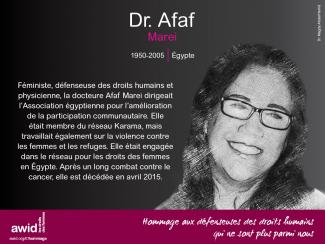
Dr. Afaf Marei
Esta sección de análisis especial ofrece un análisis feminista crítico y acceso a los recursos clave relacionados con la «protección de la familia» en los espacios internacionales de derechos humanos.
Durante los últimos años, venimos observando una nueva y preocupante tendencia en el ámbito internacional de derechos humanos, donde se están empleando discursos sobre la «protección de la familia» para defender violaciones cometidas contra miembros de la familia, de modo de reforzar y justificar la impunidad y para coartar la igualdad de derechos en el seno de la familia y la vida familiar.
La campaña para «proteger a la familia» es impulsada por proyectos conservadores que tienen como fin imponer interpretaciones «tradicionales» y patriarcales de familia; quitando los derechos de las manos de sus miembros para ponerlos en las de la institución «familia».
Desde 2014 un grupo de estados opera como bloque en espacios de derechos humanos, bajo el nombre «Group of Friends of the Family» [Grupo de amigos de la familia], y a partir de entonces se han aprobado resoluciones sobre la «Protección de la familia» todos los años.
Esta agenda se ha extendido más allá del Consejo de Derechos Humanos (HRC, por sus siglas en inglés). Hemos visto cómo el lenguaje regresivo sobre «la familia» se ha introducido en la Comisión de la Condición Jurídica y Social de las Mujeres (CSW, por sus siglas en inglés), y hemos asistido a intentos por incluir este lenguaje en las negociaciones sobre los Objetivos de Desarrollo Sostenible.
AWID trabaja con asociadxs y aliadxs para resistir conjuntamente las agendas regresivas de «Protección de la familia» y otras, y para defender la universalidad de los derechos humanos.
En respuesta a la creciente influencia de actores regresivos en los espacios de derechos humanos, AWID se ha unido con aliadxs para formar el Observatorio de la Universalidad de los Derechos (OURs, por sus siglas en inglés). OURs es un proyecto colaborativo que monitorea, analiza y comparte información sobre iniciativas anti-derechos tales como la «Protección de la familia».
Derechos en Riesgo, el primer informe de OURs, traza un mapa de los actores que conforman el cabildeo global anti-derechos e identifica sus discursos y estrategias principales, señalando los efectos que estos discursos y estrategias están teniendo sobre nuestros derechos humanos.
El informe expone a la «Protección de la familia» como una agenda que ha promovido la colaboración entre una amplia gama de actores regresivos en las Naciones Unidas. La describe como un marco estratégico que aloja «múltiples posiciones patriarcales y anti-derechos, cuyo marco, a su vez, apunta a justificar e institucionalizar estas posiciones».
Eni Lestari is an Indonesian domestic worker in Hong Kong and a migrant rights activist. After escaping her abusive employer, she transformed herself from a victim into an organizer for domestic workers in particular, and migrant workers in general. In 2000, she founded the Association of Indonesian Migrant Workers (ATKI-Hong Kong) which later expanded to Macau, Taiwan, and Indonesia. She was the coordinator and the one of the spokesperson of the Asia Migrants Coordinating Body (AMCB) - an alliance of grassroots migrants organisations in Hong Kong coming from Indonesia, Philippines, Thailand, Nepal and Sri Lanka. She is also the current chairperson of International Migrants Alliance, the first-ever global alliance of grassroots migrants, immigrants, refugees, and other displaced people.
She has held important positions in various organizations including and current Regional Council member of Asia Pacific Forum on Women, Law and Development (APWLD), former Board Member of Global Alliance Against Traffic in Women (GAATW), spokesperson for Network of Indonesian Migrant Workers (JBMI), advisor for ATKI-Hong Kong and Macau as well as the Association of Returned Migrants and Families in Indonesia (KABAR BUMI). She has been an active resource person in forums organized by academics, interfaith groups, civil societies, trade unions and many others at national, regional, and international arenas.
She has actively participated in United Nations assemblies/conferences on development and migrants’ rights and was chosen as a speaker at the opening of the UN General Assembly on Large Movement of Migrants and Refugees in 2016 in New York City, USA. She received nominations and awards such as Inspirational Women by BBC 100 Women, Public Hero Award by RCTI, Indonesian Club Award, and Non-Profit Leader of Women of Influence by American Chamber Hong Kong, and Changemaker of Cathay Pacific.
With avenues for civil society (especially those not based in Geneva) to participate in the Human Rights Council becoming more limited because of the financial crisis, spaces to put pressure and hold governments accountable for rights violations are increasingly closed. These measures include charges for hybrid participation and interpretation for side events, visa obstacles, and the limited availability of hybrid informal negotiations on draft resolutions.
Below are resolutions, key resolutions, panels and taking place in these sessions, related to gender and sexuality:

Ester Lopes est une danseuse et une écrivaine dont les recherches portent sur le corps, le genre, la race et les rapports de classe. Elle est professeure de Pilates et enseigne l’art. Ester est diplômée en théâtre contemporain – processus créatifs (à la FAINC) et en danse et conscience du corps (à l’USCS). Parmi ses spécialisations musicales figurent le chant populaire et les percussions. Elle a suivi une formation à Novos Brincantes avec Flaira Ferro, Mateus Prado et Antonio Meira à l’Institut Brincante en 2015 et 2016.
Caroline a travaillé régulièrement pour l'AWID, organisant auparavant les forums de 2005 et 2008 à Bangkok et au Cap, et à travers d'autres fonctions au sein de l'organisation. Avant de rejoindre l'AWID, elle a enseigné l'anglais en licence, puis a quitté l’université pour diriger le Reel Asian International festival de film de Toronto et travailler sur d'autres projets. Plus récemment, elle a occupé le poste de responsable des opérations chez Spring Strategies. En dehors du travail, Caroline se retrouve généralement dans son jardin, communiant avec ses chères plantes et faisant la paix avec les insectes et les rongeurs qui s’invitent.
Enciende tu fuego feminista leyendo nuestras investigaciones y publicaciones varias sobre financiamiento, defensoras de derechos humanos, construcción de movimientos, fundamentalismos, justicia económica, seguimiento y evaluación feminista y más
Brenda Salas Neves is a feminist queer strategist born and raised in the southern Andes. They organize to shift narratives and mobilize resources to support racial and climate justice movements around the world. They have produced media projects to uplift migrant power and rise against U.S. military intervention across Latin America, with Deep Dish TV and the Portland Central America Solidarity Committee. They are a proud member of the Audre Lorde Project and a graduate of the United World Colleges (UWC) movement.
Pendant Women Deliver, des Movement Hubs aux Fidji et en Géorgie conçoivent leurs propres programmes, ancrés dans leurs communautés, afin de se connecter virtuellement à la Conférence Women Deliver. En savoir plus sur leur programme !
Cela vous intéresse d’accueillir des Movement Hubs pour d’autres événements mondiaux de mouvements et des espaces de dialogue politique ? Contactez l’équipe Adhésions de l’AWID : membership @ awid.org
“Now might be a good time to rethink what a revolution can look like. Perhaps it doesn’t look like a march of angry, abled bodies in the streets. Perhaps it looks something more like the world standing still because all the bodies in it are exhausted—because care has to be prioritized before it’s too late.”
- Johanna Hedva (https://getwellsoon.labr.io/)
Hospitals are institutions, living sites of capitalism, and what gets played out when somebody is supposed to be resting is a microcosm of the larger system itself.
Institutions are set out to separate us from our care systems – we find ourselves isolated in structures that are rigidly hierarchical, and it often feels as if care is something done to us rather than given/taken as part of a conversation. Institutional care, because of its integration into capitalist demand, is silo-ed: one person is treating your leg and only your leg, another is treating your blood pressure, etc.
Photographer Mariam Mekiwi had to have surgery last month and documented the process. Her portraits of sanitized environments – neon white lights, rows after rows of repetitive structures – in a washed-out color palette reflect a place that was drained of life and movement. This was one of the ways Mariam kept her own spirit alive. It was a form of protest from within the confines of an institution she had to engage with.
The photos form a portrait of something incredibly vulnerable, because watching someone live through their own body’s breakdown is always a sacred reminder of our own fragility. It is also a reminder of the fragility of these care systems, which can be denied to us for a variety of reasons – from not having money to not being in a body that’s considered valuable enough, one that’s maybe too feminine, too queer or too brown.
Care experienced as disembodied and solitary, that is subject to revocation at any moment, doesn’t help us thrive. And it is very different from how human beings actually behave when they take care of each other. How different would our world look like if we committed to dismantling the current capitalist structures around our health? What would it look like if we radically reimagined it?
Rachel is a financial professional with over two decades of experience. She has overseen financial affairs and projects for private and public entities, non-profits, and international non-governmental organizations. A Chartered Accountant with a Global Master’s in Business Administration, she is also a member of the South African Institute of Chartered Accountants. In her spare time, Rachel designs typography art, enjoys traveling and spending time with family and friends over a bottle of wine.
|
Editorial Team Design and Illustration Communications Strategist
Translation Manager AWID’s Team |
Arabic Translators English to Spanish Proofreaders Proofreaders Portuguese to English Proofreader |