


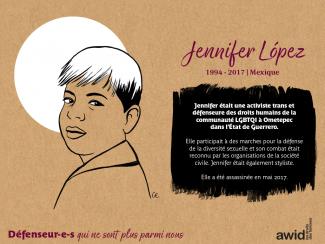
Jennifer López
Esta sección de análisis especial ofrece un análisis feminista crítico y acceso a los recursos clave relacionados con la «protección de la familia» en los espacios internacionales de derechos humanos.
Durante los últimos años, venimos observando una nueva y preocupante tendencia en el ámbito internacional de derechos humanos, donde se están empleando discursos sobre la «protección de la familia» para defender violaciones cometidas contra miembros de la familia, de modo de reforzar y justificar la impunidad y para coartar la igualdad de derechos en el seno de la familia y la vida familiar.
La campaña para «proteger a la familia» es impulsada por proyectos conservadores que tienen como fin imponer interpretaciones «tradicionales» y patriarcales de familia; quitando los derechos de las manos de sus miembros para ponerlos en las de la institución «familia».
Desde 2014 un grupo de estados opera como bloque en espacios de derechos humanos, bajo el nombre «Group of Friends of the Family» [Grupo de amigos de la familia], y a partir de entonces se han aprobado resoluciones sobre la «Protección de la familia» todos los años.
Esta agenda se ha extendido más allá del Consejo de Derechos Humanos (HRC, por sus siglas en inglés). Hemos visto cómo el lenguaje regresivo sobre «la familia» se ha introducido en la Comisión de la Condición Jurídica y Social de las Mujeres (CSW, por sus siglas en inglés), y hemos asistido a intentos por incluir este lenguaje en las negociaciones sobre los Objetivos de Desarrollo Sostenible.
AWID trabaja con asociadxs y aliadxs para resistir conjuntamente las agendas regresivas de «Protección de la familia» y otras, y para defender la universalidad de los derechos humanos.
En respuesta a la creciente influencia de actores regresivos en los espacios de derechos humanos, AWID se ha unido con aliadxs para formar el Observatorio de la Universalidad de los Derechos (OURs, por sus siglas en inglés). OURs es un proyecto colaborativo que monitorea, analiza y comparte información sobre iniciativas anti-derechos tales como la «Protección de la familia».
Derechos en Riesgo, el primer informe de OURs, traza un mapa de los actores que conforman el cabildeo global anti-derechos e identifica sus discursos y estrategias principales, señalando los efectos que estos discursos y estrategias están teniendo sobre nuestros derechos humanos.
El informe expone a la «Protección de la familia» como una agenda que ha promovido la colaboración entre una amplia gama de actores regresivos en las Naciones Unidas. La describe como un marco estratégico que aloja «múltiples posiciones patriarcales y anti-derechos, cuyo marco, a su vez, apunta a justificar e institucionalizar estas posiciones».
Nos entusiasma compartir nuestro nuevo Plan Estratégico (2023-2027) con el mundo. Próximamente, AWID anunciará a nuestra comunidad y membresía al respecto.
La Asociación para los Derechos de las Mujeres y el Desarrollo es una organización feminista mundial, de membresía, que se dedica a brindar apoyo a los movimientos.
Por más de 35 años hemos formado parte de un increíble ecosistema de movimientos feministas que trabajan para alcanzar la justicia de género y los derechos humanos de las mujeres de todo el mundo.
AWID imagina un mundo donde las realidades feministas florezcan, donde los recursos y el poder sean compartidos de maneras que permitan a todxs, y a las generaciones futuras, prosperar y concretar plenamente su potencial con dignidad, amor y respeto, y donde la Tierra nutra la vida en toda su diversidad.
Nuestra misión es apoyar a los movimientos feministas, de derechos de las mujeres y por la justicia de género para que progresen y para que sean una fuerza impulsora de retos a los sistemas de opresión y para la creación conjunta de realidades feministas.
Desarrollamos nuestro trabajo a través de estas tácticas:
Hacemos uso colaborativo de nuestro acceso, poder, recursos y relaciones para influir estratégicamente sobre las políticas y las prácticas. Nos proponemos impulsar agendas feministas a través de nuestro trabajo con quienes tienen poder de decisión política, con financiadoras y con activistas en los espacios regionales y mundiales. Para reforzar nuestro poder e influencia colectivos, también procuramos influir sobre los movimientos feministas y de derechos de las mujeres para que pongan en lugar central a los movimientos históricamente oprimidos.
Utilizamos nuestro poder de convocatoria para facilitar el diálogo y pensar estrategias sobre temas clave. Conectamos a nuestra membresía y aliadxs entre sí, para que compartan e intercambien recursos, ideas y acciones sobre temas relevantes. Organizamos y facilitamos espacios en los que participan y se fortalecen diversos movimientos, espacios para imaginar y concebir nuevos futuros, para desarrollar tácticas de influencia efectivas y para crear juntxs agendas y procesos transformadores.
Trabajamos para movilizar a nuestra membresía y a los movimientos que apoyamos para fortalecer la acción colectiva en solidaridad con causas feministas y con lxs defensorxs que están en peligro. Construimos colaboraciones de largo plazo, nos comprometemos en la escucha activa y la solidaridad continua. Trabajamos con defensorxs para construir conocimiento, redes de apoyo y solidaridad para la protección y el bienestar.
Reconocemos el valor único y estratégico de las iniciativas culturales y creativas en la lucha contra la opresión y la injusticia. Trabajamos con artistas que le dan un lugar central a las voces feministas y a las narrativas de la comunidades históricamente oprimidas. En esta táctica emergente, vemos al arte y la expresión creativa como algo que nos ayuda a concebir un mundo donde las realidades feministas siguen floreciendo y sigan siendo celebradas.
Nuestras iniciativas trabajan en las intersecciones de escenarios de cambio que buscamos abordar, de los movimientos que priorizamos y de las tácticas que usamos:
Monitoreamos, documentamos y hacemos visible cómo están operando y aglutinándose lxs actorxs anti-derechos en los espacios multilaterales y apoyamos a los movimientos feministas, de derechos de las mujeres y por la justicia de género y sus aliadxs para contrarrestar esa influencia e impacto.
Desde perspectivas como el extractivismo, la justicia impositiva y la rendición de cuentas corporativa, construimos conocimiento sobre el poder corporativo y su influencia; abogamos por que las empresas asuman sus responsabilidad así como por la distribución equitativa de la riqueza, y amplificamos las propuestas feministas para lograr economías justas.
Desarrollamos análisis accesibles y orientados a la acción acerca del estado del financiamiento para los movimientos feministas. Nos proponemos influir sobre las políticas y prácticas de las financiadoras, incrementar y sostener el financiamiento para el cambio social feminista, y apoyar las necesidades y estrategias de los movimientos.
Además del impacto que pretendemos tener en el mundo, AWID está expresamente comprometida con el fortalecimiento de nuestro propio aprendizaje y resiliencia organizacionales, para poder fortalecer mejor a los movimientos feministas del mundo.
¡Muchas Gracias!
Sin el generoso aporte y apoyo de nuestros donantes, nuestro trabajo no sería posible.
Yes! We recognize and appreciate different reasons why feminists, in their respective contexts, don’t have external funding: from being ineligible to apply for grants and/or receive money from abroad, to relying on resources generated autonomously as a political strategy in its own right. We want to hear from you regardless of your experience with external funding.
What if we perceived land and Nature not as private property to exploit, but as a whole to live in, learn from, and harmoniously coexist with? What if we repaired our relationships with the land and embraced more sustainable alternatives that nurture both the planet and its communities?
Nous Sommes la Solution (We Are the Solution, NSS) is one of many women-led movements striving to do this. This is their story.
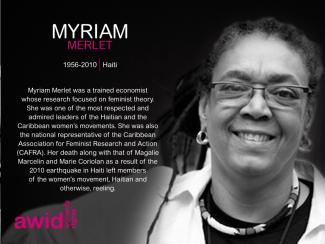
L’AWID rend hommage aux féministes et défenseur-e-s des droits humains qui ne sont plus parmi nous, et dont les contributions à l’avancement des droits humains nous font cruellement défaut.
L’hommage se présente sous forme d’une exposition de portraits d’activistes du monde entier qui ne sont plus parmi nous qui ont lutté pour les droits des femmes et la justice sociale.
Célébré en 2012 à l’occasion du lancement du 12e Forum international de l’AWID en Turquie, le premier hommage aux défenseur-e-s des droits humains a pris la forme d’une exposition de portraits et de biographies de féministes et d’activistes disparu-e-s. Des participant-e-s au Forum ont décrit cette initiative comme « une manière à la fois unique, émouvante et vivifiante de célébrer notre histoire collective ».
Lors du 13e Forum international au Brésil, nous avons célébré les activistes féministes et les défenseur-e-s des droits humains qui nous ont quitté-e-s ou qui ont été assassiné-e-s avec une cérémonie de dévoilement d’une peinture murale, un spectacle de danse et un rituel brésilien.
Entre la tenue de ces différents événements, l’hommage continue sous forme d’une galerie en ligne, mise à jour chaque année à l’occasion de la campagne de 16 jours d’action contre la violence basée sur le genre (25 novembre-10 décembre).
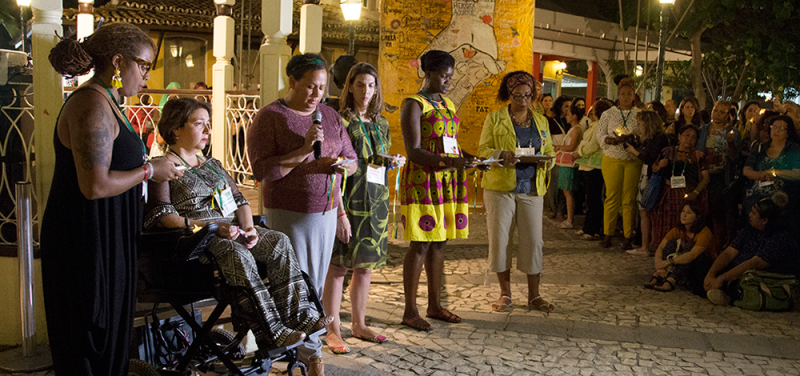
Depuis 2012, plus de 400 féministes et défenseur-e-s des droits humains issues de 11 régions et 80 pays ont été incluses dans notre Hommage.
L’AWID tient à remercier les familles et les organisations qui ont partagé leurs histoires personnelles et contribué à cette commémoration. Nous nous engageons auprès d’elles à poursuivre le travail remarquable de ces militant-e-s et nous ne ménagerons aucun effort pour que justice soit faite dans les cas qui demeurent impunis.
Visitez l’expo de l’hommage en ligne
Outre l’hommage rendu à ces incroyables activistes, nous souhaitons faire la lumière sur le sort de ces défenseur-e-s des droits humains qui ont disparu ou ont été assassin-é-es.
Un tiers des activistes présenté-e-s dans cet hommage ont été assassiné-e-s ou sont disparu-e-s dans des circonstances obscures. Iels ont été visé-e-s personnellement, en raison du travail qu’iels réalisaient afin de défier :
Ce fut notamment le cas d’Agnes Torres, du Mexique, assassinée en raison de son identité de genre et de son orientation sexuelle, de Cheryl Ananayo, une militante écologiste originaire des Philippines, assassinée alors qu’elle luttait contre une société minière, ou encore de Ruqia Hassan, une journaliste indépendante et bloggeuse syrienne, assassinée pour avoir critiqué l’Etat. Et de très nombreu-x-ses autres.
Avec cet hommage aux défenseur-e-s des droits humains, nous inscrivons tou-s-tes ces activistes dans notre mémoire collective et portons l’héritage de leurs luttes comme le flambeau qui éclaire les actions de nos mouvements féministes et en faveur des droits des femmes. Nous reconnaissons que la sécurité, la sûreté et le souci de soi doivent être des priorités dans l’ensemble de nos programmes politiques, et appelons ainsi tous les gouvernements et les organes internationaux à lutter contre la violence contre les féministes et les défenseur-e-s des droits humains.
Por el momento, la encuesta en KOBO está disponible en árabe, español, francés, inglés, portugués y ruso. Tendrás oportunidad de seleccionar el idioma de preferencia al inicio de la encuesta.
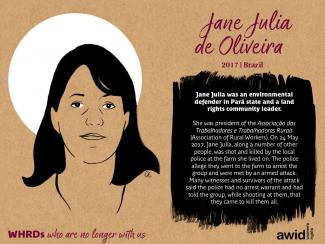
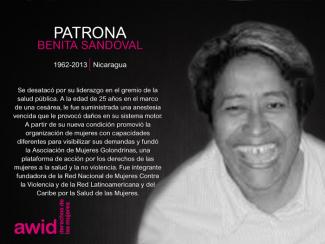
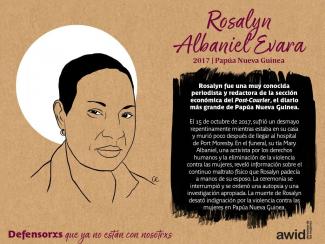
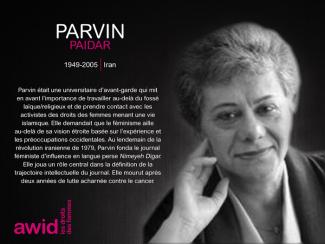
Ces défenseuses ont fait campagne pour les droits fonciers et ont lutté pour les droits des femmes et des peuples autochtones. Elles se sont opposées aux industries extractives, ont écrit de la poésie et se sont battues pour que l'amour prévale. L'une d'entre elles nous a quitté il y a dix-neuf ans. Nous vous invitons à vous joindre à nous pour rendre hommage à ces défenseuses, à leur travail et à l’héritage qu’elles nous ont laissé. Faites circuler ces mèmes auprès de vos collègues et amis ainsi que dans vos réseaux et twittez en utilisant les hashtags #WHRDTribute et #16Jours.
S'il vous plaît cliquez sur chaque image ci-dessous pour voir une version plus grande et pour télécharger comme un fichier


L’enquête WITM portant sur les réalités du financement des organisations féministes, la plupart des questions traitent du financement de votre groupe entre 2021 et 2023. Vous aurez besoin de disposer de ces informations pendant que vous répondez aux questions de l’enquête (vos budgets annuels et principales sources de financement, par exemple)
Nous Sommes la Solution eleva y multiplica el liderazgo de las mujeres rurales que trabajan por soluciones realmente africanas para la soberanía alimentaria.