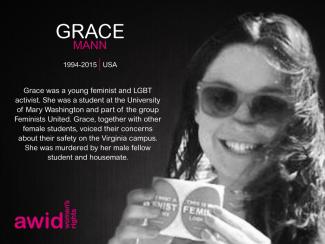
Grace Mann
Esta sección de análisis especial ofrece un análisis feminista crítico y acceso a los recursos clave relacionados con la «protección de la familia» en los espacios internacionales de derechos humanos.
Durante los últimos años, venimos observando una nueva y preocupante tendencia en el ámbito internacional de derechos humanos, donde se están empleando discursos sobre la «protección de la familia» para defender violaciones cometidas contra miembros de la familia, de modo de reforzar y justificar la impunidad y para coartar la igualdad de derechos en el seno de la familia y la vida familiar.
La campaña para «proteger a la familia» es impulsada por proyectos conservadores que tienen como fin imponer interpretaciones «tradicionales» y patriarcales de familia; quitando los derechos de las manos de sus miembros para ponerlos en las de la institución «familia».
Desde 2014 un grupo de estados opera como bloque en espacios de derechos humanos, bajo el nombre «Group of Friends of the Family» [Grupo de amigos de la familia], y a partir de entonces se han aprobado resoluciones sobre la «Protección de la familia» todos los años.
Esta agenda se ha extendido más allá del Consejo de Derechos Humanos (HRC, por sus siglas en inglés). Hemos visto cómo el lenguaje regresivo sobre «la familia» se ha introducido en la Comisión de la Condición Jurídica y Social de las Mujeres (CSW, por sus siglas en inglés), y hemos asistido a intentos por incluir este lenguaje en las negociaciones sobre los Objetivos de Desarrollo Sostenible.
AWID trabaja con asociadxs y aliadxs para resistir conjuntamente las agendas regresivas de «Protección de la familia» y otras, y para defender la universalidad de los derechos humanos.
En respuesta a la creciente influencia de actores regresivos en los espacios de derechos humanos, AWID se ha unido con aliadxs para formar el Observatorio de la Universalidad de los Derechos (OURs, por sus siglas en inglés). OURs es un proyecto colaborativo que monitorea, analiza y comparte información sobre iniciativas anti-derechos tales como la «Protección de la familia».
Derechos en Riesgo, el primer informe de OURs, traza un mapa de los actores que conforman el cabildeo global anti-derechos e identifica sus discursos y estrategias principales, señalando los efectos que estos discursos y estrategias están teniendo sobre nuestros derechos humanos.
El informe expone a la «Protección de la familia» como una agenda que ha promovido la colaboración entre una amplia gama de actores regresivos en las Naciones Unidas. La describe como un marco estratégico que aloja «múltiples posiciones patriarcales y anti-derechos, cuyo marco, a su vez, apunta a justificar e institucionalizar estas posiciones».
Sara AbuGhazal es una feminista palestina que vive en Beirut. Es cofundadora de Sawt al-Niswa, un colectivo que produce conocimiento en Beirut. Es codirectora de The Knowledge Workshop [«Taller del conocimiento»], una organización feminista con sede en Beirut que trabaja en la historia oral y el archivo feminista. Sara es actualmente la Coordinadora Regional de la Coalición Regional para Defensoras de los Derechos Humanos en el Medio Oriente y África del Norte.
Sara lucha para ayudar a crear espacios de transformación feminista y solidaridad. Su trabajo se centra principalmente en la construcción de movimientos sostenibles en la región del MOAN. Sara se empeña en temas de la Palestina, la producción de conocimiento y la transformación feminista. Publica regularmente en sawtalniswa.org y su obra de ficción también aparece en la revista electrónica Romman
 |
Jurema Araújo est une enseignante-poète originaire de Rio de Janeiro. Elle a contribué au magazine Urbana, édité par les poètes Brasil Barreto et Samaral (paix à son âme) et au livre Amor e outras revoluções (L’amour et autres révolutions) avec plusieurs autres écrivain·e·s. En collaboration avec Angélica Ferrarez et Fabiana Pereira, elle a coédité O livro negro dos sentidos (Le livre noir des sens), une anthologie créative sur la sexualité des femmes noires au Brésil. Jurema a 54 ans ; elle a une fille, trois chiens, un chat et beaucoup d’ami·e·s. |
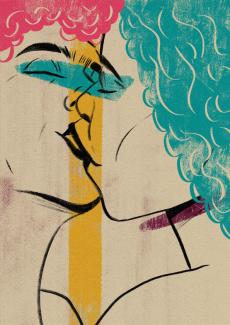
Tu la suces avec moi?La mangue est mon fruit préféré. |
Je vais être honnête : lorsque Angélica et Fabi m’ont proposé de créer une collection de textes érotiques écrits par des femmes noires, j’ignorais ce que c’était que de produire un recueil. Je maîtrisais le thème de l’érotisme, mais créer un recueil… J’ai souri, timide et flattée. Je crois que je les ai remerciées – du moins je l’espère! – et je me suis dit : mais qu’est-ce que c’est que ce truc, putain?! C’est quoi ce mot pompeux que je vais devoir intégrer tout en le mettant en pratique?
Aujourd’hui, je sais ce que c’est que de créer un recueil : c’est faire l’amour avec les écrits de quelqu’un d’autre, avec l’art de quelqu’un d’autre dans le but d’en faire un livre. Et c’est exactement ce que j’ai fait. J’ai dévêtu le texte de chaque autrice avec une lascivité littéraire. J’ai eu un rapport avec les mots et les sens d’autres personnes. J’ai été pénétrée par des poèmes que je n’avais pas écrits; des contes que je n’aurais jamais osé imaginer m’ont retournée, ont chamboulé mes sentiments, ma libido. Et c’était un orgasme inhabituel et merveilleux : éthéré, corporel, sublime, à la fois intellectuel et sensitif.
Ces textes pulsaient comme un clito durci par le désir, trempé, dégoulinant de joie à chaque lecture. Des mots dont la grivoiserie m’aspirait, me faisant plonger plus profondément dans cet univers humide.
Ces femmes noires sont allées au fond de leur excitation et ont transformé leurs fantasmes érotiques les plus profonds en art. Ces œuvres sont imprégnées de la manière dont chaque autrice vit la sexualité : libre, noire, individuelle, la sienne, son pouvoir retrouvé.
J’ai choisi de classer les textes en différentes parties dans le livre, chacune étant organisée en fonction du contenu le plus délicat, explosif, évident ou implicite qu’elle renfermait.
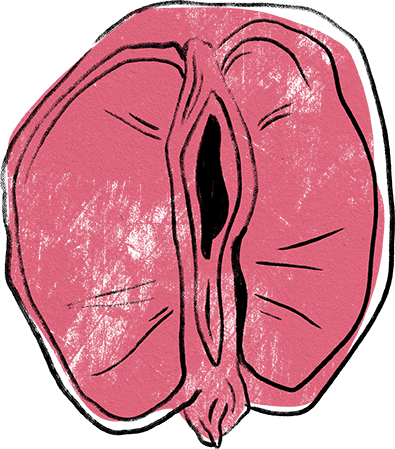
Pour ouvrir la porte à cette « envulvée noiressence », nous proposons la section Préliminaires, avec des textes qui introduisent le lecteur dans ce monde de délices. Il s’agit d’une caresse plus générale et délicate afin d’accueillir les sujets que les textes aborderont dans le reste du livre.
Puis vient la chaleur du Toucher, qui évoque les ressentis de la peau. Cette énergie qui brûle ou transite nos corps, fait bouillir nos hormones et éveille à leur tour nos autres sens. Et même si nous sommes nombreux·ses à être voyeurs·euses, le contact de la peau sur une bouche humide et chaude est excitant, comme si vous naviguiez dans la douceur de la personne qui se trouve avec vous. On est séduit par le contact ferme ou doux qui nous fait frissonner et ce picotement délicieux qui nous traverse du cou au bas du dos et qui ne disparaît que le lendemain. Et la chaleur des lèvres, la bouche, la langue humide sur la peau – ah! la langue dans l’oreille, mmmm – ou peau contre peau, les vêtements glissant sur les corps, comme s’ils se voulaient une extension de la main de l’autre. S’il n’y a pas d’urgence, l’excitation absolument sauvage d’une étreinte ferme, un peu de douleur – ou pourquoi pas, beaucoup?
La section Son – ou mélodie? – nous montre que l’attirance pour une personne passe également par l’ouïe : c’est la voix, les chuchotements, cette musique qui permet la connexion des corps et peut constituer la trame même du désir. Pour certain·e·s d’entre nous, la seule voix d’une personne ayant un joli timbre, qu’il soit rauque, traînant ou mélodieux, suffirait à nous donner un orgasme auditif. Elle n’aurait qu’à jurer grossièrement ou nous murmurer des mots doux à l’oreille pour nous faire frissonner du cou au coccyx.
Dans Saveur, nous confirmons que la langue est imbattable lorsqu’il s’agit d’aller goûter les endroits les plus enfouis et parcourir les corps pour se faire plaisir. Parfois, on l’utilise audacieusement pour goûter le nectar de l’autre. L’idée d’offrir sa fraise ou sa mangue délicieuse et juteuse à des morsures ou des coups de langue – ou des coups de langue et des morsures – nous désarme. Mais rien n’est plus délicieux que de goûter aux grottes et collines de la personne avec laquelle on est. Enfoncez votre langue bien profond pour goûter à ce bout de fruit… ou passez des heures à goûter le gland d’une queue dans votre bouche, passez votre langue sur des seins gourmands pour en goûter leurs tétons. Il s’agit de se souvenir d’une personne par la Saveur qu’elle nous a laissée.
Il y a aussi les textes où c’est le nez qui déclenche le désir. L’Odeur, mes chers·ères lecteurs·trices, est capable de nous éveiller aux délices du désir. Parfois, nous rencontrons des gens qui sentent si bon que nous voudrions les aspirer par le nez. Lorsque vous sillonnez le corps de l’autre avec le nez en commençant par le cou, sentez ce frisson délicieusement inconfortable qui parcourt votre colonne vertébrale et déshabille votre âme! Ce nez impudent se déplace ensuite vers la nuque où il capture le parfum de l’autre de telle sorte qu’en l’absence de cette personne, ce même parfum évoque, voire se répand en nous dans des souvenirs olfactifs qui ressuscitent l’odeur affolante de cette dernière.
Nous en venons au Regard – le plus traître des sens selon moi – où nous percevons le désir à partir d’un point de « vue ». Les textes présentent le désir et l’excitation par le biais de la vue, qui à son tour provoque les autres sens. Il suffit parfois d’un sourire pour nous rendre dingues. L’échange de regards? Celui qui dit : « J’ai envie de toi, là, maintenant ». Ce regard possédé qui s’éteint quand vous avez fini de baiser, ou pas. Celui-là est très particulier; il attire à lui l’autre qui ne pourra en détourner ses yeux très longtemps. Ou les regards du coin de l’œil – quand on détourne le regard au moment où l’autre va tourner la tête, comme un jeu du chat et de la souris? Pris·e·s en flagrant délit, il ne nous reste plus qu’à lui décocher un large sourire.
Pour finir, l’explosion. En se promenant à travers Tous les sens, les textes mêlent des sentiments qui prennent des allures d’alarme et nous entraînent vers le plaisir suprême : l’orgasme.
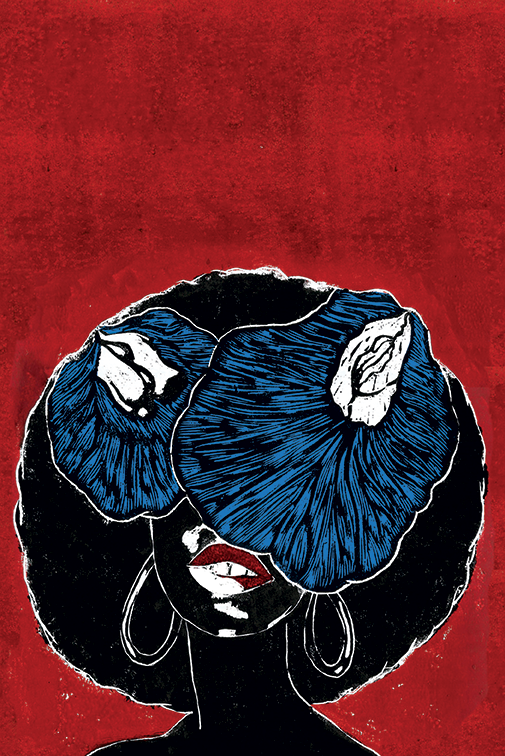
Bien sûr, ces différents contes et poèmes ne diffèrent d’aucune façon explicite. Certains sont subtils. L’excitation fait appel à tous nos sens et, plus fondamentalement, à notre tête. C’est là que ça se passe, c’est là que se fait la connexion à tout notre corps. J’ai organisé les poèmes selon la façon dont je les sentais à chaque lecture. Libre à vous de ne pas être d’accord! Mais pour moi, il existe un sens particulier par lequel le désir passe et puis explose. Et il y a quelque chose de délicieux à découvrir duquel il s’agit.
Pour pouvoir transformer l’excitation en art, nous devons nous libérer de tous nos préjugés, de nos prisons et des stigmates dans lesquels cette société centrée sur les Blancs nous a enfermé·e·s.
Chaque fois qu’une autrice noire transforme l’érotique en art, elle brise ces chaînes racistes et néfastes qui paralysent son corps, répriment sa sexualité et nous transforment en objet de convoitise d’un autre. Écrire de la poésie érotique, c’est reprendre le pouvoir sur son propre corps et parcourir sans crainte les délices du désir pour soi-même, pour les autres, pour la vie.
L’érotisme littéraire reflète ce que nous sommes lorsque nous en faisons de l’art. Nous montrons ici le meilleur de nous-mêmes, nos visions de l’amour trempées de plaisir, assaisonnées d’érogénéité, répandues dans nos corps et traduites par notre conscience artistique. Nous sommes multiples et nous partageons cette multiplicité de sensations dans des mots dégoulinants d’excitation. Oui, même nos mots dégoulinent de notre désir sexuel, mouillant nos vers, transformant nos pulsions sexuelles en paragraphes. Pour nous, jouir est révolutionnaire.
Nous devons noircir nos esprits, nos corps et notre sexualité, renouer avec notre plaisir et nous réapproprier nos orgasmes. Ce n’est qu’alors que nous serons libres. Tout ce processus est une révolution et il se fait dans la douleur. Mais il y a du bonheur à se découvrir très différent·e·s de ce que l’on attendait de nous.
Je sens que je suis à vous, je suis à nous. Goûtez, prenez plaisir, régalez-vous de ces mots merveilleux avec nous.
Ce texte est une adaptation des introductions de “O Livro Negro Dos Sentidos” [Le livre noir des sens], un recueil érotique de poèmes composés par 23 autrices noires.

Cette édition du journal, en partenariat avec Kohl : a Journal for Body and Gender Research (Kohl : une revue pour la recherche sur le corps et le genre) explorera les solutions, propositions et réalités féministes afin de transformer notre monde actuel, nos corps et nos sexualités.
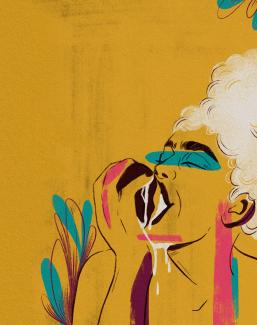
نصدر النسخة هذه من المجلة بالشراكة مع «كحل: مجلة لأبحاث الجسد والجندر»، وسنستكشف عبرها الحلول والاقتراحات وأنواع الواقع النسوية لتغيير عالمنا الحالي وكذلك أجسادنا وجنسانياتنا.
Nous tenons à remercier le collectif Amar.ela de femmes féministes militantes et créatives qui ont rendu cette série possible, et tout particulièrement Natalia Mallo (le poulpe de l'équipe) pour son soutien et son accompagnement dans ce voyage.
Nous exprimons également notre profonde gratitude et notre admiration à tous les groupes et personnes qui ont participé à ce projet, et nous les remercions d'avoir partagé leur temps, leur sagesse, leurs rêves et leurs illusions avec nous. Nous les remercions de faire de ce monde un monde plus juste, féministe et durable.
Nous espérons que leurs histoires inspireront le reste du monde autant qu’elles nous ont inspirés.
par Émilie Herbert-Pontonnier
Vous vous souvenez d’Esmeralda? Cette héroïne « gitane » et exotique née sous la plume de Victor Hugo, géant de la littérature française, et rendue célèbre par les studios Disney et leur Bossu de Notre-Dame. (...)
< illustration : « Si les Marronas le permettent » Nayare Soledad Otorongx Montes Gavilan
Mereani Naisua Senebici, que l’on appelait aussi « Sua », a été membre de l’Association des jeunes femmes chrétiennes (YWCA) des Fidji pendant de longues années.
En plus d’avoir travaillé avec divers groupes de femmes dans des contextes multiraciaux, ruraux et urbains, elle s’est impliquée dans le soutien et la promotion des droits des femmes et des jeunes femmes.
Au YWCA de Lautoka, elle travaillait avec des femmes d’origine indienne et comptait parmi les pionnières du développement de la pratique sportive et la participation des femmes et athlètes trans localement.
« Les membres du YWCA des Fidji ont profondément aimé Sua pour son dévouement et son soutien inébranlable envers tous les efforts déployés par l’organisation » – Tupou Vere
Mereani faisait partie de la House of Sarah (HoS), une initiative de l’Association of Anglican Women (AAW) lancée en 2009, un organisme de sensibilisation autour des violences basées sur le genre et de soutien des femmes victimes de violence. Ayant commencé sa pratique en tant que bénévole dévouée, elle offrait notamment son soutien aux femmes dans tout le Pacifique.
Mereani s’est éteinte en 2019.
« Une personne qui aimait les gens, qui était présente sur tous les fronts de l’autonomisation des femmes et du travail du mouvement au niveau communautaire. Repose en paix, Sua. » – Tupou Vere
Salome est une activiste féministe originaire de Tbilisi, Géorgie, qui se consacre à la justice de genre et sociale. Titulaire d’une Maîtrise en études sur le genre, elle s’est impliquée auprès de mouvements féministes, queers et écologiques au cours des neuf dernières années, travaillant entre autres sur les questions de la violence liée au genre, la violence domestique, la santé sexuelle et reproductive et les droits afférents, les droits LGBTIQ et la sécurité et les droits holistiques et numériques.
Depuis 2014, elle travaille activement sur les questions de sécurité et de sûreté des activistes et des femmes défenseures des droits humains, organisant des ateliers sur la sécurité intégrée et la sécurité numérique spécialement pour les activistes de groupes défavorisés (personnes homosexuelles, minorités ethniques et religieuses, femmes et filles rurales, etc.) ainsi que pour de grandes organisations féministes. Salome est membre de l’Independent Group of Feminists (Groupe indépendant de féministes)- une initiative non-formelle, non hiérarchique et non enregistrée qui réunit des féministes géorgiennes ayant différents parcours. Elle travaille actuellement avec le Fonds pour les femmes de Géorgie, où elle est pleinement impliquée dans la construction de mouvements de femmes/féministes, tout en offrant un financement féministe et encourageant la philanthropie féministe locale.
La conspiration du cercle des écrivain·e·s | Wazina Zondon
 |
 |
 |
| Également connue sous le nom de Réseau de recherche Teta, la conspiration des écrivain·e·s a été fondée en 2021 dans le cadre des cercles d’écriture hebdomadaires de Kohl. Le Réseau est un groupe transnational d’écrivain·e·s queer et féministes qui se consacrent à l’écriture, à la réflexion et à la création de monde collectifs. | Wazina Zondon est une Afghane élevée à New York. Elle centre son travail de recueil d’histoires et de narration sur les souvenirs collectifs et les rites de passage dans la diaspora. Elle travaille actuellement sur Faith : in Love/faith in love (Foi : en amour / Foi en l’amour), travail qui (re)retrace l’histoire d’amour de ses parents et l’empreinte d’amour héritée de sa famille. |
L’amour est sur le marché noir en enfer
car l’amour est un acide
qui ronge nos barres de fer.
Mais toi, moi et demain,
on jure en se tenant la main
que les luttes se multiplieront.
La scie à métaux a deux lames.
Le fusil a deux canons.
Nous portons la liberté en notre sein.
Nous sommes un complot.
Il est de notre devoir de lutter pour la liberté.
Il est de notre devoir de vaincre.
Nous devons nous aimer et nous soutenir mutuellement.
Nous n’avons rien d’autre à perdre que nos chaînes.
« Love » d’Assata Shakur
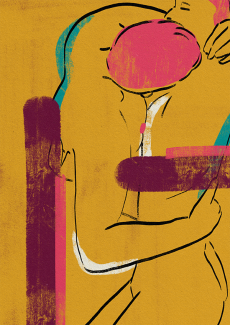
Voilà la question que pose Wazina Zondon dans son récit de souvenir collectif Loveprint. Loveprint est une déambulation, un chevauchement, un détour qui (re)crée, là où se rejoignent les entrevues et les essais personnels, nos histoires de famille et nos connaissances sur l’amour, les relations de couple et les aventures amoureuses. Sur les conseils de Wazina, la conspiration du cercle des écrivain·e·s s’est retrouvée autour d’une tentative de reproduction de cette épreuve littérale, sous la forme d’une écriture collective dans laquelle nos différentes histoires, nos genres et nos identités sexuelles se complètent et se contredisent. Nos voix empiètent les unes sur les autres, les unes complètent les phrases des autres et nous créons une conversation, un mémorial, des morceaux de nous qui parlent à un « nous ».
Je suis ce que l’on appelle un « joyeux accident ». Il y aurait beaucoup à dire à ce propos – une vie accidentelle, mais dans le même temps totalement voulue. Je sens que cela a façonné ma manière d’aimer. Je ne tombe pas simplement amoureuse, je prends le risque de la glissade qui me fera tomber. Ça a peut-être fait de moi une amor fati.
On m’a dit que je n’étais pas une enfant voulue. Donc, j’ai grandi et je suis devenue une adulte non voulue. Les origines de mon impression d’amour viennent d’avoir été éternellement non bienvenue. Je ne suis pas le fruit d’un amour ou d’une quelconque émotion joyeuse, mais bien plutôt de douleur et de fardeau. Je n’ai pas d’impression d’amour – du moins pas dans ce sens-là.
Je sais avec certitude que mes parents se sont aimés à un moment, mais la santé mentale est un tel démon – si personne ne lui tient tête, il n’y a pas de gagnant.
Je n’associerai jamais « l’amour » à mes parents ou à la famille normative. En grandissant, l’amour était accompagné de tant de violence et de responsabilités que je n’avais pas demandées, et pour lesquelles je n’étais pas prête. Alors que mes parents « s’aimaient », c’était un éthos toxique de violence, de jalousie et d’insécurité dans lequel grandir. J’ai grandi avec une immense faim de stabilité, et c’est ce que je suis aujourd’hui. Je prends des risques, mais jamais dans mon « espace d’amour ».
Je ne sais pas pourquoi ma mère a choisi d’accueillir une enfant
(moi) en son sein. Elle ne m’aime pas sous cette forme.
Ma mère me dit que si je dois penser à « trouver » l’amour, je ne devrais jamais prendre son mariage en exemple. Mon impression d’amour vient au contraire des chiens que j’élève depuis deux décennies (18 ans précisément). Le contraire est également vrai – ils m’ont élevée. Je comprends de mieux en mieux cet amour et ses différents niveaux, en leur compagnie.
Je n’ai pas découvert l’amour avec une « impression ». Dans notre maison, nous ne parlons pas d’amour. J’ai dû m’enseigner à aimer. J’ai dû y travailler dur. Malgré cela, j’échoue et malgré cela, je continue d’essayer et d’échouer tous les jours. L’échec est peut-être mon impression d’amour.
Mon impression d’amour est l’attention, la chaleur et la compréhension
que je donne aux personnes qui m’entourent, qu’il s’agisse d’un inconnu,
d’une amie, d’une proche ou d’une amante.
Mon impression d’amour est politique – sans calcul et sans réflexion.
Je suis né·e sous une pluie de bombes.
Mon impression d’amour est le négatif
de ce moment-là.
J’en sais plus sur ce que l’amour n’est pas que je n’en sais sur ce qu’est l’amour.
L’amour, ce n’est ni l’anxiété ni la panique.
L’amour, ce n’est pas de demander la permission de vivre ou de respirer. C’est toujours à propos de l’amour et il n’y a pas d’amour sans liberté.
Tout ce que l’on fait, on le fait avec le cœur, sauf l’amour. L’amour, c’est se servir de son esprit.
Je crains parfois que le langage de mon amour ne se perde dans la traduction.
--- Il y a de nombreuses manières
de cartographier les origines
de
la manière de ne pas
aimer
aimer juste assez
aimer beaucoup trop
aimer un peu
perdre un peu
à l’amour
à l’amour perdu ---
Je ne supporte pas l’idée du couple. Je ne supporte pas l’idée de vivre seule en vieillissant non plus. Je suis fatiguée de tout faire toute seule, de déménager seule, de payer le loyer et les factures toute seule… Je m’imagine avoir un arrêt cardiaque toute seule, et ça m’effraie. Je n’ai absolument pas envie de « me mettre en couple ». Je veux un monde où je peux épouser une amie, acheter une maison avec une amie, ne pas avoir de rapports sexuels.
Aimer plusieurs personnes ne corrompt
absolument pas l’amour partagé à deux, et que l’amour
soit romantique ou non n’est vraiment pas si
important que cela.
Lorsque je réfléchis à l’état déplorable de mes relations, je me rends compte que je suis dans le type de relation auquel on m’a formée. Malgré toute ma « radicalité », je n’ai toujours pas désappris les foutues normes de genre.
Mon besoin de stabilité ne me semble pas « assez radical ». Je veux sortir de cette catégorisation. Je veux quelque chose que je n’ai jamais eu. Je veux le rendre beau. Je veux me sentir belle et en sécurité – et seule la stabilité me procure ces sensations. Sûre, hors de danger, savoir que le foyer n’a rien à voir avec la violence ni les tensions.
--- Impression d’amour – j’aime sentir les livres pour voir où ils
ont été imprimés
Je tente de réfléchir à l’origine de ma compréhension et de ma
pratique de l’amour
A-t-on besoin d’origine, n’est-ce pas pareil à la pureté? Pas de
pureté ni d’origine de l’amour.
Pourquoi est-ce la compréhension et la pratique, et non
« l’émotion » qui vient à l’esprit? ---
Lorsque j’appelle mes parents, je ne raccroche pas après que l’on se soit dit au revoir, pour pouvoir entendre les bruits de la maison.
Lors de mon enterrement sunni, je veux que toutes les femmes et tous les hommes se rassemblent pour mon enterrement. Qu’est-ce que c’est que cette histoire de ne pas pouvoir dire au revoir à des morts d’un autre sexe? Il sera sunni parce que ma mère voudrait qu’il le soit. Il sera écologique – pas besoin de pierre tombale. J’adore tous les rituels funéraires. Le Coran c’est bien, mais je veux aussi de la musique. J’aime vraiment Asmahan, Oum Koulthoum et The Stones Roses.
J’ai une liste de musiques pour la semaine, du lundi au vendredi. Et deux autres pour la fin de semaine : une pour les samedis et une pour les dimanches. Je voudrais que celles et ceux qui m’ont aimée mettent la musique que j’écoutais, en respectant les jours – avec une légère tolérance tant que l’on respecte les listes de musiques.
Je veux être entourée par la ou les personnes qui m’auront aimée, même pour un bref instant. En musique et entourée de bouquets de fleurs coupées. Je ne veux pas qu’on me trouve morte; je veux mourir en riant avec des êtres aimés.
Je veux que l’on se rappelle de moi comme de quelqu’un qui aimait.
I don’t need to feel loved in death. I need the people around me to feel I loved them, even after I die. Being loved in death is about those who are alive. So I think more about how we come together as a living and loving community in the death of those we love and live with. How we take their memories with us. How we become archives of their lives.
--- Parfois, on ne peut aimer les gens que dans leur mort ---
Je dois revenir en arrière à l’idée du corps connecté à un espace. Ma famille est très réduite et, bien que ne venions pas de différents endroits, c’est comme si chaque génération était partie dans un nouveau lieu. C’est peut-être la raison pour laquelle la mort n’est pas reliée à un endroit spécial, à un cimetière. Il est courant dans notre famille d’enterrer les morts sans nom ou pierre tombale, ou de disperser les cendres dans le vent. Je me sens apaisée par ce genre de commémoration sans lieu fixe. L’idée que mes cendres puissent fertiliser une nouvelle vie me donne le sentiment d’être aimée, d’être remémorée par la re-création. Ma grand-mère est décédée en début d’année du fait de complications suite à la vaccination. Deux heures après son décès, ma famille riait aux larmes en repensant aux blagues qu’elle faisait, à sa manière hilarante de raconter des histoires. Nous avons ri et l’avons aimée, et c’était comme si elle était à nouveau assise avec nous. Voilà ce qui me ferait me sentir bien – pouvoir fertiliser les sols, fertiliser les conversations et une commémoration collective.
--- Il y avait
Deux rues dans lesquelles
Je marchais
Je courais
Je jouais
Je demeurais
Il y avait
Cinq heures pendant lesquelles
Le soleil était chaud
Le ciel était bleu
La terre était verte
Il y avait
Une fleur que je pouvais
Sentir
Toucher
Pincer
Écraser
Il y avait
Les amies que je pouvais
Caresser
La nourriture
Que je pouvais
inhaler
La langue
Qui me glissait des
lèvres
Il pourrait toujours y avoir
Tous ces nombreux lieux
Et des choses
Et des gens
Après moi ---
Peut-être qu’une promesse que je serai « spatialement commémorée » en tant que plante et soignée à tour de rôle, jusqu’à ce qu’elle devienne un arbre, serait suffisante. Pas de nom, pas de plaque – juste la plante/l’arbre, et savoir qu’on en prendra soin. Quant à mon corps, je veux qu’il soit incinéré sans aucune forme de rituel et que les cendres de mes os soient libérées dans la mer d’Arabie.
J’ai besoin que l’on traite mon corps aussi subversivement qu’il a vécu.
Je ne veux pas être enterrée à côté de ma famille. Dans ce petit tiroir à côté de toutes les personnes qui ne m’ont jamais connue. Coincée dans la mort comme je l’ai été dans la vie. Je veux être incinérée, et que mes cendres soient finalement libres.
Je veux être autorisé·e à passer, pas pendre dans l’entre-deux, pour être une présence, un processus actif, un trépas.
Je vous demanderai de :
Je veux que l’on se souvienne de moi pour l’amour que j’ai mis dans ce monde. Je veux que
mon corps soit donné, et que mes organes continuent d’alimenter
l’amour d’une ou d’autres vies.
--- L’odeur du jasmin ---
Cette édition du journal, en partenariat avec Kohl : a Journal for Body and Gender Research (Kohl : une revue pour la recherche sur le corps et le genre) explorera les solutions, propositions et réalités féministes afin de transformer notre monde actuel, nos corps et nos sexualités.
نصدر النسخة هذه من المجلة بالشراكة مع «كحل: مجلة لأبحاث الجسد والجندر»، وسنستكشف عبرها الحلول والاقتراحات وأنواع الواقع النسوية لتغيير عالمنا الحالي وكذلك أجسادنا وجنسانياتنا.
If you’re looking to have an impact through your work in feminist, social justice and other non-profit organizations, we hope this page provides a start.
Here you will find open vacancies and call for applications from AWID and the Alliance for Feminist Movements, when available. Follow us on social media to be in the loop.
by Judyannet Muchiri
October last year I left for Kenya to begin what I have come to think of as my most important work yet. (...)
artwork: “Healing Together” by Upasana Agarwal >
Juli Dugdale was an Australian feminist who practiced intergenerational leadership rooted in principles of feminism, inclusion and equality. She was a leader, peer and mentor for many women and especially young women around the world.
Juli was a dedicated staff member, volunteer and fervent advocate for young women’s leadership with the Young Women's Christian Association (YWCA) movement for over 30 years.
She offered a strong link between the Australian movement and the World YWCA Office. Her trust in the leadership capacity of young women led to a multi-year partnership with the Australian Department of Foreign Affairs and Trade and the creation of the Rise Up manual, a global guide for young women’s transformative leadership, launched in 2018.
Juli passed away in Geneva on 12 August 2019.
“For those who got to work with Juli, it was a privilege. For those who didn’t, be assured that her legacy continues in the work we do every day and in the mission of the YWCA movement.” - YWCA Australia
“Juli Dugdale will forever hold a deep place in many people's hearts in the YWCA movement, especially here in Aotearoa and across the Pacific. Juli had a special relationship with the Pacific and was an incredible supporter of the young women there. She was humble, gracious, loving, caring, dedicated, passionate and had a generous heart. She embodied the YWCA's vision of 'transformative leadership' with extraordinary vision and foresight, and helped empower generations of young women leaders around the world.” - YWCA New Zealand

Patience is a global human resources professional with over a decade of experience in human resources (HR) management in the not-for-profit sector. Patience previously worked at Mercy Corps as the Global HR Officer for Africa supporting the full employee life cycle for expatriates in the Eastern and Southern African region and provided HR technical guidance to Human Resources leaders in country offices within the African region. Before joining the global people team, she was the Country Human Resources and Safeguarding Focal Point, she was part of the senior management team leading on all human resources and safeguarding matters. Prior to Mercy Corps she led the HR and Operations department at SNV Netherlands Development Organization and was a member of the country management team. She also has HR Consultancy experience which she gained while she was still studying for her BSc Honors degree in Human Resource Management. She has a passion for HR, loves working with people and she takes wellbeing and safeguarding as her core values and in her professional work. As someone who loves sports, you can also find Patience at the basketball court, the tennis court or on the soccer field.
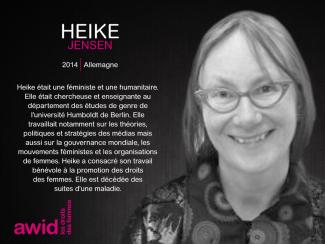
Por María Bonita - Venezuela
Las ancestras hacen un círculo
Sagrado, vivo, poderoso
Estamos en el medio
Sintiendo su fuerza.
Suena el tambor de la tierra
Nuestra piel se viste de colores
Somos verdes, rojas, naranja, azules, violetas, negras
Suena el tambor de la tierra
La voz vibra, el grito ocupa, el canto se presenta, arrulla el sueño, despierta conciencia.
Suena el tambor de la tierra
Y la mirada se hace cómplice, amiga, profunda.
Suena el tambor de la tierra
El corazón es uno solo, percuta el alma, nos invita a movernos, nos vuelve deseo, nos indica un camino.
El de la juntanza comunera, el del poder popular, el del autogobierno, el de la revolución de las mujeres, el del cuidado subversivo.
Suena el tambor de la tierra
Y yo les invito a entrar, a ser voz, piel, mirada, semilla, fuego, canción, comunión.
Suena el tambor de la tierra
Y yo les invito a descubrirla, a amarla, a conocerla, a defenderla, desde el corazón de la comuna
Hace 25 años que habitan las mismas calles polvorientas, en lo más alto de una loma con nombre de león, vienen de diferentes lugares, muchas con tradición campesina, tienen la piel color rebeldía, color cardón, porque en ellas habita el semiárido larense, de allí su amor por la vida, su aprecio, el cuidado y resguardo por el agua y el territorio, es que son herederas de la estirpe Gayón, Ayaman, comunidades indígenas que habitaron y habitan el norte del estado Lara.
Desde muy jóvenes aprendieron que la maternidad es un signo del que no se escapa con facilidad, cuidar a los hijos, la casa, el marido, lavar, planchar, cocinar, fregar, todo tenía que estar impecable, insisten.
Y la vida era eso, eso y la violencia, el insulto, el maltrato, el golpe, el reclamo, la queja era algo de esperar, algo que parecía natural, así se vivían los días, la cotidianidad, en aquellas calles de tierra viviendo en pequeñas casitas de chapa, de zinc, sin servicios básicos, esa era pobreza, la precariedad cuando llego un hombre, si, un hombre, un proyecto, una revolución inusual porque se hizo sin la guerra.
Entonces las invitaron a salir, las invitaron a tomar la calle, el espacio público y ellas en ese proceso derribaron puertas y ventanas, rompieron cadenas, se soltaron el cabello, se sintieron libres, libres cimarronas, rebeldes caribes, guerreras libertadoras.
Y es que eso de independencia y soberanía es algo que las que pudieron estudiar lo habían leído, pero sentirse, sentirse protagonistas de un proceso de cambio de transformación social, eso es una importante conquista que tenemos que mencionar, que no podemos olvidar.
En lo alto de esa loma se siente la complicidad, el fuego compartido, los años de lucha, cuentan que una de ellas se iba con su paragua por las tardes y de casa en casa tomando un cafecito, conversando con la gente iba convocando, convenciendo
¡Vamos a hacer el consejo comunal!
¡Avancemos hacia la comuna!
Hagamos planes de trabajo para la educación, el deporte, la salud, la alimentación, el comité de mujer e igualdad de género, la economía.
¡Vamos a ser Gobierno Popular para que el Barrio se Ponga Bonito!
Y así llegaron las casas, el consultorio popular, el simoncito, el proyecto de electrificación, el de agua potable son algunos de los logros comunales, de los sueños comunales hechos realidad.
Y ustedes se preguntaran como llego una cuentera, una cuenta cuentos a esa loma con nombre de león
Y yo les digo: es que nací bochinchera, dando pelea, nací callejera diría mi abuela, disposicioner agregaría el Comandante Chávez, de tanto andar, renegar, pelear y dudar de aquel militar, me termino convenciendo con el proyecto comunal, con eso de ser autogobierno, de que el pueblo administre sus recursos, con eso de todo el poder para las comunas, con eso me convenció.
Pero yo sabía que algo faltaba porque las mujeres, las mujeres comuneras seguimos construyendo poder popular y nuestro corazón se viste de lucha antiimperialista y anticapitalista pero hay algo que nos duele, que nos sigue afectando, hay heridas del patriarcado que están presente.
Entonces un día, me descubro llorando y sonó el tambor de la tierra y las ancestras hablaron.
Me vi rodeada de un grupo de mujeres que me sostuvo, me contuvo mientras me derramaba frente a ellas, mientras dolía y me liberaba al mismo tiempo, así que descubrí que el amor entre mujeres te sana, te salva, que nuestra amistad en profundamente política y que la sororidad es una manera de andar, de vivir la vida, a partir de ese momento no me volví a sentir sola, no me sentí más nunca una isla, porque sé que hay un grupo de mujeres que me llevan, me traen, me aman, me cuidan y viceversa, sé que esta forma de hacerme feminista con la mística de mujeres por la vida es una experiencia de sentirse conectada, amada por mujeres aunque no las vuelvas a ver, entonces como no querer que esto que me ocurrió, le pase a otras, este amanecer, este parirme un nuevo corazón es un regalo de las diosas que tiene que ser compartido.
Por eso decidí unirme a ellas y echar a andar por las comunas, comencé a caminar, a conocer otras experiencias, comenzamos a debatir sobre salud, educación, alimentación, nos fuimos predicando el verbo antipatriacal y las comunas libres de machismo, insistimos en recuperar la sabiduría ancestral, la intuición, decidimos defender la vida hablando de aborto y nos vemos riendo, llorando, debatiendo, reflexionando, me encuentro con macu, con la china, yenni, carolina, maria, ramona, irma y hasta con nuestra hermana yenifer que se nos fue hace poco.
Este es mi homenaje a ellas, a las mujeres loma a las mujeres leonas, ellas sin duda se sembraron en mí con tanta fuerza que son parte de mis latidos.
Ellas sin duda marca un camino, ellas son las que hacen posible el cuidado familiar, el cuidado colectivo, ellas son también una fuerza, una fuerza en el territorio para superar el bloqueo, la violencia patriarcal, la traición política, para superar la burocracia la corrupción.
Ellas sin duda marcan un camino
Ellas sin duda son una brújula
Ellas sin duda son el corazón de la comuna
Gracias.