
Elise Ama Esso
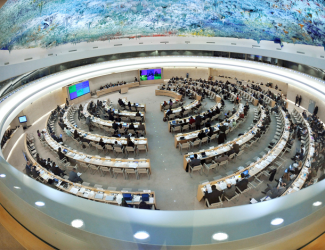
Le Conseil des droits de l'homme (CDH) est un organe intergouvernemental clé du système des Nations Unies, responsable de la promotion et la protection des droits humains autour du globe. Il se réunit trois fois par an en session ordinaire, en Mars, Juin et Septembre. Le Bureau du Haut-Commissariat des Nations Unies aux Droits de l’Homme (HCDH) constitue le secrétariat pour le CDH.
Débat et adopte des résolutions sur les questions globales des droits humains ainsi que sur la situation des droits humains dans des pays particuliers
Examine les plaintes des victimes de violations des droits humains et des organisations activistes, au nom des victimes de violations des droits humains
Nomme des experts indépendants (que l'on connaît sous le nom de « Procédures Spéciales ») pour réviser les cas de violation des droits humains dans des pays spécifiques, ainsi que pour examiner et suivre des questions globales relatives aux droits humains
Prend part à des discussions avec les experts et les gouvernements sur les questions de droits humains
Évalue les bilans des États membres de l'ONU en matière de droits humains tous les quatre ans et demi, dans le cadre de l'examen périodique universel.
La prochaine session du CDH a lieu à Genève, en Suisse, du 30 juin au 17 juillet 2020.
AWID travaille avec des partenaires féministes, progressistes et du domaine des droits humains pour partager nos connaissances clé, convoquer dialogues et évènements avec la société civile, et influencer les négociations et les résultats de la session.
Sí, invitamos a compartir más impresiones acerca de alguna cuestión que sea de importancia para ti respondiendo a las preguntas abiertas al término de la encuesta.


Avant d’aborder la méthodologie de recherche WITM, il est important que vous connaissiez les données de base et que vous sachiez à quoi vous attendre.
En ce qui concerne la méthodologie de recherche WITM de l’AWID, nous recommandons d’étudier toute la boîte à outils.
Bien que cette boîte à outils ait été conçue pour démocratiser la recherche WITM, il existe des contraintes en termes de capacités liées à l’expérience de votre organisation dans le domaine des ressources et de la recherche qui pourraient influencer son aptitude à utiliser cette méthodologie.
Utilisez la Fiche de travail « Êtes-vous prêts-tes ? » pour évaluer votre niveau de préparation à mener votre propre recherche WITM. Plus vos réponses aux questions de cette fiche de travail seront nombreuses, plus vous serez capable d’entreprendre votre recherche.
Avant de commencer toute recherche, nous vous recommandons de procéder à l’évaluation des liens que votre organisation a établis avec votre communauté et de la confiance qu’elle inspire.
Dans de nombreux contextes, les organisations pourraient hésiter à partager ouvertement leurs données financières avec d’autres pour des raisons diverses allant des inquiétudes que suscite la façon dont les données seront utilisées, à la crainte de la concurrence pour le financement en passant par les préoccupations au sujet des restrictions gouvernementales croissantes imposées aux organisations de la société civile.
Lorsque vous établirez des relations et que vous mènerez des recherches informelles pendant la période précédant le lancement de votre initiative, la clarté des objectifs fixés contribuera à instaurer la confiance. La transparence permettra aux personnes qui participent à la recherche de comprendre pourquoi vous recueillez des données et en quoi cela profitera à l’ensemble de la communauté.
Nous vous recommandons vivement de faire en sorte que les données soient recueillies de manière confidentielle et partagées anonymement. Cela permettra aux personnes qui participent à votre recherche de partager plus facilement avec vous des informations sensibles.
Nous vous invitons à consulter notre Fiche de travail « Êtes-vous prêts-tes ? » pour mesurer vos propres progrès.
Les données seront traitées à des fins statistiques, pour mettre en lumière l’état du financement de l’organisation des mouvements féministes dans le monde entier, et ne seront présentées que sous forme agrégée. L’AWID ne publiera pas d’informations relatives à une organisation donnée ni ne divulguera d’informations qui permettraient d’identifier une organisation par le biais de son emplacement ou de caractéristiques qui lui sont propres, sans son accord explicite.
« Les savoirs et pratiques indigènes ont toujours soutenu la souveraineté alimentaire, et ce savoir-faire est entre les mains des femmes [...] L'écoféminisme pour moi, c'est le respect de tout ce que nous avons autour de nous » -

Cette section vous guidera pour vous permettre d’obtenir des résultats de recherche représentatifs et fiables.
Dans cette section :
- Recueillez vos données
1. Avant le lancement
2. Lancement
3. Pendant le lancement- Préparez vos données en vue de l’analyse
1. Nettoyez vos données
2. Codifiez les réponses aux questions ouvertes
3. Supprimez les données inutiles
4. Assurez la sécurité- Créez votre rapport de synthèse
- Analysez vos données
1. Programmes statistiques
2. Éléments d’analyse suggérés
Si vous prévoyez de recueillir des données issues des demandes soumises aux institutions d’octroi de subventions, ce moment est opportun pour communiquer avec elles.
Lorsque vous recueillez ces données, réfléchissez aux types de demandes de subventions que vous souhaitez examiner. Votre cadre de recherche vous orientera sur cette question.
De plus, il n’est peut-être pas nécessaire de revoir chaque demande soumise à l’organisation. Il sera plus utile et efficace de ne passer en revue que les demandes admissibles (qu’elles aient ou non été financées).
Par ailleurs, vous pouvez aussi demander aux institutions d’octroi de subventions de partager leurs données avec vous.
Voir un modèle de lettre à envoyer aux institutions d’octroi de subventions
Votre sondage est terminée et vous avez une mine de renseignements ! Vous devez maintenant faire en sorte que vos données soient les plus exactes possibles.
Selon la taille de votre échantillon et la quantité de sondages remplis, cette étape peut être longue. Ce processus sera accéléré et gagnera en précision si vous disposez d’une bonne réserve de personnel qui a le souci du détail.
Vous aurez peut-être recueilli, en plus de vos sondages, des données issues des demandes soumises aux institutions d’octroi de subventions. Utilisez les mêmes étapes pour traiter ces données. Ne vous découragez pas si vous ne pouvez comparer les deux ensembles de données ! Les bailleurs de fonds recueillent des renseignements différents de ceux que vous aurez obtenus de vos sondages. Dans le rapport final et les produits de votre recherche, vous pouvez analyser et présenter les ensembles de données de manière distincte (données issues des sondages et des institutions d’octroi de subventions).
Il existe deux types de questions ouvertes qui exigent une codification.
Questions appelant des réponses ouvertes
Pour ces questions, vous devrez codifier les réponses afin de cerner les tendances.
Vous aurez à affronter les difficultés suivantes :
Si vous avez recours à plus d’une personne pour examiner et codifier, vous devrez vous assurer que la codification est systématique. Voilà pourquoi nous recommandons de limiter les questions ouvertes et d’être le plus précis possible si vous posez ce type de questions.
Par exemple, si vous posez cette question ouverte : « Quelles difficultés spécifiques avez-vous rencontrées cette année en matière de levée de fonds ? ».
Les réponses pourraient être : « le manque de ressources humaines » ou « pas assez de personnel ». Ces réponses peuvent être regroupées et codifiées sous une même catégories « manque de personnel ». Ceci vous permettra d’obtenir le nombre de personnes qui ont répondu de manière semblable.
Questions appelant des réponses fermées
Si vous avez proposé aux personnes répondantes de préciser leurs réponses, vous devrez procéder au « surcodage » de ces réponses.
Pour certaines questions du sondage, vous aurez peut-être proposé l’option « autre ». Lorsque cette option est offerte, on l’accompagne fréquemment d’une zone de texte où les personnes peuvent préciser leurs réponses.
Différentes méthodes de « surcodage » :
Analysez la fréquence des résultats
Pour chaque question quantitative, vous pouvez décider de retirer les 5 % ou les 1 % les plus élevés et les moins élevés afin d’éviter que des données aberrantes* ne biaisent vos résultats. Vous pouvez aussi traiter l’effet de biais en employant une moyenne médiane plutôt qu’une moyenne arithmétique. Pour calculer la médiane, il faut d’abord ordonner les données (les trier dans l’ordre ascendant). La médiane est le nombre qui se situe au point milieu. Cependant, il faut garder à l’esprit qu’il est possible que vous estimiez que les données aberrantes soient utiles. Elles vous donneront une idée de la gamme et de la diversité des personnes participant au sondage et vous choisirez peut-être de réaliser une étude de cas qui porte sur ces données aberrantes.
* Une donnée aberrante est un point de données qui est beaucoup plus grand ou beaucoup plus petit que la majorité des points de données. Par exemple, imaginons que vous viviez dans un quartier de classe moyenne avec pour voisin un millionnaire. Vous décidez de connaître l’échelle de revenu chez les familles de classe moyenne de votre quartier. Pour ce faire, vous devez retirer le revenu du millionnaire de votre ensemble de données, puisqu’il s’agit d’une donnée aberrante. Sinon, la moyenne du revenu de classe moyenne semblera beaucoup plus élevée qu’elle ne l’est en réalité.
Retirez tout le sondage concernant les répondant-e-s qui ne correspondent pas à votre population cible. Habituellement, vous les reconnaîtrez par le nom de l’organisation ou encore par leurs réponses aux questions qualitatives.
Pour assurer la confidentialité de l’information partagée par les répondant-e-s, vous pouvez à cette étape remplacer les noms des organisations par une nouvelle série de numéros d’identité et sauvegarder la codification, conservant les noms et les numéros d’identification dans un dossier distinct.
En collaboration avec votre équipe, déterminez la manière de stocker et de protéger le dossier de codification et les données.
Par exemple, les données seront-elles stockées dans un ordinateur ou un serveur protégé par mot de passe, auquel seule l’équipe de recherche aurait accès ?
Un rapport de synthèse dresse la liste de toutes les questions posées lors du sondage ainsi que les réponses obtenues en pourcentages inscrits sous chaque question. Ce document présente les résultats collectifs de toutes les réponses individuelles.
Conseils :
- Il est important d’être systématique : on doit appliquer les mêmes règles à chaque donnée aberrante lorsque l’on détermine si elle devrait demeurer ou être retirée de l’ensemble des données.
- Pour toutes les réponses ouvertes (« autre ») qui sont « surcodées », assurez-vous que la codification est en adéquation. Désignez une personne afin qu’elle vérifie la cohérence et la fiabilité des codes de façon aléatoire et qu’elle révise les codes si nécessaire.
- Si possible, tentez de toujours travailler en équipe de deux personnes afin que quelqu’un puisse vérifier le travail.
Maintenant que vos données sont nettoyées et triées, que veulent dire toutes ces informations ? Voici la partie la plus stimulante, où vous commencez à analyser pour dégager les tendances.
Est-ce qu’il existe des types de bailleurs de fonds particulièrement importants (gouvernement par rapport aux sociétés privées) ? Est-ce qu’il y a des régions qui reçoivent plus de financements ? Vos données révéleront des renseignements fort intéressants.
Échantillons plus petits (moins de 150 réponses) : peuvent être analysés en interne à l’aide d’une feuille de calcul Excel.
Échantillons plus grands (plus de 150 réponses) : peuvent être analysés en interne à l’aide d’Excel, si votre analyse se résume à compter l’ensemble des réponses, des moyennes ou d’autres analyses simples.
Si vous prévoyez des analyses plus poussées, comme des analyses à variables multiples, nous recommandons alors d’avoir recours à un logiciel statistique comme - SPSS, Stata, R (gratuit)
REMARQUE: SPSS et Stata sont dispendieux alors que R est gratuit.
Ces trois types de logiciels exigent des connaissances de la part du personnel et il n’est pas facile de les maîtriser rapidement.
Essayez de trouver des stagiaires ou du personnel temporaire, provenant notamment des universités locales. De nombreux étudiant-e-s doivent apprendre l’analyse statistique au cours de leurs programmes et ils-elles pourraient avoir un accès gratuit aux logiciels SPSS ou Stata par l’intermédiaire de l’université. Ces étudiant-e-s sauront probablement utiliser le logiciel R, qui peut être téléchargé et utilisé gratuitement.

• 2 - 3 mois
• 1 personne (ou plus) chargée de la recherche
• Traducteur(s)-trice(s), si vous voulez traduire votre sondage
• 1 personne (ou plus) pour diffuser le sondage auprès des populations choisies
• 1 personne (ou plus) chargée de l'analyse des données
• Liste d’organisations, de donateurs et d’activistes agissant à titre consultatif
• Un prix de récompense pour encourager les gens à répondre à votre sondage (optionnel)
• Une marque de reconnaissance pour vos conseillers-ères (optionnel)
• Survey Monkey
• Survey Gizmo (en anglais)
• Exemple : Enquête mondiale WITM
• Exemple de lettre aux bailleurs de fonds demandant accès aux bases de données
• Tutoriel : Simple introduction au nettoyage des données (en anglais)
• Outils de visualisation (en anglais)
Our aim is to reach a total of 2,000 responses, almost double the number from the last WITM survey in 2011.

Argentina has a long history of worker-run cooperatives and workplaces.
In 2001, the country experienced one of the worst economic crises in its history.
As a response to the recession and a form of resistance and resilience, workers across the country started occupying their workplaces.
The Nadia Echazú Textile Cooperative was the first cooperative created by and for trans and travesti people in search of economic autonomy and decent living conditions.
It provides work opportunities, access to social security, sustainable income and economic rights for the communities it serves.
Thank you to all of you who have joined us, physically or virtually, for the past four days of learning, celebrating, envisioning, dreaming and building our Feminist Futures together at the 2016 AWID Forum!
We are incredibly inspired, amazed, and re-energized by all the collective work we have done together in creating our diverse futures.

Avant de prendre sa retraite, elle a occupé de nombreux postes de haut niveau, notamment celui de membre de la cour d’appel et juge en chef adjointe de l’Ouganda. Elle a été la première femme ougandaise à occuper le poste de magistrat en chef entre 1973 et 1986 et la première femme à être nommée juge à la Haute Cour de justice en 1986.
Elle fut l'une des premières femmes à recevoir le titre de chevalier pontifical de l'histoire de l'Église catholique en Afrique. Elle est morte d'une crise cardiaque.