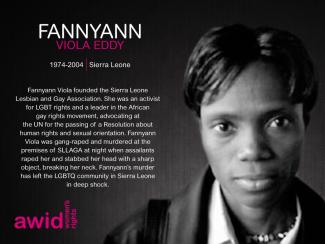
Fannyann Viola Eddy
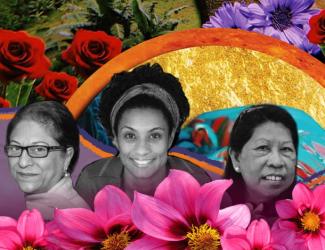
L’hommage se présente sous forme d’une exposition de portraits d’activistes du monde entier qui ne sont plus parmi nous qui ont lutté pour les droits des femmes et la justice sociale.
Cette année, tout en continuant à convoquer la mémoire de celleux qui ne sont plus parmi nous, nous souhaitons célébrer leur héritage et souligner les manières par lesquelles leur travail continue à avoir un impact sur nos réalités vécues aujourd’hui.
49 nouveaux portraits de féministes et de défenseur·e·s viennent compléter la gallerie. Bien que de nombreuses des personnes que nous honorons dans cet hommage sont décédé·e·s du fait de leur âge ou de la maladie, beaucoup trop d’entre iels ont été tué·e·s à cause de leur travail et de qui iels étaient.
Visiter notre exposition virtuelle
Les portraits de l'édition 2020 ont été illustrés par Louisa Bertman, artiste et animatrice qui a reçu plusieurs prix.
L’AWID tient à remercier nos membres, les familles, les organisations et les partenaires qui ont contribué à cette commémoration. Nous nous engageons auprès d’elleux à poursuivre le travail remarquable de ces féministes et défenseur·e·s et nous ne ménagerons aucun effort pour que justice soit faite dans les cas qui demeurent impunis.
« Ils ont essayé de nous enterrer. Ils ne savaient pas que nous étions des graines » - Proverbe mexicain
Le premier hommage aux défenseur-e-s des droits humains a pris la forme d’une exposition de portraits et de biographies de féministes et d’activistes disparu·e·s lors du 12e Forum international de l’AWID en Turquie. Il se présente maintenant comme une gallerie en ligne, mise à jour chaque année.
Depuis, 467 féministes et défenseur-e-s des droits humains ont été mis·es à l'honneur.
Thanks to our global feminist community! From May to August 2024, nearly 1,200 organizations working for Women's rights, gender justice, and LBTQI+ equality shared their experiences in the WITM survey. The results offer a unique picture of how feminist movements are resourced and where gaps remain.
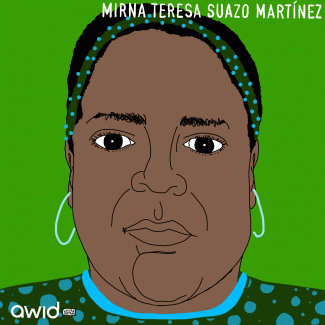
Mirna Teresa Suazo Martínez faisait partie de la communauté garifuna (afro-descendante et autochtone) Masca et vivait sur la côte nord des Caraïbes du Honduras. Elle était leader de sa communauté et fervente défenseure du territoire autochtone, une terre qui a été violée le jour où l'Institut national agraire du Honduras a accordé des licences territoriales à des personnes extérieures à la communauté.
Ce fait déplorable a été à l'origine de harcèlements, d'abus et de violences répétés contre Masca, où les intérêts économiques de différents groupes se sont heurtés à ceux des forces armées et des autorités honduriennes. Selon l'Organisation fraternelle noire du Honduras (OFRANEH), la stratégie de ces groupes consiste à expulser et exterminer la population autochtone.
« Masca, la communauté garifuna située près de la vallée du Cuyamel, se trouve dans la zone d’influence de l’une des villes présumées modèles, une situation qui a déclenché des pressions territoriales le long de la côte garifuna. » - OFRANEH, 8 septembre 2019
Mirna Teresa, présidente du conseil d'administration de la communauté de Masca à Omoa, avait elle aussi fermement rejeté la construction de deux centrales hydroélectriques sur la rivière Masca, qui porte le même nom que sa communauté.
« La communauté garífuna attribue l'aggravation de la situation dans leur région à son opposition à l'exploitation touristique, à la monoculture de palmiers africains et au trafic de drogue, tandis qu'elle cherche parallèlement à construire une vie alternative au travers de la culture de la noix de coco et d'autres produits d'autoconsommation ». - Voces Feministas, 10 septembre 2019
Mirna Teresa a été assassinée le 8 septembre 2019 dans son restaurant « Champa los Gemelos ».
Elle est l'une des six femmes défenseures garifunas à avoir été assassinées rien qu'entre septembre et octobre 2019. Selon l'OFRANEH, les autorités n'ont pas mené d'enquête sur ces crimes.
« En ce qui concerne les communautés garífuna, une grande partie des homicides sont liés au régime foncier et à la gestion des terres. Cependant, les querelles entre les organisations criminelles ont abouti à des meurtres, à l’instar de ceux ayant eu lieu récemment à Santa Rosa de Aguán ». - OFRANEH, 8 septembre 2019
Te invitamos a que te pongas en contacto con nosotrxs para explorar formas de colaborar de manera más significativa con el Foro.
Avec Manal Tamimi, Bubulina Moreno, Karolina Więckiewicz et Anwulika Ngozi Okonjo..
These transgender women were murdered because of their activism and their gender identity. There are insufficient laws recognizing trans* rights, and even where these laws exist, very little is being done to safeguard the rights of trans* people. Please join AWID in honoring these defenders, their activism and legacy by sharing the memes below with your colleagues, networks and friends and by using the hashtags #WHRDTribute and #16Days.
Please click on each image below to see a larger version and download as a file


With 1,773 fossil fuel lobbyists at last year's COP29, we're heading alongside other feminists to Belém, Brazil for COP30, from 10 November – 21 November 2025, where we will continue to denounce false solutions, call out corporate capture, demand that States uphold their commitments under the Common but Differentiated Responsibilities and Respective Capabilities and push for feminist economic alternatives.
$2.7 trillion for the military. $300 billion for climate justice. We're here to flip the script.
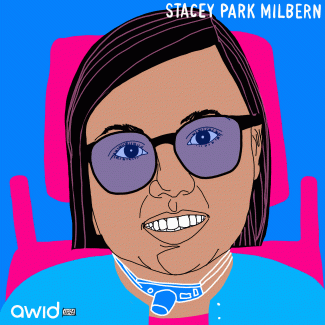
“I do not know a lot about spirituality or what happens when we die, but my crip queer Korean life makes me believe that our earthly bodyminds is but a fraction, and not considering our ancestors is electing only to see a glimpse of who we are.” - Stacey Park Milbern
Stacey, along with some friends, co-created the Disability Justice Culture Club, a group working to support various and especially vulnerable communities, including helping homeless people gain access to resources during the COVID-19 pandemic.
She was also a co-producer of an impact campaign for Netflix’s documentary “Crip Camp”, a board member of the WITH Foundation, and led organizations at local, state and national levels. Stacey wrote beautifully and powerfully:
“My ancestors are people torn apart from loves by war and displacement. It’s because of them I know the power of building home with whatever you have, wherever you are, whoever you are with. My ancestors are queers who lived in the American South. It’s because of them I understand the importance of relationships, place and living life big, even if it is dangerous. All of my ancestors know longing. Longing is often our connecting place...” - Stacey Park Milbern
She was born in Seoul, Korea and grew up in North Carolina, later continuing her journey in the San Francisco Bay Area. Stacey passed away of complications from surgery on her 33rd birthday on 19 May 2020.
Read an essay by Stacey Park Milbern
Listen to an interview with Stacey Park Milbern
#StaceyTaughtUs: Record your story for the Disability Visibility Project
“She was, a lot of people would say, a leader. She kind of encompassed all of it. You know, sometimes there's like a lead from the front, lead from the middle, lead from the back. And she was just somehow able to do all of that.” - Andraéa LaVant, disability rights activist
“What a blow to lose Stacey when our communities need her leadership more than ever, and at a time when her strength, insight, and grit were receiving increased recognition outside of disability circles, giving her a greater platform to advance her life’s work...We will not have the gift of learning where her charismatic leadership would have taken us. But let there be no doubt: What Stacey gave us, in a relatively short time, will continue benefiting others for years to come.” - Disability Rights Education and Defense Fund (DREDF)
For the first time, the AWID Forum offers three modes of participation
Participants will come together in Bangkok, Thailand. We can’t wait!
As heteropatriarchal capitalism continues to force us into consumerism and compliance, we are finding that our struggles are being siloed and separated by physical as well as virtual borders.
This section highlights key resources recommended by AWID so you can conduct your own WITM research.
In this section
Online tools
Once you gather these resources, you can estimate the costs for your research using our “Ready to Go? Worksheet”

The Ready to Go? Worksheet helps you estimate resources, staff and budget needed for your research
Panels, workshops, plenaries and spaces for exchange between collectives, activists and organizations in struggle to collectively walk the path towards an agenda and a program of struggle for ecosocialism.
📅 November 8 - November 11, 2025
📍 Buenos Aires, Argentina
The Deadline to submit activities has been extended to February 1st, 2024
In the spirit of the Forum’s theme, we invite a diversity of activity topics and formats that:
Interviews produce in-depth information that you cannot easily obtain from surveys. While surveys focuses mainly on quantifiable data and closed questions, interviews allow for expert opinions from activists and donors, and open-ended questions which can provide context to survey data results.
In this section
- General tips
1. Before conducting your interviews
2. During the interviews- Specialized interviews
1. Donor interviews
2. Women’s rights organizations and activists interviews- Preliminary findings
Send the interviewees a concept note with your objectives for the interview and for your overall research, as well as a list of questions.
This allows them to prepare answers for more complicated questions and look up information that they may not have immediately on hand.
Do not base your questions on assumptions about your interviewees’ knowledge.
Instead, first clarify what they know – this will reveal information as well.
- DON’T: “Given the current funding trends in Switzerland, do you know of any opportunities for collaboration? This question assumes that the interviewee knows current funding trends and that their understanding of funding trends matches yours.
- DO: First ask “What is your understanding of current funding trends in Switzerland?”, followed by “Do you know of any opportunities for collaboration?” This will reveal what their understanding is, giving you even more information than the first question.
Interviews with donors will allow you to build deeper relationships with them, which will be useful when you conduct post-research advocacy. They will also provide you with deeper insight into funders’ decision-making processes.
Suggested topics of focus for donor interviews:
Interviews with women’s rights organizations and activists will provide you with insight into their on-the-ground realities. Again, these interviews will allow you to build deeper relationships that can be incorporated into your advocacy, particularly to encourage collaboration between donors and activists.
Suggested topics of focus for women’s rights organizations and activist interviews:
Through the course of your WITM research, we recommend analyzing your preliminary findings. Presenting your preliminary findings opens up opportunities to conduct more interviews and get feedback on your research process and initial results. This feedback can be incorporated into your final research.
AWID conducts “WITM convenings” to share preliminary results of survey data and interviews. These gatherings allow participants (activists, women’s rights organizations, and donors) to debate and discuss the results, clarifying the context, creating more ownership amongst members of the movement, and providing more input for final research.
For example, the Resource Mobilization Hub for Indigenous Women’s Rights at the World Summit on Indigenous Philanthropy was used as a space to debut preliminary results.
4. Collect and analyze your data

• 1.5 - 3 months
• 1 or more research person(s)
• List of donors and women’s rights organizations and activists to interview
• Prepared interview questions
• Concept Note (You can use the research framing you created in the “Frame your research” section)
• AWID Sample Interview Questions: Donors
• AWID Sample Interview Questions: Activists & Women’s Rights Organizations
4. Collect and analyze your data