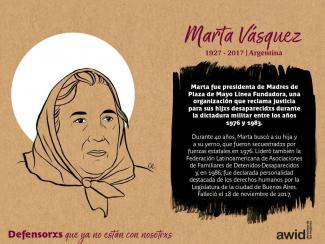
Marta Vásquez
Au cours des dernières années, nous avons observé une nouvelle tendance inquiétante dans les espaces internationaux consacrés aux droits humains. Les discours axés sur « la protection de la famille » sont en effet utilisés pour défendre des violations des droits de membres de la famille, pour renforcer et justifier l’impunité des auteurs de ces violations et pour restreindre l’égalité des droits au niveau de la vie familiale.
La campagne en faveur de la « Protection de la famille » est motivée par une volonté conservatrice d’imposer des conceptions « traditionnelles » et patriarcales de la famille et de priver les membres de la famille de leurs droits pour les transférer à « l’institution familiale ».
Depuis 2014, un groupe d’Etats travaille de front dans les espaces dédiés aux droits humains sous le nom de « Group of Friends of the Family » (Groupe des ami-e-s de la famille) ; des résolutions sur la « Protection de la famille » ont été adoptées chaque année depuis 2014.
Ce programme s’est propagé au-delà du Conseil des droits humains. Nous avons observé l’introduction d’un discours régressif autour de la « famille » à la Commission sur la condition de la femme, ainsi que des tentatives d’introduction dans les négociations sur les Objectifs de développement durable.
L’AWID travaille avec des partenaires et des allié-e-s pour s’opposer ensemble à la « Protection de la famille » et à d’autres programmes régressifs et défendre l’universalité des droits humains.
En réponse à l’influence croissante d’acteurs régressifs au sein des espaces dédiés aux droits humains, l’AWID a rejoint des allié-e-s afin de créer l’Observatoire sur l'Universalité des droits (OURs) (site en anglais). L’OURs est un projet de collaboration qui surveille, analyse et diffuse les informations concernant les initiatives anti-droits telles que la « Protection de la famille ».
Le premier rapport de l’OURs, Nos droits en danger, trace une cartographie des acteurs et actrices qui constituent le lobby mondial anti-droits et identifie leur réthorique et stratégies clés ainsi que leur impact sur les droits humains.
Le rapport précise que le programme de « Protection de la famille » a développé une collaboration entre un large éventail d’acteurs régressifs aux Nations Unies, qu’il décrit comme « un cadre stratégique abritant des positions anti-droits et patriarcales multiples, où le cadre vise entre autres à légitimer et institutionnaliser ces positions. »
A fines de 2019, la situación en Indonesia (en particular, los signos de militarización intensificada y de reacción contra los derechos LGBTQ) nos llevó a cuestionar la capacidad de AWID para sostener un ambiente razonablemente seguro y acogedor para la diversidad de participantes que esperamos reunir en el Foro.
Después de un análisis cuidadoso, en noviembre de 2019 la Junta Directiva de AWID decidió cambiar la sede del 14° Foro Internacional de AWID, de Bali a Taipéi.
Taipéi ofrece un alto nivel de capacidad logística, y resulta accesible para muchxs viajerxs (con la facilitación de un trámite de visa electrónico para conferencias internacionales).
Para más detalles:
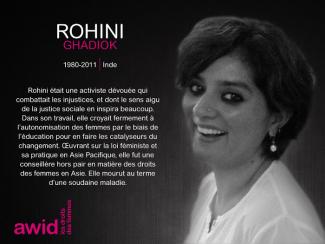
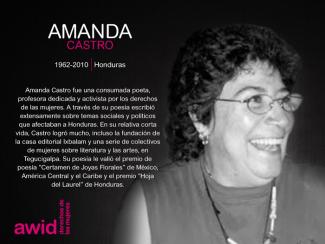
These transgender women were murdered because of their activism and their gender identity. There are insufficient laws recognizing trans* rights, and even where these laws exist, very little is being done to safeguard the rights of trans* people. Please join AWID in honoring these defenders, their activism and legacy by sharing the memes below with your colleagues, networks and friends and by using the hashtags #WHRDTribute and #16Days.
Please click on each image below to see a larger version and download as a file


Au besoin, vous avez la possibilité de sauvegarder vos réponses en cours d’enquête, pour y revenir plus tard. KOBO enregistrera vos brouillons de réponses dans le coin supérieur gauche de la page de l'enquête et rechargera votre dossier lorsque vous reviendrez à l'enquête. Assurez-vous simplement de continuer à partir du même ordinateur et du même navigateur.

1 de cada 3 personas trans y travesti en Argentina vive en un hogar de bajos ingresos.
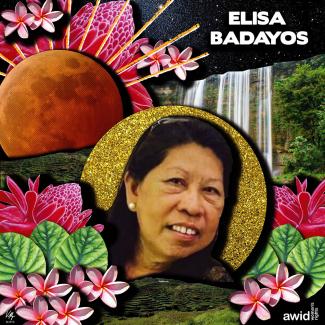
Elle organisait également les communautés urbaines pauvres dans la province de Cebu et travaillait avec Desaparecidos, une organisation de familles de disparu-e-s.
Le 28 novembre 2017, lors d'une mission d'enquête sur des violations des droits fonciers dans la région, Elisa et deux de ses collègues ont été abattu-e-s par deux hommes non identifiés à Barangay San Ramon, ville de Bayawan, dans la province de Negros Oriental.
Elle laisse quatre enfants derrière elle.

This section highlights key resources recommended by AWID so you can conduct your own WITM research.
In this section
Online tools
Once you gather these resources, you can estimate the costs for your research using our “Ready to Go? Worksheet”

The Ready to Go? Worksheet helps you estimate resources, staff and budget needed for your research
No, it's not. This survey builds on AWID’s 20-year history of mobilizing more and better funding for feminist-led social change and is the third iteration of our Where is the money for feminist organizing? research. Our aim is to repeat the WITM survey every 3 years.
LE QUOTA D'EMPLOI TRANS
n'est pas respecté par les entreprises
Mona was an economist and an independent consultant on gender and development issues.
She was a former Professor of Economics and Director of the Institute for Women's Studies in the Arab World at the Lebanese American University.
She passed away suddenly on January 6, 2018.
Friends and former colleagues say of Mona: “When we celebrate her life, the best thing we can do is commit to continuing what she started: gender equality no matter what.”

Interviews produce in-depth information that you cannot easily obtain from surveys. While surveys focuses mainly on quantifiable data and closed questions, interviews allow for expert opinions from activists and donors, and open-ended questions which can provide context to survey data results.
In this section
- General tips
1. Before conducting your interviews
2. During the interviews- Specialized interviews
1. Donor interviews
2. Women’s rights organizations and activists interviews- Preliminary findings
Send the interviewees a concept note with your objectives for the interview and for your overall research, as well as a list of questions.
This allows them to prepare answers for more complicated questions and look up information that they may not have immediately on hand.
Do not base your questions on assumptions about your interviewees’ knowledge.
Instead, first clarify what they know – this will reveal information as well.
- DON’T: “Given the current funding trends in Switzerland, do you know of any opportunities for collaboration? This question assumes that the interviewee knows current funding trends and that their understanding of funding trends matches yours.
- DO: First ask “What is your understanding of current funding trends in Switzerland?”, followed by “Do you know of any opportunities for collaboration?” This will reveal what their understanding is, giving you even more information than the first question.
Interviews with donors will allow you to build deeper relationships with them, which will be useful when you conduct post-research advocacy. They will also provide you with deeper insight into funders’ decision-making processes.
Suggested topics of focus for donor interviews:
Interviews with women’s rights organizations and activists will provide you with insight into their on-the-ground realities. Again, these interviews will allow you to build deeper relationships that can be incorporated into your advocacy, particularly to encourage collaboration between donors and activists.
Suggested topics of focus for women’s rights organizations and activist interviews:
Through the course of your WITM research, we recommend analyzing your preliminary findings. Presenting your preliminary findings opens up opportunities to conduct more interviews and get feedback on your research process and initial results. This feedback can be incorporated into your final research.
AWID conducts “WITM convenings” to share preliminary results of survey data and interviews. These gatherings allow participants (activists, women’s rights organizations, and donors) to debate and discuss the results, clarifying the context, creating more ownership amongst members of the movement, and providing more input for final research.
For example, the Resource Mobilization Hub for Indigenous Women’s Rights at the World Summit on Indigenous Philanthropy was used as a space to debut preliminary results.
4. Collect and analyze your data

• 1.5 - 3 months
• 1 or more research person(s)
• List of donors and women’s rights organizations and activists to interview
• Prepared interview questions
• Concept Note (You can use the research framing you created in the “Frame your research” section)
• AWID Sample Interview Questions: Donors
• AWID Sample Interview Questions: Activists & Women’s Rights Organizations
4. Collect and analyze your data
Si tienes alguna pregunta o duda, contáctanos a través del formulario disponible aquí, indicando «Encuesta ¿Dónde está el dinero?» en el título del mensaje. También puede escribirnos a witm@awid.org.
Ursula fue una novelista estadounidense que trabajó principalmente con los géneros de fantasía y ciencia ficción.
Encontró la fama con La mano izquierda de la oscuridad, novela en la cual imagina una sociedad futura donde la gente es ambisexual: no tienen un sexo fijo. Indaga en los efectos del género y el sexo en la sociedad, y fue uno de los primeros grandes libros feministas de ciencia ficción. Ursula fue una inspiración por su escritura subversiva y original y también por los temas sobre feminismo y libertad a los que les daba tanta importancia.
En un discurso que pronunció en 1983 en el Mills College, en California, les dijo a las graduadas: «¿Por qué una mujer libre con formación universitaria debería o luchar contra el macho o servirlo? ¿Por qué ella debería vivir su vida en los términos de él? Espero que ustedes vivan sin la necesidad de dominar y sin la necesidad de ser dominadas».