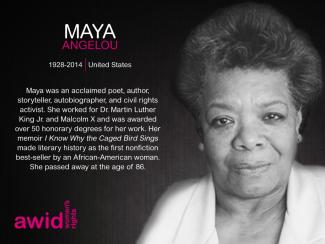
Maya Angelou
The body is a powerful entity. As women, our bodies are controlled, oppressed and policed from the womb. The way we look, move, dress, walk, speak, gesture, laugh. I often wondered at what drives patriarchal fears around the power of female bodies. Where I come from sex work and sex workers were whispered of with simultaneous contempt, disgust, fascination, pity and condemnation.
Where I come from sex work and sex workers were whispered of with simultaneous contempt, disgust, fascination, pity and condemnation.

I first encountered sex work and sex workers at age 22. Simple conversations, sitting in circles, chatting over coffee and tea, we explored each other’s lives, experiences, thoughts and feelings.
For sex workers, sex work was the most worthwhile choice out of all other options to pay bills, to support family, to have more flexible working hours, to have sex. Just as I chose my job as the most worthwhile, to pay bills, to support family, to have more flexible working hours.
These individuals, women and men, taught me that I made my own decisions about my body… where I focus its life and energy, whether I use it for pleasure or pain, whether I trade it in or give it freely, and how I want to feel about my body. The awareness was as exciting as it was empowering.
Crear | Résister | Transform: a festival for feminist movements – 2021… you accompanied me through a series of life-changing moments (!!!)
We call these ‘events,’ though in truth, to me, your feminist learning spaces are, where I take a little of what’s inside me, a little of what your speakers say and some from the discussions to go deeper into our understanding.
Sharing… Partaking… Immersing…
in strength, in vulnerability, in pleasure.
Simply being the transformative feminist that I am, without pretentions, without misgivings…
Welcoming the transformative feminist that I have always been, without even knowing the term or acknowledging it in such a manner or in such terms…
Finding home for the fiercely transformative feminist living within me…
Despite the anger, rage and frustration of not being treated as equals and being treated with ‘less __ than,’
I did not always consider myself a feminist nor did I recognise myself within the feminist movement or discourse… Truly, I appreciate doors being held open, chairs being pulled out to be seated, acknowledgement as a woman, of my femininity.
At times I dismissed the patriarchy with annoyance, at times, I responded with frustration and anger but I did not address it… I did not notice its sinister, insidious toxicity… I was privileged enough to be able to work through it, to survive it, to overcome it, to excel in spite of it… I did not question enough, challenge enough, push my boundaries enough… I did not do enough…
connecting with sex workers, exploring sexuality, and the women for peace and security...
Until I became fully aware and understood the implications of both privilege and oppression that was intersectional.
Until I realised what it meant to fight for gender justice and not simply ‘equality for all.’
Practitioner and facilitator no longer, I am a transformative feminist practitioner and facilitator.
Being a feminist means that I will act
Plunging into uncertain, fragile, complex (and possibly quite violent) future…
I am deeply grateful for you and I promise to remain fierce in addressing and redressing problematic issues around gender, race, ethnicity, social class, sexual orientation and ability, and remain present and faithful to the struggle for inclusion, equity and justice.
Khin Khin
Panels, workshops, plenaries and spaces for exchange between collectives, activists and organizations in struggle to collectively walk the path towards an agenda and a program of struggle for ecosocialism.
📅 November 8 - November 11, 2025
📍 Buenos Aires, Argentina

As feminist and labour movements, together in solidarity, we articulate the following points as a collective vision for care economies with domestic workers rights at the centre. We call on feminist and social movements to join the call to rethink the economy with care at its centre recognising the rights, agency and leadership of domestic worker movements.
Domestic and care work is in the limelight after the COVID-19 global pandemic as it provided the means to carry the world through multiple intersecting crises at the global scale. The World Bank, the International Monetary Fund, and other multilateral institutions also acknowledge the importance of care and domestic work in sustaining the world’s economy. However, it is our analysis that this recognition most often takes an instrumentalist approach (i.e. care work sustains the ‘productive’ economy) focused on profiteering from care work without recognizing care as a human right and public good, or providing recognition and rights to the workers undertaking the bulk of this labour.
Sign up to be an AWID member to connect with 9,600+ global feminist movements and co-create a range of platforms and spaces designed especially for activists and organizations from teach-ins to solidarity spaces and member mixers.
The AWID Membership community is available as an app. Download the app and start connecting with movements!
 |
 |
Women human rights defenders (WHRDs) worldwide defend their lands, livelihoods and communities from extractive industries and corporate power. They stand against powerful economic and political interests driving land theft, displacement of communities, loss of livelihoods, and environmental degradation.
Extractivism is an economic and political model of development that commodifies nature and prioritizes profit over human rights and the environment. Rooted in colonial history, it reinforces social and economic inequalities locally and globally. Often, Black, rural and Indigenous women are the most affected by extractivism, and are largely excluded from decision-making. Defying these patriarchal and neo-colonial forces, women rise in defense of rights, lands, people and nature.
WHRDs confronting extractive industries experience a range of risks, threats and violations, including criminalization, stigmatization, violence and intimidation. Their stories reveal a strong aspect of gendered and sexualized violence. Perpetrators include state and local authorities, corporations, police, military, paramilitary and private security forces, and at times their own communities.
AWID and the Women Human Rights Defenders International Coalition (WHRD-IC) are pleased to announce “Women Human Rights Defenders Confronting Extractivism and Corporate Power”; a cross-regional research project documenting the lived experiences of WHRDs from Asia, Africa and Latin America.
"Women Human Rights Defenders confronting extractive industries: an overview of critical risks and Human Rights obligations" is a policy report with a gender perspective. It analyses forms of violations and types of perpetrators, quotes relevant human rights obligations and includes policy recommendations to states, corporations, civil society and donors.
"Weaving resistance through action: Strategies of Women Human Rights Defenders confronting extractive industries" is a practical guide outlining creative and deliberate forms of action, successful tactics and inspiring stories of resistance.
The video “Defending people and planet: Women confronting extractive industries” puts courageous WHRDs from Africa, Asia, and Latin America in the spotlight. They share their struggles for land and life, and speak to the risks and challenges they face in their activism.
Challenging corporate power: Struggles for women’s rights, economic and gender justice is a research paper outlining the impacts of corporate power and offering insights into strategies of resistance.
AWID acknowledges with gratitude the invaluable input of every Woman Human Rights Defender who participated in this project. This project was made possible thanks to your willingness to generously and openly share your experiences and learnings. Your courage, creativity and resilience is an inspiration for us all. Thank you!



When you come to the center of São Paulo, you will see the building of the Ocupação 9 de Julho - a landmark in the struggle for social housing and an important cultural site. This is the work of The Homeless Workers Movement (Movimento dos Sem-Teto do Centro, MSTC) a movement of over 2000 people that operates in the city center and converts abandoned spaces into housing for low-income workers, children, women, adults, the elderly, migrants and refugees. In this particular building, they provide food and shelter to 122 families.