Special Focus

AWID is an international, feminist, membership organisation committed to achieving gender equality, sustainable development and women’s human rights

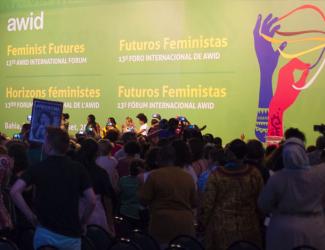
AWID Forum: Co-creating Feminist Futures

In September 2016, the 13th AWID international Forum brought together in Brazil over 1800 feminists and women’s rights advocates in a spirit of resistance and resilience.

This section highlights the gains, learnings and resources that came out of our rich conversations. We invite you to explore, share and comment!


What has happened since 2016?

One of the key takeaways from the 2016 Forum was the need to broaden and deepen our cross-movement work to address rising fascisms, fundamentalisms, corporate greed and climate change.

With this in mind, we have been working with multiple allies to grow these seeds of resistance:

And through our next strategic plan and Forum process, we are committed to keep developing ideas and deepen the learnings ignited at the 2016 Forum.

What happens now?

The world is a much different place than it was a year ago, and it will continue to change.

The next AWID Forum will take place in the Asia Pacific region (exact location and dates to be announced in 2018).

We look forward to you joining us!

About the AWID Forum

AWID Forums started in 1983, in Washington DC. Since then, the event has grown to become many things to many peoples: an iterative process of sharpening our analyses, vision and actions; a watershed moment that reinvigorates participants’ feminisms and energizes their organizing; and a political home for women human rights defenders to find sanctuary and solidarity.

Learn more about previous Forums
Related Content

Snippet FEA Principles of work Education and Learning (EN)

A pile of books in a pink cover and black graduation cap on top.

EDUCATION AND CONTINUOUS LEARNING

Наша группа, организация и/или движение не получали и не мобилизовывали финансирование от внешних спонсоров – можем ли мы принять участие в опросе?

Да! Мы признаем и ценим различные причины, по которым феминистки(-ты), работающие в различных контекстах, не имеют внешнего финансирования. Эти причины могут разниться: от невозможности подавать заявки на гранты из-за несоответствия требованиями и/или невозможности получения денег из-за рубежа, до использования генерируемых автономно ресурсов, в качестве самостоятельной политической стратегии. Мы хотим услышать ваше мнение, независимо от наличия или отсутствия у вас опыта работы с внешним финансированием.

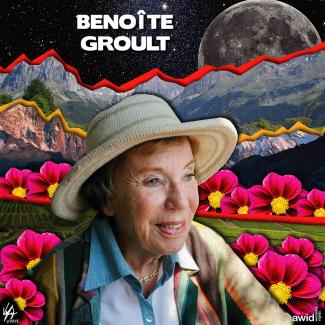
Benoîte Groult

Benoîte was a French journalist, writer, and feminist activist.

She published more than 20 novels as well as many essays on feminism.

Her first book “Ainsi Soit-Elle” (loosely translated as “As She Is”) was published in 1975. The book explored the history of women’s rights as well as misogyny and violence against women.

Her last book, “Ainsi Soit Olympe de Gouges,” explored women’s rights during the French Revolution, centering on the early French feminist Olympe de Gouges. De Gouges was guillotined in 1793 for challenging male authority and publishing a declaration of women’s rights (“Déclaration Des droits de la Femme et de la Citoyenne”) two years earlier. 


Benoïte Groult, France

FR Editor's note

Editor's note

Feminist Realities is a warm and caring invitation, a kind of en masse-care (versus self-care) act of preservation, an invitation to archive, to take stock of all the work lest it disappear. (...)

Read

Nicole Barakat

nicole barakat -verge exhibition april 2018
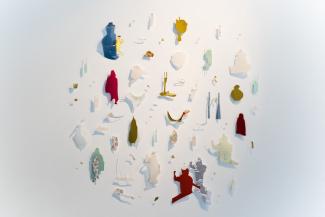
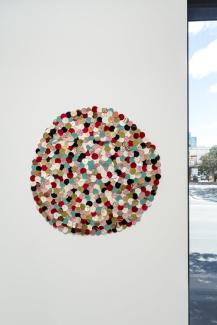
We transcend time and place, Hand cut found paper (2017)
nicole barakat -verge exhibition april 2018
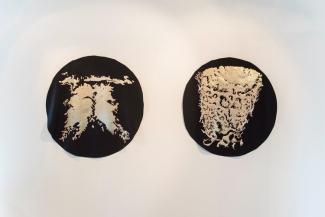
We will remember who we are and We will persist Cotton embroidered hand cut lamé on wool silk cloth (2018)
nicole barakat -verge exhibition april 2018
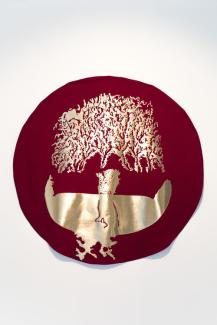
​​We will return home, Silk embroidered hand cut lamé on cotton velveteen (2018)
verge march 18 - document photography
We will heal in the now, Hand cut silk, wool, lamé, cotton, direct digital print silk satin on linen (2018)


we are infinite

An exhibition by Nicole Barakat, embodying her reconnection with the diaspora of objects from her ancestral homelands in the South West Asia and North Africa (SWANA) region.
 
Barakat presents a collection of textile works as manifestations of her practice of engaging with displaced, and often stolen objects held within Western museum collections including the Louvre, British Museum and Nicholson Museum. 
 
To by-pass the gatekeepers and breach the vitrines holding these ancestral objects, Barakat reclaims pre-colonial, non-linear, receptive forms of knowing that are often devalued and dismissed by colonial and patriarchal institutions - engaging with coffee cup divination, dream-work, intuitive listening and conversations with the objects themselves (source).

About Nicole Barakat

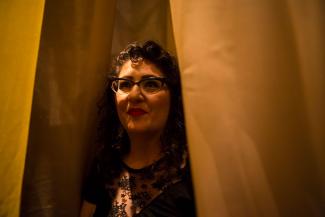
Nicole Barakat portrait
Nicole Barakat is a queer femme, SWANA artist born and living on Gadigal Country (so-called Sydney, Australia). She works with deep listening and intuitive processes with intentions to transform the conditions of everyday life. Her work engages unconventional approaches to art-making, creating intricate works that embody the love and patience that characterises traditional textile practices. 

Her works include hand-stitched and hand-cut cloth and paper drawings, sculptural forms made with her own hair, cloth and plant materials as well as live work where she uses her voice as a material. 

Nicole’s creative practice is rooted in re-membering and re-gathering her ancestral knowing, including coffee divination and more recently working with plants and flower essences for community care and healing. 
Main image
AWID-CSW_header.png
Body

Snippet FEA Story 1 Maps Economies of Care (ES)

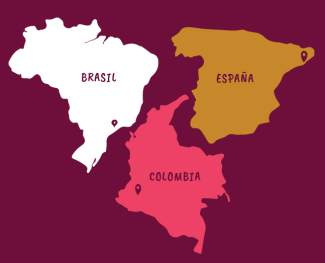
Los mapas de Brasil en blanco, España en amarillo mostaza y Colombia en rosa sobre un fondo color vino o burdeos.

Quais são os idiomas oficiais do inquérito WITM?

Por enquanto, o inquérito no KOBO está disponível em árabe, inglês, francês, português, russo e espanhol. Terá a oportunidade de selecionar um dos idiomas no início do inquérito.

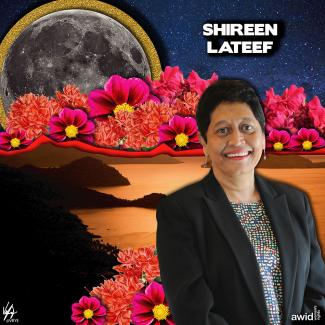
Shireen Lateef

Shireen fue una inspiración para muchas feministas en Fiyi y una aliada poderosa del movimiento de mujeres.

Abogó incansablemente por la igualdad de género tanto a nivel local como regional. Comenzó su carrera como especialista junior en género en el Banco de Desarrollo Asiático e introdujo profundos cambios en las políticas de género de la institución. Su investigación «Gobernar mediante lxs danda: violencia doméstica entre lxs indo-fiyianxs» fue uno de los primeros trabajos de investigación sobre violencia doméstica, matrimonio y mujeres en Fiyi. Este trabajo fundacional ha sido un catalizador para el trabajo feminista en esta área.

El legado de Shireen sigue vivo porque son muchxs lxs que recuerdan su influencia, su compromiso y su apoyo al movimiento de mujeres de Fiyi y del Pacífico. 


Shireen Lateef, Fiji

FRMag - My queer Ramadan

Mi ramadán queer

por Amal Amer

Rezo con mi familia por primera vez en seis años envueltx en un keffiyah que recogí de un contenedor de basura. (...)

Leer

arte: «Angels go out at night too» [Los ángeles también salen de noche], Chloé Luu >

Tendencias anti-derechos en los sistemas regionales de derechos humanos

Chapter 6

En la Comisión Africana y en el Sistema Interamericano, los actores antiderechos impulsan nociones esencialistas de cultura y género para impedir el avance de los derechos y socavar las responsabilidades. Como vemos, los actores anti-derechos están ejerciendo su influencia sobre los sistemas regionales de derechos humanos, así como en los espacios internacionales.

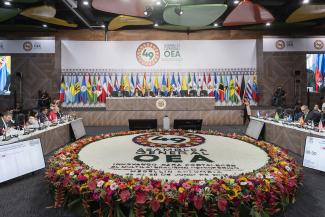
2019 JUN 27 Meeting of the Summit Implementation Review Group in Colombia
© Juan Manuel Herrera/OAS/Flickr
2019 JUN 27 Reunión del Grupo de Revisión de la Implementación de Cumbres en Colombia

La Comisión Africana de Derechos Humanos y de los Pueblos ha comenzado a definir a los derechos sexuales y de las mujeres como un menoscabo a su capacidad de ocuparse de los «derechos reales» y como contrarios a los «valores africanos», con lo cual se establece un precedente anti-derechos preocupante. La anulación del estatus de observador de la Coalición de Lesbianas Africanas es un ejemplo de esta tendencia y muestra la forma en que el espacio para el involucramiento feminista panafricanista está siendo restringido.

En la Organización de Estados Americanos (OEA) y en el Sistema Interamericano de Protección de los Derechos Humanos, las estrategias anti-derechos incluyen la oenegización de grupos religiosos, la utilización de discursos seculares, y la cooptación de marcos de discriminación. La influencia antiderechos se ha materializado de diversas maneras, que incluyen la intimidación de activistas trans y la obstrucción de la introducción de lenguaje progresista en las resoluciones.

Índice de contenidos

  • Silenciamiento de feministas en el Sistema Africano de Derechos Humanos
  • Grupos anti-derechos en América Latina: Asamblea General de la Organización de Estados Americanos (OEA) y el Sistema Interamericano de Protección de los Derechos Humanos

Leer el capítulo completo

Snippet - That Feminist Fire Logo (FR)

Texte blanc qui dit le titre de notre podcast en français : Notre flamme féministe

هل عليّ القيام بأي تجهيزات قبل تعبئة الاستطلاع؟

يركّز استطلاع "أين المال" على وقائع التمويل للتنظيمات النسوية، تسأل أغلبية الأسئلة عن تمويل مجموعتكم/ن بين الأعوام 2021-2023. سوف تحتاجون أن تكون لديكم/ن معلومات معيّنة عند تعبئة الاستطلاع مثل ميزانيتكم/ن السنوية ومصادر التمويل الأساسية.

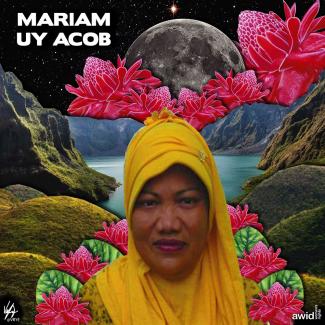
Mariam Uy Acob

Mariam était assistante juridique à l'Alliance des droits humains Kawagib Moro.

Mariam était une fervente critique de la militarisation imposée aux communautés moro et a constamment dénoncé les bombardements aériens et les cantonnements de troupes. Elle a dû fuir et chercher refuge après avoir révélé et dénoncé des injustices commises à l'encontre des communautés musulmanes aux Philippines.

Il semble que Mariam ait été assassinée par de présumés agents de l'armée à cause de son action en tant que défenseure. Les assaillants qui l‘ont tuée l’ont épiée, ont rattrapé le véhicule dans lequel elle se trouvait et ont fait feu sur elle à sept reprises.


Mariam Uy Acob, Philippines

FRMag - Ashawo Work na Work

« Ashawo Work na Work » : Comment les jeunes féministes ghanéennes transforment des horizons féministes en réalité

par Fatima B. Derby

En 2017, la campagne #ManifestezVotreSolidarité a mis en évidence la manière dont les jeunes féministes pouvaient construire un avenir féministe en étant là les unes pour les autres, en participant à des conversations transrégionales, en marchant en solidarité avec d'autres activistes et en collaborant entre les mouvements. (...)

Lire

< illustration : « Laisse-les pousser », par Gucora Andu

S'inscrire à la liste de diffusion

* indicates required
               
                   
Sélectionnez les thèmes sur lesquels vous souhaitez recevoir des informations :