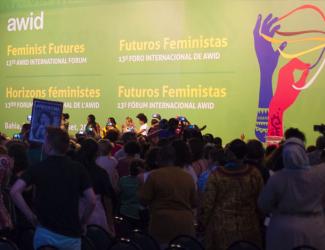
AWID Forum: Co-creating Feminist Futures
In September 2016, the 13th AWID international Forum brought together in Brazil over 1800 feminists and women’s rights advocates in a spirit of resistance and resilience.
This section highlights the gains, learnings and resources that came out of our rich conversations. We invite you to explore, share and comment!
What has happened since 2016?
One of the key takeaways from the 2016 Forum was the need to broaden and deepen our cross-movement work to address rising fascisms, fundamentalisms, corporate greed and climate change.
With this in mind, we have been working with multiple allies to grow these seeds of resistance:
- Our Seed Initiatives, has helped 20 ideas that emerged at the Forum to grow into concrete actions
- The video “Defending people and planet” and guide “Weaving resistance through action” put courageous WHRDs in the spotlight and present concrete strategies they use to confront corporate power.
- With our animations about the State of Our Feminist Movements and Climate and Environmental Justice, movements now have creative tools to support their advocacy work.
- The compiling artistic expressions of our #MovementsMatter series continues to inspire stronger and more creative organizing around the world.
- Movements can also benefit from new methodologies on Visioning Feminist Futures (Coming up soon!)
And through our next strategic plan and Forum process, we are committed to keep developing ideas and deepen the learnings ignited at the 2016 Forum.
What happens now?
The world is a much different place than it was a year ago, and it will continue to change.
The next AWID Forum will take place in the Asia Pacific region (exact location and dates to be announced in 2018).
We look forward to you joining us!
The next AWID Forum will take place in the Asia Pacific region (exact location and dates to be announced in 2018).
We look forward to you joining us!
About the AWID Forum
AWID Forums started in 1983, in Washington DC. Since then, the event has grown to become many things to many peoples: an iterative process of sharpening our analyses, vision and actions; a watershed moment that reinvigorates participants’ feminisms and energizes their organizing; and a political home for women human rights defenders to find sanctuary and solidarity.
Related Content
L’AWID EN 2014 : Renforcer les processus d’organisation en faveur des droits des femmes dans le monde entier

L’AWID a le plaisir de partager son rapport annuel 2014.
Du renforcement des connaissances sur les enjeux liés aux droits des femmes à l’élaboration de réponses plus efficaces aux violences perpétrées contre les défenseuses des droits humains, nos efforts de l’an dernier n’ont cessé de poursuivre la consolidation des mouvements féministes et de droits des femmes du monde entier.
Consultez le rapport pour en apprendre davantage sur la façon dont nous avons renforcé les capacités de nos membres et plus largement de notre public , exercé de fortes pressions pour que les droits des femmes demeurent au premier plan des principaux processus internationaux relatifs au développement et aux droits humains, et contribué à améliorer la couverture médiatique des problématiques des droits des femmes et des processus organisationnels qui y sont liés. Le rapport propose une vue panoramique de nos projets ainsi que certains chiffres qui témoignent concrètement de notre impact.
La collaboration est au cœur de toutes nos actions et nous anticipons avec enthousiasme une autre année de travail ensemble afin de mener nos mouvements vers un niveau supérieur.
Coup d'oeil à l'intérieur du rapport
Dans un contexte de plus en plus exigeant, nous pouvons néanmoins discerner d’importants signes d’espoir de voir les priorités relatives aux droits des femmes progresser. Les activistes des droits des femmes jouent toujours un rôle crucial dans la création d’espaces au sein desquels il est possible d’exiger des changements structurels, de soutenir les communautés, de s’opposer à la violence et de préserver les acquis essentiels/ importants/majeurs. Il y a en effet des occasions à saisir pour influencer les nouveaux acteurs et mobiliser des ressources plus abondantes en faveur des organisations de droits des femmes.
Pour ce faire, il est essentiel de mener de solides actions collectives et de renforcer le processus d’organisation des activistes des droits des femmes.
Notre impact

- Nous avons contribué au renforcement des connaissances sur les problématiques des droits des femmes
- Nous avons renforcé notre communauté en ligne
- Nous avons contribué à l’amélioration des réponses aux violences perpétrées contre les défenseuses des droits humains
- Nous avons renforcé le mouvement grâce à des processus de travail collaboratifs
- Nous avons exercé une pression maximale pour que les droits des femmes demeurent au premier plan des processus internationaux majeurs relatifs au développement
- Nous avons permis aux organisations de droits des femmes d’influencer plus efficacement les donateurs et à la communauté des donateurs de mieux percevoir et comprendre les organisations de droits des femmes
- Nous avons contribué à accroître et à améliorer la qualité de la couverture faite par les médias généralistes des problématiques des droits des femmes et des organisations actives dans ce domaine
Je suis sincèrement enchantée par tout ce qu’a réalisé l’AWID depuis 1982 et j’espère être en mesure d’apporter ma contribution, même modeste, à ce dur labeur en faveur des femmes et de l’égalité de genre. » — Aleksandra Miletic-Santic, Bosnie Herzégovine
Nos membres

Lire le rapport complet
Pourquoi devrais-je envisager de participer à l’enquête?
Votre participation à l’enquête WITM est importante à plusieurs égards. Vous aurez, notamment, l’occasion de faire part de votre expérience vécue de la mobilisation de fonds pour soutenir votre organisation, de réclamer votre autorité en tant qu’experte sur la manière dont l’argent est transféré et qui il atteint réellement, et de contribuer à un plaidoyer collectif et cohérent auprès de financeurs afin que les fonds circulent davantage et soient de meilleure qualité. Au cours des deux dernières décennies, la recherche WITM de l’AWID s’est révélée être une ressource clé pour les activistes et les financeurs. Nous vous invitons chaleureusement à participer à sa troisième édition pour souligner la situation actuelle des ressources, remettre en question les fausses solutions, et identifier les modifications nécessaires dans le financement afin que les mouvements s’épanouissent et relèvent les défis complexes de notre époque.
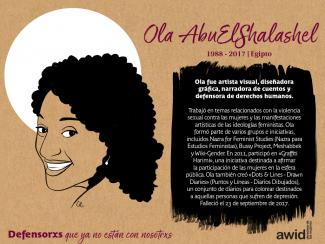
Ola AbuElShalashel
À propos du Forum international de l'AWID
Plus qu'un événement !
Le Forum international de l'AWID est un événement mondial qui offre aux participant·e·s une occasion unique de se rencontrer, tisser des alliances, de faire la fête et d’apprendre des autres dans une ambiance stimulante, riche en émotions et en toute sécurité.
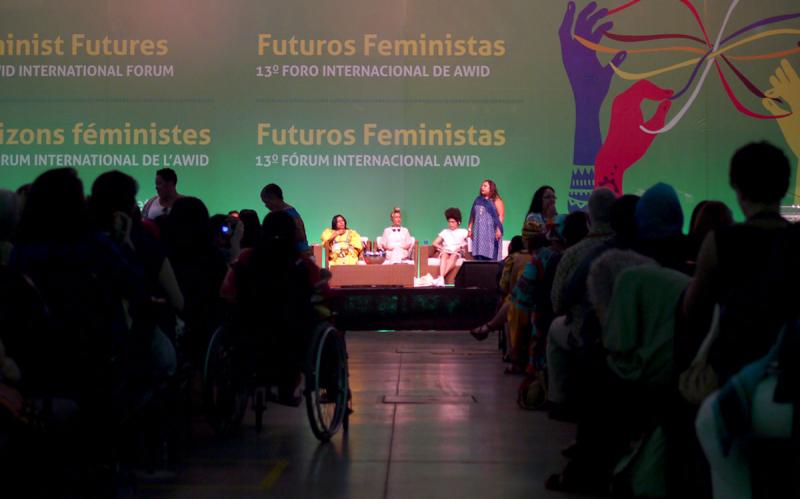
De plus en plus, nous nous efforçons de penser le processus du Forum au-delà des limites de l’événement lui-même. Nous ouvrons des discussions avec des partenaires et renforçons des alliances tout au long de l’année. Nous essayons d’être au plus proches des mouvements locaux pour comprendre leurs difficultés et co-créer des solutions.
Le Forum de l’AWID un espace propice aux discussions en profondeur, qui repousse nos limites internes et externes et favorise le développement personnel et professionnel, en plus de renforcer nos mouvements pour la justice sociale, de genre et les droits des femmes.
Nous envisageons ce moment de rencontre comme une réponse à l’urgence de favoriser un engagement plus marqué et une action mieux concertée entre les organisations féministes, les défenseur·e·s des droits des femmes et les autres activistes de justice sociale. Pour nous, le Forum est plus qu’un événement. Il nourrit nos réflexions respectives et nous aide à cerner des initiatives concrètes dans lesquelles les mouvements féministes et peuvent s’engager avec d’autres acteurs·trices.
Au départ un événement national d’environ 800 personnes, le Forum rassemble aujourd'hui plus de 2 000 féministes, des dirigeant·e·s communautaires, des activistes de justice sociale et des bailleurs de fonds du monde entier.
Le prochain forum de l'AWID aura lieu du 11 au 14 janvier 2021 à Taipei, Taiwan.
Les Forums précédents
2016 : Horizons féministes : Construire un pouvoir collectif pour les droits et la justice (Costa de Sauipe, Brésil)
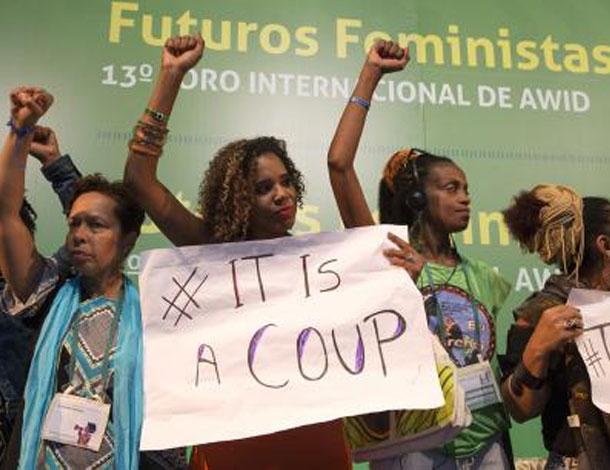
Compte tenu de la complexité du monde d'aujourd'hui, le Forum de l'AWID 2016 ne s'est pas concentré sur un « problème » particulier mais a plutôt exploré comment créer des moyens efficaces de travailler ensemble !
Malgré le contexte difficile dans lequel s’est déroulé le Forum de 2016 (l’épidémie de Zika, la grève au ministère des Affaires étrangères brésilien, la destitution de la présidente Dilma Rousseff et l’instabilité qui a suivi), il a rassemblé plus de 1800 participant-e-s issu-e-s de 120 pays et territoires de toutes les régions du monde.
Ce qu’il s’est passé au Forum 2016:
- Pour 96 % des participant·e·s qui ont répondu à l’enquête d’évaluation du Forum, le Forum a représenté une source majeure d’inspiration et d’énergie.
- Quelque 98 % des participant·e·s ont considéré qu’il s’agissait d’un espace de rassemblement important pour les mouvements féministes et ont exprimé l’espoir que l’AWID continue d’organiser de tels forums.
- 59 % des répondant·e·s au sondage d’évaluation du Forum ont déclaré être très satisfai·e·s du Forum et 34 % assez satisfait·e·s.
- Plus de 150 sessions ont été organisées sous divers formats et sur une variété de sujets allant de l’intégrité physique et de la liberté corporelle, en passant par la violence de genre sur le lieu de travail et les stratégies visant à renforcer le pouvoir collectif.
- Le premier Forum des Féminismes noirs juste avant le Forum de l’AWID lui-même a rassemblé 250 féministes noires du monde entier pour co-créer un espace important afin de construire et de renforcer les relations transnationales et intergénérationnelles
Lisez en détail les accomplissement du Forum de l’AWID 2016 :
Téléchargez le rapport d’évaluation
2012 - Transformer le pouvoir économique pour avancer les droits des femmes et la justice (Istanbul, Turquie)
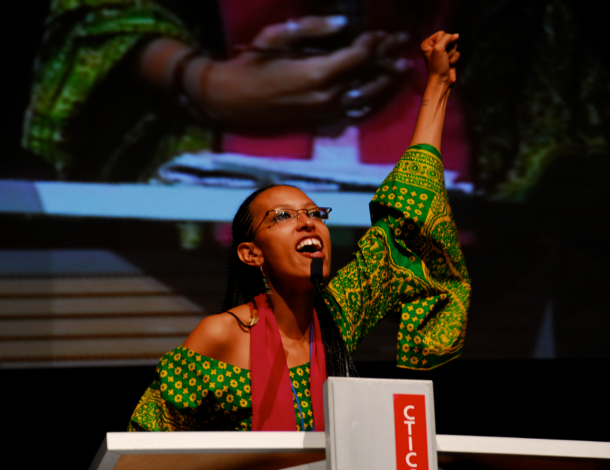
Le 12e Forum de l’AWID s’est tenu à Istanbul en Turquie en 2012, avec pour thème central Transformer le pouvoir économique pour avancer les droits des femmes et la justice. Ce Forum fut le plus important et le plus diversifié de l’histoire, rassemblant quelque 2 239 activistes pour les droits des femmes en provenance de 141 pays différents. Parmi elles-eux, environs 65 % venaient de pays du Sud, près de 15 % étaient des jeunes femmes de 30 ans et moins, alors que 75 % participaient au Forum pour la première fois.
Le Forum s’est focalisé sur la transformation du pouvoir économique pour faire progresser les droits des femmes et la justice en proposant plus de 170 activités incluant des ateliers de formation en économie féministe, en passant par toute une séries d’ateliers de discussion et autres tables rondes solidaires autour de 10 grandes questions cruciales.
Dans l’élan du Forum, nous avons transformé la page qui lui était dédiée en un outil multimédia en ligne qui intègre également les contenus générés par les participant-e-s sur toutes les composantes du Forum.
Visitez l'archive web du Forum 2012
Tous les Forums
- 2016 : Horizons féministes : Construire un pouvoir collectif pour les droits et la justice (Costa de Sauipe, Brésil). Lire le résumé du rapport d'évaluation du Forum 2016
- 2012 : Transformer le pouvoir économique pour avancer les droits des femmes et la justice (Istanbul)
- 2008 : Le Pouvoir des mouvements (Le Cap, Afrique du Sud). Lisez le Rapport du Forum 2008
- 2005 : Comment survient le changement ? (Bangkok, Thaïlande)
- 2002 : Réinventer la mondialisation (Guadalajara, Mexique)
- 1999 : Propositions innovantes pour l’égalité et la justice (États-Unis)
- 1996 : L’après-Beijing : Des paroles aux actes (États-Unis)
- 1993 : Joindre nos forces pour développer des visions communes (États-Unis)
- 1991 : Travailler ensemble, apprendre ensemble : Un dialogue Nord-Sud (États-Unis)
- 1989-1990 : L’autonomisation mondiale des femmes (États-Unis)
- 1987 : Aller de l’avant : Propositions innovantes pour la recherche, l’action et les politiques de développement (États-Unis)
- 1985 : Femmes créatrices de richesse : Transformer le développement économique (États-Unis)
- 1983 : Les Femmes dans le développement (WID) (Washington D.C., États-Unis)
Snippet FEA EoS The Powerful (EN)

The Powerful
Self-protection and strengthening
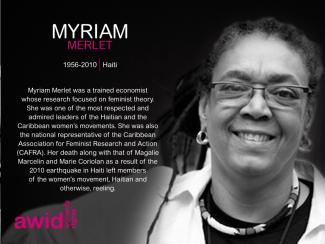
Myriam Merlet
Annual Report 2009
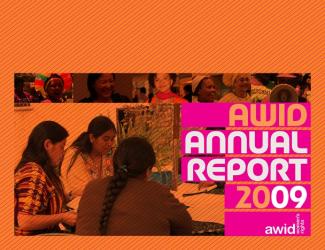
Our 2009 Annual Report includes highlights of another busy year of action and reflection at AWID as we implement our commitment to boldly, creatively and effectively contribute to the advancement of women’s rights and gender equality worldwide.
In the report you can find out about our programmatic achievements, membership, finances, what to watch out for in 2010, as well as information about our Board and Staff.
Our group, organization and/or movement has not taken or mobilized funding from external funders, should we take the survey?
Yes! We recognize and appreciate different reasons why feminists, in their respective contexts, don’t have external funding: from being ineligible to apply for grants and/or receive money from abroad, to relying on resources generated autonomously as a political strategy in its own right. We want to hear from you regardless of your experience with external funding.
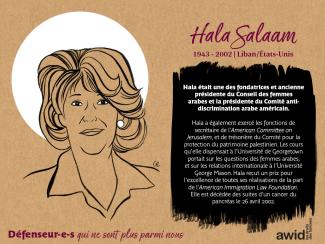
Hala Salaam
English article
English body
Snippet FEA Land and Agroecology (ES)
AGROECOLOGÍA Y
SOBERANÍA ALIMENTARIA
Mujeres Rurales Cuidando la Naturaleza y las Comunidades
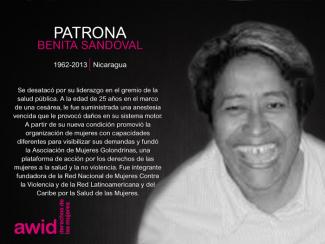
Patrona Benita Sandoval
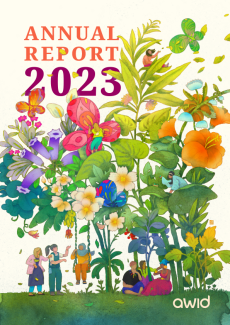
2023: Fierce Feminisms: Together We Rise
For us at AWID, 2023 was the first year of our new Strategic Plan, “Fierce Feminisms: Together We Rise”, which speaks to the unapologetic drive needed to change the world, and the plurality of feminisms and movements in our ecosystem.
In the course of 2023, the volatile situation in Sudan has escalated greatly. The unspeakable genocide in Gaza, in the context of ongoing colonization and occupation of Palestine, continues as we write these lines. Climate crises, militarization, and extractivism all persist as threats to people and the planet. Building stronger movements and people power is a vision to which we contribute daily, through AWID membership, teach-ins, resourcing advocacy and more.
Download the full 2023 Annual Report
From centering climate in feminist economies to advocating for resourcing feminist movements - an urgent task, given the chronic underfunding of feminist, indigenous and Global South movements who are on the frontlines of climate crisis - we are finding solutions.
¿Cuáles son los idiomas oficiales de ¿Dónde está el dinero?
Por el momento, la encuesta en KOBO está disponible en árabe, español, francés, inglés, portugués y ruso. Tendrás oportunidad de seleccionar el idioma de preferencia al inicio de la encuesta.
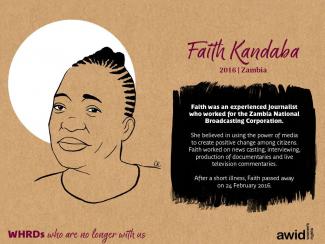
Faith Kandaba
Défendre les droits des personnes LGBT*QI
Une étudiante, une scénariste, une leader, une avocate. Les quatre femmes auxquelles nous rendons hommage ci-dessous avait toutes leur propre façon de vivre leur activisme, mais elles avaient en commun la promotion et la défense des droits des personnes lesbiennes, gaies, bisexuelles, trans*, queer et intersexes. Nous vous invitons à vous joindre à nous pour commémorer ces défenseuses, leur travail et l'héritage qu’elles nous ont laissé. Faites circuler ces mèmes auprès de vos collègues et amis ainsi que dans vos réseaux et twittez en utilisant les hashtags #WHRDTribute et #16Jours.
S'il vous plaît cliquez sur chaque image ci-dessous pour voir une version plus grande et pour télécharger comme un fichier


Snippet FEA Audio Land and Agroecology (EN)
Escucha esta historia aquí:
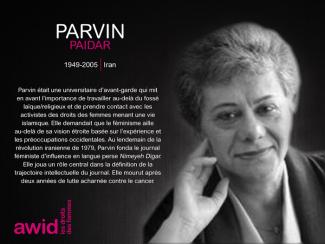
Parvin Paidar
Inna Michaeli
Biography
Inna est une activiste et sociologue féministe queer comptant de nombreuses années d'engagement profond dans les luttes féministes et LGBTQI+, l'éducation politique et l'organisation par et pour les femmes migrantes, ainsi que la libération de la Palestine et la solidarité avec cette dernière. Inna a rejoint l'AWID en 2016 et occupé différents postes, dont celui de directrice des programmes plus récemment. Basée à Berlin, en Allemagne, elle a grandi à Haïfa, en Palestine/Israël, et est née à Saint-Pétersbourg en Russie. Elle porte ces territoires politiques et cette résistance au passé et au présent colonial dans son féminisme et sa solidarité transnationale.
Inna est l'auteure de « Women's Economic Empowerment: Feminism, Neoliberalism, and the State » (« L'autonomisation Économique des Femmes : Féminisme, Néolibéralisme et l’État », Palgrave Macmillan, 2022), un ouvrage basé sur une thèse qui lui a valu un doctorat de l'Université Humboldt de Berlin. En tant qu'universitaire, elle a enseigné des cours sur la mondialisation, la production de connaissances, l'identité et l'appartenance. Inna est titulaire d'un master en études culturelles de l'Université hébraïque de Jérusalem. Elle a été membre du conseil d'administration de +972 Advancement of Citizen Journalism, et l’est actuellement pour Jewish Voice for a Just Peace in the Middle East (en Allemagne). Auparavant, Inna a travaillé avec la Coalition des Femmes pour la Paix et est une passionnée de la mobilisation des ressources pour l'activisme populaire.
Position
Codirectrice Exécutive
Add to stories
Off
Y a-t-il une préparation particulière à suivre avant de répondre aux questions de l’enquête?
L’enquête WITM portant sur les réalités du financement des organisations féministes, la plupart des questions traitent du financement de votre groupe entre 2021 et 2023. Vous aurez besoin de disposer de ces informations pendant que vous répondez aux questions de l’enquête (vos budgets annuels et principales sources de financement, par exemple)