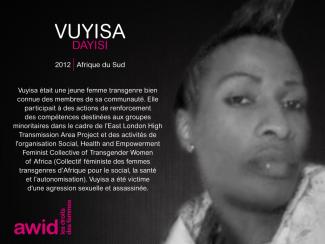
Vuyisa Dayisi
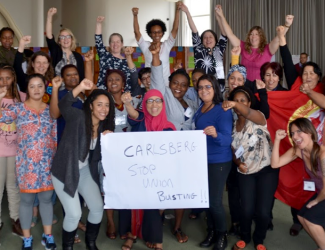
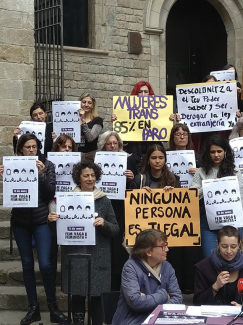
Women human rights defenders (WHRDs) worldwide defend their lands, livelihoods and communities from extractive industries and corporate power. They stand against powerful economic and political interests driving land theft, displacement of communities, loss of livelihoods, and environmental degradation.
Extractivism is an economic and political model of development that commodifies nature and prioritizes profit over human rights and the environment. Rooted in colonial history, it reinforces social and economic inequalities locally and globally. Often, Black, rural and Indigenous women are the most affected by extractivism, and are largely excluded from decision-making. Defying these patriarchal and neo-colonial forces, women rise in defense of rights, lands, people and nature.
WHRDs confronting extractive industries experience a range of risks, threats and violations, including criminalization, stigmatization, violence and intimidation. Their stories reveal a strong aspect of gendered and sexualized violence. Perpetrators include state and local authorities, corporations, police, military, paramilitary and private security forces, and at times their own communities.
AWID and the Women Human Rights Defenders International Coalition (WHRD-IC) are pleased to announce “Women Human Rights Defenders Confronting Extractivism and Corporate Power”; a cross-regional research project documenting the lived experiences of WHRDs from Asia, Africa and Latin America.
"Women Human Rights Defenders confronting extractive industries: an overview of critical risks and Human Rights obligations" is a policy report with a gender perspective. It analyses forms of violations and types of perpetrators, quotes relevant human rights obligations and includes policy recommendations to states, corporations, civil society and donors.
"Weaving resistance through action: Strategies of Women Human Rights Defenders confronting extractive industries" is a practical guide outlining creative and deliberate forms of action, successful tactics and inspiring stories of resistance.
The video “Defending people and planet: Women confronting extractive industries” puts courageous WHRDs from Africa, Asia, and Latin America in the spotlight. They share their struggles for land and life, and speak to the risks and challenges they face in their activism.
Challenging corporate power: Struggles for women’s rights, economic and gender justice is a research paper outlining the impacts of corporate power and offering insights into strategies of resistance.
AWID acknowledges with gratitude the invaluable input of every Woman Human Rights Defender who participated in this project. This project was made possible thanks to your willingness to generously and openly share your experiences and learnings. Your courage, creativity and resilience is an inspiration for us all. Thank you!
✉️ Requiere inscripción previa para grandes grupos. Entrada libre para grupos reducidos. Reserven aquí
📅 Miércoles 12 de marzo de 2025
🕒 de 02:00 a 04:00 p.m., EST
🏢 Chef's Kitchen Loft with Terrace, 216 East 45th St 13th Floor, New York
Organiza: AWID
"Pero, ¿ fue el maestro alguna vez
seducido por el poder?
¿Alguna vez se rompió
un sistema con aceptación ?
¿Cuándo el JEFE te entregará el poder con amor?
¿En Jo'Burg, en Cancún o en la ONU? - Molara Ogundipe
A través de los diferentes continentes y países, la profesora Ogundipe enseñó literatura comparada, escritura, género y filología inglesa, y utilizó la literatura como vehículo para la transformación social y el replanteamiento de las relaciones de género.
Molara Ogundipe, como pensadora, escritora, editora, crítica social, poeta y activista feminista, logró combinar el trabajo teórico con la creatividad y la acción práctica. Se la considera una de las principales voces críticas de los feminismos africanos, los estudios de género y la teoría literaria.
Molara acuñó el concepto de "estiwanismo" a partir de las siglas STIWA (Social Transformations in Africa Including Women) [Transformaciones Sociales en África Incluyendo a las Mujeres], con el fin de reconocer la necesidad de “alejar la definición del feminismo y los feminismos en relación con Euro-América u otro lugar, y declamar lealtades o deslealtades". Con su obra fundamental, "Recreándonos Nosotras Mismas", de 1994, Molara Ogundipe (publicada bajo el nombre de Molara Ogundipe-Leslie) dejó tras de sí un inmenso cuerpo de conocimientos que descolonizó el discurso feminista y "re-centró a las mujeres africanas en sus completas y complejas narrativas... guiadas por una exploración de la liberación económica, política y social de las mujeres africanas y la restauración de la agencia femenina en las diferentes culturas de África".
Comentando los retos a los que se enfrentó como joven académica, dijo:
"Cuando empecé a hablar y escribir sobre el feminismo a finales de los años sesenta y en los setenta, se me veía como una chica buena y admirable que se había extraviado, una mujer cuya cabeza se había arruinado con un exceso de aprendizaje".
Molara Ogundipe se destacó por su liderazgo a la hora de combinar el activismo con el mundo académico; en 1977 fue una de las fundadoras de la Asociación de Mujeres en la Investigación y el Desarrollo, AAWORD (por sus siglas en inglés),. En 1982 fundó Mujeres en Nigeria, WIN (por sus siglas en inglés), con el fin de abogar por un acceso pleno a los "derechos económicos, sociales y políticos" para las mujeres nigerianas. Posteriormente, estableció y dirigió la Fundación Internacional para la Educación y el Monitoreo y pasó muchos años en el consejo editorial del periódico The Guardian.
Luego de haber crecido con el pueblo yoruba, sus tradiciones, cultura e idioma, dijo una vez:
"Creo que la celebración de la vida, de las personas que mueren después de una vida llena de logros, es uno de los aspectos más hermosos de la cultura yoruba".
El nombre de alabanza yoruba 'Oiki' de Molara era Ayike. Molara nació el 27 de diciembre de 1940 y falleció el 18 de junio de 2019 a la edad de 78 años, en Ijebu-Igbo, Estado de Ogun, Nigeria.

Las realidades feministas son ejemplos palpables de los mundos justos que estamos creando conjuntamente. Existen ahora, en las múltiples formas en que vivimos, luchamos y construimos nuestras vidas.
Estas realidades feministas van más allá de la resistencia contra los sistemas de opresión, y nos muestran cómo sería un mundo sin dominación, ni explotación ni supremacía.
Estas son las historias que queremos descubrir, compartir y ampliar a lo largo de este viaje por las realidades feministas.
Creamos y difundimos alternativas: Creamos juntxs arte y expresiones creativas se centran en celebrar la esperanza, el optimismo, la sanación y la imaginación radical que inspiran las realidades feministas.
Construimos conocimiento: Documentamos, demostramos y difundimos metodologías que ayudarán a identificar las realidades feministas en nuestras diferentes comunidades.
Promovemos agendas feministas: Expandimos y profundizamos nuestro pensamiento colectivo y nuestra organización para promover soluciones y sistemas justos que encarnen valores y visiones feministas.
Movilizamos acciones solidarias: Involucramos a movimientos feministas, de derechos de las mujeres, de justicia de género y aliados para que compartan, intercambien y creen juntos realidades, narrativas y propuestas feministas en el 14º Foro Internacional de AWID.
Aunque ponemos énfasis en el proceso que lleva al Foro y en lo que ocurre después, el evento de cuatro días es un espacio importante en el que ocurre la magia que queremos crear, gracias a la energía única que despierta y a las oportunidades que se abren cuando nos reunimos.
Les dé fuerza a las Realidades Feministas al nombrarlas, celebrarlas y generar entusiasmo por las experiencias y propuestas que nos muestran de qué somos capaces, alimentando así nuestra imaginación colectiva.
Nos llene de esperanza y de energía que son combustibles tan necesarios para la resiliencia y el activismo por los derechos y la justicia
Fortalezca las conexiones, la reciprocidad y la solidaridad entre los diversos movimientos feministas, y entre ellos y otros movimientos por los derechos y la justicia
Aquí podrás leer más acerca del proceso del Foro
I’ll admit it: when Angélica and Fabi invited me to curate a collection of erotic texts by black women, I didn’t know what curatorship was. I understood the erotic well, but curatorship...
If you have any questions or concerns, please contact us via the form here, indicating “WITM Survey” as the title of your message. You can also write to us at witm@awid.org.
عندما يصبح عملنا المتجسّد مادةً ربحية في أيدي الأنظمة التي نسعى إلى إزالتها فلا عجب أنّ جنسانيّاتنا وملذّاتنا توضَع جانباً من جديد، لا سيّما أنّها ليست مُربِحة بما فيه الكفاية. لقد تساءلنا، في مواقف عدّة خلال إنتاج هذا العدد، ما الذي سيحدث إذا رفضنا مراعاة خدمات الرأسمالية الأساسية؟ لكن هل نجرؤ على هذا التساؤل وقد أنهكنا العالم؟ ربما يتمّ تجاهل جنسانيّاتنا بهذه السهولة لأنها لا تُعتَبَر أشكالاً من أشكال الرعاية. ربما ما نحتاجه هو أن نعيد تصوّر الملذّة كشكلٍ من أشكال الرعاية الجذرية، تكون أيضاً مناهضة للرأسمالية وللمؤسساتية.
تشينيلو أونوالو، مستشارة في الشؤون التحرِيرية، مع 10 سنوات من الخبرة في صياغة الاتصالات الاستراتيجية للمنظمات غير الربحية في جميع أنحاء العالم. من بين عملائها منظمة ActionAid Nigeria و BBC World Trust و Open Society Initiative for West Africa و AWID. حائزة على درجة الماجستير في الصحافة من جامعة سيراكيوز. عملت كاتبة ومحررة وباحثة في نيجيريا وكندا والولايات المتحدة. وهي أيضًا محررة في مجلة Anathema والمؤسس المشارك في Omenana، وهي مجلة من قصص الخيال الأفريقي. ظهرت قصصها القصيرة في العديد من المختارات الحائزة على جوائز، ورُشّحت لجوائز الخيال العلمي البريطانية، وجوائز نومو للخيال الأفريقي المضارب، وجائزة يوم القصة الافريقية القصيرة. تشينيلو من نيجيريا لكنها تعيش في تورنتو مع شريكها وطفلها.
Os movimentos feministas, de direitos das mulheres, de justiça de género, de LBTQI+ e de aliados em todo do mundo encontram-se num momento crítico, e enfrentam uma forte retaliação contra direitos e liberdades conquistados anteriormente. Os últimos anos trouxeram o crescimento rápido do autoritarismo, a violenta repressão da sociedade civil e a criminalização dos defensores dos direitos humanos das mulheres e de pessoas de género diverso, o aumento da guerra e do conflito em várias partes do nosso mundo, a perpetuação contínua de injustiças económicas e crises de saúde, da ecologia e do clima interligadas.
As part of our commitment to engage more deeply with artists and the practice of co-creating Feminist Realities, AWID collaborated with an Artist Working Group to advance and strengthen feminist agendas and realities in their communities and movements through their creative expression. Our intention here is to bring feminist creatives together in a powerful and brave space where they grow and live freely, and where they shatter toxic narratives to replace them with transformative alternatives.
This exhibition gathers the work of artists and collectives from across the globe, those who are actively creating the difference that we want to see in the world. These feminist creatives include Upasana Agarwal, Nicole Barakat, Siphumeze Khundayi, Katia Herrera, Ali Chavez Leeds, Colectivo Morivivi, Ika Vantiani, and the curators behind the #MeToo in China exhibition. Their voices stand strong in their refusal to accept the limitations imposed by patriarchy, and amplify their commitments to the communities they are working in and with. In their own way, each artwork represents daily acts of resistance, untold stories and identities, connections to land and ancestry, and most importantly, the solidarity that exists within and amongst feminist movements and struggles. These artists are both inspired by and inspire creative strategies of feminist resistance and initiatives that show us how we can all live in a more just world - a world that centers care and healing.
(Доступно на английском языке)
Grupos, organizações e movimentos cujo foco específico ou principal seja os direitos das mulheres, de jovens, a justiça de género, os direitos das pessoas LBTQI+ e de aliados em todas as regiões e em todos os níveis, quer sejam novos ou já estabelecidos.
نعم! نلاحظ ونقدّر الأسباب المختلفة لعدم تلق الحركات النسوية التمويل الخارجي، حيث من الممكن أن تكون غير مؤهلة لتقديم الطلبات للتمويل و\ أو تلقّي المال من خارج البلاد، أو الاعتماد على المصادر التي يتم إنتاجها بشكل مستقل كاستراتيجية سياسية. نريد أن نسمع منكم/ن بعيدا عن تجربتكم/ن مع التمويل الخارجي.
AWID стремится к языковой справедливости, и мы сожалеем, что на данный момент проведение опроса на большем количестве языков не представляется возможным. Если вам нужна помощь в переводе или вы хотите заполнить анкету на любом другом языке, пожалуйста, свяжитесь с нами по адресу witm@awid.org
Sim, ainda queremos a sua resposta, independentemente de terem recebido financiamento em três, dois, um, ou qualquer um dos anos entre 2021 e 2023.
نسأل عن هذه المعلومات كي نسهّل عملية المعالجة وكي نستطيع أن نتواصل مع مجموعتكم/ن في حالة لم تستطيعون تكملة الاستطلاع و\ أو في حالة كانت لديكم/ن شكوك أو أسئلة إضافية. يمكنكم/ن قراءة المزيد عن كيف نستعمل المعلومات التي نجمعها خلال عملنا هنا.
Our strategic plan “Feminist Realities” completed its final year at the end of 2022. For the past five years, this bold framework pushed us to go beyond feminist futures and to recognize the feminist solutions and ways of life that already exist in the here and now. Realities that must be uplifted, celebrated, and popularized. The Feminist Economies We Love multimedia story project and Our:Resource knowledge hub on autonomous ways to resource feminist activism are just two examples of this visionary work, always deeply collective with diverse feminist movements.
Download the full 2022 Annual review
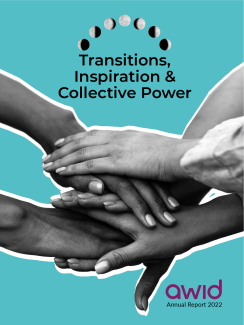
With this reflection on the year, we invite you to celebrate with us beautiful closures and promising beginnings. Change and transitions are an inseparable part of life and movements, which we seek to embrace with intention and care.
Мы проанализируем ответы, чтобы получить представление о тенденциях, и представим результаты на 15-м Международном форуме AWID в Бангкоке, а также в режиме онлайн, в декабре 2024 года. Зарегистрируйтесь для участия в Форуме здесь!
Marta is a queer, transfeminist non-binary activist-researcher from ex-Yugoslavia, currently based in Barcelona. They work as a transnational movement organizer, a feminist economist and a weaver of systemic alternatives. They are the co-founder and one of the coordinators of the Global Tapestry of Alternatives, a global process that seeks to identify, document and connect alternatives on local, regional and global levels. Locally, they are engaged in anti-racist, transfeminist, queer, migrant organizing. They also hold a doctoral degree in Environmental Science and Technology from the Autonomous University of Barcelona, dedicated to decolonial feminist perspectives of a pluriverse of systemic alternatives and the creation of feminist alternative systems based on care and the sustainability of life. During their free time, they enjoy boxing, playing the guitar and the drums as part of a samba band, photography, hiking, cooking for loved ones and spoiling their two cats.
The AWID Community is an online social networking platform specifically for AWID. It is a feminist space for connection, resistance and celebration. A space for critical feminist conversations, collective power and solidarity. It is also a space for post-event dialogues, navigating difficult political learnings and community care.
Join AWID membership to be part of the AWID Community today.
Leila is a transnational feminist leader, strategist, and advisor with over 25 years of organizing, advocacy and philanthropic experience advancing human rights, gender equality, and sexual and reproductive rights and justice. She was born in Algeria and educated in the U.S., France, and Morocco; over her professional career, she has lived and worked in forty countries across Africa, Europe, Latin America and Asia. Leila currently serves as a Senior International Fellow at the Asfari Institute for Civil Society and Citizenship at the American University of Beirut in Lebanon and as Senior Strategist for various feminist movements and organizations as well as the the Urgent Action Fund-Africa and Trust Africa on an initiative on Reimagining Feminist and Pan-African Philanthropies.
From 2017-2023, Leila held the position as Vice-President of Programs at Global Fund for Women where she oversaw its strategic grantmaking, movement-strengthening, global advocacy and philanthropic collaborations. At GFW, she doubled its grantmaking to over $17 million, launched its feminist and gender-based movements and crises work, created an adolescent girls program led by a girls’ advisory council and led its philanthropic advocacy work. Prior to that she served on the senior leadership team of Ipas from 2002 to 2016 where she published extensively on abortion rights and justice, lead global advocacy efforts and partnered with feminist groups working on self-management, community strategies and stigma reduction around bodily integrity and sexual and reproductive rights.
Leila is currently researching shifts in the philanthropic sector including recognizing non-institutional practices of giving resources in the Global South and efforts to decolonize practices in the Global North. She has written extensively on the political nature of veiling across North Africa and the Middle East, abortion practices in majority Muslim contexts and feminist approaches to sexual and reproductive health, rights and justice.
Leila holds an MPH in public health and a MA in Middle Eastern and North African Studies, studied Islamic law in Morocco and pursued doctoral studies in sociology in France. She studied Arabic and speaks French and English fluently. She is a mother of two feminist young women, an avid scuba diver, mountain bike rider, skier, and outdoor enthusiast.
A dynamic network of people around the world, AWID members are researchers, academics, students, educators, activists, business people, policy-makers, development practitioners, funders, and more. Our members - of every age - are those who make AWID a unique global feminist association.
We offer different types of memberships geared to income level and whether you are an individual or an organization. Currently we have over 5000 members, individual and institutional, from 164 countries.
We collaborate for advocacy on specific issues, members vote in elections for our Board, and can also participate in and contribute to our Priority Areas through webinars, surveys, or urgent actions, for example.
Our institutional membership draws from a broad range of organizations interested in advancing gender justice and women’s human rights, including women’s rights organizations, from the local to the global levels, grassroots networks, major international institutions, government departments, university programs and more. 63% of our members are from the global South and 38% are under the age of 30.
Find and create connections. There are over 9,000 AWID members, all working to address complementary, interconnected issues. This diversity supports the sustainability of feminist movements and actors.
Feminist and gender justice movements continue to be chronically underfunded in the face of global funding cuts and freezes. Particularly in Global South regions with shrinking civic spaces, resource scarcity has impacted the most vulnerable communities.
In the face of these setbacks, AWID has updated the Who Can Fund Me? Database - an easy-to-use, practical tool for movements looking for funders from philanthropic foundations, multilateral funders to women’s and feminist funds to support vital lifesaving efforts.
Yamile Guerra était une avocate bien connue, leader communautaire et activiste politique dans la région de Santander en Colombie.
Activement impliquée dans la résolution de litiges entre les communautés locales et les promoteurs immobiliers, elle s’est battue contre l’appropriation des terres illégale. Yamile a occupé plusieurs fonctions politiques, dont celle de secrétaire générale du gouvernement de Santander à Bogota, et s’était également présentée comme candidate à la mairie de Bucaramanga. Au cours des dernières années de sa vie, Yamile s’était de plus en plus impliquée dans les causes environnementales, et particulièrement celle de la défense de la biodiversité des zones humides de Santurbán, une région qui approvisionnait près de deux millions de personnes en eau potable, contre les promoteurs du développement économique.
D’après sa famille et ses ami·e·s, Yamile recevait quotidiennement des menaces de mort et avait demandé la protection des autorités.
« Elle était tout à fait consciente de la question [du litige foncier] et avait à plusieurs reprises mentionné qu’elle se sentait en danger. » - Alixon Navarro Muñoz, journaliste et amie de la famille Guerra
Le 20 juillet 2019, Yamile a été tuée par balles par deux hommes à Floridablanca, Santander. Elle venait de clore une discussion avec eux en lien avec le litige foncier. Un suspect a ensuite été arrêté pour son meurtre, lequel a admis avoir été payé pour organiser son assassinat. Selon des rapports, Yamile est la troisième membre de sa famille a avoir été assassinée, en lien avec des litiges fonciers. Son père, Hernando Guerra, avait lui aussi été assassiné plusieurs années auparavant.
L’assassinat de Yamile s’inscrit dans une vague de violences et de meurtres systématiques de centaines d’activistes sociaux et défenseur·e·s des droits humains en Colombie. L’Institut d’études sur le développement et la paix (INDEPAZ) rapporte qu’au moment du décès de Yamile, plus de 700 leaders communautaires et activistes pour les droits humains ont été tué·e·s depuis la signature en août 2016 d’un traité de paix par la Colombie. La plupart furent assassiné·e·s pour s’être opposé·e·s à des trafics de drogue et des opérations minières; y compris les peuples autochtones, les Afro-Colombiens et les défenseures des droits humains étant les plus exposé·e·s.
Moins d’une semaine après le décès de Yamile, des milliers de Colombien·ne·s ont manifesté dans les petites et grandes villes, brandissant des photos en noir et blanc d’activistes tué·e·s, et sur lesquelles était écrit : « Il ne peut y avoir de paix sans leaders » et « Fini les bains de sang ».
Yamile Guerra n’avait que 42 ans au moment de son assassinat.
Nos solidarizamos unxs con otrxs, y con las distintas luchas por la justicia y las libertades. Procuramos movilizar y fortalecer la acción colectiva, y practicamos formas significativas de trabajar en conjunto.
From building prospect funders lists with *templates*, to understand how to write a solid grant proposal, with ‘Getting the Money we Need’ Guide really we don't have to figure this out alone anymore
Read and download the guide hereText-only version
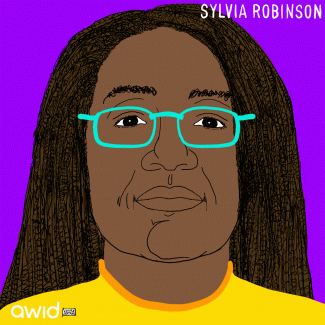
"Life is...about living in joy - waking up with purpose, feeling our creative energy, answering your calling." - Sylvia Robinson
This hub and performance space combine education, civic engagement, arts, social and spiritual services, and sustainable environmental practices. Sylvia envisioned it as a home where “there was a balance and synergy with the activities that people needed in order to sustain life.”
She was also one of the founding members of the Georgia Avenue Community Development Taskforce, a neighborhood group that works on social justice and organizing in Northwest DC to make sure the community has a voice in redevelopment and gentrification in the area.
“We're asking for affordable housing. We're asking that the small businesses that have been here for a long time don't get wiped out by new retail. We're asking for green space and space for people to get together to socialize. We're asking for streetscape improvements—better roads and lighting in the corridor.” - Sylvia Robinson about the Taskforce
Prior to becoming an organizer and after receiving a degree in computer science, Sylvia worked in air traffic control systems for over a decade. She then moved into drug and alcohol counselling, becoming increasingly engaged in community work.
“It was my call to be involved in community.” - Sylvia Robinson
Born in Washington D.C. on 14 August 1961, Sylvia passed away on 18 September 2017 after a battle with cancer.
“Sylvia's spirit and legacy will continue to inspire this community for many years to come.” - ECAC