Special Focus

AWID is an international, feminist, membership organisation committed to achieving gender equality, sustainable development and women’s human rights

Confronting Extractivism & Corporate Power

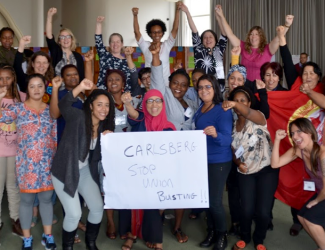
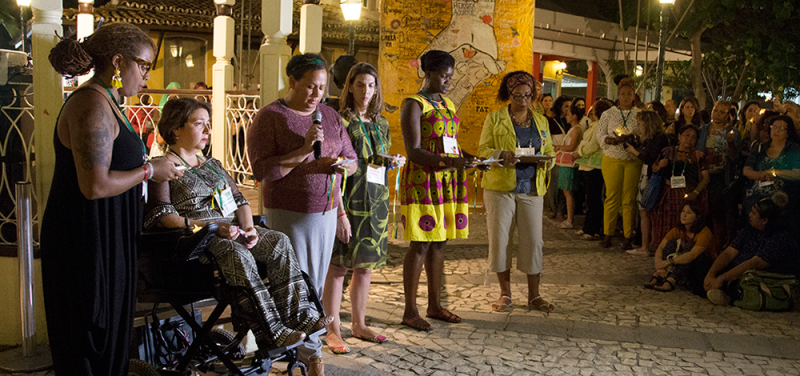
Women human rights defenders (WHRDs) worldwide defend their lands, livelihoods and communities from extractive industries and corporate power. They stand against powerful economic and political interests driving land theft, displacement of communities, loss of livelihoods, and environmental degradation.


Why resist extractive industries?

Extractivism is an economic and political model of development that commodifies nature and prioritizes profit over human rights and the environment. Rooted in colonial history, it reinforces social and economic inequalities locally and globally. Often, Black, rural and Indigenous women are the most affected by extractivism, and are largely excluded from decision-making. Defying these patriarchal and neo-colonial forces, women rise in defense of rights, lands, people and nature.

Critical risks and gender-specific violence

WHRDs confronting extractive industries experience a range of risks, threats and violations, including criminalization, stigmatization, violence and intimidation.  Their stories reveal a strong aspect of gendered and sexualized violence. Perpetrators include state and local authorities, corporations, police, military, paramilitary and private security forces, and at times their own communities.

Acting together

AWID and the Women Human Rights Defenders International Coalition (WHRD-IC) are pleased to announce “Women Human Rights Defenders Confronting Extractivism and Corporate Power”; a cross-regional research project documenting the lived experiences of WHRDs from Asia, Africa and Latin America.

We encourage activists, members of social movements, organized civil society, donors and policy makers to read and use these products for advocacy, education and inspiration.

Share your experience and questions!

Tell us how you are using the resources on WHRDs Confronting extractivism and corporate power.

◾️ How can these resources support your activism and advocacy?

◾️ What additional information or knowledge do you need to make the best use of these resources?

Share your feedback


Thank you!

AWID acknowledges with gratitude the invaluable input of every Woman Human Rights Defender who participated in this project. This project was made possible thanks to your willingness to generously and openly share your experiences and learnings. Your courage, creativity and resilience is an inspiration for us all. Thank you!

Related Content

Могу ли я связаться с кем-либо, если у меня возникнут вопросы?

Если у вас есть какие-либо вопросы или сомнения, пожалуйста, свяжитесь с нами через форму здесь, указав «Опрос «Где деньги?» (WITM Survey) в качестве заголовка вашего сообщения. или напишите нам по адресу witm@awid.org

Forum 2024 - FAQ - Other Questions FR

Autres questions

Sylvia Rivera

Sylvia Rivera was a civil rights activist, a transvestite and sex worker.

Known as the New York Drag queen of color, Silvia was fierce and tireless in her advocacy, in defense of those who  were marginalized and excluded as the “gay rights” movement mainstreamed in the United States in the early 1970’s.

In a well-known speech on Christopher Street Day in 1973, Sylvia, shouted through a crowd of LGBT community members: 

“You all tell me, go and hide my tail between my legs.
I will no longer put up with this shit.
I have been beaten.
I have had my nose broken.
I have been thrown in jail.
I have lost my job.
I have lost my apartment.
For gay liberation, and you all treat me this way?
What the fuck’s wrong with you all?
Think about that!” 

In 1969, at age 17, Silvia took part in the iconic Stonewall Riots by allegedly throwing the second Molotov cocktail to protest the police raid of the gay bar in Manhattan. She continued to be a central figure in the uprisings that followed, organizing rallies and fighting back police brutality.

In 1970, Sylvia worked together with Marsha P. Johnson to establish Street Transvestite Action Revolutionaries (S.T.A.R.), a political collective and organisation that would set up projects of mutual support for trans people living on the streets, those struggling with drug addiction and in prisons and in particular for trans people of color and those living in poverty. 

Defiant of labels, Silvia lived life in a way that challenged people in the gay liberation movement to think differently. She said: 

“I left home at age 10 in 1961. I hustled on 42nd Street. The early 60s was not a good time for drag queens, effeminate boys or boys that wore makeup like we did. Back then we were beat up by the police, by everybody. I didn't really come out as a drag queen until the late 60s. when drag queens were arrested, what degradation there was. I remember the first time I got arrested, I wasn't even in full drag. I was walking down the street and the cops just snatched me. People now want to call me a lesbian because I'm with Julia, and I say, "No. I'm just me. I'm not a lesbian." I'm tired of being labeled. I don't even like the label transgender. I'm tired of living with labels. I just want to be who I am. I am Sylvia Rivera. 

Through her activism and courage, Sylvia offered a mirror that reflected all that was wrong within society, but also the possibility of transformation. Sylvia was born in 1951 and passed away in 2002. 

Mariam Mekiwi | Snippet EN

Mariam Mekiwi Portrait

Mariam Mekiwi is a filmmaker and photographer from Alexandria and living and working in Berlin.

AWID Community Blurb

Join our online community!

The AWID Community is an online social networking platform specifically for AWID. It is a feminist space for connection, resistance and celebration. A space for critical feminist conversations, collective power and solidarity. It is also a space for post-event dialogues, navigating difficult political learnings and community care.

Join AWID membership to be part of the AWID Community today.

AWID IN 2014: Strengthening Women’s Rights Organizing Around the World

AWID is very pleased to share our 2014 Annual Report.

From building knowledge on women’s rights issues to amplifying responses to violence against women human rights defenders (WHRDs), our work last year continued to strengthen feminist and women’s rights movements across the world.

Get learn how we built the capacity of our members and broader constituency, pushed hard to keep women’s rights on the agenda of major international development and human rights processes, and helped increase coverage of women’s rights issues and organizing through the media. You'll find a panoramic sampling of our projects and some concrete numbers demonstrating our impact.

Collaboration is at the heart of all that we do, and we look forward to another year of working together to take our movements to the next level.


A sneak peak inside the report

Despite an increasingly challenging panorama, there are important signs of hope for advancing women’s rights agendas. Women’s rights activists remain crucial in creating openings to demand structural change, sustaining their communities, opposing violence and holding the line on key achievements. And there are important opportunities to influence new actors and to mobilize greater resources to support women’s rights organizations.

In this context, strong collective action and organizing among women’s rights activists remains essential.

Our impact

  • We built knowledge on women’s rights issues
  • We strengthened our online community
  • We helped improve responses to violence against WHRDs
  • We strengthened movement  building through collaborative working processes
  • We pushed hard to keep women’s human rights on the agendas of major international development processes
  • We helped women’s rights organizations better influence donors and increased visibility and understanding of women’s rights organizations among the donor community
  • We contributed towards increased and improved coverage of women’s rights issues and organizing in mainstream media

I am sincerely thrilled  by AWID’s accomplishments since 1982 and hope to be able to pay at least a modest contribution to its hard work for the benefit of women  and situation of gender equality.”  — Aleksandra Miletic-Santic, Bosnia Herzegovina

Our Members


Read the full report

Cynthia Cockburn

Cynthia Cockburn fue una socióloga feminista, escritora, académica, fotógrafa y activista por la paz.

Estudió los aspectos relacionados con el género en la violencia y el conflicto e hizo importantes contribuciones al movimiento por la paz gracias a sus investigaciones sobre masculinidad y violencia, así como gracias a su activismo local e internacional.

Cynthia aportó un análisis feminista potente sobre la militarización y la guerra, y fue una de las académicas cuyos escritos y estudios demostraron claramente cómo la violencia de género desempeñaba un papel clave en la perpetuación de la guerra. Al trabajar en estrecha colaboración con activistas por la paz en distintos países en conflicto, sus conclusiones abarcaron diversos contextos, entre ellos: Irlanda del Norte, Bosnia y Herzegovina, Israel/Palestina, Corea del Sur, Japón, España y el Reino Unido. También logró incluir en sus investigaciones y escritos académicos una interpretación sobre cómo la violencia se experimenta como un continuo de tiempo y escala y cómo se percibe de forma muy diferente cuando se analiza desde la perspectiva de género.

En sus propias palabras: "El género nos ayuda a ver la continuidad, la conexión entre los casos de violencia".

Cynthia conectó su trabajo de investigación con el activismo que sostuvo a nivel local e internacional con los movimientos por la desmilitarización, el desarme y la paz. Ayudó a iniciar el campamento de paz de las mujeres de Greenham Common, que defendía el desarme nuclear universal en Gran Bretaña, y formó parte también de la creación del capítulo londinense de Women in Black [Mujeres de Negro]. A lo largo de las décadas, Cynthia organizó y participó en vigilias semanales locales y en el coro político Raised Voices [Elevar las Voces], para el que, además de cantar, escribió varias letras de canciones que forman parte de su repertorio.

Su activismo la llevó a apoyar también el trabajo de la Women’s International League for Peace and Freedom [Liga Internacional de Mujeres por la Paz y la Libertad] (WILPF, por su siglas en inglés), el European Forum of Socialist Feminists [Foro Europeo de Feministas Socialistas] y Women Against Fundamentalism [Mujeres contra el Fundamentalismo].

"Cynthia arrojó claridad feminista, tejió comunidades feministas, cantó canciones de paz, escuchó, escuchó, escuchó, observó los pájaros - y detuvo el tráfico. Siempre estaré agradecida y en deuda con ella, la otra 'Cynthia'" - Cynthia Enloe.

Cynthia nació en julio de 1934 y falleció en septiembre de 2019, a la edad de 85 años.

Disintegration | Small Snippet AR

تَفَسُخ

وصلتني رسالة يوم الأربعاء
مصحوبة بعنوانٍ على ظهرها. 

اقرأ أكثر

Snippet - Blog post Quote_FR

« Poursuivons notre dynamique de solidarité, d’espoir et d’imagination radicale. »

- Beijing+30 et la CSW : adopter une lecture féministe des multiples défis de notre époque

Lisez l’article ici

2019: Realidades feministas en un mundo cambiante

AWID comenzó a preparar este informe anual en el momento en que la pandemia global empezaba a desintegrar las formas en que nos reunimos, nos organizamos y vivimos nuestras vidas. Es imposible reseñar lo que hemos hecho sin que el COVID-19 afecte nuestra evaluación.

Descargar el informe anual 2019 completo (PDF)


 AWID Annual report - COVER - esp

La creación conjunta de realidades feministas ya no es solamente un tema del Foro de AWID: es un llamamiento a la acción en respuesta a una pandemia que ha puesto en evidencia las falencias de los sistemas sociales, políticos y económicos.

Es una afirmación, urgentemente necesaria, de que existen otros modos, más justos, de organizar nuestras vidas. Durante 2019, cientos de grupos compartieron con nosotrxs sus experiencias y propuestas de realidades feministas, que van desde las redes radicales de apoyo comunitario que facilitan el aborto autogestionado en América Latina y las prácticas de economías comunitarias en Indonesia y de sistemas alimentarios comunitarios en India y EEUU, hasta la reconcepción y renovación de las prácticas no perjudiciales para ritos de iniciación en Sierra Leona. Estas son las experiencias que trazarán un camino hacia una «nueva normalidad».

Sin embargo, las largas historias de opresión y violencia pueden hacer que resulte difícil imaginar lo posible. 

Una parte clave de nuestro trabajo de 2019 fue alentar estas exploraciones a través de una guía que AWID lanzó para apoyar a aquellos grupos interesados en descubrir las historias y las aspiraciones que son los componentes esenciales de las proposiciones feministas. 

Mientras nos focalizamos en nuestras propuestas para un mundo diferente, también reconocemos el complejo contexto que nos rodea. A través de alianzas con el Observatorio sobre la Universalidad de los Derechos, las Feministas por un Tratado Vinculante, el Consorcio Count Me In! y otras organizaciones, AWID ha continuado resistiendo contra el poder corporativo irrestricto y contra las agendas fascistas y fundamentalistas que socavan los derechos de las mujeres y la justicia de género. En vista de las escasas posibilidades de lograr un cambio transformador a través de procesos multilaterales y de la limitada receptividad de la mayoría de los Estados, estamos redoblando nuestros esfuerzos para garantizar que los movimientos feministas, en toda su diversidad, sean financiados de forma proporcional al papel crítico que desempeñan al apoyar a sus comunidades, reclamar derechos, y responder a las crisis. En 2019, introdujimos principios y enfoques feministas para fondos innovadores como la Iniciativa Spotlight y el Fondo Igualdad, y logramos obtener recursos a través de subvenciones de fondos semilla para realidades feministas provenientes de donantes feministas. 

Si miramos hacia adelante, resulta claro que el contexto requiere una transformación de nuestras estrategias de organización:

  • estamos aprendiendo a manejar el trabajo de incidencia global aún confinado a los canales en línea,
  • lidiamos con la incertidumbre respecto de cuándo y cómo podremos reunirnos en forma presencial y
  • utilizamos las herramientas que tenemos a disposición para estrechar conexiones desde las esferas locales a las mundiales.

AWID se está embarcando ahora en un nuevo modelo de membresía que reduce las barreras para el acceso y pone el énfasis en las oportunidades para la participación y la conexión entre afiliadxs. Seguiremos experimentando con distintas herramientas y procesos virtuales para construir comunidad. La interacción entre movimientos continuará siendo central para nuestro trabajo. Las acciones de AWID en solidaridad con los movimientos y las identidades que sufren opresión (incluso y especialmente cuando estas quedan marginalizadas dentro de los movimientos feministas) son importantes para impulsar el cambio y brindar apoyo a los movimientos amplios e inclusivos para todas las personas.

La crisis no es nueva para los movimientos feministas y sociales. 

Somos resilientes, nos adaptamos, y nos hacemos presentes para lxs demás. Y tenemos que seguir haciéndolo mejor. Gracias a todxs ustedes, que son parte del viaje junto con nosotrxs.

Descargar el informe anual 2019 completo (PDF)

Hevrin Khalaf

Hevrin Khalaf était une grande dirigeante politique kurde de Syrie dans la région autonome du Rojava, où les femmes kurdes risquent leur vie pour résister aux offensives turques et pour bâtir un système féministe.

Elle a travaillé en tant que secrétaire-générale du Parti du Futur de la Syrie, un groupe qui souhaitait construire des ponts, réconcilier les différents groupes ethniques et mettre sur pied une « Syrie démocratique, pluraliste et décentralisée ».

Véritable symbole de cet effort de réconciliation, elle a également oeuvré à la promotion de l’égalité entre les femmes et les hommes et fut représentante auprès des journalistes en visite, des humanitaires et des diplomates.

Hevrin a de plus été diplômée en tant qu’ingénieure civile, à la ville de Derik, ainsi que l’une des fondatrices de la Fondation pour la Science et la Libre pensée en 2012.

Elle a été torturée et assassinée le 12 octobre 2019 par la milice Ahrar al-Sharqiya, soutenue par la Turquie, lors d’une opération militaire contre les Forces démocratiques syriennes dans le Rojava.

 « L’assassinat de Khalaf est un tournant majeur dans l’histoire moderne de la Syrie, celui-ci ayant une fois de plus confirmé la validité du vieux proverbe kurde qui dit : « Il n’y a de véritable ami·e que la montagne ». Je serai toujours ami avec Khalaf et sa vision d’un monde meilleur. » – Ahed Al Hendi

Hospital | Content Snippet FR

Hôpital

« C’est peut-être le moment de repenser à ce à quoi peut ressembler une révolution. Peut-être qu’elle ne ressemble pas à une marche de personnes handicapées en colère dans les rues. Peut-être ressemble-t-elle plutôt à un monde qui s’immobilise parce que tous les corps qui le composent sont épuisés – parce qu’il faut donner la priorité aux soins avant qu’il ne soit trop tard. »- Johanna Hedva 

Les hôpitaux sont des institutions, des sites vivants du capitalisme, et ce qui se joue lorsque quelqu’un est censé se reposer est un microcosme du système lui-même.

Les institutions sont conçues pour nous séparer de nos systèmes de soins – nous nous retrouvons isolé.e.s dans des structures rigidement hiérarchisées, et nous avons souvent l’impression que les soins nous sont imposés plutôt que donnés ou pris dans le cadre d’une conversation. Les soins institutionnels, du fait de leur intégration dans la demande capitaliste, sont cloisonnés : une personne s’occupe de votre jambe et uniquement de votre jambe, une autre s’occupe de votre tension artérielle, etc. 

La photographe Mariam Mekiwi a dû subir une opération le mois dernier et documenté le processus. Ses portraits d’environnements aseptisés – néons blancs, rangées et rangées de structures répétitives – dans une palette de couleurs délavées reflètent un lieu vidé de toute vie et de tout mouvement. C’était l’une des façons pour Mariam de garder son esprit vivant. C’était une forme de protestation à l’intérieur des limites d’une institution avec laquelle elle devait s’engager.

Les photos forment le portrait de quelque chose d’incroyablement vulnérable, car regarder quelqu’un·e vivre l’effondrement de son propre corps est toujours un rappel sacré de notre propre fragilité. C’est aussi un rappel de la fragilité de ces systèmes de soins, qui peuvent nous être refusés pour de multiples raisons – allant du manque d’argent au fait de ne pas être dans un corps considéré comme suffisamment précieux, un corps peut-être trop féminin, trop homosexuel ou trop brun.  

Des soins vécus comme désincarnés et solitaires, susceptibles d’être révoqués à tout moment, ne nous aident pas à nous épanouir. Et c’est très différent de la façon dont les êtres humains se comportent réellement lorsqu’iels prennent soin les un.e.s des autres. À quoi ressemblerait notre monde si nous nous engagions à démanteler les structures capitalistes actuelles qui entourent notre santé? À quoi ressemblerait-il, si nous le réimaginions radicalement?

Snippet - CSW69 - OURs & friends - FR

OURs et ses ami·es à l’Espace de Solidarité Féministe

✉️ Sur invitation uniquement

📅 Mardi 11 mars 2025
🕒 14.00h-16.00h EST

🏢 Chef's Kitchen Loft with Terrace, 216 East 45th St 13th Floor New York

Organisé par : Consortium de l’Observatoire sur l'universalité des droits (OURs)

2024: Fortaleciendo movimientos, sosteniendo el cambio

Desde el auge de la derecha en muchos países y la oleada de recortes al financiamiento que afectan seriamente a la sociedad civil de la mayoría global, hasta el genocidio en curso en Gaza, la intensificación de los violentos conflictos en Sudán y la crisis climática en muchas áreas de nuestro planeta, estamos frente a las fuerzas reales del fascismo y a un orden mundial de impunidad.

Descargar el informe anual 2024


De cara al futuro, nos basamos en los poderosos llamados a la acción realizados por les feministas en el Foro de AWID. Juntes podemos construir un mundo en el que la justicia, la liberación y los cuidados no sean aspiraciones, sino realidades.

Descargar el informe anual 2024

Laurie Carlos

Laurie Carlos was an actor, director, dancer, playwright, and poet in the United States. An extraordinary artist and visionary with powerful ways of bringing the art out in others. 

“Laurie walked in the room (any room/every room) with swirling clairvoyance, artistic genius, embodied rigor, fierce realness—and a determination to be free...and to free others. A Magic Maker. A Seer. A Shape Shifter. Laurie told me once that she went inside people’s bodies to find what they needed.” - Sharon Bridgforth 

She combined performance styles such as rhythmic gestures and text. Laurie mentored new actors, performers, writers and helped amplify their work through Naked Stages, a fellowship for emerging artists. She was an artistic fellow at Penumbra Theater and supported with identifying scripts to produce, with a goal of “bringing more feminine voices into the theater”. Laurie was also a member of Urban Bush Women, a renowned contemporary dance company telling stories of women of the African diaspora.

In 1976, as Lady in Blue, she made her Broadway debut in Ntozake Shange’s original and award-winning production of the poetic drama For colored girls who have considered suicide / when the rainbow is enuf. Laurie’s own works include White Chocolate, The Cooking Show, and Organdy Falsetto

“I tell the stories in the movement—the inside dances that occur spontaneously, as in life—the music and the text. If I write a line, it doesn’t necessarily have to be a line that is spoken; it can be a line that’s moved. A line from which music is created. The gesture becomes the sentence. So much of who we are as women, as people, has to do with how we gesture to one another all the time, and particularly through emotional moments. Gesture becomes a sentence or a state of fact. If I put on a script ‘four gestures,’ that doesn’t mean I’m not saying anything; that means I have opened it up for something to be said physically.” Laurie Carlos

Laurie was born and grew up in New York City, worked and lived in Twin Cities. She passed away on 29 December 2016, at the age of 67, after a battle with colon cancer.


Tributes:  

“I believe that that was exactly Laurie’s intention. To save us. From mediocrity. From ego. From laziness. From half-realized art making. From being paralyzed by fear.
Laurie wanted to help us Shine fully.
In our artistry.
In our Lives.” - Sharon Bridgforth for Pillsbury House Theatre

“There’s no one that knew Laurie that wouldn’t call her a singular individual. She was her own person. She was her own person, her own artist; she put the world as she knew it on stage with real style and understanding, and she lived her art.” - Lou Bellamy, Founder of Penumbra Theater Company, for Star Tribune 

Read a full Tribute by Sharon Bridgforth

CREDITS | Content Snippet EN

Credits

Co-editeurices
Chinelo Onwualu
Ghiwa Sayegh (Kohl)

Création graphique et illustration
Sophia Andreazza

Stratège des communications
Zuhour Mahmoud (Kohl)

Editrice de la langue arabe
Sabah Ayoub (Kohl)

Responsable de la traduction
Maya Zebdawi (Kohl)


L’équipe de AWID
Nana Darkoa Sekyiamah
Lola Silva
Kamee Abrahamian
Tanya Lallmon    
Maria Olivo
Marianne Asfaw
Ana Abelenda


Version française
Traduction
Camille Dufour
Morgane Boëdec

Relecture
Nathalie Thériault
 

Traduction arabe
Lina Yahya
Marina Samir
Maya Zebdawi
Nidal Majeed
Rania El-Ghazal
Rola Alaeddine
Viviane Akiki


Version espagnole
Traduction
Verónica Torrecillas
Gabriela Adelstein
Maria Luisa Peralta
Alejandra Sarda
Gabby De Cicco

Relecture
Alejandra Sarda
Gabby De Cicco
María Eugenia Martí


Portuguais vers anglais
Traduction
Luiza Martello

Relecture
Shaina Greiff