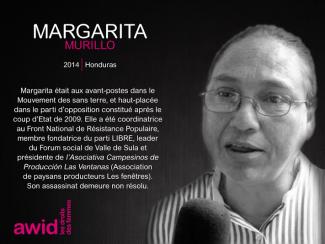
Margarita Murillo
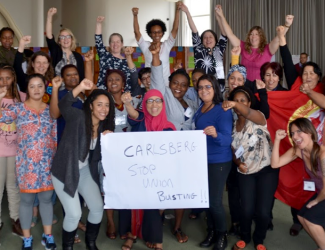
Women human rights defenders (WHRDs) worldwide defend their lands, livelihoods and communities from extractive industries and corporate power. They stand against powerful economic and political interests driving land theft, displacement of communities, loss of livelihoods, and environmental degradation.
Extractivism is an economic and political model of development that commodifies nature and prioritizes profit over human rights and the environment. Rooted in colonial history, it reinforces social and economic inequalities locally and globally. Often, Black, rural and Indigenous women are the most affected by extractivism, and are largely excluded from decision-making. Defying these patriarchal and neo-colonial forces, women rise in defense of rights, lands, people and nature.
WHRDs confronting extractive industries experience a range of risks, threats and violations, including criminalization, stigmatization, violence and intimidation. Their stories reveal a strong aspect of gendered and sexualized violence. Perpetrators include state and local authorities, corporations, police, military, paramilitary and private security forces, and at times their own communities.
AWID and the Women Human Rights Defenders International Coalition (WHRD-IC) are pleased to announce “Women Human Rights Defenders Confronting Extractivism and Corporate Power”; a cross-regional research project documenting the lived experiences of WHRDs from Asia, Africa and Latin America.
"Women Human Rights Defenders confronting extractive industries: an overview of critical risks and Human Rights obligations" is a policy report with a gender perspective. It analyses forms of violations and types of perpetrators, quotes relevant human rights obligations and includes policy recommendations to states, corporations, civil society and donors.
"Weaving resistance through action: Strategies of Women Human Rights Defenders confronting extractive industries" is a practical guide outlining creative and deliberate forms of action, successful tactics and inspiring stories of resistance.
The video “Defending people and planet: Women confronting extractive industries” puts courageous WHRDs from Africa, Asia, and Latin America in the spotlight. They share their struggles for land and life, and speak to the risks and challenges they face in their activism.
Challenging corporate power: Struggles for women’s rights, economic and gender justice is a research paper outlining the impacts of corporate power and offering insights into strategies of resistance.
AWID acknowledges with gratitude the invaluable input of every Woman Human Rights Defender who participated in this project. This project was made possible thanks to your willingness to generously and openly share your experiences and learnings. Your courage, creativity and resilience is an inspiration for us all. Thank you!
Nana es una organizadora feminista e investigadora en derechos reproductivos y políticas demográficas que reside en Egipto. Es miembro de RESURJ (organización feminista por la justicia sexual y reproductiva), del Órgano Asesor del Proyecto A del Líbano y de la Comisión de la Comunidad de Mama Cash. Nana tiene una maestría en Salud Pública del Instituto KIT y la Universidad Vrije de Ámsterdam. En su trabajo, da seguimiento y contextualiza las políticas demográficas nacionales, al tiempo que reúne información para abordar la eugenesia moderna, las ayudas internacionales de carácter regresivo y el autoritarismo. Anteriormente, formó parte de la Fundación de Ginebra para la Educación y la Investigación Médica, la Iniciativa Egipcia para los Derechos Personales y el Colectivo Feminista Ikhtyar de El Cairo.
ฟอรัมแต่ละครั้งถูกจัดขึ้นในภูมิภาคต่างๆทั่วโลก และครั้งนี้ AWID ฟอรัมกลับมาจัดที่เอีเชียอีกครั้ง! เราได้ผ่านการไปเยี่ยมเยือนประเทศต่างๆในเอเชียเพื่อหารือกับขบวนการเฟมินิสต์เพื่อประเมินรายละเอียดด้านโลจิสติกส์ การเข้าถึงง่าย ความปลอดภัย วีซ่า และความพร้อมด้านอื่นๆ โดยคณะกรรมการ AWID ของเรา อนุมัติให้จัดที่กรุงเทพอย่างกระตือรือร้นในฐานะทางเลือกที่ดีที่สุด เราตื่นเต้นที่ได้กลับมากรุงเทพที่ที่เราเคยได้จัด AWID ฟอรัมในปีพ.ศ. 2548
Merci de bien vouloir parcourir les propositions existantes avant de soumettre vos idées. Quelqu'un pourrait déjà avoir pensé à une proposition similaire! Envoyez votre proposition à contribute@awid.org.
Nous examinerons et inclurons les nouvelles propositions qui nous parviendront au fur et à mesure sur cette page Web.
AWID surgió en 1982 y se ha ido transformando con el paso de los años en una verdadera organización mundial.
Leer «From “WID” to “GAD” to Women’s Rights: The First Twenty Years of AWID» (en inglés)
สำหรับข้อมูลด้านนี้สามารถอ่านรายละเอียดได้ที่ เปิดรับสมัครกิจกรรม รวมถึงข้อมูลในหัวข้อ “สิ่งที่คุณต้องรู้”
Kay Thi Win, Asia Pacific Network of Sex Workers (APNSW)
Thin Pa Pa Htun, Aye Myanmar Association
Xiao Shuang, Northeast Transgender Support Network
Cathy Ketepa, Friends Frangipani Inc. PNG
Rajeshwari Prajapati, Society for Women Awareness Nepal (SWAN)
All our annual reports are accessible online.
Dans le cadre de notre engagement à nouer des liens plus profonds avec des artistes via nos pratiques de co-création de Réalités Féministes, AWID a collaboré avec un Groupe de Travail Artistique visant à faire progresser et à renforcer les programmes et réalités féministes, dans les communautés et mouvements via l’expression créative. Notre intention ici est de rassembler des féministes créatifs·ves dans un espace puissant et audacieux pour grandir et vivre librement, et briser les récits toxiques en les remplaçant par des alternatives transformatrices.
ونحن نسأل أنفسنا نفس السؤال، ونعتقد أنه لا توجد إجابات بسيطة. بالنسبة للعديد من المشاركين/ات، قد يكون منتدى جمعية حقوق المرأة في التنمية (AWID) أحد الرحلات الدولية القليلة التي يقومون بها في حياتهم/ن. علمتنا الجائحة الإمكانيات والقيود التي تفرضها المساحات الافتراضية لبناء الحركة: لا يوجد شيء أفضل من الاتصال الشخصي. تحتاج الحركات إلى التواصل عبر الحدود لبناء قوتنا الجماعية في مواجهة التهديدات التي نواجهها، ولا سيما أزمة المناخ. نعتقد أن منتدى حقوق المرأة في التنمية القادم يمكن أن يكون مساحة استراتيجية لعقد هذه المحادثات واستكشاف بدائل للسفر الدولي. ويشكل العنصر المختلط للمنتدى جزءًا مهمًا من هذا الاستكشاف.
Related Content
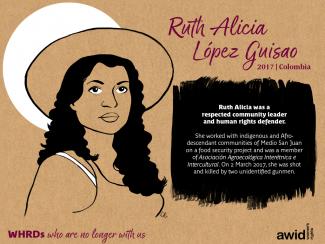
Front Line Defenders: Ruth Alicia López Guisao killed
HRD Memorial: Ruth Alicia Lopez Guisao