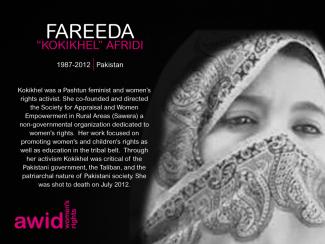
Farida Afridi
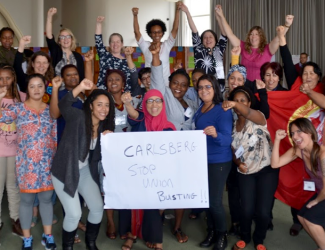
Women human rights defenders (WHRDs) worldwide defend their lands, livelihoods and communities from extractive industries and corporate power. They stand against powerful economic and political interests driving land theft, displacement of communities, loss of livelihoods, and environmental degradation.
Extractivism is an economic and political model of development that commodifies nature and prioritizes profit over human rights and the environment. Rooted in colonial history, it reinforces social and economic inequalities locally and globally. Often, Black, rural and Indigenous women are the most affected by extractivism, and are largely excluded from decision-making. Defying these patriarchal and neo-colonial forces, women rise in defense of rights, lands, people and nature.
WHRDs confronting extractive industries experience a range of risks, threats and violations, including criminalization, stigmatization, violence and intimidation. Their stories reveal a strong aspect of gendered and sexualized violence. Perpetrators include state and local authorities, corporations, police, military, paramilitary and private security forces, and at times their own communities.
AWID and the Women Human Rights Defenders International Coalition (WHRD-IC) are pleased to announce “Women Human Rights Defenders Confronting Extractivism and Corporate Power”; a cross-regional research project documenting the lived experiences of WHRDs from Asia, Africa and Latin America.
"Women Human Rights Defenders confronting extractive industries: an overview of critical risks and Human Rights obligations" is a policy report with a gender perspective. It analyses forms of violations and types of perpetrators, quotes relevant human rights obligations and includes policy recommendations to states, corporations, civil society and donors.
"Weaving resistance through action: Strategies of Women Human Rights Defenders confronting extractive industries" is a practical guide outlining creative and deliberate forms of action, successful tactics and inspiring stories of resistance.
The video “Defending people and planet: Women confronting extractive industries” puts courageous WHRDs from Africa, Asia, and Latin America in the spotlight. They share their struggles for land and life, and speak to the risks and challenges they face in their activism.
Challenging corporate power: Struggles for women’s rights, economic and gender justice is a research paper outlining the impacts of corporate power and offering insights into strategies of resistance.
AWID acknowledges with gratitude the invaluable input of every Woman Human Rights Defender who participated in this project. This project was made possible thanks to your willingness to generously and openly share your experiences and learnings. Your courage, creativity and resilience is an inspiration for us all. Thank you!
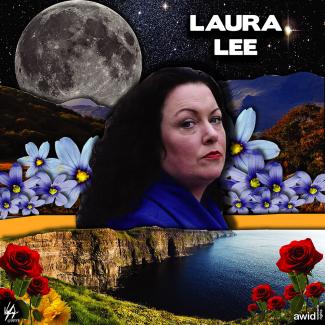
Laura was a leading activist and lawyer who campaigned fearlessly for the decriminalisation of sex work in Ireland.
She is remembered as “a freedom fighter for sex workers, a feminist, a mother to a daughter and a needed friend to many.”
Laura advocated for individuals in the sex industry to be recognised as workers deserving of rights. She advanced demands for decriminalisation, including initiating a judicial review at Belfast’s high court in respect of the provisions criminalising the purchase of sex. Laura stated that her intention was to bring the case to the European Court of Human Rights.
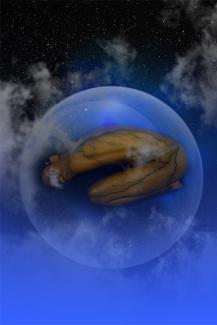
Cette œuvre est la collaboration photographique et illustrative réalisée par Siphumeze et Katia pendant le confinement. Elle se penche sur les récits de sexe et de plaisir des queers noirs, le bondage, le sexe protégé, les jouets, la santé mentale et le sexe et bien d'autres choses encore. Elle a été créée pour accompagner l'anthologie Touch.



Siphumeze Khundayi est une créatrice d'art, photographe et animatrice qui s'intéresse aux moyens créatifs de réunir le dialogue et la pratique artistique en relation avec l'identité queer africaine.
Elle est directrice créative de HOLAAfrica!, un collectif panafricaniste féministe en ligne.
Ses travaux de performance en solo et collaboratifs ont été présentés dans un certain nombre de festivals et d'espaces théâtraux tels que le festival Ricca Ricca au Japon.
Elle a mis en scène deux productions nominées aux Naledi Awards en 2017 et 2018. Elle a aussi mis en scène un spectacle qui a remporté un prix Standard Bank Ovation en 2020.
En tant que photographe, elle a participé à une exposition de groupe intitulée Flowers of my Soul (Fleurs de mon âme) en Italie, organisée par le Misfit Project. Elle a produit trois publications pour HOLAAfrica et a été publiée dans le deuxième volume, pour lequel elle a fourni la couverture: As You Like des Gerald Kraak Anthologies.
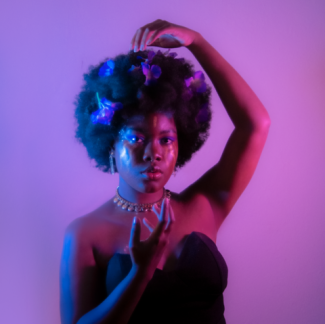
Katia Herrera est une artiste visuelle numérique de 21 ans originaire de la ville bruyante de Saint-Domingue, en République dominicaine. Bien que Herrera soit une introvertie autoproclamée, ses œuvres d'art sont remarquablement fortes dans un monde qui tente de faire taire les voix des personnes noires. Avec des titres comme Black Woman (Femme Noire), You Own the Moon (La Lune t’Appartient), Earth Goddess (Déesse de la Terre), Forever (Pour Toujours) et Universe Protector (Protecteur.rice de l’Univers), l'héritage de Herrera sera marqué par sa volonté passionnée de mettre en lumière l'endurance et la persévérance des Noir·e·s d'hier et d'aujourd'hui, afin de contrer le discours selon lequel la peau noire ne devrait être associée qu'à l'esclavage.
L'une de ses œuvres la plus belle et la plus vivante, Universe Protector, dépeint l'âme noire comme une entité divine pleine de force, de puissance et de grandeur. C’est dans sa jeunesse que son amour du graphisme a été stimulé grâce à l'art de ses parents et le Photoshop qu'ils avaient téléchargé sur leur ordinateur pour leur photographie professionnelle.
سيتم جمع المعطيات لأهداف إحصائية لتسليط الضوء على وضع التمويل للحركات النسوية العالمية وسيتم عرضها فقط بشكل إجمالي. لن تنشر AWID المعلومات عن اي منظمة محددة ولن تعرض أي من المعلومات التي ستمكّن من التعرّف على منظمة عن طريق موقعها أو صفاتها دون موافقة المنظمة.
Te presentamos a Sabrina Sanchez, increíble mujer trans, migrante, trabajadora sexual, organizadora, transfeminista y una de las fundadoras del sindicato OTRAS.
Originaria de la Ciudad de México, emigró a España hace 17 años después de graduarse en comunicaciones y comenzó a trabajar como trabajadora sexual.
No pasó mucho tiempo antes de que se involucrara con el activismo trans y el activismo de trabajadoras sexuales en Barcelona. Después de unirse al colectivo Asociación de Profesionales del Sexo (Aprosex), comenzó a trabajar en su secretaría y fundó el sindicato español de trabajadoras sexuales OTRAS.
Actualmente vive en Ámsterdam, donde trabaja como coordinadora de la Alianza Europea de Trabajadoras Sexuales.
Dato divertido: ¡también es mecánica de automóviles y corredora!
En este Foro, vamos a celebrar y multiplicar las propuestas poderosas que nos rodean, en sus distintos estadios de evolución.
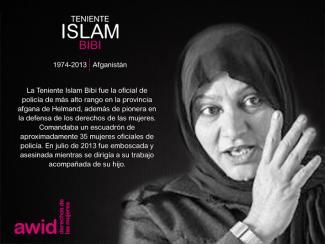
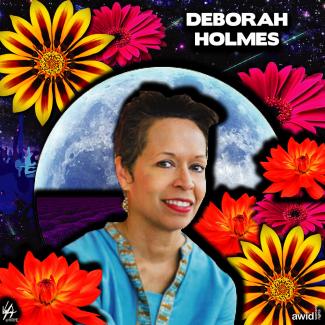
Al momento de su muerte, luego de una corta pero denodada batalla contra el cáncer, Deborah era la Jefa de Comunicaciones y Participación en la Women’s Funding Network (WFN, Red de financiamiento para mujeres).
Deborah también trabajó para el Fondo Global de Mujeres entre 2008 y 2017. Era sumamente querida y respetada por el consejo asesor, el personal y lxs colaboradorxs de la organización.
Kavita Ramdas, anterior directora ejecutiva del Fondo, acertadamente señaló que Deborah era un «pequeño paquete que explotaba de calidez, generosidad, inteligencia, estilo y un apasionado compromiso por unir la belleza con la justicia. Ella entendía el poder de las historias. El poder de la voz de las mujeres. El poder de la experiencia vivida. El poder de levantarse de las cenizas y decirle a otrxs que era posible. Y todavía nos levantamos».
Musimbi Kanyoro, actual directora ejecutiva del Fondo Global de Mujeres, añadió: «Hemos perdido a una hermana y su vida ilumina valores que nos unen y nos inspiran. Al reunirnos para llorar el fallecimiento de Deborah, recordemos y celebremos su notable, audaz y apasionada vida».
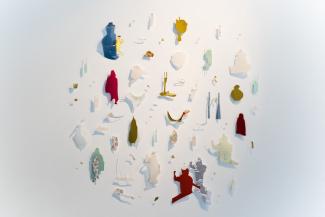
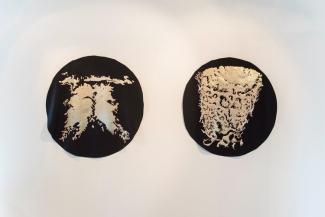
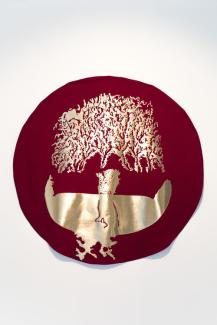
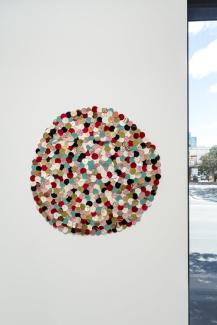
An exhibition by Nicole Barakat, embodying her reconnection with the diaspora of objects from her ancestral homelands in the South West Asia and North Africa (SWANA) region.
Barakat presents a collection of textile works as manifestations of her practice of engaging with displaced, and often stolen objects held within Western museum collections including the Louvre, British Museum and Nicholson Museum.
To by-pass the gatekeepers and breach the vitrines holding these ancestral objects, Barakat reclaims pre-colonial, non-linear, receptive forms of knowing that are often devalued and dismissed by colonial and patriarchal institutions - engaging with coffee cup divination, dream-work, intuitive listening and conversations with the objects themselves (source).
Мы стремимся в общей сложности получить 2000 ответов, что почти вдвое больше, чем в последнем опросе, проведенном в 2011 году.
Lisez nos recherches sur le financement, sur les défenseuses des droits humains, sur la création de mouvements, sur les fondamentalismes, la justice économique et beaucoup plus
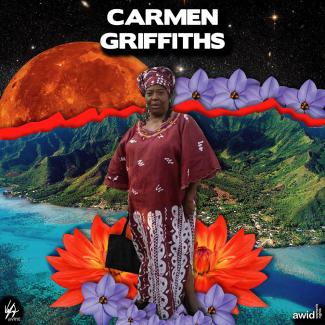
Carmen dirigeait le Construction Resource and Development Collective et a joué un rôle de premier plan en faveur de la participation des femmes dans l’industrie de la construction en Jamaïque.
Elle a également œuvré à la préparation aux catastrophes de femmes rurales et urbaines. Elle a travaillé en étroite collaboration avec les femmes (en particulier les mères célibataires) pour leur apprendre à utiliser les sangles anti-ouragan ainsi que d’autres technologies pour sécuriser leur foyer. Elle a travaillé dans le domaine de l’eau et de l’assainissement et a été une ardente défenseure d’une gestion durable de l’environnement et du développement.
Elle faisait partie de la Commission Huairou et plaidait en faveur des femmes de la base sur des questions telles que le logement, l'énergie et les moyens de subsistance durables.
En la Comisión Africana y en el Sistema Interamericano, los actores antiderechos impulsan nociones esencialistas de cultura y género para impedir el avance de los derechos y socavar las responsabilidades. Como vemos, los actores anti-derechos están ejerciendo su influencia sobre los sistemas regionales de derechos humanos, así como en los espacios internacionales.
La Comisión Africana de Derechos Humanos y de los Pueblos ha comenzado a definir a los derechos sexuales y de las mujeres como un menoscabo a su capacidad de ocuparse de los «derechos reales» y como contrarios a los «valores africanos», con lo cual se establece un precedente anti-derechos preocupante. La anulación del estatus de observador de la Coalición de Lesbianas Africanas es un ejemplo de esta tendencia y muestra la forma en que el espacio para el involucramiento feminista panafricanista está siendo restringido.
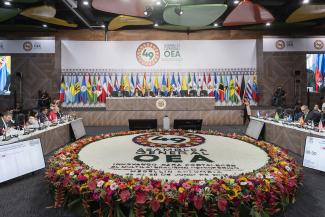
En la Organización de Estados Americanos (OEA) y en el Sistema Interamericano de Protección de los Derechos Humanos, las estrategias anti-derechos incluyen la oenegización de grupos religiosos, la utilización de discursos seculares, y la cooptación de marcos de discriminación. La influencia antiderechos se ha materializado de diversas maneras, que incluyen la intimidación de activistas trans y la obstrucción de la introducción de lenguaje progresista en las resoluciones.
1 |
Fornecer a membres da AWID, parceires do movimento e financiadores uma análise atualizada, robusta, baseada em fatos e orientada para a ação das realidades do financiamento de movimentos feministas e do estado atual do ecossistema do financiamento feminista. |
2 |
Identificar e demonstrar oportunidades para transferir mais recursos de maior qualidade para a organização feminista, expor soluções falsas e interromper tendências que fazem com que o financiamento não seja bem-sucedido e/ou se mova contra a justiça de género e objetivos feministas interseccionais. |
3 |
Articular visões, propostas e objetivos feministas para a justiça no financiamento. |
by Rode Wanimbo
I was born and grew up in Agamua, the Central Highlands of West Papua. My father belongs to the Lani tribe and my mother comes from Walak. (...)
< artwork: “Offerings for Black Life” by Sokari Ekine
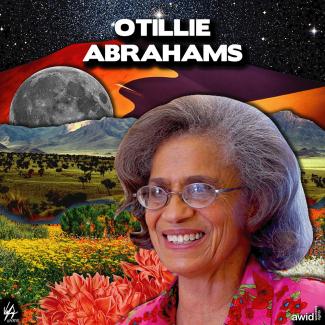
Ottilie was a Namibian feminist activist, educator and politician.
Ottilie was one of the founders of the South West African People's Organisation (SWAPO), the Yu Chi Chan Club (an armed revolutionary group); and the South West African National Liberation Front (SWANLIF). She was also a founder of the Namibian Women’s Association and Girl Child Project.
Throughout her life, Ottilie argued for the right to argue, think, contest, and demand. She mobilized women, organized students and teachers and criticized other comrades for their elitism and their corruption.
Ottilie worked ferociously to dismantle patriarchy, and to create a concrete transformative, liberatory, feminist participatory democracy.
Ottilie often said: “I will rest the day I die.”