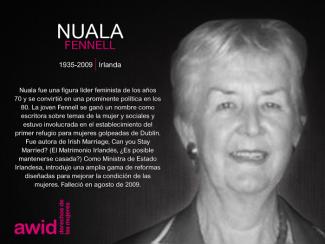
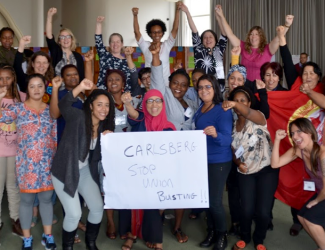
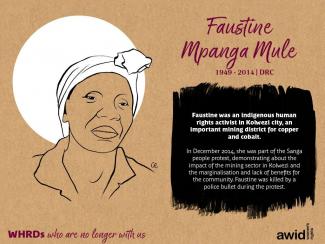
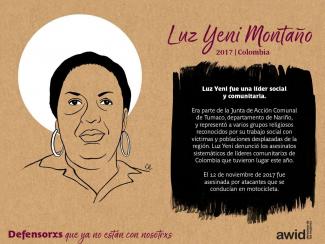
Women human rights defenders (WHRDs) worldwide defend their lands, livelihoods and communities from extractive industries and corporate power. They stand against powerful economic and political interests driving land theft, displacement of communities, loss of livelihoods, and environmental degradation.
Why resist extractive industries?
Extractivism is an economic and political model of development that commodifies nature and prioritizes profit over human rights and the environment. Rooted in colonial history, it reinforces social and economic inequalities locally and globally. Often, Black, rural and Indigenous women are the most affected by extractivism, and are largely excluded from decision-making. Defying these patriarchal and neo-colonial forces, women rise in defense of rights, lands, people and nature.
Critical risks and gender-specific violence
WHRDs confronting extractive industries experience a range of risks, threats and violations, including criminalization, stigmatization, violence and intimidation. Their stories reveal a strong aspect of gendered and sexualized violence. Perpetrators include state and local authorities, corporations, police, military, paramilitary and private security forces, and at times their own communities.
Acting together
AWID and the Women Human Rights Defenders International Coalition (WHRD-IC) are pleased to announce “Women Human Rights Defenders Confronting Extractivism and Corporate Power”; a cross-regional research project documenting the lived experiences of WHRDs from Asia, Africa and Latin America.
We encourage activists, members of social movements, organized civil society, donors and policy makers to read and use these products for advocacy, education and inspiration.
AWID acknowledges with gratitude the invaluable input of every Woman Human Rights Defender who participated in this project. This project was made possible thanks to your willingness to generously and openly share your experiences and learnings. Your courage, creativity and resilience is an inspiration for us all. Thank you!
Marianne Mesfin Asfaw est une féministe panafricaine qui se consacre à la justice sociale et à la construction communautaire. Elle est titulaire d'une licence en études de genre et en relations internationales de l'Université de la Colombie-Britannique (UBC) et d'un master en études de genre et de droit de l'Université SOAS de Londres. Auparavant, elle travaillait dans l'administration universitaire et le soutien aux étudiant·e·s internationaux·ales, de même qu’à titre de chercheuse et d’animatrice dans des espaces féministes à but non lucratif. Elle a également travaillé et été bénévole auprès d'organisations non gouvernementales, notamment Plan International, dans des rôles administratifs. Avant d'occuper son poste actuel, elle a travaillé dans le soutien logistique et administratif à l'AWID. Elle est originaire d'Éthiopie, a grandi au Rwanda et est actuellement basée à Tkaronto/Toronto, au Canada. Elle aime lire, voyager et passer du temps avec sa famille et ses ami·e·s. Pendant les mois les plus chauds, on peut la trouver en train de se promener dans des quartiers familiers à la recherche de cafés et de librairies obscurs dans lesquels flâner.
Position
Coordonnatrice de l’Initiative de Construction d’Économies Féministes
Add to stories
Off
Snippet FEA Objectives NSS Family Farming (FR)
L'AGRICULTURE FAMILIALE, L’AGROÉCOLOGIE ET LA SOUVERAINETÉ ALIMENTAIRE
Promouvoir l'agriculture familiale par l'agroécologie et la souveraineté alimentaire
Our individual and institutional members come from ALL regions of the world and 163 countries. Our latest members join us from France, South Sudan, the United Kingdom, and Lebanon. All of our members bring with them a rich and diverse array of perspectives, experiences, knowledge, energy and inspiration!
Did you know about our weekly member profiles?
One of the benefits of being an AWID member, is having your story featured on awid.org, in our newsletters which go out to 35,000 subscribers, and via our social media channels which have over 60,000 followers.
If you have any difficulties and require support with the sign-up process, please do not hesitate to contact us at membership@awid.org
What Our Members Say
"We have found AWID to be a very exciting network and we are involved in many of its platforms." - Engabu Za Tooro (AWID institutional member)
"I am looking forward to a fruitful engagement with the team. Feeling great. Thanks for accepting me as a member." - R. Chakraborty (AWID individual member)
"Thank you so much AWID, your work is tremendous. I really appreciated your efforts." - E. Khan (AWID individual member)
¿Tendré oportunidad de compartir mi opinión sobre cuestiones que no se hayan incluido en la encuesta?
Sí, invitamos a compartir más impresiones acerca de alguna cuestión que sea de importancia para ti respondiendo a las preguntas abiertas al término de la encuesta.
Claudia is a feminist psychologist with a Masters degree in Development Equality and Equity. She has been a human rights activist for 30 years, and a women’s rights activist for the last 24.
Claudia works in El Salvador as the co-founder and Executive Director of Asociación Mujeres Transformando. For the past 16 years she has defended labour rights of women working within the textile and garment maquila sector. This includes collaborations to draft legislative bills, public policy proposals and research that aim to improve labour conditions for women workers in this sector. She has worked tirelessly to support organizational strengthening and empowerment of women workers in the textile maquilas and those doing embroidery piece-work from home.
She is an active participant in advocacy efforts at the national, regional and international levels to defend and claim labour rights for the working class in the global South from a feminist, anti-capitalist and anti-patriarchy perspective and class and gender awareness raising. She is a board member with the Spotlight Initiative and its national reference group. She is also part of UN Women’s Civic Society Advisory Group.
Ahora que has analizado toda la información que recogiste — de la encuesta, las entrevistas, la investigación secundaria y otras fuentes que hayas utilizado — ya puedes generar el producto final.
En esta sección:
El producto final
1. Escribe con claridad
2. Consigue que tenga un aspecto atractivo
El producto final será un documento que resume, analiza y critica la información que obtuviste. Será lo que compartas con la audiencia cuando les presentes tu investigación y se la expliques.
En AWID por lo general elaboramos un informe escrito exhaustivo en el que analizamos cada conjunto de información y sintetizamos todos los resultados que encontramos, para luego generar productos más breves como infografías o resúmenes (que explicaremos en la sección siguiente, «Finalización y formato»).
1. Escribe con claridad
Organiza la información según cómo te gustaría contar la historia. Puedes respetar el orden de la encuesta. O reagrupar algunas preguntas para que la conclusión surja de manera fluida y siga una progresión lógica.
Adapta el lenguaje al público. Utiliza un lenguaje universal y evita las jergas o los términos demasiado técnicos.
La importancia de la edición
El trabajo de edición implica corregir el texto, garantizar que la redacción sea concisa, revisar que los datos proporcionados sean exactos, señalar las inconsistencias que se deben resolver, acomodar el texto para que fluya y posiblemente también sugerir títulos.
Lo ideal es que la persona que haga este trabajo entienda y conozca tu labor en cuanto a WITM pero que no haya participado directamente de la investigación, así puede aportar una perspectiva nueva.
2. Consigue que el producto tenga un aspecto atractivo
Utiliza la información recogida para generar gráficos y tablas. Estas herramientas visuales constituyen una forma atractiva de subrayar los principales resultados de la investigación y validar los análisis.
Busca imágenes relevantes que puedan ilustrar el informe.
Destaca las principales cifras y/o los testimonios de impacto.
Recuerda: Cuanto más accesible sea el producto, más personas querrán leerlo (y compartirlo).
Cuando llegues a este momento, ya habrás compilado toda la información, la habrás analizado y convertido en un producto final, que probablemente sea un informe extenso.
1. Pule los resultados
Antes de encarar los pasos siguientes deberías compartir el producto final con organizaciones, activistas y donantes que puedan comentarlo (lxs «consultorxs»).
Este es un momento excelente para pedirles que revisen lo siguiente:
¿Hay algo fundamental que esté ausente delanálisis del panorama actual del financiamiento y sus tendencias?
¿Hay algo fundamental que esté ausente de las conclusiones?
¿Hay alguna inexactitud en la información que necesite ser corregida?
¿Tienen alguna sugerencia general sobre cómo fortalecer el informe para que cumpla con las metas que habías mencionado en el marco de la investigación?
Una vez que hayas incorporado todos los comentarios de las personas a las que consultaste, asegúrate de que la persona a cargo de la edición vuelva a revisar el informe.
Con esto ya tendrás la versión final y completa del informe. Si quieres publicarlo en otros idiomas, ahora es el momento de enviarlo a traducir.
2. Facilita los comentarios
Es probable que las personas a las que consultes estén ocupadas con su trabajo habitual. Asegúrate de darles un plazo razonable para que te hagan llegar sus comentarios.
Pídeles comentarios breves y específicos, para que les resulte fácil responder. Si quieres, puedes simplemente copiar y pegar los puntos que mencionamos en la sección anterior.
Si vas a publicar el informe en varios idiomas, asegúrate de contar con personas que también puedan revisar las versiones finales traducidas de el/los producto/s.
Las personas que revisen el informe (lxs «consultorxs») te estarán haciendo un aporte significativo. Considera la posibilidad de otorgarles alguna forma de reconocimiento.
• 1 persona (o más) de investigación
• 1 Editor (editor web o si crea un producto en línea)
• Traductores (si ofrece encuesta en varios idiomas)
Recursos necesarios
• Lista de organizaciones de asesores, activistas y financiadores.
• Documento de Síntesis (sección de "marco de su investigación")
• Los resultados de su(s) encuesta(s)
• Preguntas de la entrevista
• Resultados de las entrevistas
• Los datos de la investigación secundaria
• Todos otros datos utilizados en el informe
Comment présenterez-vous et traiterez-vous les données collectées pendant l’enquête?
Les données seront traitées à des fins statistiques, pour mettre en lumière l’état du financement de l’organisation des mouvements féministes dans le monde entier, et ne seront présentées que sous forme agrégée. L’AWID ne publiera pas d’informations relatives à une organisation donnée ni ne divulguera d’informations qui permettraient d’identifier une organisation par le biais de son emplacement ou de caractéristiques qui lui sont propres, sans son accord explicite.
Sanyu es una feminista que reside en Nairobi (Kenia). Ha dedicado los últimos 10 años a apoyar a los movimientos obreros, feministas y por los derechos humanos, promoviendo la rendición de cuentas empresarial, la justicia económica y la justicia de género. Ha trabajado con el Centro de Información sobre Empresas y Derechos Humanos, en International Women’s Rights Action Watch Asia y el Pacífico (IWRAW, Observatorio Internacional de los Derechos de las Mujeres) y la Iniciativa de Derechos Humanos de la Commonwealth. Posee una maestría en Leyes y Derechos Humanos y una licenciatura en Derecho de la Universidad de Nottingham. Sus escritos se han publicado en el Business and Human Rights Journal, Human Rights Law Review, y plataformas como Open Global Rights, Democracia Abierta, entre otras. En sus ratos libres, le gusta caminar por el bosque y perseguir mariposas.
Position
Gerente Construcción de Economías Feministas
Add to stories
Off
Snippet FEA Travesti (ES)
TRAVESTI:
Una identidad de género latinoamericana
El término travesti se trata de una identidad de género latinoamericana sin equivalente en otros idiomas, y exclusivamente femenina. Es una persona designada varón al nacer que se identifica como mujer, y siempre deben abordarse con el pronombre “ella”.
Travesti no es solo una identidad de género ubicada fuera del binarismo de género, también es una identidad cultural arraigada en los movimientos latinoamericanos. El término inicialmente fue peyorativo, pero luego fue re-apropiado como símbolo de resistencia y dignidad. Toda travesti es trans porque no se identifica con el género asignado al nacer, sin embargo no toda travesti se considera mujer trans, ya que travesti ya es una identidad de género en sí misma.
Referencia: Berkins, Lohana. (2006). Travestis: una Identidad Política . Trabajo presentado en el Panel Sexualidades contemporáneas en las VIII Jornadas Nacionales de Historia de las Mujeres/ III Congreso Iberoamericano de Estudios de Género Diferencia Desigualdad. Construirnos en la diversidad, Villa Giardino, Córdoba, 25 al 28 de octubre de 2006.
Dans le contexte actuel, nous avons cerné cinq grandes menaces à la lutte pour des économies justes d’un point de vue féministe :
1. La financiarisation de l'économie mondiale
« La financiarisation fait référence à l'importance croissante des marchés financiers, des intérêts financiers, des institutions financières et des élites de la finance dans le fonctionnement de l'économie et de ses institutions de gouvernance, sur la scène nationale et internationale. » Gerald Epstein
Epstein Gerald A. 2006 ; Financialization and the World Economy, Editions Edward Elgar, en anglais seulement.
Les institutions financières exercent une forte influence sur la gouvernance économique et l’orientation des politiques de développement. La domination croissante du secteur des entreprises et des institutions financières internationales, dans le cadre de la définition des politiques publiques locales et mondiales, a abouti à la prise en otage de l'État dans l'intérêt du capital. Le système financier actuel, en ce compris les politiques controversées de crédit et d’endettement, font partie intégrante de l'expansion et de la reproduction des processus d'accumulation du capital.
Cela soulève des questions importantes sur la façon de réglementer et de repenser le système financier mondial, non seulement pour éviter les conséquences désastreuses des crises de la dette, mais également pour permettre des moyens de subsistance durables et la réalisation des droits économiques et sociaux sans périodes de recul.
Au cours des 20 dernières années, les cadres des accords commerciaux (bilatéraux ou multilatéraux) ont été élargis, démontrant un intérêt accru pour les droits de propriété intellectuelle (DPI) à octroyer aux sociétés.
Les droits de propriété intellectuelle ont clairement bénéficié aux sociétés multinationales, causant d'énormes répercussions sur la capacité des nations et des peuples les plus pauvres à réaliser les droits humains, notamment :
le droit à l'alimentation
le droit de préserver
le droit d'utiliser et de vendre des semences
le droit d'accès aux médicaments essentiels
En outre, la libéralisation de l'importation des produits agricoles a entraîné un afflux de produits bon marché et compromis l’emploi des agriculteur-trice-s indépendants dans les pays pauvres, ainsi que la sécurité alimentaire. Les dispositions de protection de l'investissement inscrites aux accords commerciaux limitent la marge de manœuvre des gouvernements nationaux leur permettant de créer et de faire respecter des règlements sur des questions aussi cruciales que la protection de l'environnement, le droit du travail et la durée des droits d'auteur.
En exposant les pièges de ces accords, les mouvements féministes ont été et sont toujours à la fine pointe de la résistance.
3. Les écosystèmes et la biodiversité menacés à une échelle sans précédent
La marchandisation des ressources de la Terre, la dégradation environnementale et le changement climatique qui résultent de décennies d'industrialisation agressive, du pillage et de l'extraction liée aux ressources de la planète, ont endommagé la biodiversité et la résilience écologique. Ces dommages menacent maintenant l'existence de la société humaine elle-même.
La communauté internationale n'a pas réussi à modifier les modes de production et de consommation qui sont à la racine du problème. Au lieu de cela, les gouvernements, avec le soutien de grandes entreprises intéressées au profit, penchent en faveur d’une «économie verte». Cette approche favorise les « technologies économes en énergie » (y compris l'énergie nucléaire, les biocarburants, les organismes génétiquement modifiés et la géo-ingénierie) et les systèmes d’échanges de droits d’émission de carbone comme solutions miracles.
4. La marchandisation des terres et l’accélération du phénomène mondial de l’accaparement des terres et des ressources
Les phénomènes d’accaparement des terres et de l'appropriation des ressources ne sont pas nouveaux et les résistances étaient déjà au cœur de l’histoire coloniale. Ce qui est nouveau, c’est la rapidité et la manière dont les terres et les ressources naturelles sont devenues des marchandises pour de nouveaux marchés.
Les institutions financières internationales jouent un rôle central dans la promotion des marchés fonciers dans les pays en développement. Ces institutions financent des réformes agraires qui permettent à de puissants acteurs financiers de faire main-basse sur des terres à des fins spéculatives en échange de maigres promesses d'emplois et de croissance. L'accaparement des terres a de profondes répercussions négatives sur l'accès des populations locales aux biens et services essentiels, sans compter les déplacements forcés et la dégradation de l'environnement qui y sont associés.
Les personnes qui résistent à l'accaparement des terres, parmi lesquelles des femmes défenseuses des droits humains, sont confrontées quotidiennement à diverses formes de violence, y compris les agressions physiques et les abus sexuels.
5. Des fondements patriarcaux profondément ancrés qui soutiennent le système capitaliste
Ces fondements patriarcaux sont particulièrement hégémoniques dans les modèles néolibéraux actuels.
Les nombreuses manières dont l'économie politique et le développement sont liés à la sexualité ou au genre sont évidentes : pensez à la manière dont le capitalisme détermine ce qui est qualifié de travail et comment la ‘valeur humaine’ est fondée sur la productivité du travail salarié.
En règle générale, la position des femmes dans l'économie mondiale continue de reposer sur l’exploitation de leur travail fondée sur le genre : ce travail est sous-évalué et on retrouve essentiellement les femmes dans les emplois précaires, la sphère de la subsistance domestique et de la production non rémunérée et dans la sphère ‘reproductive’. Puisque le travail de reproduction est systématiquement associé au travail non rémunéré des femmes, il a fourni un immense soutien au capitalisme, en même temps qu’il est la source d'oppressions fondées sur le genre et l'assujettissement.
Cette situation est aggravée par le fait que dès lors où les mécanismes de protection sociale commencent à diminuer, le fardeau du travail des femmes augmente proportionnellement.
En outre, le phénomène de la migration mondiale, stimulé par des milliers de réfugiés économiques qui fuient la pauvreté endémique à travers le monde, n’est pas étranger au type de relations de pouvoir entre hommes et femmes du système capitaliste. Les fonds envoyés dans le pays d’origine deviennent une source importante de financement et de développement pour les familles et les communautés restées au pays. Ce phénomène a un coût important pour les femmes migrantes qui luttent pour gagner un salaire décent dans leur pays d’accueil.
Dans la même veine, nous avons vu comment les systèmes capitalistes patriarcaux font usage de la violence et de l'oppression pour maintenir le statu quo. La hausse des dépenses militaires mondiales et l’escalade de la violence perpétrée à la fois par des acteurs étatiques et non étatiques, sont des stratégies adoptées pour contrôler la dissidence, le corps et la voix des femmes et régler les différends économiques, politiques et sociaux.
Partout dans le monde, la violence, l'incarcération et la discrimination ciblent de manière disproportionnée :
les femmes et les communautés de couleur
les peuples autochtones
les personnes handicapées
les travailleur-euse-s du sexe
les populations démunies
les personnes LGBT*QI
Pour contester la violence structurelle et ses liens avec un système mondial capitaliste, nous devons procéder à une analyse intersectionnelle qui tienne compte du genre, de la race/de l'origine ethnique, de l'âge, des compétences, de la nationalité, de l'orientation sexuelle et de l'identité de genre des personnes, entre autres statuts.
La crise profonde du système actuel de gouvernance mondiale est également évidente lorsqu’on examine les maigres accords intergouvernementaux conclus et la façon dont ils manquent souvent de mécanismes de responsabilisation les plus fondamentaux. Le système multilatéral qui a servi la gouvernance mondiale par le passé ne parvient plus à répondre aux multiples crises actuelles. Ce même système continue d'être profondément antidémocratique, marqués par l’augmentation de la présence et de la puissance des sociétés qui occupent désormais les espaces précédemment réservés aux États.
Repenser, Renouveler et Réactiver
Ces menaces nous forcent, nous les féministes, à repenser nos perspectives et nos stratégies, à renouveler et à réactiver notre engagement pour la construction d’un mouvement en faveur d’une économie juste, en partenariat avec d'autres mouvements.
Ces menaces nous incitent à envisager, d’une perspective féministe, de vastes programmes de transformation socioéconomique qui tiennent compte des réalités de la majorité des personnes démunies. Le temps est venu d’opérer les changements nécessaires pour mettre en place une économie juste et pour relever les défis systémiques persistants.
Avant de prendre sa retraite, elle a occupé de nombreux postes de haut niveau, notamment celui de membre de la cour d’appel et juge en chef adjointe de l’Ouganda. Elle a été la première femme ougandaise à occuper le poste de magistrat en chef entre 1973 et 1986 et la première femme à être nommée juge à la Haute Cour de justice en 1986.
Elle fut l'une des premières femmes à recevoir le titre de chevalier pontifical de l'histoire de l'Église catholique en Afrique. Elle est morte d'une crise cardiaque.
Originaire des Fidji, Veena Singh est féministe et femme de couleur. Élevée dans une petite commune rurale de ces îles, elle tire sa force de la richesse de son héritage mixte (sa mère est une femme autochtone fidjienne et son père est de descendance indo-fidjienne). L’identité et le vécu de Veena ont largement façonné son engagement envers la justice, l’équité et l’inclusion. Avec plus d’une vingtaine d’années d’expérience dans les droits humains, l’égalité des genres, l’épanouissement de la communauté et l’inclusion sociale, Veena croit passionnément qu’il faut faire bouger les lignes du pouvoir pour provoquer le changement transformateur qui permettra de construire l’économie de la bienveillance. Elle travaille dans des domaines très divers, notamment l’épanouissement de la communauté ; les femmes, la paix et la sécurité ; les politiques sociales ; les droits humains ; et le plaidoyer politique.
Elle est profondément engagée à faire avancer l’inclusion, la paix et la justice, la santé et les droits sexuels et reproductifs, la justice climatique, la justice transitionnelle et les droits humains. Elle possède une vaste expérience des réseaux de terrain, des organisations internationales et des institutions gouvernementales, et elle place toujours au centre les approches pilotées à l’échelle locale et par les communautés ainsi que les principes féministes.
En dehors de sa « vie de bureau », Veena est une défenseuse de l’environnement, de la santé mentale et c’est aussi une écrivaine. Mère de 11 chats, elle ne jure que par les saris et a un gros faible pour le courrier traditionnel et les cartes postales. Observatrice attentive des mouvements féministes aux Fidji et dans le Pacifique, Veena est en plein parcours personnel pour « décoloniser sa pensée et soi-même, en entreprenant une introspection radicale ». Par-dessus tout, elle est animée par le désir et le rêve de livrer des écrits auxquels pouvoir s’identifier, qui résonnent auprès des autres, en connectant avec la diaspora du Pacifique et en amplifiant les voix marginalisées.
Position
Co-président
Add to stories
Off
Snippet FEA Lohana Berkins (FR)
L'une des dirigeantes fondatrices de la coopérative était Lohana Berkins, une militante, défenseuse et promotrice de l'identité trans. Lohana a joué un rôle crucial dans la lutte pour les droits des personnes trans et travestis.
Grâce à sa lutte, entre autres choses, l'approbation de la loi sur l'identité de genre a été obtenue. C'est l'une des lois les plus progressistes au monde, garantissant les droits fondamentaux des personnes trans et des travestis. Désormais, les personnes peuvent changer de nom et de sexe avec un affidavit et ont accès à des soins de santé complets sans intervention/approbation judiciaire ou médicale (Outright International, 2012).