Special Focus

AWID is an international, feminist, membership organisation committed to achieving gender equality, sustainable development and women’s human rights

Confronting Extractivism & Corporate Power

Women human rights defenders (WHRDs) worldwide defend their lands, livelihoods and communities from extractive industries and corporate power. They stand against powerful economic and political interests driving land theft, displacement of communities, loss of livelihoods, and environmental degradation.


Why resist extractive industries?

Extractivism is an economic and political model of development that commodifies nature and prioritizes profit over human rights and the environment. Rooted in colonial history, it reinforces social and economic inequalities locally and globally. Often, Black, rural and Indigenous women are the most affected by extractivism, and are largely excluded from decision-making. Defying these patriarchal and neo-colonial forces, women rise in defense of rights, lands, people and nature.

Critical risks and gender-specific violence

WHRDs confronting extractive industries experience a range of risks, threats and violations, including criminalization, stigmatization, violence and intimidation.  Their stories reveal a strong aspect of gendered and sexualized violence. Perpetrators include state and local authorities, corporations, police, military, paramilitary and private security forces, and at times their own communities.

Acting together

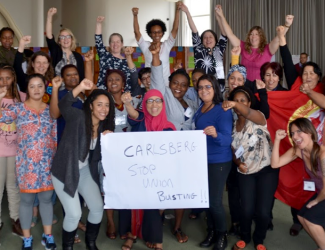
AWID and the Women Human Rights Defenders International Coalition (WHRD-IC) are pleased to announce “Women Human Rights Defenders Confronting Extractivism and Corporate Power”; a cross-regional research project documenting the lived experiences of WHRDs from Asia, Africa and Latin America.

We encourage activists, members of social movements, organized civil society, donors and policy makers to read and use these products for advocacy, education and inspiration.

Share your experience and questions!

Tell us how you are using the resources on WHRDs Confronting extractivism and corporate power.

◾️ How can these resources support your activism and advocacy?

◾️ What additional information or knowledge do you need to make the best use of these resources?

Share your feedback


Thank you!

AWID acknowledges with gratitude the invaluable input of every Woman Human Rights Defender who participated in this project. This project was made possible thanks to your willingness to generously and openly share your experiences and learnings. Your courage, creativity and resilience is an inspiration for us all. Thank you!

Related Content

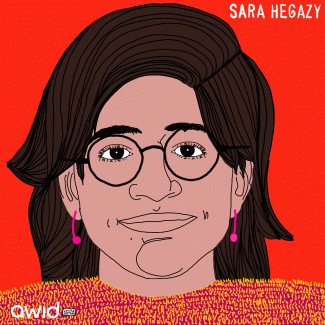
Sara Hegazy

Sara Hegazy, une audacieuse activiste égyptienne des droits des LGBTQI+, vivait dans une société où les membres de sa communauté, leurs corps et leurs vies sont souvent victimes de préjugés mortels. La résistance de Sara puise ses racines dans le processus de déconstruction d'un système dominant, oppressif et patriarcal, et de ses acteurs antidroits. 

« [En Égypte], toute personne qui n'est pas un homme, musulman, sunnite, hétéro et partisan du système, est rejetée, réprimée, stigmatisée, arrêtée, exilée ou tuée. Ce phénomène concerne le système patriarcal dans son ensemble, étant donné que l'État ne peut pratiquer sa répression contre les citoyens sans une oppression préexistant depuis l'enfance », écrivait Sara Hegazy le 6 mars 2020

La répression de la voix de Sara par le gouvernement égyptien atteignit son paroxysme en 2017, lorsqu’elle fut arrêtée pour avoir brandi un drapeau arc-en-ciel lors du concert de Mashrou' Leila (groupe libanais dont le chanteur principal est ouvertement gai) au Caire. Elle fut ensuite accusée d'avoir rejoint un groupe illégal et « d’incitation à la déviance sexuelle et à la débauche ».  

« C’était un acte de soutien et de solidarité, non seulement envers le chanteur [de Mashrou' Leila] mais pour tou·te·s les opprimé·e·s… Nous étions fier·ère·s de porter le drapeau. Nous ne pouvions imaginer que la société et l’État égyptien réagiraient de cette façon. Ils m’ont vue comme une criminelle, quelqu’un qui cherchait à détruire la structure morale de la société ».  - Sara Hegazy

Sara fut emprisonnée pendant trois mois, durant lesquels elle fut torturée et agressée sexuellement. En janvier 2018, après avoir été libérée sous caution, elle demanda l'asile au Canada où elle vécut en sécurité mais resta prisonnière des souvenirs de la violence et des sévices qu'elle avait subis dans son corps et son âme.

« Je suis sortie de cette expérience au bout de trois mois avec un cas très sévère et grave de SSPT [syndrome de stress post-traumatique]. La prison m'a tuée. Elle m'a détruite », déclara Sara Hegazy à la NPR (Radio d’État)

Sara s'est suicidée le 14 juin 2020, en laissant une note manuscrite en arabe :  

« À mes frères et sœurs - j'ai essayé de trouver la rédemption et j'ai échoué, pardonnez-moi. »
« À mes amis - l'expérience [l’aventure] a été rude et je suis trop faible pour la supporter, pardonnez-moi. » 
« Au monde - tu as été très cruel, mais je te pardonne. »

Son courage et son héritage seront perpétués par toutes les personnes qui l’aimaient et qui croient en ce pour quoi elle s’est battue. 


Hommages :

« À Sara : repose-toi, repose-toi simplement, hors d’atteinte de cette violence implacable, de ce patriarcat étatique meurtrier. Dans la rage, dans le chagrin, dans l'épuisement, nous résisterons. » - Rasha Younes, chercheuse sur les droits LGBT à Human Rights Watch. Lisez le texte complet

Le chanteur de Mashrou’ Leila chante en hommage à Sara Hegazy
Hommages sur Twitter 

Documentaire sur la vie de Sara Hegazy

Site Web dédié à Sara Hegazy et à celleux, particulièrement aux voix LGBTQI, qui n'ont pas la possibilité de faire leur deuil en public

WITM - Refreshed INFOGRAPHIC 3 FR

Comment les féministes s’autofinancent ?

Les organisations féministes et de défense des droits des femmes ne dépendent pas uniquement des financements institutionnels, elles s’autofinancent. Nos mouvements sont animés par la passion, la solidarité, l’engagement politique et le soin collectif.
Ces ressources autonomes et autogénérées sont souvent invisibles dans les budgets, mais elles sont le pilier de notre action collective.

 Explorez les données sur l’autofinancement

Snippet FEA Occupation’s kitchen Instagram (FR)

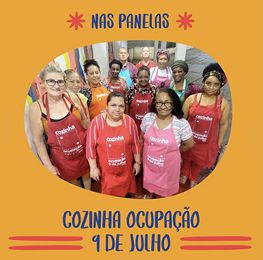
Campagne publicitaire d'Ocupação 9 de Julho :

Photo of Cozinha Ocupação 9 de Julho team in aprons
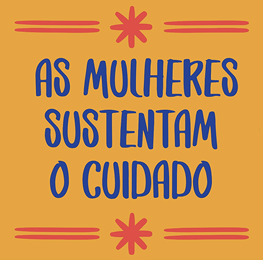
Yellow square that says "As mulheres sustentam o cuidado" or Women sustain care in Portuguese.
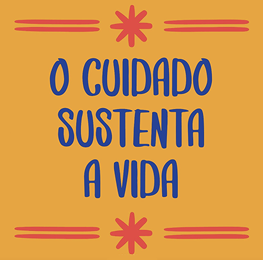
Yellow square that says "O cuidado sustenta a vida" or "Care sustains life" in Portuguese.
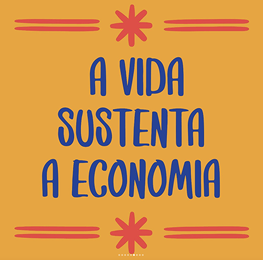
Yellow square that says "A vida sustenta a economia" or "Life sustains the economy" in Portuguese.
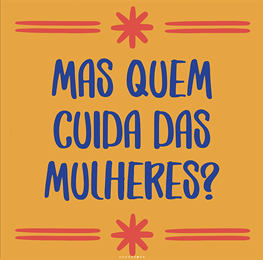
Yellow square that says: "Mas quen cuida das mulheres?" or "But who is taking care of women?" in Portuguese.
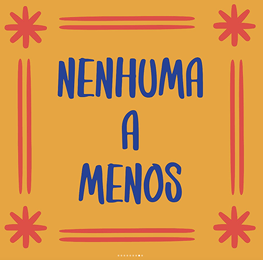
A yellow square that says "Nenhuma a menos" which translates to "Not another woman less"
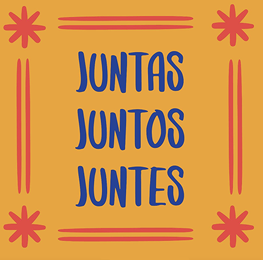
Yellow square that says "Juntas, Juntos, Juntes" which translates to "Together, together, together"
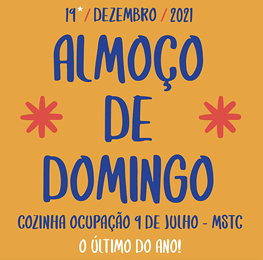
Yellow square announcing Sunday Lunch at the Occupation's Kitchen

Les Femmes Maintiennent les Soins | Les Soins Soutiennent la Vie | La Vie Soutient l'Économie | Qui s'Occupe des Femmes ? | Pas Une de Moins1 | Ensemble | Déjeuner du Dimanche

1Nenhuna a menos se traduit littéralement par « pas une femme de moins » ou « ni una menos » en espagnol - un célèbre slogan féministe en Amérique latine qui a émergé en Argentine en réponse à l'augmentation de la violence sexiste.

Snippet - COP30 - Radical Democracy - EN

Démocratie radicale et justice climatique - le débat absent de la COP30

Modèles de gouvernance alternative comme moyens de sortir de la crise climatique.

📅 Mercredi 12 novembre 2025
📍 Seminario Mar Nossa Sra Da Assunção, Pará, Brésil

Plus d'infos ici

Site web en anglais

Body

Snippet FEA Clemencia (EN)

Meet Clemencia Carabalí Rodallega, an extraordinary Afro-Colombian feminist.

She has worked relentlessly for three decades towards the safeguarding of human rights, women’s rights and peace-building in conflict areas on the Pacific Coast of Colombia.

Clemencia has made significant contributions to the fight for truth, reparations and justice for the victims of Colombia’s civil war. She received the National Award for the Defense of Human Rights in 2019, and also participated in the campaign of newly elected Afro-Colombian and long-time friend, vice-president Francia Marquez.

Although Clemencia has faced and continues to face many hardships, including threats and assassination attempts, she continues to fight for the rights of Afro-Colombian women and communities across the country.

Snippet - COP30 - Resistance Hubs Section Title - EN

Resistance Hubs for Climate Justice

Snippet FEA Metzineres activists (ES)

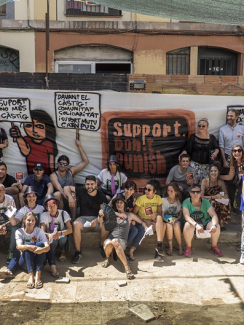
A crowd of people sitting in front of a banner which says ‘support, don't punish”;
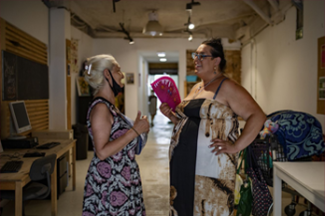
Photo of two women talking to each other, one of them is holding a handheld fan.
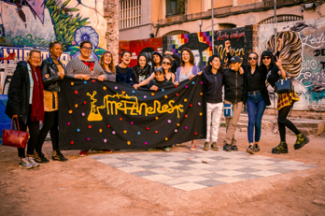
Crowd of people with a black banner that says Metzineres in yellow.
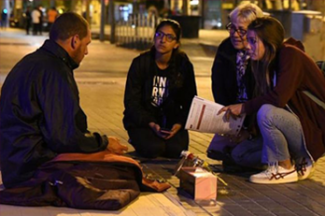
Photo of four people sitting on the ground and talking
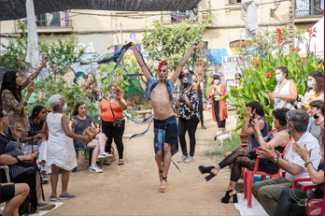
Photo people with plants around them, most of them sitting and clapping to a person who is walking in the middle


Activistas de Metzineres en acción

Snippet - COP30 - Political Education Toolbox - EN

📚 Political Education Toolbox

Expose corporate capture. Understand false solutions. Build alternatives. Everything you need to run your own "Whose COP Is It?" campaign.

Access Toolbox #1 

Access Toolbox #2

Body

Snippet FEA Get Involved 1 (FR)

ENGAGEZ-VOUS!

Vous pouvez suivre le travail de ces collectifs sur les réseaux sociaux et sites internet suivant:

Body

Snippet FEA EoS The Cover (FR)

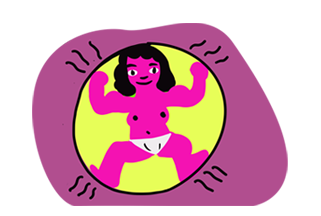
Illustration of a pink human in white underwear doing a power pose

La puissante
Autoprotection et renforcement