Special Focus

AWID is an international, feminist, membership organisation committed to achieving gender equality, sustainable development and women’s human rights

Confronting Extractivism & Corporate Power

Women human rights defenders (WHRDs) worldwide defend their lands, livelihoods and communities from extractive industries and corporate power. They stand against powerful economic and political interests driving land theft, displacement of communities, loss of livelihoods, and environmental degradation.


Why resist extractive industries?

Extractivism is an economic and political model of development that commodifies nature and prioritizes profit over human rights and the environment. Rooted in colonial history, it reinforces social and economic inequalities locally and globally. Often, Black, rural and Indigenous women are the most affected by extractivism, and are largely excluded from decision-making. Defying these patriarchal and neo-colonial forces, women rise in defense of rights, lands, people and nature.

Critical risks and gender-specific violence

WHRDs confronting extractive industries experience a range of risks, threats and violations, including criminalization, stigmatization, violence and intimidation.  Their stories reveal a strong aspect of gendered and sexualized violence. Perpetrators include state and local authorities, corporations, police, military, paramilitary and private security forces, and at times their own communities.

Acting together

AWID and the Women Human Rights Defenders International Coalition (WHRD-IC) are pleased to announce “Women Human Rights Defenders Confronting Extractivism and Corporate Power”; a cross-regional research project documenting the lived experiences of WHRDs from Asia, Africa and Latin America.

We encourage activists, members of social movements, organized civil society, donors and policy makers to read and use these products for advocacy, education and inspiration.

Share your experience and questions!

Tell us how you are using the resources on WHRDs Confronting extractivism and corporate power.

◾️ How can these resources support your activism and advocacy?

◾️ What additional information or knowledge do you need to make the best use of these resources?

Share your feedback


Thank you!

AWID acknowledges with gratitude the invaluable input of every Woman Human Rights Defender who participated in this project. This project was made possible thanks to your willingness to generously and openly share your experiences and learnings. Your courage, creativity and resilience is an inspiration for us all. Thank you!

Related Content

Key opposition actors

We are witnessing an unprecedented level of engagement of anti-rights actors in international human rights spaces. To bolster their impact and amplify their voices, anti-rights actors increasingly engage in tactical alliance building across sectors, regional and national borders, and faiths.


This “unholy alliance” of traditionalist actors from Catholic, Evangelical, Mormon, Russian Orthodox and Muslim faith backgrounds have found common cause in a number of shared talking points and advocacy efforts attempting to push back against feminist and sexual rights gains at the international level.

Holy See

  • Key activities: As the government of the Roman Catholic Church, the “Holy See” uses its unique status as Permanent Observer state at the UN to lobby for conservative, patriarchal, and heteronormative notions of womanhood, gender identities and “the family”, and to propagate policies that are anti-abortion and -contraception  

  • Based in: Vatican City, Rome, Italy.

  • Religious affiliations: Catholic

  • Connections to other anti-rights actors: US Christian Right groups; interfaith orthodox alliances; Catholic CSOs

Organization of Islamic Cooperation (OIC)

  • Key activities: Self-described as the “collective voice of the Muslim world”, the OIC acts as a bloc of states in UN spaces. The OIC attempts to create loopholes in human rights protection through references to religion, culture, or national sovereignty; propagates the concept of the “traditional family”; and contributes to a parallel but restrictive human rights regime (e.g. the 1990 Cairo Declaration on Human Rights in Islam).

  • Based in: Jeddah, Saudi Arabia

  • Religious affiliations: Muslim

  • Connections to other anti-rights actors: Ultra conservative State missions to the UN, such as Russia

World Congress of Families

  • Key activities: International and regional conferences; research and knowledge-production and dissemination; lobbying at the United Nations “to defend life, faith and family”

  • Based in: Rockford, Illinois, U.S.

  • Religious affiliation: Predominantly Catholic and Christian Evangelical

  • Connections to other anti-rights actors: Sutherland Institute, a conservative think-tank; the Church of Latter-Day Saints; the Russian Orthodox Church’s Department of Family and Life; the anti-abortion Catholic Priests for Life; the Foundation for African Culture and Heritage; the Polish Federation of Pro-Life Movements; the European Federation of Catholic Family Associations; the UN NGO Committee on the Family; and the Political Network for Values; the Georgian Demographic Society; parliamentarians from Poland and Moldova, etc; FamilyPolicy; the Russian Institute for Strategic Studies; and HatzeOir; C-Fam; among others

Center for Family and Human Rights (C-Fam)

  • Key activities: Lobbying at the United Nations, particularly the Commission of the Status of Women to “defend life and family”; media and information-dissemination (Friday Fax newsletter); movement building; trainings for conservative activists

  • Based in: New York and Washington D.C., U.S.

  • Religious affiliations: Catholic

  • Connections to other anti-rights actors: International Youth Coalition; World Youth Alliance; Human Life International; the Holy See; coordinates the Civil Society for the Family; the Family Research Council (U.S.) and other Christian/Catholic anti-rights CSOs; United States CSW delegation

Family Watch International

  • Key activities: Lobbying in international human rights spaces for “the family” and anti-LGBTQ and anti-CSE policies; training of civil society and state delegates (for example, ‘The Resource Guide to UN Consensus Language on Family Issues’); information dissemination; knowledge production and analysis; online campaigns

  • Based in: Gilbert, Arizona, U.S.

  • Religious affiliations: Mormon

  • Connections to other anti-rights actors: leader of the UN Family Rights Caucus; C-Fam; Jews Offering New Alternatives to Homosexuality (JONAH); the National Association for Research and Therapy of Homosexuality (NARTH); World Congress of Families; CitizenGo; Magdalen Institute; Asociación La Familia Importa; Group of Friends of the Family (25 state bloc)

World Youth Alliance

  • Key activities: Advocacy in international policy spaces including the United Nations, the European Union, and the Organization of American States for “the family”, against sexual and reproductive rights; training youth members in the use of diplomacy and negotiation, international relations, grassroots activities and message development; internship program to encourage youth participation in its work; regular Emerging Leaders Conference; knowledge production and dissemination

  • Based in: New York City (U.S.) with regional chapter offices in Nairobi (Kenya), Quezon City (The Philippines), Brussels (Belgium), Mexico City (Mexico), and Beirut (Lebanon)

  • Religious affiliations: primarily Catholic but aims for interfaith membership

  • Connections to other anti-rights actors: C-Fam; Human Life International; the Holy See; Campaign Life coalition

Russian Orthodox Church

  • Key Activities: The Russian Orthodox Church (ROC), capitalizing on its close links to the Russian state, has operated as a “norm entrepreneur” in human rights debates.  Russia and the ROC have co-opted rights language to push for a focus on “morality” and “traditional values”  as supposed key sources of human rights.  Russia led a series of “traditional values” resolutions at the Human Rights Council and has been at the forefront of putting forward hostile amendments to progressive resolutions in areas including maternal mortality, protection of civil society space, and the right to peaceful protest.

  • Connections to other anti-rights actors: Organization of Islamic Cooperation; Eastern European and Caucasus Orthodox churches, e.g. Georgian Orthodox Church; U.S. Christian Right including U.S. Evangelicals; World Congress of Families; Group of Friends of the Family (state bloc)


Other Chapters

Read the full report

Snippet FEA Metzineres activists (ES)

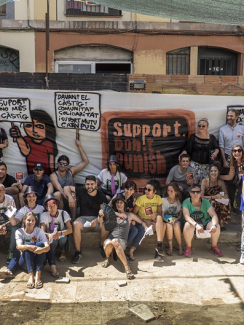
A crowd of people sitting in front of a banner which says ‘support, don't punish”;
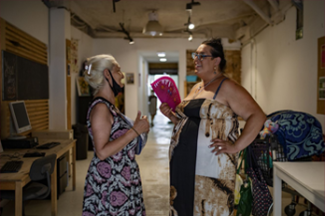
Photo of two women talking to each other, one of them is holding a handheld fan.
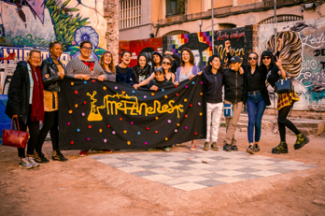
Crowd of people with a black banner that says Metzineres in yellow.
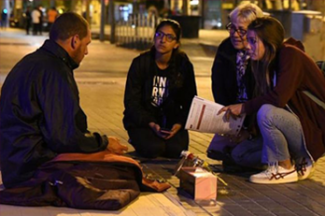
Photo of four people sitting on the ground and talking
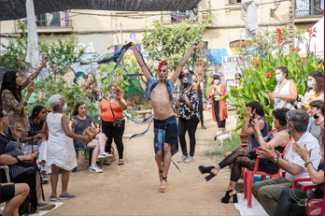
Photo people with plants around them, most of them sitting and clapping to a person who is walking in the middle


Activistas de Metzineres en acción

Juli Dugdale

Juli Dugdale fue una feminista australiana que practicaba un liderazgo intergeneracional arraigado en los principios del feminismo, la inclusión y la igualdad. Fue líder, colega y mentora para muchas mujeres, especialmente, para las mujeres jóvenes de todo el mundo.

Juli fue una integrante comprometida del equipo del movimiento Young Women's Christian Association [Asociación Cristiana de Mujeres Jóvenes] (YWCA, por su siglas en inglés), una voluntaria y una ferviente defensora del liderazgo de las mujeres jóvenes por más de 30 años.

Se convirtió en un vínculo fuerte entre el movimiento australiano y la Oficina de la YWCA Mundial. Su confianza en la capacidad de liderazgo de las mujeres jóvenes llevó a establecer una asociación de varios años con el Departamento de Asuntos Exteriores y Comercio de Australia y a la creación del manual Rise Up (Rebélate), una guía global para el liderazgo transformador de las mujeres jóvenes, lanzada en 2018.

Juli falleció en Ginebra el 12 de agosto de 2019.


Tributos:

"Para quienes llegaron a trabajar con Juli, fue un privilegio.  Quienes no lo hicieron,  pueden tener la certeza de que su legado continúa en el trabajo que hacemos cada día y en la misión del movimiento de la YWCA". - YWCA Australia

"Juli Dugdale siempre ocupará un lugar profundo en el corazón de muchas personas en el movimiento de la YWCA, especialmente aquí, en Aotearoa, y a través del Pacífico. Juli tenía una relación especial con el Pacífico y fue un apoyo increíble para las mujeres jóvenes de allí. Ella era humilde, amable, cariñosa, dedicada, apasionada y tenía un corazón generoso. Ella encarnó la visión de la YWCA de "liderazgo transformador" con una extraordinaria visión y previsión de futuro, y ayudó a empoderar a generaciones de mujeres jóvenes líderes de todo el mundo". - YWCA Nueva Zelanda

¿De dónde obtiene AWID su financiamiento?

El trabajo de AWID es posible gracias al apoyo financiero de una amplia gama de donantes, incluyendo agencias multilaterales y bilaterales, fundaciones privadas y fondos de mujeres.

Consulta la lista actualizada de donantes

Snippet - CSW69 - Feminist Solidarity Space - ES

Espacio de solidaridad feminista

✉️ Requiere inscripción previa para grandes grupos. Entrada libre para grupos reducidos. Reserven aquí

📅Martes 11 de marzo de 2025
🕒 de 12:00 a 02:00 p.m. y de 04:00 a 06:00 p.m., EST
🏢 
Chef's Kitchen Loft with Terrace, 216 East 45th St 13th Floor New York

Organiza: AWID

Defendiendo nuestra tierra del poder corporativo

Estas industrias 'extraen' materias primas de la tierra: minería, gas, petróleo y madera son algunos ejemplos.

Este modelo económico explota desenfrenadamente la naturaleza e intensifica las desigualdades norte, donde sus grandes corporaciones se benefician y sur, de donde extraen los recursos.

Contaminación del agua, daño irreparable al medioambiente, comunidades forzadas a desplazarse son algunas de las consecuencias inmediatas.

Lee nuestro reporte de INDUSTRIAS EXTRACTIVAS

Hay alternativas sostenibles para el medioambiente y los derechos humanos de la mujer.


Descubre además cómo nos afecta económicamente

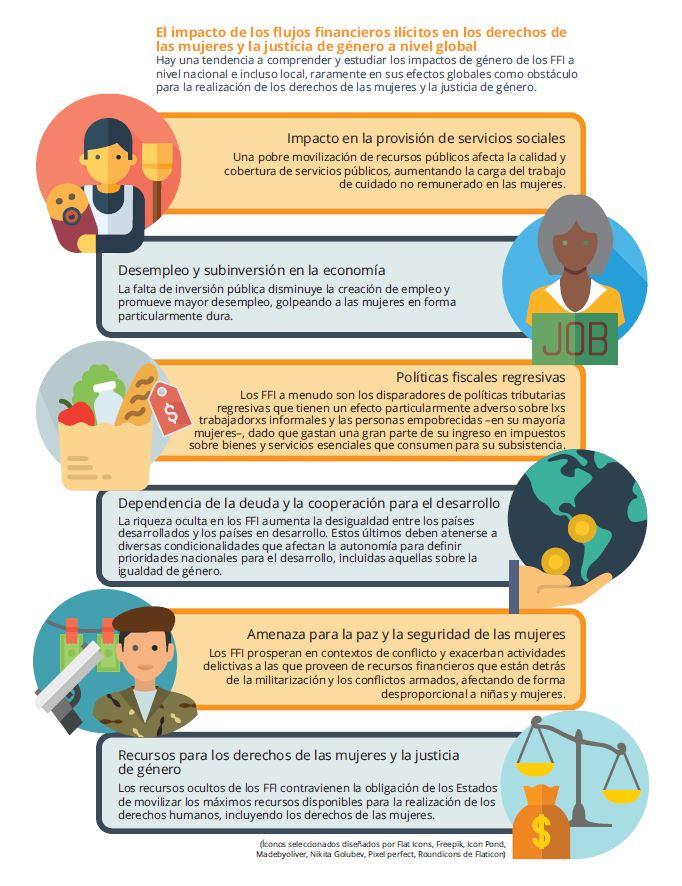
El impacto de los flujos financieros ilícitos en los derechos de las mujeres y la justicia de género a nivel global

Conoce qué son los FLUJOS FINANCIEROS ILÍCITOS

Snippet FEA Get Involved 1 (FR)

ENGAGEZ-VOUS!

Vous pouvez suivre le travail de ces collectifs sur les réseaux sociaux et sites internet suivant:

Sarah Maldoror

“Je n’adhère pas au concept de ‘tiers-monde’. Je fais des films pour que les gens puissent les comprendre indépendamment de leur race ou de leur couleur. Pour moi, il n’y a que des exploiteurs et des exploités, c’est tout. Faire un film, c’est prendre position.” - Sarah Maldoror 

Sarah Maldoror, cinéaste française d’origine antillaise, fut une pionnière du cinéma panafricain. Elle plaça ses préoccupations politiques et son engagement de longue date dans les mouvements de décolonisation au coeur de son oeuvre.

Son film révolutionnaire Sambizanga (1972), avec son “image révolutionnaire”, retrace la lutte de libération anticoloniale des activistes angolais et retranscrit le point de vue d’une femme qui se trouve dans ce moment historique.   

“Pour beaucoup de cinéastes africains, le cinéma est un outil de la révolution, une éducation politique pour transformer les consciences. Il s’inscrivait dans l’émergence d’un cinéma du Tiers-Monde cherchant à décoloniser la pensée pour favoriser des changements radicaux dans la société.” - Sarah Maldoror

Au cours de sa carrière, Sarah a fondé, aux côtés d’un certain nombre d’artistes africain·e·s et caribéen·ne·s, la première compagnie de théâtre noire en France (1956). Elle a réalisé une quarantaine de films, y compris d’importants documentaires qui mettent en valeur les vies et l’oeuvre d’artistes noir·e·s, notamment celles de son ami et poète Aimé Césaire qui lui écrivit ceci: 

“À Sarah Maldoror qui, caméra au poing, 
combat l’oppression, l’aliénation 
et défie la connerie humaine”. 

Sarah a également voulu permettre aux femmes africaines de s'approprier davantage le processus de réalisation des films. Dans une interview, elle faisait remarquer : 

"La femme africaine doit être partout. Elle doit être à l'image, derrière la caméra, au montage, à toutes les étapes de la fabrication d'un film. C'est elle qui doit parler de ses problèmes…”  

Sarah a laissé un héritage incroyablement puissant qui doit être transmis. 

Née le 19 juillet 1929, Sarah est décédée le 13 avril 2020 des suites de complications liées au coronavirus.


Regardez Sambizanga et lisez la critique de film parue dans le New York Times en 1973 (seulement en anglais)

Les hommes peuvent-ils adhérer à l’AWID ?

Oui, l’adhésion à l’AWID est ouverte à tous ceux et à toutes celles qui partagent nos valeurs.

Nombre d’hommes qui partagent notre engagement vis-à-vis du féminisme et des droits humains des femmes sont membres de l’AWID.

Rencontrez nos membres

Snippet - Resources to rally - ES

Recursos para movilizarnos durante la CSW69

Framework & Theme

The theme of the 14th AWID International Forum is: “Feminist Realities: our power in action”. 

In our 14th Forum, we will celebrate and amplify Feminist Realities that are around us, in all stages of development. 

We want to make this Forum our Feminist Reality - a place where you can inhabit a different world, where you bring your victories, the solutions you have devised; what makes you feel stronger, hopeful and ready to go on. It will be different from any other convening you have previously attended. 

We urge you to join us in co-creating this world. It will be worth it!


Each Forum has a theme that reflects the needs of our membership and movements, and responds to our analysis of the current context.

The global context

Currently fascisms, fundamentalisms, authoritarianism and unfettered corporate power are gaining momentum globally. We see these threats converging with the State to shape public norms, narratives, and policies,  entrenching a culture of fear, hate and incitement to violence in public discourse. States, previously the target of advocacy and rights claims, in many cases no longer feel accountable and in some cases themselves don’t have the power to uphold rights.

This time of volatility, complexity and uncertainty requires creativity in how we organize across movements, coherence in what we demand and daring in what we propose. 

From Feminist Futures to Feminist Realities

AWID’s 2016 Forum centered on Feminist Futures and the conditions needed to bring such futures about. It was clear then, and remains evident now, the enormous challenge for many social justice movements to think outside of the current system for structural solutions. Imaginations can become narrowed from long experiences of inequality and oppression. But what we also heard then and we see all around us is that feminist movements are indeed living and promoting rights-and justice-oriented realities and solutions in big and small ways. 

Indeed we see an urgency to mobilize from a place of hope, rather than from a lowest common denominator - hope that is grounded in the certainty that across the globe, however imperfectly, are experiences and practices that embody more just ways of being in the world and that by sharing, strengthening and building on these experiences, we can help them grow their influence.

These are not impossible dreams, but lived realities. This sense of possibility is a spark to re-examine and re-appreciate the transformative dimensions in our work. 


A few examples of Feminist Realities across the globe

At AWID, we understand feminist realities as the living, breathing examples of the worlds we know are possible.  We understand these diverse feminist realities as reclamations and embodiments of hope and power. They are embedded in the multiple ways  that show us that there is a different way of living, thinking and doing-- from the daily expressions of how we live and relate to each other, to alternative systems of governance and justice. Feminist Realities resist dominant power systems such as patriarchy, capitalism, and white supremacy. 

These are powerful propositions that orient us toward a vision of what is possible, and show how feminist organizing is blazing a path toward justice in movements and communities around the world. 

  • In a deeply marginalized Black community in Jackson, Mississippi, an experiment in solidarity and cooperative economics is taking place through Cooperation Jackson. An ambitious plan to build community ownership outside of capitalist modes of production.

  • In West Africa, women farmers are resisting land grabbing and refusing industrialized agriculture projects, boldy claiming We Are The Solution, in a campaign to build agro-ecological solutions that center women farmers and their knowledges as the solutions to feed communities and mitigate climate change

  • Similarly, in India, 5,000 women have come together to develop community-based food sovereignty systems based on local knowledge, including grain and seed banks

  • Women in Mexico have created a moneyless economy project created by and for women and everyone they know. In El Cambalache everything has the same value: people exchange things they no longer need for things they want as well as knowledge, abilities and mutual aid that people would like to share. El Cambalache was built on the anti-systemic, anti-capitalist values of local social movements

  • In Rojava, Kurdish people are building democracy without the state and Kurdish women offer Jineology as a framework for challenging patriarchy, capitalism and the state, creating systems and institutions to put this framework into practice

  • In the UK, Anarcho Agony Aunts are a sex and dating advice show, covered from a feminist, antifascist, anarchist perspective. Hosts Rowan and Marijam are reclaiming space from the alt-right in giving people (mostly men) a space to ask tricky questions in a judgment-free zone. 

  • The African Feminist Judgment Project drafts and disseminates alternative judgments for important African landmark cases on a range of legal issues. At the heart of the project is propositional feminist judicial practice and alternative feminist judgments that contribute to African jurisprudence, legal practice and judicial decision-making 

  • The Usha Cooperative in India was founded when mainstream banks refused services to sex workers in Sonagachi. Sex workers self-organized to prioritize their economic concerns and set up their own financial institution. The Usha Cooperative is cooperative bank of over 20,000 sex workers and has provided over USD 4.7M in loans to 7,231 sex workers in a span of one year. With a membership entirely of sex workers, the bank provides real ownership and influence over the cooperative’s governance and management, pioneering ways for individuals and communities on the margins to build economic power on their own terms. 

  • In Puerto Rico, a community land trust is helping to transform an informal settlement around a polluted and flood prone river channel into a sustainable community. It provides a new model for improving informal settlements in cities without them then becoming unaffordable for the original residents.

  • In several Latin American countries activists are providing peer-to-peer counselling and accompaniment on medical abortion, reclaiming women´s right to decide over their bodies as well as to medical knowledgde. (for safety reasons, no links are provided.


The 14th AWID international Forum

The AWID Forum will be organized around 6 thematic anchors:

  • Resources for Communities, Movements and Economic Justice
  • Governance, accountability and justice
  • Digital Realities 
  • Bodies, pleasure and wellbeing
  • Planet and living beings
  • Feminist organizing 

Learn more about these anchors

Building on those realities, we expect the 2020 Forum to:

  • Build the power of Feminist Realities, by naming, celebrating, amplifying and contributing to build momentum around experiences and propositions that shine light on what is possible and feed our collective imaginations
  • Replenish wells of hope and energy as much needed fuel for rights and justice activism and resilience
  • Strengthen connectivity, reciprocity and solidarity across the diversity of feminist movements and with other rights and justice-oriented movements

The Forum is a collaborative process

The Forum is more than a four-day convening. It is one more stop on a movement strengthening journey around Feminist Realities that has already begun and will continue well beyond the Forum dates.

Join us on this journey!
Snippet FEA EoS The Cover (FR)

Illustration of a pink human in white underwear doing a power pose

La puissante
Autoprotection et renforcement

Gloria Chicaiza

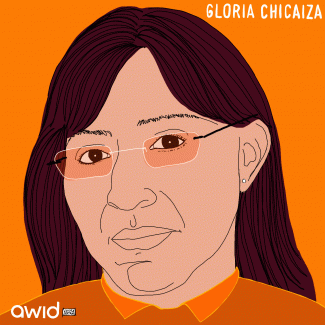
Gloria Chicaiza, an Ecuadorian social and environmental activist, was a fervent defender of land and water. She defied the status quo, fighting against a model of development based on extraction and worked tirelessly for ecological justice and the rights of communities affected by mining.  

In diverse areas of Ecuador, Gloria was part of resistance actions in favour of protecting the ecosystem. With passion and dedication, Gloria supported the indigenous and environmental movement, its communities and organizations who oppose mining projects and protect their territories and collective life projects. She spoke out, in local and international foras, against the criminalization of dissent and resistance, the pressure and violence being enacted against community activists, in particular, women human rights defenders and in support of community led efforts for food sovereignty and sustainability

She was the Mining Justice Coordinator at Acción Ecológica, member of the Latin American Network of Women Defenders of the Social and Environmental Rights and a Board member at the Observatory of Mining Conflicts of Latin America.

In October 2010, Gloria was accused by the mining company Curimining / Salazar Resources S.A. (with Headquarters in Vancouver, Canada) of sponsoring an act of terrorism, sabotage and illegal association to commit a crime. Acción Ecológica believed this to be “in retaliation for her work of denouncing the impacts of mining activities in the country.”

In 2014, Gloria supported the coordination of a delegation to the UN COP 20 Dialogue on Climate Change. The group consisted of 25 Indigenous women from Latin America.

Gloria passed away due to complications from a lung transplant on December 28, 2019. She is remembered for her resistance and tireless work. 

"The fastest way to achieve sustainability is still resistance." -  Gloria Chicaiza (2010 interview)


Tributes:

“Para GLORIA. GLORIA Agua. GLORIA Tierra. GLORIA Madre. GLORIA Revolución. GLORIA Hermana. GLORIA Cielo. GLORIAmiga. GLORIAstral. Thank you for weaving us together.” -Liliana Gutierrez

“Thank you Glorita, for sustaining hope, for keeping the fabric strong, for connecting the community, for the united hands, for solidarity, thank you Glorita for standing with us in the most difficult moments. Thank you for teaching us that throughout life, nobody gets tired.” (Chakana News)

“Gloria Chicaiza cherished and flourished in being one of many. And as humble as she was, she had an uncanny ability to lead and maintain a steady and thunderous beat, a life-affirming pulse that guided, mobilized, and inspired communities and networks in the protection of Mother Earth. She denounced all forms of violence against cuerpos-territorios. She endorsed el buen vivir.” - Gabriela Jiménez, Latin America Partnerships Coordinator, KAIROS

“Thank you Gloria Chicaiza from infinity we are sure that you will continue to support our struggle. You who continued to struggle with us despite your failing health. You will live on in the forests and the water that you defended with such courage. You will live on in our hearts.”- The community of Intag in Ecuador

Read more Tributes to Gloria
 

I am interested in working for women’s rights. How do I get started?

Cláusula de exención de responsabilidad: Comunicaciones con el equipo de AWID

Si has recibido correos electrónicos de integrantes del equipo de AWID, nos gustaría que tengas presente lo siguiente:

  • La información contenida en esta comunicación es confidencial y está destinada exclusivamente la persona que lo recibe.

  • Esta comunicación podría contener información que es propiedad de la Asociación para los Derechos de las Mujeres y el Desarrollo (AWID, por sus siglas en inglés). Esta información no puede reproducirse ni diseminarse  ni parcialmente ni  en su totalidad sin el consentimiento escrito de AWID.

  • AWID no garantiza que la información aquí contenida sea completa o correcta. Esta comunicación no es una oferta para elaborar ningún tipo de acuerdo y no es una confirmación de ningún acuerdo descrito en este documento, a menos que el contexto indique claramente lo contrario.

  • AWID no está actuando en calidad de asesora de ningún acuerdo que pueda surgir de este documento, y esta comunicación no constituye una recomendación, guía o propuesta para elaborar un acuerdo.

  • AWID no garantiza o asegura los resultados esperados de cualquier acuerdo. Esta comunicación puede contener puntos de vista y opiniones que pueden no corresponderse con aquellos de AWID.

  • No tendrá derecho a utilizar la información contenida en esta comunicación con fines de llegar a cualquier tipo de propuesta de acuerdo u otro. 

Snippet FEA Land and Agroecology

LAND AND 

AGROECOLOGY

Rural Women Caring for Nature and Communities

Nilcéa Freire

Nilcéa Freire fue una activista feminista, política y académica brasileña. Como perseverante defensora de los derechos de las mujeres y de las minorías subrepresentadas de su país, su vida y su trabajo acumularon una larga historia de luchas y victorias.

«Mientras se resiste, tenemos que empujar para avanzar y los avances que vamos a poder lograr en este momento, a mi juicio, serán a través de la organización estupenda que las jóvenes mujeres blancas, pero sobre todo, las mujeres negras, están haciendo en todas las capitales, y las grandes ciudades de Brasil.» - Nilcéa Freire

En 1999, se convirtió en la primera mujer Rectora de la Universidad del Estado de Río de Janeiro (UERJ). Desde ese puesto, impulsó la implementación de la primera política de acción afirmativa para estudiantes que se graduaban de escuelas públicas, que exigía un cupo específico para estudiantes negrxs de sectores de bajos ingresos, sistema adoptado por decenas de otras universidades públicas.

Unos años más tarde, Nilcéa encabezó la Secretaría Especial de Políticas para las Mujeres del gobierno del ex-presidente Luiz Inácio Lula da Silva. Desde esta función, lideró la Primera Conferencia Nacional de Mujeres Brasileñas, en la que participaron más de doce mil mujeres de todo el país. El resultado de este trabajo colectivo fue incorporado en el Plan Nacional de Políticas para las Mujeres.

Su compromiso con las mujeres y las personas afrobrasileñas e indígenas se reflejó también en su trabajo de promoción de sus derechos, a través de iniciativas de la Fundación Ford en Brasil, de la cual fue Directora Regional.

La activista feminista Manoela Miklos describió a Nilcéa como «una mujer sin igual».

Nilcéa falleció en Río de Janeiro el 29 de diciembre de 2019 a los 66 años, víctima de un cáncer.


 «No tengo palabras ante la noticia de la muerte de la querida Nilcéa Freire. Es demasiado triste saber que partió tan pronto. Siempre formó parte de las filas de quienes no aceptan las injusticias del mundo. Fue Ministra de las Mujeres, una activista, siempre activa en la causa feminista. ¡La extrañaremos mucho!» - Jandira Feghali, Diputada Federal

La feminista brasileña Nilcéa Freire nos dice por qué es importante solidarizarse con Brasil