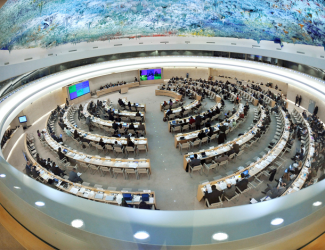
Jean-Marc Ferré | Flickr (CC BY-NC-ND 2.0)
A general view of participants at the 16th session of the Human Rights Council in Geneva, Switzerland.

Special Focus

AWID is an international, feminist, membership organisation committed to achieving gender equality, sustainable development and women’s human rights

Human Rights Council (HRC)

The Human Rights Council (HRC) is the key intergovernmental body within the United Nations system responsible for the promotion and protection of all human rights around the globe. It holds three regular sessions a year: in March, June and September. The Office of the UN High Commissioner for Human Rights (OHCHR) is the secretariat for the HRC.

The HRC works by:

  • Debating and passing resolutions on global human rights issues and human rights situations in particular countries

  • Examining complaints from victims of human rights violations or activist organizations on behalf of victims of human rights violations

  • Appointing independent experts (known as “Special Procedures”) to review human rights violations in specific countries and examine and further global human rights issues

  • Engaging in discussions with experts and governments on human rights issues

  • Assessing the human rights records of all UN Member States every four and a half years through the Universal Periodic Review

Learn more about the HRC


AWID works with feminist, progressive and human rights partners to share key knowledge, convene civil society dialogues and events, and influence negotiations and outcomes of the session.

With our partners, our work will:

◾️ Monitor, track and analyze anti-rights actors, discourses and strategies and their impact on resolutions

◾️ Raise awareness of the findings of the 2017 and 2021 OURs Trends Reports.

◾️Support the work of feminist UN experts in the face of backlash and pressure

◾️Advocate for state accountability
 
◾️ Work with feminist movements and civil society organizations to advance rights related to gender and sexuality.
 

Related Content

Navleen Kumar

"She was not a person. She was a power."
- a fellow activist remembering Navleen Kumar

Navleen Kumar was a fervent land rights and social justice activist in India.

With commitment and integrity, she worked for more than a decade to protect and restore the lands of Indigenous people (adivasi) in Thane district, an area taken away by property and land developers using such means as coercion and intimidation. She fought this injustice and crime through legal interventions at different courts, realizing that manipulation of land records was a recurrent feature in most cases of land acquisition. In one of the cases, that of the Wartha (a tribal family), Navleen found out that the family had been cheated with the complicity of government officials.

Through her work, she helped restore the land back to the Wartha family and continued to pursue other cases of adivasi land transfers.

“Her paper on the impact of land alienation on adivasi women and children traces the history and complexities of tribal alienation from the 1970s, when middle class families began to move to the extended suburbs of Mumbai as the real estate value in the city spiralled.

Housing complexes mushroomed in these suburbs, and the illiterate tribals paid the price for this. Prime land near the railway lines fetched a high price and builders swooped down on this belt like vultures, to grab land from tribals and other local residents by illegal means.”
-Jaya Menon, Justice and Peace Commission 

During the course of her activism, Navleen received numerous threats and survived several attempts on her life. Despite these, she continued working on what was not only important to her but contributed to changing the lives and realities of many she supported in the struggle for social justice. 

Navleen was stabbed to death on 19 June 2002 in her apartment building. Two local gangsters were arrested for her murder. 

Snippet FEA Principles of work Human Rights (EN)

A person speaking in a loudspeaker.

HUMAN RIGHTS

Défendre les droits des personnes LGBT*QI

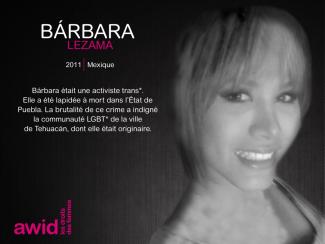
Une étudiante, une scénariste, une leader, une avocate. Les quatre femmes auxquelles nous rendons hommage ci-dessous avait toutes leur propre façon de vivre leur activisme, mais elles avaient en commun la promotion et la défense des droits des personnes lesbiennes, gaies, bisexuelles, trans*, queer et intersexes. Nous vous invitons à vous joindre à nous pour commémorer ces défenseuses, leur travail et l'héritage qu’elles nous ont laissé. Faites circuler ces mèmes auprès de vos collègues et amis ainsi que dans vos réseaux et twittez en utilisant les hashtags #WHRDTribute et #16Jours.


S'il vous plaît cliquez sur chaque image ci-dessous pour voir une version plus grande et pour télécharger comme un fichier 


Snippet - Home page promo WITM - FR

« Où est l’argent pour l’organisation des mouvements féministes? »

En s’appuyant sur nos 20 années d’efforts pour la mobilisation de davantage de financements de meilleure qualité pour des changements sociaux menés par des féministes, l’AWID vous invite à répondre à la nouvelle version de notre enquête phare intitulée WITM

JE PARTICIPE À L’ENQUÊTE! En savoir plus

Nadyn Jouny

Lo personal es político, y la apasionada y valiente Nadyn Jouny personificó este mantra feminista. Nadyn experimentó de primera mano el dolor de la violencia estructural de los sistemas legales que despojan a las mujeres de sus derechos.

Cuando Nadyn decidió solicitar el divorcio, los tribunales religiosos chiítas, bajo las Leyes de Estatuto Personal Libanesas, le negaron la custodia de su joven hijo Karam. Nadyn, como tantas otras mujeres del Líbano y de otros países, se vio atrapada entre el dolor imposible de dejar una relación no deseada y abusiva y de perder a la vez los derechos sobre su hijo.  Sin embargo, Nadyn se defendió, y lo habría de hacerlo hasta el último día.

Nadyn utilizó su  habilidad con los medios de comunicación para convertirse en una voz  franca a favor de las mujeres que luchan contra la discriminación en la legislación familiar, en el Líbano y a nivel internacional. Nadyn cofundó el grupo autofinanciado "Protecting Lebanese Women" [Protegiendo a las Mujeres Libanesas] (PLW, por sus siglas en inglés) y se unió a muchas otras madres libanesas que se enfrentaban a problemas similares de custodia. Juntas, trabajaron para crear conciencia sobre las injusticias extremas a las que se enfrentaban, a nivel nacional, protestaron ante los tribunales religiosos por sus derechos y, a nivel internacional, llamaron la atención de los medios de comunicación.

Nadyn también trabajó con ABAAD - Resource Center for Gender Equality [Centro de Recursos para la Igualdad de Género], otra organización por los derechos de las mujeres en el Líbano, para realizar campañas en favor de los derechos de las mujeres, la igualdad en la legislación familiar y relativa a las custodias y contra los matrimonios forzados y precoces.

Para muchxs de sus colegas, Nadyn llegó a "simbolizar la lucha de una madre libanesa contra la supresión y la misoginia de todo tipo" (en inglés), al utilizar "su experiencia personal y trayectoria individual de empoderamiento, dio a otras mujeres esperanza para que ellas también pudieran ser un catalizador para el cambio positivo" - ABAAD - Centro de Recursos para la Igualdad entre los Géneros, Líbano.

El 6 de octubre de 2019, Nadyn murió trágicamente en un accidente de automóvil cuando se dirigía a protestar por los injustos aumentos de impuestos en un país que ya se enfrentaba a una espiral de crisis financiera. Nadyn Jouny tenía solo 29 años en el momento de su muerte.

Snippet FEA Title Main (ES)


Las Economías Feministas

QUE AMAMOS


Body

Advancing Movements

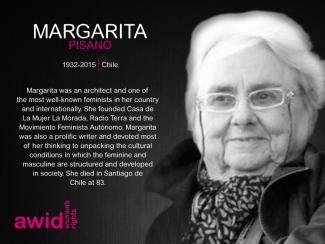
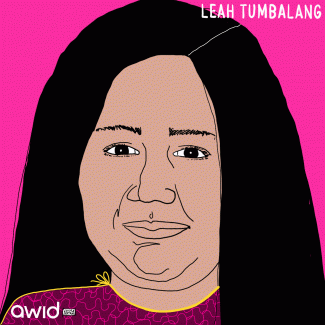
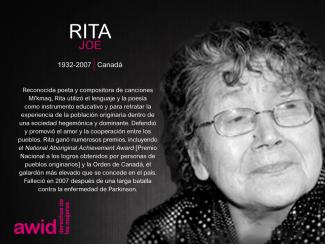
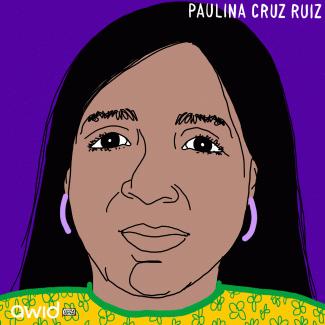
6 Women Human Rights Defenders (WHRDs) across Western and Southeastern Europe have in their lifetime researched, campaigned, participated in and advanced peace and women’s rights movements be it through political and social activism or through dance. We are grateful for the legacy they have left. Please join AWID in honoring these women, their activism and legacy by sharing the memes below with your colleagues, networks and friends and by using the hashtags #WHRDTribute and #16Days.


Please click on each image below to see a larger version and download as a file


FRMag - Freeing the Church

Liberar a la Iglesia, descolonizar la Biblia para las mujeres de Papúa Occidental

por Rode Wanimbo

«Señor, somos indignas. Somos las que pecaron, porque Eva comió el fruto en el Edén. Solo somos mujeres que cultivan batatas, cuidan cerdos y dan a luz niñxs. Creemos que tú moriste en la cruz para liberarnos. Gracias, en el nombre de Jesús, amén». (...)

Leer


< arte: «Offerings for Black Life» [Ofrendas para las vidas negras], Sokari Ekine

Forum Homepage Banner

¡Inscríbete en el Foro!

Cuando la gente se reúne a escala global, como personas individuales y como movimientos, se genera una fuerza arrolladora. Únete a nosotrxs en Bangkok, Tailandia, y de manera virtual, en diciembre de 2024.

Conoce más Inscríbete

Doris Valenzuela Angulo

Doris Valenzuela Angulo était une activiste sociale, leader et défenseure des droits humains afrodescendante de Buenaventura, en Colombie. Elle faisait partie du réseau national Comunidades Construyendo Paz en Colombia (CONPAZ, Communautés construisant la paix en Colombie) composé d’organisations présentes dans les communautés affectées par le conflit armé œuvrant en faveur de la non-violence et la justice socio-environnementale.

Doris s’opposait à la violence paramilitaire continue, aux pressions incessantes des mégaprojets cherchant à déplacer sa communauté, et à la complicité de  l’État. Confrontée à l’un des contextes les plus difficiles de son pays, elle joua un rôle de premier plan dans l’initiative de résistance non-violente sans précédent Espacio Humanitario Puente Nayero, un lieu urbain conçu pour assurer la cohésion communautaire, la sécurité, la créativité et l’action collective. 

Ce combat non-violent unique en son genre des familles de l’Espacio Humanitario Puente Nayero attira l’attention et le soutien des agences tant locales qu’internationales. En septembre 2014, la Commission interaméricaine des droits de l’Homme accorda des mesures de protection préventives à la communauté, ordonnant au gouvernement colombien d’adopter des mesures nécessaires en vue de protéger la vie et l’intégrité physique des habitant·e·s. Les menaces et la violence des paramilitaires se poursuivirent néanmoins. Malgré l’assassinat de son fils Cristian Dainer Aragón Valenzuela en juillet 2015,Doris continua à mettre toute son énergie à éviter le recrutement forcé des enfants et des jeunes par les néo-militaires. Elle devint alors également une cible, recevant constamment des menaces pour son activisme et le travail qu’elle accomplissait.

Les incessantes agressions et menaces de mort dont elle était l’objet forcèrent Doris à quitter la Colombie. Elle vécut en Espagne de février 2017 à février 2018, dans le cadre du programme de protection temporaire d’Amnesty International pour les défenseur·e·s des droits humains en danger.

Doris a été assassinée en avril 2018 à Murcie, en Espagne, par son ex-compagnon. Elle n’avait que 39 ans. 


Hommages :

« Doris, cette année passée avec toi nous a montré combien une personne peut avoir la capacité de transformer et créer de l’espoir en dépit des événements profondément négatifs et dévastateurs qui jalonnent sa vie... Nous poursuivons notre engagement à défendre tous les droits humains. Ton courage et ta lumière nous guideront toujours. » - Montserrat Román, Amnesty International, Groupe de La Palma, Espagne

Extrait de « Mots pour Doris Valenzuela Angulo », d’Elsa López

« ... Tu le savais. Tu l’as toujours su. Et malgré tout cela, tu as résisté sans faillir à tant d’injustice, de misère, de persécution. Tu t’es élevée, fière et acharnée, contre ceux qui continuaient à vouloir que tu abandonnes tout espoir, que tu t’abaisses, que tu te rendes. Debout, tu as réclamé haut et fort ta liberté et la nôtre, qui était la tienne. Rien ni personne n’est parvenu à paralyser tes efforts pour changer le monde et le rendre plus généreux et plus vivable. Tu vis parmi nous, aujourd’hui plus vivante que jamais malgré la mort. Tu vis encore par tes actes, par ton courage, par ta grandeur lorsque tu pleurais pour cette terre promise que tu invoquais à chacun de tes cris, pour tous ces déserts que tu as habités. Toi. Toujours en vie. Doris Valenzuela Angulo.
Ce ne sont que des mots. Je sais. Je le sais, moi aussi. Mais les mots nous unissent, nous protègent, nous donnent la force et le soutien nécessaires pour continuer à aller vers la lumière que tu défendais tant... »

Snippet - Podcast Intro (FR)

Nous sommes ravi.es d'annoncer le lancement du nouveau podcast de l'AWID, NOTRE FLAMME FÉMINISTE. Notre série narrative dévoile plus de 40 ans de mouvements féministes et réinvente une voie à suivre.

Dans notre saison pilote, vous entendrez cinq histoires captivantes qui font partie d'une constellation d'activisme féministe aujourd'hui. Animé par Gopika Bashi, notre directrice adjointe des programmes à l'AWID, chaque épisode explore des réalités féministes uniques mais interconnectées qui améliorent la justice de genre et les droits humains.

Produit par notre partenaire de podcast Webby Hueman Group Media, vous pouvez vous abonner à NOTRE FLAMME FÉMINISTE et écouter notre premier épisode ici.

Retrouvez-nous sur Apple Podcasts, Spotify ou partout où vous obtenez vos podcasts. Partagez avec votre réseau ! Aidez-nous à diffuser des histoires qui allument notre feu féministe et nous poussent à l'action.

Abonnez-vous ici

2. Frame your research

A framework for your research will guide throughout your research process, and the framing document you develop can also serve as a concept note to advisors and partners, and a funding proposal to potential donors.

Before conducting any research:

Your research framing may evolve over time as you refine your questions and gather new information. However, building an initial research framing will allow you to work from a solid foundation.


Goals

To create a strong foundation for your WITM research, it is important to clarify what you hope to accomplish.

For example, one goal of AWID’s WITM global research was to provide rigorous data to prove what we already knew anecdotally: that women’s rights organizations are discrepantly underfunded. With this data, we felt we would be better positioned to influence funders in their decision-making.

Your goals could be to:

  • Generate hard data on funding realities and trends to prove or disprove existing myths.
  • Gain deeper insight into differences between the perspectives of donors and women’s rights organizations.
  • Influence donors in grant-making.
  • Add crucial input to key funding debates.
  • Explore collaboration between donors and women’s rights organizations on issues that emerge from the research.

Back to top


Key questions

Frame your research process with key questions that only your research can answer and limit those questions to a specific time frame (e.g. past five years, past year, etc.).

Consider the following points:

  • What exactly do you want to learn more about and what is the hypothesis you would like to test? Writing this out will assist you in your thought process.
  • Is there existing research on this? If research already exists, it may not make sense to conduct new WITM research unless you feel like the existing research is not extensive or specific enough.  
  • What time frame do you want to cover in your analysis? For example, will your research analyze only the past year, or several previous years, such as the past five years?
  • Are you planning to repeat your survey to collect data in the future?

Choosing a specific timeframe for your research can result in more precise findings than working with an open-ended timeframe. Also, deciding whether you will repeat this research at regular intervals will allow you to set up data collection benchmarks for easy replication and comparison over time.

These were the key questions that guided AWID’s WITM research process:

  • What is the current state of women’s organizations’ financial sustainability across the world?
  • What external and internal trends are impacting donors’ funding decisions to support women’s organizations and movements?

Back to top


Type of data

Now that you determined your key questions, you can determine what kind of data will help you answer your key questions. This will allow you to plan the rest of your schedule for your WITM research.

For example, will you conduct a survey that covers an extensive portion of your priority population? Will you analyze the applications that funders are receiving from a certain region? Will you also conduct interviews (recommended)? By determining the types of data you need, you can reach out to external parties who will provide this data early on, and plot out your full schedule accordingly. Some suggested sources of data could be:

  • Surveys you create for women’s rights organizations and donors
  • Application and grantmaking data from donors funding cycles
  • Interviews of prominent activists, organizations, and donors
  • Donor data from membership organizations and networks, such as  the Foundation Center, regional or national donor affinity groups.

Diverse data sets are a great way to create robust and rich analysis.

The data from AWID’s 2011 Global Survey formed the backbone of our analysis in Watering the Leaves, Starving the Roots report. However, we also collected data from interviews and interactions with several actors in the field, ranging from donors to activists and women’s rights organizations.

Back to top


Final products

In addition to allowing you to set your schedule, creating an initial plan of what products you will develop will also allow you to work out what resources you need.

For example, will you only produce a long research report or will you also create infographics, brochures and presentations? Depending on your products, you may need to hire a design firm, plan events and so on.

These products will also be the tools you use to achieve your goals, so it is important to keep those goals in mind. For example, is your WITM research exclusively intended as an advocacy tool to influence funders? In that case, your products should allow you to engage with funders at a deep level.

 Some sample products:

  • Long report for dissemination with key funders and organizations.
    Historically, AWID WITM research has centered on a long report, from which AWID distilled other smaller products  - see rest of list.
  • Infographic for viral distribution online
  • Short animation demonstrating key findings
  • Short brochure(s) distilling your findings and messages
  • Articles and blog posts on key findings to draw interest to your larger report
  • Seminars or webinars presenting key findings.

Back to top


Conclusion: Framing your research will give you the big picture

Framing your research to cover goals, key questions, types of data, and final products will allow you to create a well-planned schedule, prepare your resources in advance, and plan a realistic budget.

This will make interactions with external partners easier and allow you to be nimble when unexpected setbacks occur.


Previous step

1. Gather your resources

Next step

3. Design your survey


Estimated time:

• 1 month

People needed:

• 1 or more Research person(s)

Resources available:

AWID Research Framing: sample 1
AWID Research Framing: sample 2


Previous step

1. Gather your resources

Next step

3. Design your survey


Ready to Go? Worksheet

Download the toolkit in PDF

FRMag - Our neighbourhood, our network

Notre quartier, nos réseaux, notre force

par Marta Plaza Fernández 

Le pouvoir de tisser des réseaux où nous nous soutenons les unes les autres: telle est la réalité féministe dont je veux vous faire part.  (...)

Lire

illustration : « Guérir ensemble », par Upasana Agarwal >

Snippet - CSW69 spaces to watch out for - FR

Les espaces de la CSW69 sur lesquels garder un œil

Apprenez-en davantage sur les prochains événements CSW69 co-organisés par l'AWID ci-dessous