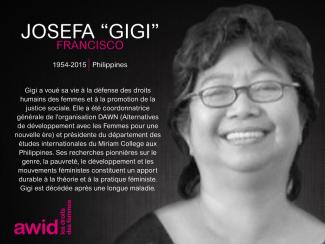
Josefa "Gigi" Francisco
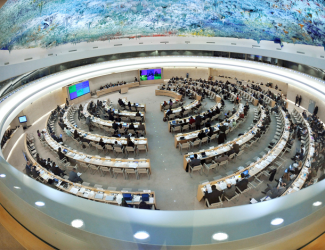
The Human Rights Council (HRC) is the key intergovernmental body within the United Nations system responsible for the promotion and protection of all human rights around the globe. It holds three regular sessions a year: in March, June and September. The Office of the UN High Commissioner for Human Rights (OHCHR) is the secretariat for the HRC.
Debating and passing resolutions on global human rights issues and human rights situations in particular countries
Examining complaints from victims of human rights violations or activist organizations on behalf of victims of human rights violations
Appointing independent experts (known as “Special Procedures”) to review human rights violations in specific countries and examine and further global human rights issues
Engaging in discussions with experts and governments on human rights issues
Assessing the human rights records of all UN Member States every four and a half years through the Universal Periodic Review
AWID works with feminist, progressive and human rights partners to share key knowledge, convene civil society dialogues and events, and influence negotiations and outcomes of the session.

Merci, Ángela et Pilar

 |
Yannia Sofía Garzón Valencia: Je suis une femme noire et une tisserande communautaire. Je vis à Santander de Quilichao dans le Cauca, en Colombie. Je m’intéresse aux processus créatifs autour desquels s’organise une vie collective durable. J’aime échanger des idées et cuisiner, faire des recherches et analyser, planter des graines et apprendre des plantes, lire et jouer. Je coordonne actuellement l’Observatoire des violences fondées sur le genre à l’encontre des communautés afro-descendantes en Colombie (@VigiaAfro). |

Il y avait une aire de jeux verte particulièrement grande, et nous étions assises sur de petits tabourets de bois sous un grand sureau. Nous faisions enfin l’expérience de cette autre forme d’amour – ce plaisir d’être ensemble et de s’écouter les unes les autres. Pour moi, ce genre de discussion compte parmi les expressions d’amour dont la vie me permettait de profiter depuis peu. Je ne savais pas que cette autre forme d’amour – que l’on trouve en dehors d’ateliers de formation, d’espaces d’activisme, de classes ou de lieux de travail – était possible. Mais nous trois, amies, avons passé l’après-midi entre nous, sans prétendre ne pas remarquer nos couleurs de peau respectives. C’était, au contraire, un facteur vécu qui nous permit de discuter de manière très intime des similitudes et des différences de nos expériences d’enfance et de jeunesse.
Ces discussions n’avaient aucun lien avec les prochaines activités du mouvement noir en Colombie, mais elles m’ont néanmoins nourrie et ont acquis de nouvelles significations. Notre intimité découlait de notre rapprochement, notre reconnaissance mutuelle et la perception de nos libérations uniques et individuelles. Et par la prise de conscience qu’il n’y a pas une, mais bien plusieurs voies vers la libération – ces voies que nous incarnions chaque fois que nous disions « non » et nous nous rebellions. Loin de tout malaise, nous nous sommes rencontrées avec une réelle authenticité empreinte de faiblesse et de force, qui nous rapprochait plus qu’elle ne nous séparait.
Notre objectif en ce bel après-midi était simplement d’être – d’avoir la conscience d’être simplement entre nous. Nous avons cheminé dans nos passés afin que nos mémoires conservées soient celles que nous avions décidé de garder en nous, et non celles que la peur avait fait entrer et inscrites en nous. Nous nous sommes remémoré des extraits très précis d’émissions de télé et avons chanté des chansons d’artistes qui nous avaient appris à bien aimer, à bien haïr, à jurer comme les pires brigands et à souffrir comme de vraies dames.
Nous nous sommes raconté nos mauvais coups à l’école, et ce qui demeurait dans notre subconscient d’avoir été exposées aux nombreuses manières qu’ont les médias de répéter la même chose – et après que les enseignantes et les nonnes à l’école nous aient abreuvées d’histoires nous incitant à nous identifier et à nous approprier les aspirations de Cendrillon pour nos propres vies. Cela donnait le ton pour le reste de notre histoire : le drame de la fille pauvre et affaiblie qui ne s’accomplira entièrement que par un acte qui la sauvera de sa condition. Et cet acte ne pourra que prendre la forme du regard d’un homme qui est, au minimum, blanc, méritant ainsi ce qui est entre nos cuisses – sa « principale aspiration » – et « la réalisation parfaite de nos rêves », ce qui nous était alors enseigné comme étant notre principale aspiration à nous aussi.
Nous étions trois, cet après-midi-là. Nous avions chacune été élevée dans une région différente du pays, mais il était absolument fascinant de néanmoins pouvoir citer des extraits de chansons et des situations de séries télévisées, qui – comme nous l’avons compris en apprenant à nous connaître – partageaient des codes ou des symboles répétés, à quelques différences près, dans nos maisons, dans nos premières relations et dans nos quartiers et nos écoles. Élevées par des « drames » (n’est-ce pas ainsi que l’on appelle ce genre si populaire?) dans lesquels plus on souffre plus on est méritante, la question de « comment et dans quelles situations est-il acceptable ou légitime de souffrir » devient un étalon important de la manière dont la personne qui souffre devrait être considérée, ce qu’elle devrait faire et qui elle devrait être. Certaines d’entre nous étions parvenues à nous libérer et à « apprendre » une définition de l’amour qui ne pouvait être apprise qu’à l’âge adulte, brisant toute illusion et acceptant le péché naturel. Et prenant conscience de la production industrielle d’une vierge, à qui nous pouvions refuser de ressembler car elle n’avait pas sa place dans notre entendement, et de la déception qu’apporte cette aliénation.
Après avoir chanté, nous avons examiné nos premières explorations sexuelles. Je n’avais jamais pensé que la plupart des gens en faisaient l’expérience avant l’âge de neuf ans et que, même à l’âge adulte, ces expériences et ces mémoires demeurent un fardeau encombrant. Même aujourd’hui, dans des milliers d’endroits, des millions de filles et de garçons voient leur innocence mise à mal par un manque de confiance et l’ignorance que nous affichons lorsqu’elles et ils tentent d’explorer leur corps. Blâmer la curiosité est un mécanisme de contrôle radicalement efficace. Nous sommes revenues sur les brèves conversations que nous avions eues lorsque nous avons changé l’histoire de nos vies, passant de Noires maudites à une perspective qui nous a permis de renaître. Nous avons évoqué le souvenir du nombre conséquent de tantes et de cousines qui avaient quitté leur maison, leur centre, leurs racines, à la recherche d’un avenir à l’extérieur, ailleurs.
« Elle apprit qu’il fallait qu’elle prenne soin de son ventre en gardant ses tissus au chaud, pour éviter le froid qui entre par cette partie plus souple sur le dessus de la tête, par les pieds, par les oreilles, afin de ne pas avoir mal, et particulièrement lorsque l’on a ses règles. Pour ce faire, il faut prêter attention à ce que l’on mange, à la manière dont on s’habille et à la manière dont on marche, car tout cela est en lien avec la santé des filles. »
L’avenir a un coût : il exige que les relations qui ont marqué notre enfance soient refaçonnées et jetées dans l’oubli. Ce sont nos fondations, mais elles ne sont pas pertinentes si nous voulons continuer à avancer. Pour nous, avancer était synonyme d’apprendre par cœur ce que nous nous faisions à nous-mêmes avec les occasions que nous trouvions ailleurs. Parce que c’est ailleurs, et non en nous, que se trouvent ces occasions, que nous sommes disponibles, que nous devons être à l’extérieur. Cependant, pour beaucoup de nos tantes et de nos cousines, le coût des rares occasions de s’inscrire et d’assister à des cours du soir ou de prendre un congé sabbatique du travail domestique était celui de devenir la première expérience sexuelle de proches qui vivaient dans l’avenir. Un avenir pour lequel d’autres avant elles avaient également payé, et dont elles avaient déjà oublié le prix. Cette exigence de paiement arrivait avec la même ponctualité que celle de la facture d’électricité. Nous n’accepterons pas cet héritage.
Il y avait, en Colombie et en Amérique latine, un manuel de bonnes manières intitulé La urbanidad de Carreño (Le manuel de bonnes manières de Carreño). Sa lecture était obligatoire dans les écoles publiques et privées jusque dans les années 1990. Ce manuel conditionnait la manière dont les corps étaient perçus et ma mère, accueillie et élevée par des nonnes carmélites, le connaissait par cœur. La première fois que je l’ai lu, j’ai dû m’arrêter à plusieurs reprises pour me frotter le ventre qui me faisait mal tant je riais. Il contient des instructions ridicules telles que : prenez une douche les yeux fermés et éteignez la lumière lorsque vous enfilez votre chemise de nuit. Différents chapitres traitent de la manière de se comporter à la maison, dans la rue, et lors d’un dîner ou d’un déjeuner public – soit les normes du bon goût et du savoir-vivre. La base éthique pour les bons citoyens était l’urbanité qui leur permettait de s’éloigner de la ruralité. Ce même manuel précisait que de saluer un proche de l’autre côté de la rue en criant n’était pas acceptable; les bonnes manières nous dictaient de traverser la rue. De la même manière, les hommes doivent retirer leur manteau et le mettre sur des flaques d’eau lorsqu’ils sont accompagnés par une femme, afin qu’elle ne mouille pas ses chaussures. Je pensais à la manière de saluer quelqu’un de l’autre côté d’une rivière, et au fait qu’il fait si chaud où nous vivons que nous ne portons pas de manteau.
L’auteur de ce manuel, Monsieur Carreño, est le contraire du grand-père d’une dame âgée née à Turbo. Elle me raconta un jour que son grand-père était un homme sage, qui lui avait parlé de l’accouchement et de la manière de prendre soin de son corps. Elle apprit qu’il fallait qu’elle prenne soin de son ventre en gardant ses tissus au chaud, pour éviter le froid qui entre par cette partie plus souple sur le dessus de la tête, par les pieds, par les oreilles, afin de ne pas avoir mal, et particulièrement lorsque l’on a ses règles. Pour ce faire, il faut prêter attention à ce que l’on mange, à la manière dont on s’habille et à la manière dont on marche, car tout cela est en lien avec la santé des filles. La femme âgée ajouta que son grand-père dévoué lui avait également enseigné que les crampes étaient plus fréquentes depuis que les sols des maisons n’étaient plus en terre battue ou en bois. Depuis le béton et le carrelage, ces matériaux qui permettaient au froid d’entrer dans la maison par les pieds, les tensions dans les tissus du ventre augmentaient également.
Encore une surprise. Il y avait une telle distance entre Don Carreño et le sage grand-père en termes de conscience de la vie – aussi grande que les injonctions à bien se comporter qui brident nos impulsions et nos sens, même le bon sens commun qui valorise la santé. C’est alors que je compris une des manières selon lesquelles le béton empêche la terre de respirer, et nous en empêche également par le fait même. Je n’avais pas réalisé qu’il y avait, et qu’il y a toujours, une architecture et des matériaux pour prendre soin de nos corps. En Colombie, et dans d’autres pays, les matériaux utilisés pour faire des maisons sont des indicateurs d’une pauvreté multidimensionnelle. Une maison construite avec du béton nous éloigne de la perception de la pauvreté. C’est là un simple exemple décevant de la manière dont le progrès nous incite à délaisser la relation entre notre environnement et notre corps. Le bon goût et l’urbanité nous poussent à l’extérieur : pour avancer, mentent-ils, il faut aller là-bas.
« Je compris une des manières selon lesquelles le béton empêche la terre de respirer, et nous en empêche également par le fait même. Je n’avais pas réalisé qu’il y avait, et qu’il y a toujours, une architecture et des matériaux pour prendre soin de nos corps. »
Nous étions embêtées par la prise de conscience que ni nos mères ni nos pères ne nous avaient parlé des menstruations, sauf quand la tache brune avait déjà sali nos culottes. Ils avaient échoué à nous protéger contre la honte qui était supposée être un sentiment naturel lorsque nos menstruations avaient commencé. Et avec les menstruations venaient les crampes souvent supportées en silence, parce qu’il y avait du travail à faire; certaines de ces crampes étaient dues à des kystes, des hématomes ou des fibromes qui avaient tué les grands-mères qui avaient découvert et oublié les traitements de soins, puis s’était oubliées elles-mêmes. L’haleine de nos mères et de nos pères devenait de plus en plus froide, mais l’Extérieur frigorifiait la familiarité et, au lieu de réchauffer nos ventres, exprimait des jugements avec des conseils qui semblaient être des avertissements à propos de la seule chose qui importe aux hommes. Ceci s’appliquait à tous les hommes – légitimant ainsi le rôle de pillage du phallus, comme si sa seule option était de prendre ce que nous avions entre nos cuisses. Les nombreuses versions de cette vérité étaient remplacées par une naturalisation inamovible et fortement ancrée : dire à toutes les femmes que nous devions nous préserver pour l’un d’entre eux, pour celui qui introduira le premier son pénis en nous, pour celui qui nous donnera quelque chose en échange, et que nous sommes des femmes uniquement car nous aspirons à, et nous le laissons le mettre en nous. Quand j’étais une petite fille, j’ai exploré des petits pénis et des petits clitoris et, entre les séances de jeux entre filles, la question chuchotée était : à qui le tour de jouer l’homme et à qui le tour de jouer la femme? Et la réponse : les débuts de petits orgasmes, peu importe avec qui. Je suppose que la même chose doit se passer entre les corps de garçons.
Les expériences et les explorations de nos tantes, nos cousines et nos proches portaient essentiellement sur le corps et sa nudité en tant que tabou. Elles évitaient de l’exprimer et de le nommer, au point de le couvrir, de donner de nouveaux noms à ses excrétions, ses expulsions, sa procréation et, juste entre nous les femmes, ses fonctions de réception. J’ai entendu un jour une femme âgée dans un atelier de formation dire que lorsqu’elle vivait avec sa grand-mère, son souvenir était que cette vieille femme dormait en gardant un œil ouvert, avec un fusil posé sur son matelas. Le bruit le plus ténu dans la nuit suffisait à ce qu’elle empoigne son arme et vise. C’est là une situation courante en Colombie Pacifique, où certains comportements très néfastes sont normalisés. Des hommes mariés ou célibataires qui aiment bien une jeune femme pénètrent dans sa chambre la nuit – on appelle ça la gateada. Et cela n’est pas sans risque : si les tenant·es de l’autorité dans la famille réalisent ce qu’il se passe, qu’il s’agisse d’un abus ou non, l’homme peut être blessé, voire tué.
Cette habitude de faire sa propre loi n’a cependant jamais mis un terme aux gateadas, même encore aujourd’hui. Lors de ce même atelier – comme je le répétais à mes sœurs – d’autres participantes dirent que ni elle ni leur mère ne laisserait leur fille seule avec leur père à l’heure du bain, à moins que les filles ne portent un sous-vêtement. Je me suis alors souvenue de la voix de mon père me disant, lorsque j’avais sept ans, ta mère ne m’a jamais laissé te donner le bain. Après avoir parlé de cela, une autre femme répondit que, au contraire, son père l’a baignée toute nue dans la cour de sa maison d’enfance jusqu’à ses sept ans, puis son frère aîné le fit jusqu’à ses neuf ans. Elle ne sentit jamais quoi que ce soit de bizarre à la manière dont ils la regardaient; pour eux, c’était là simplement une autre tâche consistant à prendre soin de l’enfant la plus gâtée de la maison. Elle se souvient avoir été vue pour ce qu’elle était : une enfant fille, une enfant sœur, qui n’aimait pas l’eau.
Les enfances, à nouveau, hier comme aujourd’hui. Nous avons été surprises par cette histoire qui nous a réconfortées. Même moi j’avais vu que les choses étaient différentes ailleurs; le père de ma fille lui a donné son bain dans la baignoire jusqu’à ce qu’elle soit âgée d’environ deux ans. Même avant ses deux ans, il lui donnait de légères tapes sur les fesses, vers le haut, pour les faire grossir, disait-il. Nous pourrions ici parler de dimensions supplémentaires de la manière dont nous construisons nos corps, mais c’est là une tout autre histoire. Pour moi, il s’agissait d’une tâche de soins, parmi les nombreuses autres, que nous avions décidé d’un commun accord de répartir entre nous, avant même la naissance du bébé. Et la décision de ne pas considérer chaque homme comme un violeur en embuscade ne signifie pas que ce ne sont pas des violeurs, mais plutôt qu’ils peuvent arrêter de l’être. Il y a également des hommes et des corps masculins qui ont été élevés à ne jamais être des violeurs.
Cela a toujours cours. C’est arrivé à une de nos amies et à ma propre fille. Je me suis dit : comment se fait-il que certaines femmes soient en couple avec des hommes à qui elles ne peuvent pas faire confiance pour prendre soin de leur fille? Je suis sûre que ma mère aimait mon père. Et, bien qu’on ne parle que rarement de la femme qu’elle était avant de devenir ma mère, je sais que ces expériences d’abus ne peuvent être comparées à la brutalité et à la tolérance exagérée envers celles d’aujourd’hui. Mais cela demeure une décision que de nombreuses femmes dans de nombreux lieux prennent, ce qui entraîne d’autres questions. À quelle fréquence, combien de fois, ont eu lieu les cas d’abus dans nos familles élargies pour que les femmes interdisent de manière ouverte, ou de manière imperceptible, à leurs partenaires de donner le bain à leur fille? Est-ce que cela est en lien avec la surexposition médiatique à laquelle nous sommes soumises et soumis dès notre naissance? Qu’est-ce qui délite les liens familiaux et les transforme en simples échanges de satisfaction corporelle? Est-ce que cela tient à la proximité des valeurs urbaines qui portent tant d’attention aux bonnes formes des corps des femmes en tant qu’objets de désir, et poussent les corps masculins à se comporter comme des propriétaires et des conquérants, remplissant la mission de mimétisme des représentations médiatiques pour être rassurés dans leur identité? Est-ce le béton et d’autres codes, comme les bonnes manières de Carreño, qui les font perdurer? Est-ce encouragé par le besoin d’oublier certaines relations comme prix du progrès, cette insistance à « faire pour l’extérieur »? Que se passe-t-il avec ce que nous avons appris à notre époque, celles et ceux qui, en secret ou non, se sont adonné·e·s à des explorations sexuelles en tant qu’enfants? Cela a-t-il été effacé par la culpabilité? S’agissait-il des graines de méfiance et de honte en nous-mêmes? En effet, ne s’agit-il pas là de possibilités d’apprentissage dans lesquelles avoir confiance, comprendre la nudité des corps comme faisant partie du respect de soi-même et des autres? Ces questions émergent dans des espaces de confiance, où la peur de dire ce que l’on pense et ce que l’on ressent est chassée par l’intention de l’accompagnement. J’imagine combien nous sommes, dans tous les coins de cette planète, et je suis certaine que ce ne sont pas de nouvelles questions, que les messages qu’elles contiennent sont répétés, et que l’on se trouve à vivre dans les réponses.

Cette édition du journal, en partenariat avec Kohl : a Journal for Body and Gender Research (Kohl : une revue pour la recherche sur le corps et le genre) explorera les solutions, propositions et réalités féministes afin de transformer notre monde actuel, nos corps et nos sexualités.
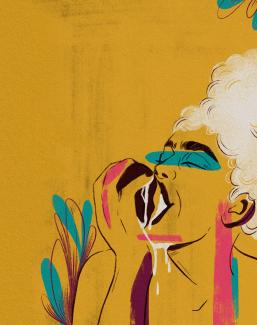
نصدر النسخة هذه من المجلة بالشراكة مع «كحل: مجلة لأبحاث الجسد والجندر»، وسنستكشف عبرها الحلول والاقتراحات وأنواع الواقع النسوية لتغيير عالمنا الحالي وكذلك أجسادنا وجنسانياتنا.
by Fatima B. Derby
In 2017, the AWID #PracticeSolidarity campaign highlighted how young feminists could build feminist futures by showing up for one another, being in cross-regional conversations with one another, marching in solidarity with other activists and collaborating between movements. (...)
< artwork: “Let it Grow” by Gucora Andu
«No adhiero al concepto de “Tercer Mundo”. Hago películas para que las personas (no importa de qué raza o color sean) puedan entenderlas. Para mí, solamente existen explotadores y explotadxs, eso es todo. Hacer una película significa tomar una posición.» - Sarah Maldoror
La innovadora Sambizanga (1972), su «película revolucionaria», sigue la lucha de liberación anticolonial de lxs militantes de Angola y capta la perspectiva de una mujer en el momento histórico en que se encuentra.
«Para muchxs cineastas africanxs, el cine es una herramienta revolucionaria, una educación política para crear consciencia. Se inscribe en la evolución de un Tercer Cine, que se orienta a descolonizar el pensamiento y promover cambios radicales en la sociedad.» - Sarah Maldoror
A lo largo de su carrera, Sarah (junto con otrxs artistas africanxs y caribeñxs) cofundó, en 1956, la primera troupe de teatro negra de Francia. Realizó alrededor de cuarenta películas, incluidos importantes documentales que difundieron la vida y la obra de artistas negrxs, entre lxs cuales se encuentra su amigo y poeta, Aimé Césaire, quien le escribió:
«A Sarah Maldo
que, cámara en mano,
lucha contra la opresión, la alienación
y se planta de cara
frente a la estupidez humana.»
Sarah estaba también dedicada a lograr que las mujeres africanas se apropiaran más del proceso de filmación. En una entrevista, señaló:
«Las mujeres africanas deben estar en todos lados. Deben estar en las imágenes, detrás de la cámara, en la sala de edición, y participar en todas las etapas de la realización de una película. Ellas deben ser quienes hablen sobre sus problemas.»
Sarah dejó un legado formidable para que sea continuado.
Nacida el 19 de julio de 1929, Sarah falleció el 13 de abril de 2020 debido a complicaciones por el coronavirus.
Mira Sambizanga y lee una reseña de la película en un artículo del New York Times de 1973 (solo en ingles)
Que représentent les Forums de l’AWID pour celles et ceux qui y ont assisté ? Quelle est cette magie qui opère lorsque des féministes du monde entier se rassemblent pour célébrer, élaborer des stratégies, apprendre et partager leurs joies ?
L’AWID s’est entretenue avec plus de quarante participant·es aux Forums pour connaître le récit de leur transformation personnelle en tant qu’activistes, celle de leur organisation et des mouvements auxquels elles et ils appartiennent. Elles et ils nous ont également dit ce que nous devrions conserver et renforcer pour les prochains Forums, ce qui distingue les Forums de l’AWID, et ce que nous pouvons améliorer.
Ce rapport contient des enseignements et d’inestimables conseils pour toute personne prévoyant d’organiser des rassemblements régionaux et thématiques en personne, et pour nous-mêmes alors que nous planifions le 15e Forum international de l’AWID.
Nuestra presencia colectiva trastorna las prácticas institucionales de exclusión en dichos espacios y, a la vez, apoya los procesos de organización de los movimientos en torno a las alternativas feministas a los sistemas de opresión.
Súmate a las conversaciones desde el 10 al 21 de marzo de 2025, mientras transformamos de forma colectiva la CSW69 en espacios para y sobre la resistencia y la solidaridad.
Speaking on behalf of the Board, I write to express our deepest gratitude, appreciation, and respect for Hakima Abbas and Cindy Clark, our extraordinary Co-Executive Directors during the past five years who will be stepping aside to refresh the AWID leadership as we move into a new strategic plan and phase of our organizational life. They have consistently practiced the best principles of feminist organizational leadership and ethics of care as they navigated us through one of the most unpredictable, turbulent times in recent history of the world, the COVID-19 syndemic, and the subsequent downward global political spiral. They held AWID, our Staff, and Board firmly, gently, and lovingly as all of us experienced various impacts. They also held steadfastly to AWID vision and mission as they responded respectfully and strategically to various changes, not least the cancellation of the AWID Forum.
The Board decided to prioritize an internal recruitment process first, fully recognizing the great potential that exists within the current team. We expect to complete the transition by the end of 2022. Hakima and Cindy will stagger their departure, and will facilitate a smooth transition to the new leadership.
Seeing Cindy and Hakima leave AWID is difficult for the Board as well as others who have worked closely with them and love them. Nonetheless, rest assured the AWID Board is leading the transition process in a way that fully recognizes the beautiful and inspiring indelible marks Hakima and Cindy will be leaving as part of our 40-year history, that embraces the next step of on-boarding and supporting new leadership, and that inspires us to do better at this moment in AWID's life.
Major organizational transitions are neither simple nor easy. Sometimes they are forced, beyond anyone’s control, fraught, or even destructive. I, and many of you, have seen examples of those kinds of transitions. At other times, the staff’s needs and aspirations are aligned with those of the organization. Although we did not choose or wish Cindy and Hakima to leave AWID, their decision and AWID moving into the next strategic plan and new decade of existence are aligned. Best of all, we are in the wonderful, super competent, creative, and feminist hands of the Staff and Board.
We thank you, dear Feminist Movements, for your confidence in AWID. We also ask you to support our leadership transition in the coming months. Let’s continue to build, deepen, and strengthen our connections, as we have done for the past 40 years.
Please stay tuned for more concrete developments and updates. You will be hearing from us in the coming weeks.
In feminist solidarity and love,
Margo Okazawa-Rey
President, AWID Board
por Gabriela Estefanía Riera Robles
Juliana. ¡Cómo quisiera llamarme Juliana! Es un nombre lleno de poder y presencia, lleno de fuerza y vehemencia. (...)
< arte: «Born Fighters», Borislava Madeit y Stalker Since 1993
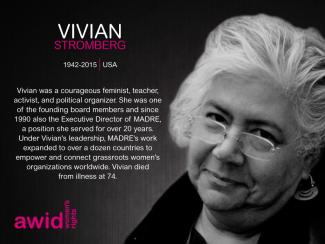
María Digna Montero était une défenseuse Garifuna (d’origine africaine et autochtone) du droit à la terre et membre de l’Organisation fraternelle noire hondurienne (OFRANEH), une organisation communautaire oeuvrant à protéger les communautés Garifunas, leurs droits, leur culture, leurs ressources et leur territoire ancestraux.
María a également enseigné dans l'école locale et été membre du groupe de travail sur l'éducation bilingue interculturelle de l'OFRANEH.
Le 12 octobre 2019, jour de la Résistance autochtone, des inconnus ont tiré à plusieurs reprises sur María, alors qu’elle se trouvait dans l’arrière-cour de sa maison.
Elle est l'une des six défenseuses Garifunas à avoir été assassinées entre septembre et octobre 2019 et selon OFRANEH, ces crimes n’ont fait l’objet d’aucune enquête de la part des autorités. Dans une déclaration officielle, l'organisation a également souligné le lien entre la violence à l’encontre des dirigeants Garifunas et le développement des industries extractives qui exploitent les ressources naturelles de leurs communautés, affirmant que cette violence s’inscrivait dans une "stratégie d'intimidation et d'expulsion systématique" menée par l'État hondurien.
“La tension accrue et les risques croissants pour la sécurité et les droits humains des dirigeants des communautés et des territoires ancestraux sont le résultat de la dépossession, du déplacement et de la criminalisation des communautés et des mégaprojets d'extraction promus par l'État en collaboration avec les entreprises nationales et internationales". - Communiqué de l'OFRANEH, 12 octobre 2019
Regularly updated and searchable directory of 200+ funders across different sectors and regions that support vital gender justice work.
Cada año, en AWID buscamos renovar y enriquecer las perspectivas y la experiencia reflejadas en nuestra Junta Directiva a través de la incorporación de nuevxs afiliadxs.
Por favor, ayúdanos a identificar a feministas audaces y dedicadxs a fin de incluirlxs en la lista de nominaciones para la elección a la Junta Directiva de AWID, a realizarse el 29 de julio de 2022.
Las personas elegidxs se sumarán por un período de 3 años, a partir de principios de 2023. Esta es una oportunidad para contribuir a la gobernanza de nuestra organización y formar parte de un grupo increíble de feministas de todo el mundo
Por favor, también comparte esta invitación a candidaturas entre tus redes.
Ante todo, estamos buscando candidatxs comprometidxs con la misión de AWID, capaces de establecer conexiones entre las luchas locales y globales, y que puedan ayudarnos en la reflexión sobre cómo optimizar el posicionamiento y las fortalezas de AWID en un contexto en constante evolución. Además, lxs candidatxs deben estar dispuestxs a cumplir con los deberes y las responsabilidades legales de la Junta Directiva de AWID en beneficio de la organización.
La participación en la Junta de AWID es una función voluntaria que requiere compromiso y dedicación durante todo el año. Se espera que lxs integrantes de la Junta se comprometan a dedicar un mínimo de 10 a 15 días al año para asistir a reuniones presenciales y virtuales, y contribuir con otras comunicaciones.
En AWID, aspiramos a que nuestro Consejo refleje la diversidad en todas sus formas, especialmente, en términos de identidad de género, orientación sexual, edad, geografía y origen. Además, buscamos integrantes de la Junta con experiencia relevante para las áreas de trabajo prioritarias de AWID.
Si bien consideraremos todas las candidaturas recibidas, teniendo en cuenta la composición actual de la Junta, daremos prioridad a los siguientes aspectos:
Candidatxs con experiencia de trabajo en las intersecciones de los derechos de las mujeres / justicia de género y
Candidatxs de las siguientes regiones:
La Junta Directiva es clave para orientar la dirección estratégica de AWID y apoyar a nuestra organización para que cumpla su misión en coherencia con el mundo en el que vivimos y las necesidades de nuestros movimientos.
Lxs integrantes de la Junta Directiva contribuyen al día a día de la organización de muchas maneras: aportando su experiencia en gobernanza en otros espacios, como también perspectivas de diversos sectores de los movimientos feministas y experiencia sustantiva en áreas relevantes para la estrategia de AWID.
Lxs candidatxs que finalmente resulten elegidxs se incorporarán a la Junta Directiva de AWID en 2023, acompañándonos en el lanzamiento de nuestro nuevo plan estratégico liderado por lxs nuevxs Codirectorxs Ejecutivxs de AWID, y en la planificación de nuestro próximo Foro internacional.
(Puedes nominarte a ti mismx o a alguien que conozcas, con su consentimiento
Por favor, ayúdanos a difundir este llamado a candidaturas compartiéndolo en tus redes.
¡Gracias, desde ya, por ayudarnos a encontrar a lxs próximxs maravillosxs integrantes de la Junta Directiva que apoyarán a AWID en su camino hacia el futuro!
Notre tout premier programme du Club de cinéma féministe est désormais accessible : « La tendresse est la plus tranchante des résistances » fait référence à une série de films sur les réalités féministes d’Asie et du Pacifique, sélectionnés par Jess X Snow.
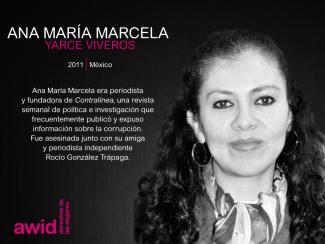
Lorena Borjas, a trans Latina woman and activist, lived and worked in the Jackson Heights neighborhood of Queens, New York City. In those streets, she looked after her community for years, advocating for trans and immigrant rights, supporting survivors of human trafficking and abuse, campaigning for sex workers’ rights and those of people living with HIV and AIDS.
Lorena was strong and tireless in her fight to support, defend, and have the back of those most marginalized and discriminated by transphobia, misogyny and racism.
“She pushed us to shine authentically, to become a scream of subversion that says, ‘I am here, and I deserve happiness, too.’” - Cecilia Gentili, a trans activist and Lorena’s friend
Having faced numerous traumas and hardships herself, as a trans immigrant woman and victim of human trafficking, Lorena pulled knowledge and emotional memory from the well of her experiences in order to help build and strengthen the community she was part of and which was part of her. Some of the ways she did this was to organize and mobilize support ranging from providing condoms and connecting trans women to different services, to setting up an HIV testing clinic in her own home.
"She was such a beautiful soul who helped others when her journey was difficult and painful as an immigrant, as a trans immigrant. She believed the trans community needed love, acceptance, and compassion, and she gave it all.” - Luchia Dragosh, QPTV Supervising producer of a documentary about Lorena
In more than 25 years of activism, she also founded the Lorena Borjas Community Fund together with Chase Strangio (lawyer and trans rights activist). The Fund helps the many different members of her community (and especially trans persons) dealing with immigration challenges to avoid the cycle of arrest-jail-deportation.
Lorena passed away in March 2020 of complications from COVID-19.
Her enormous and beautiful legacy will be taken forward through the streets of Queens by the network and community she co-created.
“We will pick up her work where she left it, work that is essential to the well-being of “mis pajaras” as she called the trans girls of Queens under her wing.” - Cecilia Gentili
"Lorena brought light to us when we were living through a very dark time here in New York. She brought us light when we were dealing with the crack epidemic, when we were dealing with the AIDS crisis, dealing with changes in immigration policies." - Cristina Herrera, founder and CEO of Translatina Network and Lorena’s friend
"Lorena has done more than anyone else I know to shine a light on the epidemic of trafficking in transgender communities and to help other trans women escape exploitation." - Lynly Egyes (represented Borjas on behalf of the Transgender Law Center)
Watch a documentary about Lorena Borjas
Read a postscript in The New Yorker about Lorena Borjas
Read an opinion piece in the New York Times by Cecilia Gentilin
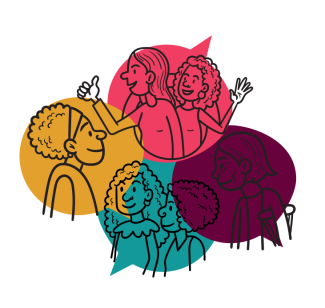
Les mouvements féministes ont énormément évolué et se sont adaptés depuis la dernière fois que nous nous sommes rencontrées de cette manière. Pour nous rappeler pourquoi les Forums de l’AWID sont importants, nous avons demandé à des activistes du monde entier de réfléchir et de partager leurs histoires, leurs impressions et leurs souvenirs. Voici ce que nous avons appris.

Filter your search by funders’ priority support areas that speak to your organizing efforts