Jean-Marc Ferré | Flickr (CC BY-NC-ND 2.0)
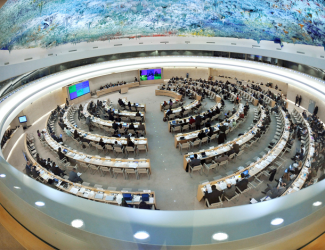
A general view of participants at the 16th session of the Human Rights Council in Geneva, Switzerland.

Special Focus

AWID is an international, feminist, membership organisation committed to achieving gender equality, sustainable development and women’s human rights

Human Rights Council (HRC)

The Human Rights Council (HRC) is the key intergovernmental body within the United Nations system responsible for the promotion and protection of all human rights around the globe. It holds three regular sessions a year: in March, June and September. The Office of the UN High Commissioner for Human Rights (OHCHR) is the secretariat for the HRC.

The HRC works by:

  • Debating and passing resolutions on global human rights issues and human rights situations in particular countries

  • Examining complaints from victims of human rights violations or activist organizations on behalf of victims of human rights violations

  • Appointing independent experts (known as “Special Procedures”) to review human rights violations in specific countries and examine and further global human rights issues

  • Engaging in discussions with experts and governments on human rights issues

  • Assessing the human rights records of all UN Member States every four and a half years through the Universal Periodic Review

Learn more about the HRC


AWID works with feminist, progressive and human rights partners to share key knowledge, convene civil society dialogues and events, and influence negotiations and outcomes of the session.

With our partners, our work will:

◾️ Monitor, track and analyze anti-rights actors, discourses and strategies and their impact on resolutions

◾️ Raise awareness of the findings of the 2017 and 2021 OURs Trends Reports.

◾️Support the work of feminist UN experts in the face of backlash and pressure

◾️Advocate for state accountability
 
◾️ Work with feminist movements and civil society organizations to advance rights related to gender and sexuality.
 

Related Content

Snippet - WITM RESOURCES - AR

المصادر

(متوفرة باللغة الإنجليزية)

Annual Report 2012

Our 2012 Annual Report provides key highlights of our work during the year to boldly, creatively and effectively contribute to the advancement of women’s rights and gender equality worldwide.

Enjoy viewing videos, photos, and stories about our contributions.

Visit our 2012 Annual Report site


Key opposition actors

We are witnessing an unprecedented level of engagement of anti-rights actors in international human rights spaces. To bolster their impact and amplify their voices, anti-rights actors increasingly engage in tactical alliance building across sectors, regional and national borders, and faiths.


This “unholy alliance” of traditionalist actors from Catholic, Evangelical, Mormon, Russian Orthodox and Muslim faith backgrounds have found common cause in a number of shared talking points and advocacy efforts attempting to push back against feminist and sexual rights gains at the international level.

Holy See

  • Key activities: As the government of the Roman Catholic Church, the “Holy See” uses its unique status as Permanent Observer state at the UN to lobby for conservative, patriarchal, and heteronormative notions of womanhood, gender identities and “the family”, and to propagate policies that are anti-abortion and -contraception  

  • Based in: Vatican City, Rome, Italy.

  • Religious affiliations: Catholic

  • Connections to other anti-rights actors: US Christian Right groups; interfaith orthodox alliances; Catholic CSOs

Organization of Islamic Cooperation (OIC)

  • Key activities: Self-described as the “collective voice of the Muslim world”, the OIC acts as a bloc of states in UN spaces. The OIC attempts to create loopholes in human rights protection through references to religion, culture, or national sovereignty; propagates the concept of the “traditional family”; and contributes to a parallel but restrictive human rights regime (e.g. the 1990 Cairo Declaration on Human Rights in Islam).

  • Based in: Jeddah, Saudi Arabia

  • Religious affiliations: Muslim

  • Connections to other anti-rights actors: Ultra conservative State missions to the UN, such as Russia

World Congress of Families

  • Key activities: International and regional conferences; research and knowledge-production and dissemination; lobbying at the United Nations “to defend life, faith and family”

  • Based in: Rockford, Illinois, U.S.

  • Religious affiliation: Predominantly Catholic and Christian Evangelical

  • Connections to other anti-rights actors: Sutherland Institute, a conservative think-tank; the Church of Latter-Day Saints; the Russian Orthodox Church’s Department of Family and Life; the anti-abortion Catholic Priests for Life; the Foundation for African Culture and Heritage; the Polish Federation of Pro-Life Movements; the European Federation of Catholic Family Associations; the UN NGO Committee on the Family; and the Political Network for Values; the Georgian Demographic Society; parliamentarians from Poland and Moldova, etc; FamilyPolicy; the Russian Institute for Strategic Studies; and HatzeOir; C-Fam; among others

Center for Family and Human Rights (C-Fam)

  • Key activities: Lobbying at the United Nations, particularly the Commission of the Status of Women to “defend life and family”; media and information-dissemination (Friday Fax newsletter); movement building; trainings for conservative activists

  • Based in: New York and Washington D.C., U.S.

  • Religious affiliations: Catholic

  • Connections to other anti-rights actors: International Youth Coalition; World Youth Alliance; Human Life International; the Holy See; coordinates the Civil Society for the Family; the Family Research Council (U.S.) and other Christian/Catholic anti-rights CSOs; United States CSW delegation

Family Watch International

  • Key activities: Lobbying in international human rights spaces for “the family” and anti-LGBTQ and anti-CSE policies; training of civil society and state delegates (for example, ‘The Resource Guide to UN Consensus Language on Family Issues’); information dissemination; knowledge production and analysis; online campaigns

  • Based in: Gilbert, Arizona, U.S.

  • Religious affiliations: Mormon

  • Connections to other anti-rights actors: leader of the UN Family Rights Caucus; C-Fam; Jews Offering New Alternatives to Homosexuality (JONAH); the National Association for Research and Therapy of Homosexuality (NARTH); World Congress of Families; CitizenGo; Magdalen Institute; Asociación La Familia Importa; Group of Friends of the Family (25 state bloc)

World Youth Alliance

  • Key activities: Advocacy in international policy spaces including the United Nations, the European Union, and the Organization of American States for “the family”, against sexual and reproductive rights; training youth members in the use of diplomacy and negotiation, international relations, grassroots activities and message development; internship program to encourage youth participation in its work; regular Emerging Leaders Conference; knowledge production and dissemination

  • Based in: New York City (U.S.) with regional chapter offices in Nairobi (Kenya), Quezon City (The Philippines), Brussels (Belgium), Mexico City (Mexico), and Beirut (Lebanon)

  • Religious affiliations: primarily Catholic but aims for interfaith membership

  • Connections to other anti-rights actors: C-Fam; Human Life International; the Holy See; Campaign Life coalition

Russian Orthodox Church

  • Key Activities: The Russian Orthodox Church (ROC), capitalizing on its close links to the Russian state, has operated as a “norm entrepreneur” in human rights debates.  Russia and the ROC have co-opted rights language to push for a focus on “morality” and “traditional values”  as supposed key sources of human rights.  Russia led a series of “traditional values” resolutions at the Human Rights Council and has been at the forefront of putting forward hostile amendments to progressive resolutions in areas including maternal mortality, protection of civil society space, and the right to peaceful protest.

  • Connections to other anti-rights actors: Organization of Islamic Cooperation; Eastern European and Caucasus Orthodox churches, e.g. Georgian Orthodox Church; U.S. Christian Right including U.S. Evangelicals; World Congress of Families; Group of Friends of the Family (state bloc)


Other Chapters

Read the full report

Ottilie Abrahams

Ottilie était une militante féministe, éducatrice et politicienne namibienne.

Elle était l'une des fondatrices de l'Organisation populaire du Sud-Ouest africain (SWAPO), du Yu Chi Chan Club (groupe révolutionnaire armé) et du Front de libération nationale du Sud-Ouest africain (SWANLIF). Ottilie a également été une des fondatrices de la Namibian Women’s Association et du Girl Child Project. Tout au long de sa vie, Ottilie a plaidé en faveur du droit de discuter, de penser, de contester et de réclamer. Elle a mobilisé des femmes, organisé des assemblées d’étudiants et d’enseignants et critiqué d'autres camarades pour leur élitisme et leur corruption.

Ottilie a œuvré sans relâche pour démanteler le patriarcat et faire émerger une démocratie participative, féministe, libératrice et transformatrice.

Ottilie disait souvent : « Je me reposerai quand je serai morte. »


Ottilie Abrahams, Namibia

Snippet FEA Map of Georgia (ES)

Esta imagen es un primer plano de Georgia en rosa coral con un alfiler amarillo que indica "Sindicato Red de Solidaridad".

على من يجب تعبئة الاستطلاع؟

المجموعات، المنظمات والحركات التي تعمل خصوصاً وبالأساس على حقوق النساء، حقوق الفتيات، العدالة الجندرية، حقوق مجتمعات الميم - عين وحلفائها/يفاتها في جميع المناطق وعلى جميع المستويات، إن كانت مجموعات جديدة أو قديمة.

AWID en 2016: Co-creando nuestros futuros feministas

En 2016 convocamos el 13º Foro Internacional de AWID en Bahía, Brasil, al que asistieron 1800 participantes de 120 países y territorios de todo el mundo. El Foro fue un espacio muy necesario para la construcción de estrategias y alianzas con feministas y otros movimientos de justicia.

Sabemos que los movimientos por lo derechos de las mujeres y feministas son actores clave en la creación de un cambio transformador sostenible. En nuestros movimientos, la organización, resistencia y respuesta al contexto desafiante se está agudizando, y en nuestro mundo cada vez más conectado, el potencial para la acción colectiva a través de diversos movimientos ha crecido dramáticamente. Este es el trabajo crucial que AWID busca amplificar y apoyar. Nos proponemos informar y equipar a organizaciones y movimientos por los derechos de las mujeres para responder a las oportunidades y contrarrestar las amenazas. Apoyamos una mayor visibilidad y comprensión de las iniciativas por los derechos de las mujeres y las amenazas que enfrentan, y también trabajamos para influenciar a lxs actores e instituciones que dan forma a los derechos humanos y a los resultados de desarrollo.


Lo que logramos en 2016

Mayor solidaridad y acción conjunta en diversos movimientos

El innovador 13º Foro Internacional de AWID se realizó del 8 al 11 de septiembre de 2016 en Bahía, Brasil, con el tema: «Futuros Feministas: Construyendo poder colectivo por los derechos y la justicia». Si bien gran parte de la energía de AWID en 2016 se dedicó al proceso del Foro, también se valió del pensamiento y la energía de casi 500 aliadxs, presentadorxs, panelistas, moderadorxs, artivistas, escritorxs, facilitadorxs, innovadorxs de TI y artistas de performance, muchxs de ellxs líderes en su campo. También, en reconocimiento a la historia y la lucha de Bahía, albergamos al Foro de Feminismos Negros (BFF, por su sigla en inglés), de dos días, organizado por un grupo de trabajo conformado por feministas negrxs de todo el mundo.

El fortalecimiento del conocimiento de temas y estrategias

  • SOBRE DESAFIAR AL PODER CORPORATIVO. Produjimos Desafiar al poder corporativo: las luchas por los derechos de las mujeres, la justicia económica y de género junto con el Solidarity Center, revelando la escala y el alcance del poder corporativo y describiendo cómo las corporaciones en connivencia con élites y otros actores poderosos están teniendo impacto en las vidas de las mujeres y los pueblos oprimidos. El informe ofrece ideas sobre estrategias de resistencia, destacando cinco luchas que utilizaron la colaboración entre movimientos para desafiar al poder corporativo.

  • SOBRE ECONOMÍAS FEMINISTAS. Produjimos Propuestas feministas para una economía justa juntamente al Centro para el Liderazgo Mundial de las Mujeres (CWGL, por su sigla en inglés) y la Red de Mujeres Africanas para el Desarrollo y la Comunicación FEMNET. Propuestas Feministas es una plataforma en internet que propone una agenda feminista para el desarrollo y la justicia
    económica y de género.

  • SOBRE DESAFIAR A LOS FUNDAMENTALISMOS. El diablo se esconde en los detalles: En el nexo entre el desarrollo, los derechos de las mujeres y los fundamentalismos religiosos detalla cómo los fundamentalismos religiosos limitan el desarrollo y los derechos de las mujeres en particular y proporciona recomendaciones a lxs actores del desarrollo para fortalecer los derechos de las mujeres.

  • SOBRE ACTIVISMO JOVEN FEMINISTA. Junto a FRIDA lanzamos Valientes, creativxs, resilientes: La situación a nivel global de la organización de jóvenes feministas en el Espacio de Activismo Joven Feminista durante el Foro de AWID. Este proyecto de descripción del estado del activismo feminista joven se basa en los datos recopilados de 1360 solicitudes de subvenciones recibidas por FRIDA entre los años de 2012 y 2014 y una encuesta global, que contó con 694 respuestas de 118 países diferentes.

La incidencia colectiva

AWID, en asociación con otras organizaciones feministas y por los derechos de las mujeres, se involucró en la incidencia y el diálogo para explorar mejores soluciones para las agendas de derechos de las mujeres, como nuestro trabajo con el consorsio Count Me In! 

El aumento de la visibilidad de los movimientos

Las experiencias de mujeres con discapacidad, mujeres negras y afrodescendientes, trabajadorxs sexuales, mujeres indígenas, personas trans y personas intersexuales, trabajadorxs domesticxs
y cómo sus vidas se ven afectadas por múltiples opresiones y violencias estuvieron en el centro del proceso del Foro.

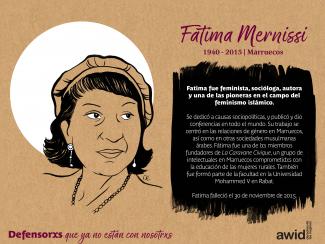
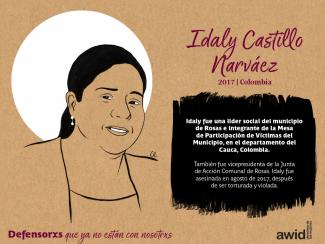
Durante los 16 Días de activismo, y gracias a las contribuciones de nuestrxs increíbles afiliadxs, lanzamos el Tributo a lxs defensorxs de derechos humanos 2016 para celebrar la vida de lxs defensorxs que ya no están con nosotrxs.

Nuestra colaboración con The Guardian y Mama Cash: la sección de enfoque en derechos de las mujeres e igualdad de género del portal de desarrollo global de The Guardian ha resultado en una mayor atención a los grupos y temas
que no suelen recibir la cobertura adecuada de los medios de comunicación dominantes.


Nuestrxs afiliadxs


Defendiendo nuestra tierra del poder corporativo

Estas industrias 'extraen' materias primas de la tierra: minería, gas, petróleo y madera son algunos ejemplos.

Este modelo económico explota desenfrenadamente la naturaleza e intensifica las desigualdades norte, donde sus grandes corporaciones se benefician y sur, de donde extraen los recursos.

Contaminación del agua, daño irreparable al medioambiente, comunidades forzadas a desplazarse son algunas de las consecuencias inmediatas.

Lee nuestro reporte de INDUSTRIAS EXTRACTIVAS

Hay alternativas sostenibles para el medioambiente y los derechos humanos de la mujer.


Descubre además cómo nos afecta económicamente

El impacto de los flujos financieros ilícitos en los derechos de las mujeres y la justicia de género a nivel global

Conoce qué son los FLUJOS FINANCIEROS ILÍCITOS

María Cecilia Alfaro Quesada

Most of María’s life was devoted to incorporating a feminist and gender perspective in institutional and organizational work, and capacity building in Latin America. 

As a child, María had a strong interest in art, communication, nature, literature, and the achievement of justice, especially for women and marginalized groups.

María was committed to sexual and reproductive rights and was a member of the National Board for Integral Education in Sexuality. She is remembered by those who loved her as a “passionate and restless fighter” with a strong commitment to women’s and children’s rights.


María Cecilia Alfaro Quesada, Guatemala

Snippet FEA collaborator and allies Photo 1 (FR)

La photo montre Sopo Japaridze, l'une des cofondatrices de l'Union Solidarity Network. Sopo a de longs cheveux bruns, avec une frange, et des yeux bruns, et porte un masque rouge de l'Union du réseau de solidarité. La photo est prise de nuit.

Что подразумевается под внешним финансированием?

Внешнее финансирование включает гранты и другие формы финансирования от благотворительных фондов, правительств, двусторонних, многосторонних или корпоративных спонсоров и индивидуальных доноров – как внутри вашей страны, так и из-за рубежа. Сюда не входят ресурсы, которые группы, организации и/или движения генерируют самостоятельно, такие как, например, членские взносы, добровольные взносы "сотрудниц(-ков), участниц(-ков) и/или сторонниц(-ков), сборы через сообщество, сдача помещений в аренду или продажа услуг. Для удобства в опрос включены определения различных видов финансирования и краткие описания различных доноров.

2021: El poder feminista en acción

En 2021, AWID, junto con muchas otras organizaciones, comenzábamos a asumir las consecuencias de la pandemia global, todavía en curso, para nuestro modo de trabajo y nuestro rol en este momento tan particular. Fue un año que nos enseñó tres lecciones cruciales sobre cómo transitar este momento como organización global de apoyo a los movimientos feministas.

Descargar el informe anual 2021


Gracias al diálogo e intercambios fundamentales para su trabajo, AWID conectó a miles de feministas de todo el mundo.

Lo que nos queda claro de nuestra experiencia en 2021 es el rol preponderante -y de alguna forma singular- que AWID desempeña en la construcción y el sostenimiento de una comunidad feminista global transversal a diversas identidades y temas.

Descargar el informe anual 2021

Framework & Theme

The theme of the 14th AWID International Forum is: “Feminist Realities: our power in action”. 

In our 14th Forum, we will celebrate and amplify Feminist Realities that are around us, in all stages of development. 

We want to make this Forum our Feminist Reality - a place where you can inhabit a different world, where you bring your victories, the solutions you have devised; what makes you feel stronger, hopeful and ready to go on. It will be different from any other convening you have previously attended. 

We urge you to join us in co-creating this world. It will be worth it!


Each Forum has a theme that reflects the needs of our membership and movements, and responds to our analysis of the current context.

The global context

Currently fascisms, fundamentalisms, authoritarianism and unfettered corporate power are gaining momentum globally. We see these threats converging with the State to shape public norms, narratives, and policies,  entrenching a culture of fear, hate and incitement to violence in public discourse. States, previously the target of advocacy and rights claims, in many cases no longer feel accountable and in some cases themselves don’t have the power to uphold rights.

This time of volatility, complexity and uncertainty requires creativity in how we organize across movements, coherence in what we demand and daring in what we propose. 

From Feminist Futures to Feminist Realities

AWID’s 2016 Forum centered on Feminist Futures and the conditions needed to bring such futures about. It was clear then, and remains evident now, the enormous challenge for many social justice movements to think outside of the current system for structural solutions. Imaginations can become narrowed from long experiences of inequality and oppression. But what we also heard then and we see all around us is that feminist movements are indeed living and promoting rights-and justice-oriented realities and solutions in big and small ways. 

Indeed we see an urgency to mobilize from a place of hope, rather than from a lowest common denominator - hope that is grounded in the certainty that across the globe, however imperfectly, are experiences and practices that embody more just ways of being in the world and that by sharing, strengthening and building on these experiences, we can help them grow their influence.

These are not impossible dreams, but lived realities. This sense of possibility is a spark to re-examine and re-appreciate the transformative dimensions in our work. 


A few examples of Feminist Realities across the globe

At AWID, we understand feminist realities as the living, breathing examples of the worlds we know are possible.  We understand these diverse feminist realities as reclamations and embodiments of hope and power. They are embedded in the multiple ways  that show us that there is a different way of living, thinking and doing-- from the daily expressions of how we live and relate to each other, to alternative systems of governance and justice. Feminist Realities resist dominant power systems such as patriarchy, capitalism, and white supremacy. 

These are powerful propositions that orient us toward a vision of what is possible, and show how feminist organizing is blazing a path toward justice in movements and communities around the world. 

  • In a deeply marginalized Black community in Jackson, Mississippi, an experiment in solidarity and cooperative economics is taking place through Cooperation Jackson. An ambitious plan to build community ownership outside of capitalist modes of production.

  • In West Africa, women farmers are resisting land grabbing and refusing industrialized agriculture projects, boldy claiming We Are The Solution, in a campaign to build agro-ecological solutions that center women farmers and their knowledges as the solutions to feed communities and mitigate climate change

  • Similarly, in India, 5,000 women have come together to develop community-based food sovereignty systems based on local knowledge, including grain and seed banks

  • Women in Mexico have created a moneyless economy project created by and for women and everyone they know. In El Cambalache everything has the same value: people exchange things they no longer need for things they want as well as knowledge, abilities and mutual aid that people would like to share. El Cambalache was built on the anti-systemic, anti-capitalist values of local social movements

  • In Rojava, Kurdish people are building democracy without the state and Kurdish women offer Jineology as a framework for challenging patriarchy, capitalism and the state, creating systems and institutions to put this framework into practice

  • In the UK, Anarcho Agony Aunts are a sex and dating advice show, covered from a feminist, antifascist, anarchist perspective. Hosts Rowan and Marijam are reclaiming space from the alt-right in giving people (mostly men) a space to ask tricky questions in a judgment-free zone. 

  • The African Feminist Judgment Project drafts and disseminates alternative judgments for important African landmark cases on a range of legal issues. At the heart of the project is propositional feminist judicial practice and alternative feminist judgments that contribute to African jurisprudence, legal practice and judicial decision-making 

  • The Usha Cooperative in India was founded when mainstream banks refused services to sex workers in Sonagachi. Sex workers self-organized to prioritize their economic concerns and set up their own financial institution. The Usha Cooperative is cooperative bank of over 20,000 sex workers and has provided over USD 4.7M in loans to 7,231 sex workers in a span of one year. With a membership entirely of sex workers, the bank provides real ownership and influence over the cooperative’s governance and management, pioneering ways for individuals and communities on the margins to build economic power on their own terms. 

  • In Puerto Rico, a community land trust is helping to transform an informal settlement around a polluted and flood prone river channel into a sustainable community. It provides a new model for improving informal settlements in cities without them then becoming unaffordable for the original residents.

  • In several Latin American countries activists are providing peer-to-peer counselling and accompaniment on medical abortion, reclaiming women´s right to decide over their bodies as well as to medical knowledgde. (for safety reasons, no links are provided.


The 14th AWID international Forum

The AWID Forum will be organized around 6 thematic anchors:

  • Resources for Communities, Movements and Economic Justice
  • Governance, accountability and justice
  • Digital Realities 
  • Bodies, pleasure and wellbeing
  • Planet and living beings
  • Feminist organizing 

Learn more about these anchors

Building on those realities, we expect the 2020 Forum to:

  • Build the power of Feminist Realities, by naming, celebrating, amplifying and contributing to build momentum around experiences and propositions that shine light on what is possible and feed our collective imaginations
  • Replenish wells of hope and energy as much needed fuel for rights and justice activism and resilience
  • Strengthen connectivity, reciprocity and solidarity across the diversity of feminist movements and with other rights and justice-oriented movements

The Forum is a collaborative process

The Forum is more than a four-day convening. It is one more stop on a movement strengthening journey around Feminist Realities that has already begun and will continue well beyond the Forum dates.

Join us on this journey!

Peni Moore

Peni fue una filósofa feminista radical, poeta, escritora, dramaturga y compositora.

Como primera coordinadora del movimiento por los derechos de las mujeres de Fiji, dejó un legado atravesado por su profundo compromiso con los derechos humanos de las mujeres, la justicia y la paz. La dedicación de Peni a la justicia social, económica y ecológica y su sobresaliente trabajo le valieron el respeto local e internacional. Fue una de las primeras participantes de los movimientos feministas hegemónicos en Fiji en trabajar junto a las personas LGBTQI como una verdadera aliada y brindó asistencia práctica durante la creación del movimiento de trabajadorxs sexuales.

Sus colegas la describen como una persona formidable y una líder con visión para el cambio. Inspiró a muchxs con su creatividad y coraje. Su trabajo significó una plataforma para que las personas sean escuchadas, adquieran nuevas habilidades y abran nuevos caminos tanto personales como comunitarios.


Peni Moore, Fiji

Snippet FEA Workers demonstrations in Georgia 3 (EN)

The photo shows a demonstration with a crowd holding green and white posters.

O meu idioma não é um dos oficiais do inquérito, e estou a ter dificuldades a preencher o mesmo. O que posso fazer?

A AWID compromete-se a alcançar a justiça linguística e lamentamos que, neste momento, não seja viável disponibilizar um inquérito do WITM em mais idiomas. No entanto, caso precise de apoio com traduções ou queira preencher o inquérito em qualquer outro idioma, entre em contacto connosco através de witm@awid.org.

Lucy O.

Biography

With over ten years of finance experience, Lucy has devoted her career to for profit and furthering nonprofit missions. She also worked and volunteered at non-for-profit organizations. From the fast-paced world of Finance, Lucy has passion for staying tuned with tech skills in the finance field. Lucy joined AWID in 2014. During her spare time she enjoys music, traveling, and variety sports.

Position
Accounting Coordinator
Add to stories
Off