Left
Half
Left

Special Focus

AWID is an international, feminist, membership organisation committed to achieving gender equality, sustainable development and women’s human rights

Memory as Resistance: A Tribute to WHRDs no longer with us

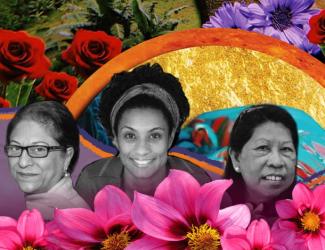
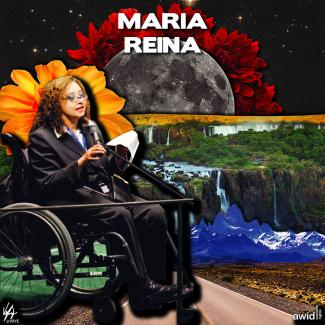
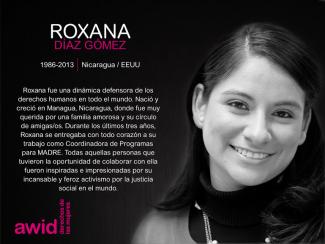
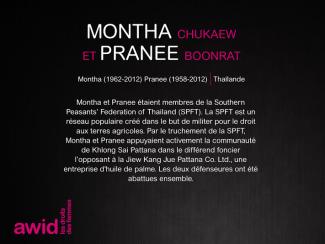
AWID’s Tribute is an art exhibition honouring feminists, women’s rights and social justice activists from around the world who are no longer with us. 


In 2020, we are taking a turn

This year’s tribute tells stories and shares narratives about those who co-created feminist realities, have offered visions of alternatives to systems and actors that oppress us, and have proposed new ways of organising, mobilising, fighting, working, living, and learning.

49 new portraits of feminists and Women Human Rights Defenders (WHRDs) are added to the gallery. While many of those we honour have passed away due to old age or illness, too many have been killed as a result of their work and who they are.

This increasing violence (by states, corporations, organized crime, unknown gunmen...) is not only aimed at individual activists but at our joint work and feminist realities.

The stories of activists we honour keep their legacy alive and carry their inspiration forward into our movements’ future work.

Visit the online exhibit

The portraits of the 2020 edition are designed by award winning illustrator and animator, Louisa Bertman

AWID would like to thank the families and organizations who shared their personal stories and contributed to this memorial. We join them in continuing the remarkable work of these activists and WHRDs and forging efforts to ensure justice is achieved in cases that remain in impunity.

“They tried to bury us. They didn’t know we were seeds.” - Mexican Proverb 


The Tribute was first launched in 2012

It took shape with a physical exhibit of portraits and biographies of feminists and activists who passed away at AWID’s 12th International Forum, in Turkey. It now lives as an online gallery, updated every year.

To date, 467 feminists and WHRDs are featured.

Visit the online exhibit

Related Content

Ȃurea Mouzinho

Biography

Ȃurea Mouzinho is a feminist economic justice organizer from Luanda, Angola, with a 10-year career in research, grant-making, advocacy, and movement-building for women's rights and economic justice across Africa and the global south. Currently the Program Manager for Africa at Thousand Currents, she also serves on the Feminist Africa Editorial Board and is a member of Ondjango Feminista, a feminist collective she co-founded in 2016. A new mom to a Gemini boy, urea enjoys slow days with her young family and taking long strolls by the beach.

She occasionally tweets at @kitondowe.

Add to stories
Off

Snippet FEA Audio Story 3 (EN)

Listen to the story here:

Annaliza Dinopol Gallardo Capinpin

Annaliza était la présidente du Conseil de réforme agraire des pionniers de Mindanao, un groupe de coordination de la ville de Tacurong, aux Philippines.

Mère aimée de quatre enfants, sa communauté se souvient d’Annaliza comme de « celle qui dirige quand personne ne veut diriger, qui parle quand personne ne veut parler, qui a eu le courage d'aider les bénéficiaires de la réforme agraire à acquérir des terres ».

Annaliza a été abattue par des assaillants inconnus devant l'Université d'État de Sultan Kudarat (SKSU) alors qu'elle se rendait au lycée national Salabaca à Esperanza.

Sa famille a déclaré : « Naghihintay pa rin kami ng hustisya para sa kanya » (nous attendons toujours que justice lui soit rendue).


Les membres de l’AWID s’engagent à la CSW61

Les Etats membres et les défenseur-e-s et organisations des droits des femmes se réuniront au siège des Nations Unies à New York du 13 au 24 mars pour la 61ème édtion de la Commission de la condition de la femme, afin d’aborder le thème de l’« autonomisation économique des femmes » dans le cadre de l'objectif 5 pour le développement durable.

Alors que nous avons hâte de retrouver quelques un-e-s d'entre vous à New-York, nous souhaitons aussi impliquer celles et ceux qui ne peuvent pas être présent-e-s à la CSW et être votre porte-voix dans les espaces pertinents.

Poursuivez votre lecture pour savoir comment participer à la CSW aux côtés de l’AWID, que vous soyez sur place ou non.


Participez à une prise de contrôle artistique !

C'es un plaisir pour nous que Nayani Thiyagarajah, membre de l’AWID, assistera à la CSW cette année et qu’elle sera en charge du compte Instagram de l’AWID.

Là-bas, elle sera disponible pour rencontrer d’autres membres qui pourront éventuellement figurer sur notre Instagram. Elle explorera par ailleurs les possibilités d’inclure certain-e-s membres de l’AWID dans un court-métrage sur le thème ‘le privé est politique’, qui retracera l’histoire de la participation de Nayani à la CSW de cette année.

Nayani Thiyagarajah

Qui est Nayani?

Nayani Thiyagarajah est une directrice, productrice et écrivaine qui se consacre à porter des histoires à l’écran. Fille de la diaspora tamoule, elle appelle désormais Toronto sa ville. Pendant plus de 10 ans, Nayani a travaillé dans l’industrie des arts et de la culture. Son premier long-métrage documentaire indépendant, Shadeism: Digging Deeper (2015), fut présenté en première au Festival international du film de Zanzibar, où il obtint le Prix spécial du jury. Avec son partenaire de production Camaro West, Nayani a récemment lancé [RE]FRAME, une compagnie de production basée à Atlanta et à Toronto qui s’attache à reformuler les récits concernant les noir-e-s, les autochtones et d’autres personnes de couleur à travers des narrations portées à l’écran.

Plus sérieusement, il convient de mentionner que Nayani a un rire étrange, qu’elle est assez maladroite et qu’elle a toujours la tête dans les nuages. Pour elle, c’est une chance incroyable d’inventer des histoires pour l’écran et de s’amuser à faire croire, et de pouvoir en vivre. Elle croit en l’amour par-dessus tout.

(Biographie soumise par Nayani)

Vous avez envie de rencontrer Nayani et d’être pris-e en compte pour figurer dans son film ?

  • Envoyez un e-mail à membership@awid.org en précisant dans la ligne d’objet « CSW: Prise de contrôle artistique »

  • Avant le 13 mars 2017

  • Merci d’inclure votre nom complet et votre lieu de résidence.


Vous ne pouvez pas assister à la CSW ? Exprimez-le !

Si vous êtes dans l’incapacité d’assister à la CSW61 en raison d’une interdiction de voyager, qu’elle ait été imposée par l’administration Trump ou par votre propre gouvernement, n’hésitez pas à nous faire part de votre histoire.

Envoyez-nous les messages que vous voulez voir diffusés dans les espaces des Nations Unies autour du financement, de l’impact du rétablissement de la règle du bâillon mondiale (Global Gag Rule) et de la nécessité de rejeter les fondamentalismes religieux. Vous pouvez adresser vos messages sous les formats suivants : 

  • vidéo : elle ne devra pas durer plus de deux minutes et devra être envoyée via un partage de fichier en ligne (par exemple dropbox, google drive) 

  • audio : il ne durera pas plus de deux minutes et sera envoyé via un partage de fichier en ligne (par exemple dropbox, google drive)

  • image : vous pouvez partager une photo ou une affiche de votre message 

  • texte : il ne pourra pas faire plus de 200 mots et devra être intégré dans le corps d’un e-mail ou dans un document word

Envoyez-nous votre message !

  • Envoyez un e-mail à membership@awid.org, en précisant en ligne d’objet « CSW: Exprimez-le ! »

  • Avant le 15 mars 2017


Rencontrez d’autres membres à la CSW61

Les membres de l’AWID nous disent combien les rencontres qui se font entre membres à la CSW sont précieuses. Dans un lieu de plaidoyer tellement immense, il est utile de rencontrer et d’échanger avec les autres, y compris avec des activistes travaillant sur des questions semblables, ou venant du même pays ou de la même région. Nous reconnaissons que les rencontres sont fondamentales dans la construction des mouvements.

Voir les members de l'AWID

Vous souhaitez être mis-e-s en contact avec d’autres membres à la CSW61 ?

  • Envoyez un e-mail à membership@awid.org, en précisant en ligne d’objet « CSW: Membres de l’AWID »

  • NOTE : Veuillez nous transmettre vos coordonnées complètes (nom, pays) et nous indiquer si vous nous autorisez à communiquer votre adresse mail aux autres membres qui souhaiteraient entrer en contact à la CSW.


Prenez une photo !

Si vous participez à la CSW, partagez-nous ce que vous y voyez ! Montrez-le nous en capturant un instant qui reflète l'energie de l'espace de la CSW, que ce soit lors d'une conférence ou en dehors. Nous avons l'intention de publier vos images usr nos réseaux sociaux et de les partager sur notre site.

Vous pouvez nous envoyer :

  • des photographies en couleur ou en noir & blanc

  • avec leur titre (si vous souhaitez)

  • et une légende (pas plus de 100 mots) qui raconter l'histoire de votre photo.

Veuillez aussi inclure :

  • votre nom complet et votre pays d'origine

  • faites-nous aussi savoir si vous nous autorisez à partager tout ou partie de ces informations

Partagez vos images !

  • Envoyez un e-mail à membership@awid.org en précisant en ligne d’objet « CSW: Prenez une photo ! »

  • Pendant toute la CSW ou rapidement après, jusqu'au jeudi 28 mars 2017. 

Snippet - WITM Acknowledgements - RU

Слова благодарности

AWID выражает признательность всем тем, чьи идеи, аналитические работы и вклад в развитие легли в основу исследования «Где деньги?» и его дальнейшей адвокации.

Прежде всего, мы выражаем глубочайшую благодарность членам AWID и активисткам(-там), которые участвовали в консультациях, и провели этот опрос вместе с нами, щедро поделившись своим временем, аналитикой и теплом.

Мы выражаем признательность феминистским движениям, союзницам(-кам) и феминистским фондам, включая (но не ограничиваясь ими) Black Feminist Fund, Pacific Feminist Fund, ASTRAEA Lesbian Foundation for Justice, FRIDA Young Feminist Fund, Purposeful, Kosovo Women’s Network, Human Rights Funders Network, Dalan Fund and PROSPERA International Network of Women's Funds , за ваше тщательное исследование состояния ресурсного обеспечения, вдумчивый анализ и постоянную адвокацию для достижения более объемного и эффективного финансирования для феминистских организаций и движений за гендерную справедливость во всех контекстах.

Присоединяйтесь к глобальному феминистскому сообществу, которое освещает состояние ресурсного обеспечения, требуя большего финансирования и влияния для феминисток(-ов) во всем мире

Simone Jagger

Biography

Simone a 20 ans d’expérience dans le soutien à la gestion et l’administration dans des organisations à but non lucratif, en particulier dans l’enseignement médical post universitaire et la formation aux Technologies de l'Information et de la Communication. Elle possède des qualifications en soutien à la gestion et en études parajuridiques. Elle est basée en Afrique du Sud, aime voyager et agit en tant que généalogiste amatrice.

Position
Assistante Exécutive
Add to stories
Off

Snippet FEA how important essential workers are (ES)

La pandemia de COVID-19 le mostró al mundo la importancia de lxs trabajadorxs esenciales. Estamos hablando de limpiadorxs, enfermerxs, paramédicxs, trabajadorxs del hogar, transportistxs, las personas que trabajan en los supermercados, entre muchísimas otras. Su trabajo es atender y garantizar el bienestar de lxs demás y hacer funcionar nuestras economías.

Pero mientras ellxs nos cuidan…

Benoîte Groult

Benoîte was a French journalist, writer, and feminist activist.

She published more than 20 novels as well as many essays on feminism.

Her first book “Ainsi Soit-Elle” (loosely translated as “As She Is”) was published in 1975. The book explored the history of women’s rights as well as misogyny and violence against women.

Her last book, “Ainsi Soit Olympe de Gouges,” explored women’s rights during the French Revolution, centering on the early French feminist Olympe de Gouges. De Gouges was guillotined in 1793 for challenging male authority and publishing a declaration of women’s rights (“Déclaration Des droits de la Femme et de la Citoyenne”) two years earlier. 


Benoïte Groult, France

Seven feminist policy recommendations to curb illicit financial flows

The growing dominance of international financial markets and institutions in defining global economic policies has resulted in the capture of people’s power in the interest of global elites and big corporations. 


Our policy brief on Illicit Financial Flows explores their disproportional gender impact and unveils the current legal and political frameworks that allow multinational corporations to benefit from tax abuse to the detriment of people and planet.

The brief concludes with these seven feminist policy recommendations to demand transparency and corporate accountability in order to curb illicit financial flows.


Our recommendations for advocacy

Illicit financial flows are gaining unprecedented attention: whether in development negotiations, like those leading to Agenda 2030 and the Addis Ababa Financing for Development Conference in 2015; or making headlines in mainstream media with the release of leaked documents on offshore finance known as the ‘Panama Papers’. In another example, the Ecuadorean people voted to bar politicians and civil servants from having assets, companies or capital in tax havens, in a referendum in February 2017. The Ecuadorian government is now a leading voice within the group of G77, in the United Nations, to create a UN global tax body to end tax havens.

This public attention potentially builds momentum for feminists, social movements and tax justice advocates to pressure for the transformation of the global financial system, which entrenches global inequalities, including gendered inequalities.

We offer below a set of seven policy asks as a contribution to growing advocacy efforts from social justice, feminist, women’s rights and gender equality actors:

1.  Address IFFs as a violation of human rights and women’s rights:

  • Illicit financial flows are hindering the fulfillment of the obligation of States to mobilise the maximum available resources for the realisation of human rights, including long agreed commitments on women’s rights and gender equality.
  • Strengthening corporate accountability is a possibility on the table at the UN Human Rights Council. An open-ended intergovernmental working group is in place to elaborate an international legally binding instrument to regulate, in international human rights law, the activities of transnational corporations and other business enterprises. This process has the potential to address corporate tax evasion as a violation of human rights, including women’s rights, and should be greater supported by countries in the global North and South.

2.  Ensure multinational corporations pay their share of taxes:

  • Develop international mechanisms that curb abusive tax practices and prevent corporate tax exemptions. UN member states should initiate negotiations to draft a UN convention to combat abusive tax practices. The convention should adopt a consolidation and apportionment system for taxing global corporate profits.
  • Revise specifically national regulations in wealthy countries that demand MNCs pay taxes only in the resident country, rather than in the countries of economic activity. This practice hinders developing countries the most, as they increasingly lose taxable base to low and zero tax jurisdictions. Proposals like the Unitary Taxation approach should be considered in this regard.

3.  Support the establishment of a United Nations intergovernmental tax body:

  • A UN tax body with equal voting rights and universal membership should have the power to review national, regional and global tax policy and ensure states comply with long agreed commitments on human rights, including women’s rights and gender equality.

4.  Promote transparency and gender-sensitive data gathering:

  • Greater efforts must be made at the global level to refine comparable data on tax abuse, for example with gender disaggregated data that shows the gender biases of certain tax systems.
  • Countries must ensure a framework for automatic information exchange, which guarantees public and global access to key data that affects the resources available for the realization of human rights.
  • Implement country-by-country reporting obligations for multinational corporations to publicly disclose, as part of annual reports, profits made and taxes paid for each country in which they operate.
  • Among other financial information, there must be greater cooperation from governments to share their national public registries that disclose beneficial owners of companies, trusts, foundations and similar legal structures.

5.  Promote tax justice through progressive fiscal policies at the national level:

  • Promote tax justice through progressive fiscal policies. This requires increasing the weight of direct taxes on income capital and highly profitable sectors of society, while reducing and removing the burden on women and poor people. Poor segments of society, of which women are overrepresented, should not end up paying more taxes, in relation to their income, than the richest segments that often benefit from government tax subsidies, tax holidays and reductions.
  • Governments must critically review the harmful trade and investment agreements that grant tax incentives and exemptions that perpetuate inequality and gender biases.

6.  Ensure participation of women’s rights organisations, social movements and progressive civil society broadly:

  • Economic and fiscal policy decisions often lack a gender sensitive perspective. Engagement between the ministries of Gender and Finance, and both with civil society and women human rights defenders, is key to better understand the impact that revenue decisions are having on women’s rights and gender equality.
  • An enabling environment should be in place to protect women human rights defenders and others (including whistle-blowers, tax justice activists) that expose tax abuse and report corruption.

7.  Stop the impunity of criminal activities associated with IFFs and ensure accountability:

  • Establish a global coordinated mechanism across national tax authorities, human rights and gender equality machineries, and intelligence units, to ensure criminal activities associated with IFFs do not continue with impunity.
  • Strengthen national and global justice systems to be able to hold individuals and entities to account for funding criminal activities through IFFs.

Read the full report

O nosso grupo, organização e/ou movimento não está registado - devemos participar no inquérito mesmo assim?

É claro que sim, queremos saber mais sobre si e sobre a sua experiência com o financiamento.

Nana Abuelsoud

Biography

Nana is a feminist organizer and a reproductive rights and population policy researcher based in Egypt. She is a member of Realizing Sexual and Reproductive Justice (RESURJ), a member of the Advisory Board of the A Project in Lebanon, and a member of the Community Committee of Mama Cash. Nana holds an MSc in Public Health from KIT Institute and Vrije University in Amsterdam. In her work, she follows and contextualizes national population policies while building evidence that addresses modern eugenics, regressive international aid, and authoritarianism. Previously, she was part of the Geneva Foundation for Medical Education and Research, the Egyptian Initiative for Personal Rights, and Ikhtyar Feminist Collective in Cairo.

Add to stories
Off

Snippet FEA collaborator and allies Photo 3 (FR)

La représente cinq femmes (Sopo se tient au milieu) debout en haut d'un escalier, devant un mur de pierre, tenant des pancartes sur lesquelles sont écrits des slogans géorgiens.

Shireen Lateef

Shireen fue una inspiración para muchas feministas en Fiyi y una aliada poderosa del movimiento de mujeres.

Abogó incansablemente por la igualdad de género tanto a nivel local como regional. Comenzó su carrera como especialista junior en género en el Banco de Desarrollo Asiático e introdujo profundos cambios en las políticas de género de la institución. Su investigación «Gobernar mediante lxs danda: violencia doméstica entre lxs indo-fiyianxs» fue uno de los primeros trabajos de investigación sobre violencia doméstica, matrimonio y mujeres en Fiyi. Este trabajo fundacional ha sido un catalizador para el trabajo feminista en esta área.

El legado de Shireen sigue vivo porque son muchxs lxs que recuerdan su influencia, su compromiso y su apoyo al movimiento de mujeres de Fiyi y del Pacífico. 


Shireen Lateef, Fiji

Oficina Administrativa

Para asuntos adminsitrativos puede contactar con nuestra oficina: 

  • +1 416 594 3773
  • 192 Spadina Avenue, Suite 300 |Toronto, ON, M5T 2C2 | Canadá

كيف تعرّفون "التمويل الخارجي"؟

يشمل التمويل الخارجي المنح والأشكال الأخرى من التمويل من المؤسسات الخيرية، الحكومات، الجهات ثنائية الاتجاه أو متعددة الاتجاهات أو الممولين/ات من الشركات أو الممولين/ات الأفراد، إن كان ذلك من دولتكم/ن أو من الخارج. لا يشمل هذا الموارد التي تنتجها المجموعات، المنظمات أو الحركات بشكل مستقل مثل رسوم العضوية، تطوع الطاقم أو الأعضاء/ العضوات أو الداعمين/ات، تجنيد الأموال المجتمعي، تأجير الأماكن أو بيع الخدمات أو المنتجات. لتسهيل عملية تعبئة الاستطلاع، تم شمل تعريف أنواع التمويل ووصفها بشكل قصير في الاستطلاع نفسه.

How did AWID get started?

AWID began in 1982 and has grown and transformed since then into a truly global organization.

Find out more:

Read From WID to GAD to Women's Rights: The First 20 Years of AWID

Snippet FEA different lines of work S4 (EN)

Lines of work:

AGAINST