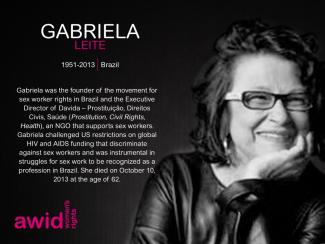
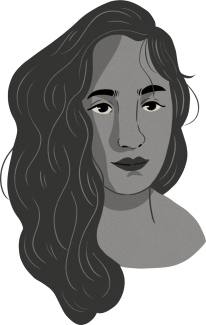
Gabriela Leite
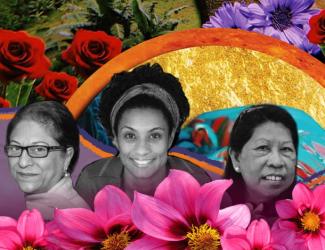
AWID’s Tribute is an art exhibition honouring feminists, women’s rights and social justice activists from around the world who are no longer with us.
This year’s tribute tells stories and shares narratives about those who co-created feminist realities, have offered visions of alternatives to systems and actors that oppress us, and have proposed new ways of organising, mobilising, fighting, working, living, and learning.
49 new portraits of feminists and Women Human Rights Defenders (WHRDs) are added to the gallery. While many of those we honour have passed away due to old age or illness, too many have been killed as a result of their work and who they are.
This increasing violence (by states, corporations, organized crime, unknown gunmen...) is not only aimed at individual activists but at our joint work and feminist realities.
The portraits of the 2020 edition are designed by award winning illustrator and animator, Louisa Bertman.
AWID would like to thank the families and organizations who shared their personal stories and contributed to this memorial. We join them in continuing the remarkable work of these activists and WHRDs and forging efforts to ensure justice is achieved in cases that remain in impunity.
“They tried to bury us. They didn’t know we were seeds.” - Mexican Proverb
It took shape with a physical exhibit of portraits and biographies of feminists and activists who passed away at AWID’s 12th International Forum, in Turkey. It now lives as an online gallery, updated every year.
To date, 467 feminists and WHRDs are featured.
نسأل عن هذه المعلومات كي نسهّل عملية المعالجة وكي نستطيع أن نتواصل مع مجموعتكم/ن في حالة لم تستطيعون تكملة الاستطلاع و\ أو في حالة كانت لديكم/ن شكوك أو أسئلة إضافية. يمكنكم/ن قراءة المزيد عن كيف نستعمل المعلومات التي نجمعها خلال عملنا هنا.
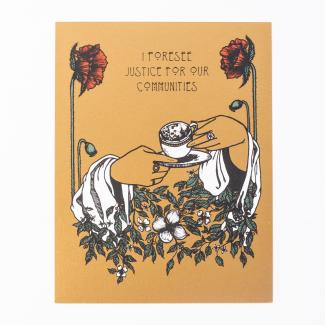
La tasséomancie est une méthode de divination qui interprète les motifs dans les feuilles de thé et/ou le marc de café. Il s’agit d’une pratique qui se transmet par les femmes de mon côté arménien et qui m’a été enseignée par ma mère, qui elle-même l’a apprise de sa mère, et ainsi de suite. Lorsque je regardais ma grand-mère lire le marc de café du café arménien préparé pour la famille et les amis, je remarquais que, souvent, elle voyait ce qu'elle avait envie de dire. Ces gravures disent certaines des choses que j’ai envie de voir dans le monde ; j'espère que vous aussi.
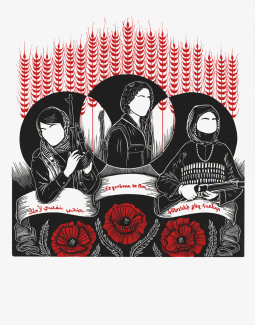
Cette gravure célèbre la résilience, le sacrifice et la force des combattant·e·s de la liberté de l’Asie du Sud-Ouest et de l’Afrique du Nord à travers l'histoire et la solidarité qui existe. Elle a été inspirée à l'origine par un article que j'ai lu sur une exposition organisée à Tatvan, un district de Bitlis, qui mettait en lumière la présence arménienne dans la région. Mes ancêtres sont originaires de Bitlis, se situant aujourd'hui sur le territoire de la Turquie actuelle.
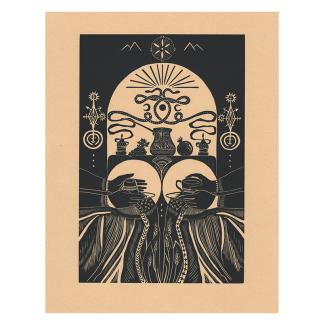
La tasséomancie (la lecture du marc de café) est une pratique culturelle utilisée par les femmes arméniennes depuis des siècles pour se parler entre elles et les unes aux autres, un langage codé permettant d'entamer des conversations, d'établir des relations et de tisser des liens.
![]Ali Chavez Leeds portrait](/sites/default/files/styles/max_325x325/public/2021-10/portrait.jpeg?itok=0yU3PqLe)
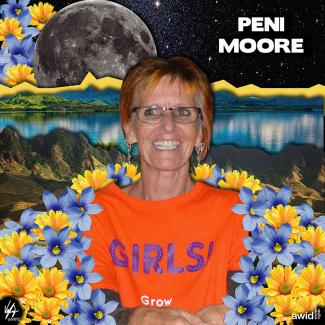
Peni fue una filósofa feminista radical, poeta, escritora, dramaturga y compositora.
Como primera coordinadora del movimiento por los derechos de las mujeres de Fiji, dejó un legado atravesado por su profundo compromiso con los derechos humanos de las mujeres, la justicia y la paz. La dedicación de Peni a la justicia social, económica y ecológica y su sobresaliente trabajo le valieron el respeto local e internacional. Fue una de las primeras participantes de los movimientos feministas hegemónicos en Fiji en trabajar junto a las personas LGBTQI como una verdadera aliada y brindó asistencia práctica durante la creación del movimiento de trabajadorxs sexuales.
Sus colegas la describen como una persona formidable y una líder con visión para el cambio. Inspiró a muchxs con su creatividad y coraje. Su trabajo significó una plataforma para que las personas sean escuchadas, adquieran nuevas habilidades y abran nuevos caminos tanto personales como comunitarios.
L’AWID propose la Boîte à outils « Où est l’argent pour les droits des femmes? » (« Where Is The Money for Women's Rights? », WITM) pour soutenir les individus et les organisations qui souhaitent mener leur propre recherche sur les tendances de financement en adaptant la méthodologie de recherche de l’AWID à une région, une question ou une population spécifique.
La Boîte à outils WITM de l’AWID est le produit de dix ans de recherches. La rméthologie WITM de l’AWID proposent une démonstration politique et pratique des ressources et des étapes qu’exige une solide recherche-action.
L’équipe 'Ressources des mouvements féministes' offre également un soutien technique et politique, avant et pendant le processus de recherche. Parcourez la boîte à outils et contactez fundher@awid.org si vous souhaitez plus de renseignements.
Мы проанализируем ответы, чтобы получить представление о тенденциях, и представим результаты на 15-м Международном форуме AWID в Бангкоке, а также в режиме онлайн, в декабре 2024 года. Зарегистрируйтесь для участия в Форуме здесь!
by Esra Ozban
In a product-obsessed world, prioritizing process is a fundamental feminist method. Processes matter, and curation is no exception. While figuring out which of the films from the SWANA region would speak the loudest to the Feminist Realities theme, the global pandemic we are still facing shifted our everyday lives tremendously. Even to think, write, or express myself has become an everyday struggle. I kept missing all of my deadlines and sending apology emails to Kamee Abrahamian, whom I was working with as an independent curator for AWID’s Feminist Film Club. Kamee’s invaluable support, understanding, and suggestions reminded me that even in two different parts of the world, as colleagues who never met in person, we can co-create micro versions of the Feminist Realities for which we live and yearn.
Feminist Realities for me have a lot to do with sisterhoods. Sisterhoods that help womxn clearing mines in Artsakh/Nagorno-Karabakh. Sisterhoods baked in Vegan Inclusive Trans Cake by young trans feminists in Ankara that remind cis-ters that they are not welcomed by the Z generation. Sisterhoods that are growing into the mint on Dragica Alafandi’s rooftop in the Dheisheh Refugee Camp in Occupied Palestine in Sowing seeds of resistance. Sisterhoods that embrace intimate, sexual, and revolutionary proximities in Gezi Park in #resistayol. Sisterhoods that unearth an imagined encounter between two generations of womxn in exile in the streets of Haifa in Your father was born 100 years old and so was the Nakba. Cross-species sisterhoods that build in a fictional (brave) space created by Mounia Akl in Submarine for her rebel character Hala, who refuses to evacuate from a city full of garbage and is left behind with a dog friend.
This selection gathers bits and pieces of many Feminist Realities that have been realized in the SWANA region over the last couple of years. We will continue to imagine, learn, and share feminist embodiments of hope and power. In the meantime, let’s immerse ourselves in the powerful alternatives brought to life by the filmmakers and protagonists of these films. We may co-create every step, every act, and every attempt as we continue to cohabitate this world with others who are living Feminist Realities and continue to dream more of them into existence.
By Emily Mkrtichian& Jesse Soursourian
“With beautiful visuals paired with compelling verité scenes, Motherland is a show of female camaraderie and strength… The film is a testament of women around the world who are willing to work harder to overcome any obstacle they meet.”
- Nosarieme Garrick, award winning filmmaker
“Motherland is an inspiring visualization of solidarity, courage, and grit…”
- Hers is Ours Collective, organizers of the Outsider Moving Art & Film Festival
Motherland from jesse soursourian on Vimeo.
Emily Mkrtichian on Feminist Realities and Artsakh/NKR:
We shot the short film, Motherland, in the Republic of Artsakh in 2018. I was drawn to each of these women for their strength, their resilience and their humor -- despite the context in which they lived. In 2018, that context was the aftermath of a brutal war in the 1990’s, after which their country remained an unrecognized (or, in the international community, disputed) territory that was not given the autonomy and independence so many other countries enjoy. Artsakh was also deeply affected by the consequences we see in almost all places that go through violent conflict -- consequences that so often fall on women to bear: PTSD, high rates of alcoholism, high rates of domestic abuse, less equality and freedoms granted to women, little to no representation of women in politics and civil service. In the face of all these challenges, this film tries to capture the fire and power of the women of Artsakh, one that might not fit the traditional Western feminist paradigm, but one they have created for themselves through deep community ties, care for their families, hard work, and the ability to laugh with eachother through it all. Today, the Republic of Artsakh has been newly devastated by another war that left it without 70% of the lands these women grew up understanding were theirs. Yet, I can promise you that these women, and thousands of others, continue to pull their families, communities, and culture together through the same networks of care, commitment to hard work, and deep riotous laughter in the face of an uncertain future.
By Baladi-Rooted Resistance
“A timely film to watch after having born witness to the latest bombardment of Gaza by Israeli Defence Forces. A glimpse into the way that women in Palestinian communities survive structural oppression, through the story of a library of traditional seeds.. and the women that sustain them as a form of nourishing rebellion.”
- Jessica Horn, PanAfrican feminst strategist, writer and co-creator of the temple of her skin
“Watching women coming together and working collectively for food autonomy is both therapeutic and empowering for me.”
- Hers is Ours Collective, organizers of the Outsider Moving Art & Film Festival
Baladi-Rooted Resistance Team on Feminist Realities:
How to talk about Feminist Realities when you live in Deheisheh, a Palestinian refugee camp, built 70 years ago to serve 3000 refugees, but now home to 15000 people, in the occupied West Bank? Or when the land you farm is under constant threat by illegal settlers.
If you’re a woman in occupied Palestine you will have to struggle not only against patriarchy but also against colonialism and a brutal military occupation.
Dragiča and Vivien are fighting these multiple systems of domination in their own way.
Vivien uses native seeds to help Palestinians maintain their identity. Growing traditional food in traditional ways has great significance: “If you’re not a producer anymore, you’re a consumer, and what better way to enslave someone than turning them into your consumer. This is happening all around the world, but here you have it doubled with the military occupation.”
31.5% of households in the West Bank are food insecure. Through a rooftop edible garden, Dragiča managed to increase her family’s food autonomy. In the crowded camp, where the Israeli army conducts regular nighttime incursions to arrest and harass residents, Dragiča’s rooftop garden not only nourishes her family, but it especially nourishes her soul.
By Ruzgar Buski
Ruzgar Buski on Feminist Realities:
I don’t know what to say about Feminist Realities but as a trans artist, an activist from Turkey, I know our realities are harsh. We live with violences- physical, emotional, economical, sexual! That is why we have to build our own networks, and co-creating micro realities for each other is a Feminist Reality for me. #resistayol is my first film, and at the beginning I was planning to make a film by/for/with trans people that does not try to convince anyone to the fact that trans people are human or focuses on raising awareness on trans issues. However, Gezi Uprising, one of the biggest uprising in the history of Turkey, happened and the film became something different.
I believe the production process really affects what the film is. We tried very hard for women, trans and non-binary people to work on every step of the film. This film is made by people who gathered with camaraderie and friendship. Kanka Productions is founded on transfeminist comradeship. I want the film to give hope, to heal because we carry a lot of traumas in our bodies- this is what makes us and what bonds us. Healing is a never-ending process and we have to create spaces to breath. #resistayol is an hour of breathing collectively.
Boysan Yakar in #resistayol:
Well lubunyas (queers) were sitting in the park, all of a sudden bulldozers arrived and everyone got pissed off. Actually in summary this is it. It's Lubunya's park,and we had thirty days to explain that to this huge city. Everyone acknowledged that at night ibnes (faggots) fuck in that park...LGBTI Block carried our commune there. We already didn't trust the state and police and didn't have any security, we've established our own ways of doing things, our own laws and customs to survive... We carried our law to Gezi rapidly...With an effort to establish some common language and understanding among all these groups, the LGBT language of togetherness spread all through the park. Every day was a Pride march, everyone was continuously saying ‘ayol’. We spruced up the stinky, fusty language of the left. I guess we had such an impact because we've been disowned for all these years. From the most radical ones to the most conservative and nationalist ones, they all needed us, because everyone got used to being confronted with everything. Τhey were not used to such energy, our energy. That’s why it was a great political space for us. Every day, we actualized our biggest and main struggle there, that is, a struggle for visibility and recognition. That’s why we left Gezi with a huge gain.
By Pembe Hayat
“...a multifaceted statement, showing the joy that exists in the friendships within the queer community in Turkey as a display of rebellion and resistance.”
- Nosarieme Garrick, award winning filmmaker
“...fun, light, and random. In a world constantly marked and scarred by violence against the trans community, nothing, no action, is (unfortunately) deprived of meaning. So to more joy, love, and meaningful randomness!”
- Hers is Ours Collective, organizers of the Outsider Moving Art & Film Festival
Cayan Azadi in Vegan Inclusive Trans Cake:
Hello Barbies, Kens, porcelain dolls, Olive Oyls, cabbage dolls. Brides of Chucky, sisters of Chucky, brother-in-laws of Chucky and last but not least, esteemed brother-in-law lovers.
So why did we make this cake.
Now we got the news that a trans woman sex worker has attempted suicide due to the violence from street-guards and police on the street. She’s being kept at a police station now and that’s exactly why we made this cake. This transvestite cake is baked to show that we exist in every part of life, that we exist persistently and this cake shows that won’t be wiped off or ignored in this society.
Yes, there is violence in our lives, yes there is a lot of shade as well but despite all of that, we can still have fun, enjoying life as much as we can. Bon appetit, sis!
By Razan AlSalah
By Mounia Akl
“It is directed as a poem is written… simple, a touch abstract, and moving.”
- Hers is Ours Collective, organizers of the Outsider Moving Art & Film Festival
Esra Ozban:
Esra Ozban is a film programmer and filmmaker from Turkey. Their artistic, curatorial, and scholarly work intersects critical archival practices, sex work, pornography, feminist/queer film cultures among others.
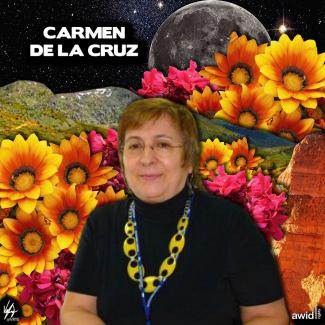
Carmen a consacré sa carrière à la défense des droits des femmes au sein de diverses ONG, ainsi qu’au sein des Nations Unies.
Elle a enseigné dans plusieurs universités espagnoles et latino-américaines et publié de nombreux articles et rapports sur les femmes, le genre et la paix dans les pays en développement. Ses écrits et ses réflexions critiques ont touché toute une génération de jeunes femmes.
Son dernier mandat auprès du centre régional du Programme des Nations Unies pour le développement (PNUD) de l'Amérique latine, fut comme responsable du département de mise en pratique des politiques de genre, lors duquel elle a soutenu de très précieuses initiatives en faveur de l'égalité de genre et des droits fondamentaux des femmes.
Olajumoke ‘Jay’ Abdullahi and Kym Oliver are revolutionary feminists in more ways than one. (...)
artwork: “Bloomed” by Titash Sen >
Building on our 20-year history of mobilizing more and better funding for feminist-led social change, AWID invites you to complete the new iteration of our flagship survey, WITM.
Una red compleja de actores anti-derechos, en constante evolución, está ejerciendo cada vez más influencia en los espacios internacionales y en las políticas nacionales. Respaldados a menudo por financiaciones poco transparentes, estos actores construyen alianzas tácticas sobre distintos temas y cruzando diferentes regiones y credos para aumentar su impacto.
Estamos viendo actores fascistas y fundamentalistas que, si bien tienen un discurso nacionalista, son completamente transnacionales en lo que respecta a sus basamentos ideológicos, sus alianzas políticas y sus redes de financiamiento. En algunos casos, estos grupos están respaldados por flujos financieros poco transparentes vinculados con grandes empresas o con partidos políticos de extrema derecha. Sin embargo, también crean alianzas estratégicas, que incluyen, en algunos casos, segmentos de los movimientos feministas y por los derechos de las mujeres, y se distancian de los elementos más evidentemente extremistas para parecer más legítimos. Los actores anti-derechos también se expanden y replican su estilo de organización antiderechos (ya sea a través de campañas y grupos de presión, o de litigios estratégicos) en todo el planeta.
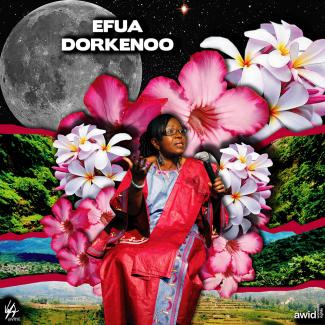
Affectionately known as “Mama Efua”, her work to end Female Genital Mutilation (FGM) movement spanned three decades and helped bring international attention and action to end this harmful practice.
In 1983 Efua co-founded FORWARD (The Foundation for Women’s Health, Research and Development), which became a leading organisation in the battle to raise awareness about FGM. Her 1994 book, “Cutting the Rose: Female Genital Mutilation,” is considered the first on FGM and, featured in Columbia University’s “Africa’s 100 Best Books for the 20th Century”.
Originally from Ghana and a nurse by training, Efua joined the WHO in 1995 and successfully pushed for FGM to go on the agendas of WHO member states. She also worked closely with the Nigerian government in formulating a comprehensive National Policy that laid the groundwork for Nigeria’s anti-FGM laws, still in place today.
Her ground breaking work culminated in an Africa-led campaign, “The Girl Generation,” which is committed to ending FGM within a generation. Efua demonstrated how one person can become the unifying voice for a movement, and her wise words - “shared identity can help bring activists from different backgrounds together with a common sense of purpose” – are more relevant than ever.
por Prinka Saraswati
El ciclo menstrual habitualmente abarca entre 27 y 30 días. En ese lapso, el período en sí dura de 5 a 7 días. La fatiga, los cambios de humor y los espasmos son el resultado de la inflamación durante la menstruación.
< arte: «Movimiento feminista», Karina Tungari
Des mots perdus |
 |
 |
| Chinelo Onwualu | Ghiwa Sayegh |
« Lorsque nous avons désespérément besoin de changement, comme c’est le cas dans la maladie et l’insurrection, notre langage se vide de sa complexité et se réduit à l’essentiel... Mais à mesure que la maladie et la révolution persistent, le langage fabriqué en elles et à leur sujet s’approfondit, laisse entrer plus de nuances, absorbé par l’expérience profondément humaine qu’est de rencontrer de ses propres limites sur le site de la fin du monde. »
Johanna Hedva
Lorsque nous avons commencé à imaginer un tel numéro avec Nana Darkoa, à l’approche du festival Crear | Résister | Transform : un festival dédié aux mouvements féministes ! de l’AWID, nous sommes parti·e·s d’une question qui relève davantage d’une observation de l’état du monde – un désir de déplacer le terrain : pourquoi nos sexualités et nos plaisirs continuent-ils d’être apprivoisés et criminalisés, alors même qu’on nous répète sans cesse qu’ils n’apportent ni valeur ni progrès? Nous sommes arrivé·e·s à la conclusion que lorsqu’elles sont incarnées, quelque chose dans nos sexualités va à l’encontre d’un ordre mondial qui continue à se manifester par des contrôles aux frontières, des apartheids vaccinaux, un colonialisme d’occupation, un nettoyage ethnique et un capitalisme rampant. Pouvons-nous donc parler du potentiel perturbateur de nos sexualités? Pouvons-nous encore le faire lorsque, pour être financé·e·s, nos mouvements sont cooptés et institutionnalisés?
Lorsque notre travail incarné devient un profit entre les mains de systèmes que nous cherchons à démanteler, il n’est pas étonnant que nos sexualités et nos plaisirs soient une fois de plus relégués à la marge – surtout lorsqu’ils ne sont pas assez rentables. À plusieurs reprises au cours de la production de ce numéro, nous nous sommes demandé ce qui se passerait si nous refusions de nous plier aux services essentiels du capitalisme. Mais pouvons-nous oser poser cette question, lorsque nous sommes épuisé·e·s par le monde? Peut-être que nos sexualités sont si facilement rejetées parce qu’elles ne sont pas considérées comme des formes de soins. Peut-être que ce dont nous avons besoin, c’est de réimaginer le plaisir comme une forme de soin radical – un soin qui est également anticapitaliste et anti-institutionnel.
Alors que nous entrons dans notre deuxième année complète de pandémie mondiale, notre approche des incarnations transnationales a dû se concentrer sur un seul constat politique : prendre soin est une forme d’incarnation. Et parce qu’à l’heure actuelle, une grande partie de notre travail se fait sans tenir compte des frontières entre nous et en nous-mêmes, nous sommes toustes incarné·e·s de manière transnationale – et nous échouons toustes. Nous ne parvenons pas à prendre soin de nous-mêmes et, plus important encore, à prendre soin les un·e·s des autres.
Cet échec n’est pas de notre fait.
Beaucoup de nos parents considéraient le travail comme une transaction, quelque chose à donner en échange d’une compensation et d’une garantie de soins. Et bien que cet échange n’ait pas toujours été respecté, nos parents ne s’attendaient pas à ce que leur travail les comble. Iels avaient leurs loisirs, leurs passe-temps et leurs communautés pour cela. Aujourd’hui, nous, leurs enfants, qui avons été conditionné·e·s à penser que notre travail est intimement lié à notre passion, n’avons pas de telles attentes. Nous considérons le travail et les loisirs comme une seule et même chose. Pour un trop grand nombre d’entre nous, le travail en est venu à incarner tout notre être.
Cependant, le capitalisme hétéropatriarcal ne nous valorise pas, et encore moins notre travail ou nos sexualités. C’est un système qui ne fera qu’exiger toujours plus, jusqu’à votre mort. Et quand vous mourrez, il vous remplacera par quelqu’un·e d’autre. L’attente d’être en ligne 24 heures sur 24 signifie que nous ne pouvons tout simplement pas nous échapper du travail, même lorsque nous le souhaitons. Cette commercialisation du travail, qui le dissocie de la personne, a infiltré tous les aspects de nos vies et se perpétue même dans les milieux les plus féministes, les plus radicaux et les plus révolutionnaires.
Les attentes capitalistes ont toujours été particulièrement pernicieuses pour les corps qui ne correspondent pas à leur idéal. Et celleux qui cherchent à consolider leurs pouvoirs ont utilisé la pandémie comme une occasion de cibler les femmes, les minorités sexuelles et toustes celleux qu’iels considèrent comme des moins que rien.
Ce numéro spécial existe à cause, et certainement en dépit, de cela.
Presque tous les contributeur·ice·s et membres du personnel se sont surpassé·e·s. Chaque article est le fruit d’une passion, mais aussi d’un incroyable épuisement. De manière très concrète, ce numéro est une incarnation du travail transnational – et dans le monde numérique dans lequel nous vivons, tout travail est devenu un travail transnational. Alors que nous devons faire face à de nouvelles frontières qui ne brisent pas un ordre ancien mais le réifient, nous avons fait l’expérience directe, aux côtés de nos contributeurs, de la façon dont le capitalisme épuise nos limites – comment il devient difficile de construire des arguments cohérents, en particulier lorsque ceux-ci sont soumis à une date limite. Nous avons collectivement perdu les mots – parce que nous sommes perdu·e·s pour les mondes.
Se sentir perdu et seul dans le monde du capitalisme hétéropatriarcal est exactement la raison pour laquelle nous devons réévaluer et repenser nos systèmes de soins. À bien des égards, nous avons transformé ce numéro en une mission visant à trouver du plaisir dans les soins. Parce qu’il est devenu plus difficile de construire des arguments cohérents, les moyens visuels et créatifs sont passés au premier plan. Nombreux·ses sont celleux qui, ayant l’habitude d’écrire, se sont tourné·e·s vers ces médias pour produire des connaissances et couper court au brouillard mental qui nous a toustes enveloppé·e·s. Nous avons fait intervenir d’autres voix, en plus de celles que vous avez entendues au festival, afin d’ouvrir de nouvelles conversations et d’élargir nos horizons.
Alors que nous sommes privé·e·s de nos mots, il est de notre devoir politique de continuer à trouver des moyens de nous maintenir et de prendre soin de nous-mêmes et des autres. Une grande partie de nos réalités actuelles tente de nous effacer et de nous déplacer, tout en continuant à exploiter notre travail. Notre incarnation, par conséquent, devient une forme de résistance; c’est le début de nous-mêmes trouvant notre voie en dehors et en dedans de nous.