Left
Half
Left

Special Focus

AWID is an international, feminist, membership organisation committed to achieving gender equality, sustainable development and women’s human rights

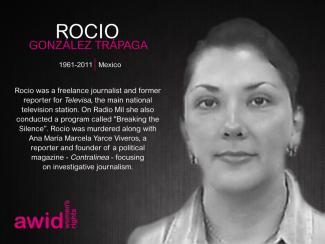
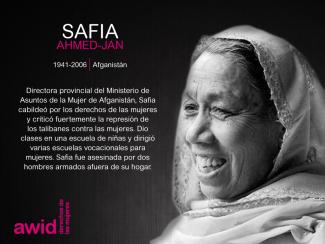
Memory as Resistance: A Tribute to WHRDs no longer with us

AWID’s Tribute is an art exhibition honouring feminists, women’s rights and social justice activists from around the world who are no longer with us. 


In 2020, we are taking a turn

This year’s tribute tells stories and shares narratives about those who co-created feminist realities, have offered visions of alternatives to systems and actors that oppress us, and have proposed new ways of organising, mobilising, fighting, working, living, and learning.

49 new portraits of feminists and Women Human Rights Defenders (WHRDs) are added to the gallery. While many of those we honour have passed away due to old age or illness, too many have been killed as a result of their work and who they are.

This increasing violence (by states, corporations, organized crime, unknown gunmen...) is not only aimed at individual activists but at our joint work and feminist realities.

The stories of activists we honour keep their legacy alive and carry their inspiration forward into our movements’ future work.

Visit the online exhibit

The portraits of the 2020 edition are designed by award winning illustrator and animator, Louisa Bertman

AWID would like to thank the families and organizations who shared their personal stories and contributed to this memorial. We join them in continuing the remarkable work of these activists and WHRDs and forging efforts to ensure justice is achieved in cases that remain in impunity.

“They tried to bury us. They didn’t know we were seeds.” - Mexican Proverb 


The Tribute was first launched in 2012

It took shape with a physical exhibit of portraits and biographies of feminists and activists who passed away at AWID’s 12th International Forum, in Turkey. It now lives as an online gallery, updated every year.

To date, 467 feminists and WHRDs are featured.

Visit the online exhibit

Related Content

Snippet - CSW69 - What’s a feminist like you - EN

What’s a feminist like you doing in a place like this?

A conversation on international advocacy and global governance

✉️ By registration only. Register here

📅 Friday, March 14, 2025
🕒 2.30pm EST

🏢 Blue Gallery, The Blue Building, 222 East 46th Street

🎙️Facilitated by: Anissa Daboussi, Manager, Advancing Universal Rights and Justice team

Organizer: SRI, AWID

Mena Mangal

Mena Mangal était une éminente journaliste de télévision, défenseure des droits des femmes et conseillère culturelle du Wolesi Jirga, la chambre basse du parlement national afghan.

Pendant plus d’une décennie, Mena a travaillé pour Ariana TC, la chaîne en pashto Lamar de Tolo TV et la chaîne de télévision nationale privée Shamshad TV. Mena était principalement présentatrice d’émissions sur les droits des femmes et la culture.

« La défenseure des droits des femmes Wazhma Frogh a dit que Mangal « se faisait entendre » et s’exprimait ouvertement en faveur de la défense de son peuple. »

Loin des écrans, elle dirigeait également des plateformes sur les réseaux sociaux, promouvant les droits à l’éducation et au travail des filles et femmes afghanes. Sur le plan de sa vie privée, Mena a longuement écrit sur le mariage arrangé qu’elle a été forcée d’accepter en 2017, et le long processus qui s’en est suivi pour finalement obtenir le divorce.

Dans un post sur Facebook, Mena avait écrit qu’elle recevait des menaces de mort de sources inconnues, mais qu’elle continuerait néanmoins son travail.

Elle a été attaquée le 11 mai 2019 par des hommes armés inconnus et tuée en plein jour et dans un espace public, dans le sud-est de Kaboul.

« La situation nous inquiète, car elle a un impact direct sur les femmes qui travaillent en dehors de la maison... Les femmes journalistes changent de profession du fait de l’augmentation des risques auxquels elles sont confrontées. » - Robina Hamdard, défenseure des droits des femmes à Kaboul

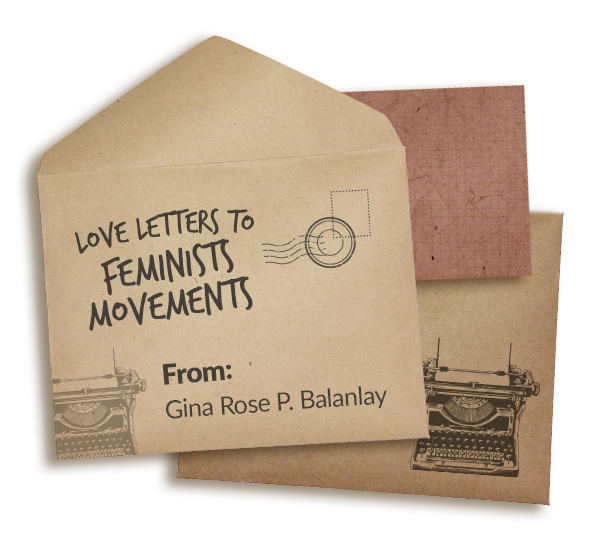
Love letter to Feminist Movements #7

Dearest Feminist community,

I am pleased to share with you one of my remarkable dates as feminist with disability. It was May 30, 2014 when we (the Nationwide Organization of Visually-Impaired Empowered Ladies NOVEL) participated in the Philippine Fashion Week Holiday 2014 for our white cane advocacy campaign.  Two ladies who are blind walked down the catwalk to promote the white cane as one of the symbols of gender equality, empowerment, full inclusion and equal participation of women and girls with visual impairment in society. 

Love letter to feminist movements from Your dramatically cloaked jungle nymph.

Their walk in front of the crowd were extremely a nerve-wracking experience for me, as the proponent of our project with the Runway Productions (I enduringly waited for a year for its approval), knowing that they were not models, they were the crowned Ms. Philippines Vision and 1st Runner Up of 2013 Ms. Philippines on Wheels, Signs and Vision by Tahanang Walang Hagdanan, Inc. (House with No Steps). Also, they fell on their orientation and practiced the evening before the event and they didn’t have practice with professional models. Before the show started, I talked to them via mobile phone to boost their confidence and to pray together for God’s guidance. When they exited the catwalk, I breathed deeply while my tears were flowing. I was feeling euphoric because we did it despite the challenges we’ve been through! Our message to the world that women and girls with visual impairment can walk with dignity, freedom and independence on an equal basis with others, with the use of our assistive device - white canes was successfully delivered! We trended in social media and we were featured by television networks. 

My life as a feminist with disability started as a means to mend my broken spirit and to see a different path towards finding my life’s purpose after I became victim-survivor to a vicious acid attack in 2007  while I was waiting for a ride going home from office. My eyes were severely damaged, to the point that I became a woman with low vision.

I never knew how joyful and purposeful my life could be again until I met women leaders in the gender and disability movement who influenced me to keep going. Their words of encouragement attracted me and became the sweetest music to my ears. My broken heart leaped like a hummingbird in flight every time I think of them and feminism which stimulated me to partake in making difference for our invisible sisters with disabilities and to those who continue to experience discrimination. To date, I am consumed by the desire to be with the movement. I cannot hide my excitement whenever I submit project proposals to different stakeholders for our sisters with disabilities' empowerment, development and advancement; and to make representations in local, national and international conversations to amplify our voices even at my expense.

Unexpectedly, I was selected as our country’s female representative in the 2012 World Blind Union (WBU) General Assembly in Thailand even though I was a newcomer in the disability movement.  In the same year, I was elected as the only woman officer of the Philippine Blind Union (PBU) in its assembly. I was inspired to reach out, gather and empower our sisters with visual impairment on their rights and to know their intersecting issues. In 2013, we officially launched the Nationwide Organization of Visually-Impaired Empowered Ladies (NOVEL) to support the empowerment of our sisters with disabilities, build coalitions with cross-disability and women’s movements and promote gender and disability-inclusive development.

My participation as co-focal person of women with disabilities in our 2016 CEDAW Shadow Report submission convened by Women’s Legal and Human Rights Bureau (WLB) with the marginalized groups of women, opened many doors such as working with various women’s organizations and attending the 2017 Inclusion Days International in Berlin, Germany together with 3 Filipino women leaders with disabilities to share our good practices, mainly our engagement with the women’s movement in our country. 

My journey as feminist with disability has been an emotional roller coaster for me. It gave me  happiness and a sense of worth when I participated in promoting for our sisters with disabilities full inclusion, equal and effective participation in society, yet I felt frustrated and upset when I gave my all but I received negative remarks. Nevertheless, I feel that way because I am in love with the movement.    
I see my future working in solidarity with the movement to ensure that our sisters with and without disabilities can equally and fully enjoy and participate in society. 
 

Love lots, 
Gina Rose P. Balanlay
Feminist with disability
Philippines 

En quoi ce Forum sera-t-il différent ?

Avec jusqu'à 2 500 participant·e·s sur place et 3 000 participant·e·s virtuel·e·s/hybrides, il s'agira du plus grand Forum de l'AWID jamais organisé. Nous envisageons de mettre en place de multiples espaces qui vous permettront d'établir des liens significatifs, d'apprendre, d'échanger, d'avoir des échanges stratégiques, de guérir et de fêter. C'est la première fois que nous nous réunissons dans cet espace depuis la pandémie, et nous brûlons d’impatience.

Snippet - WCFM smart filtering - EN

With smart filtering for both databases, you can connect with funders based on:

  Nature of funding:
Due to global funding cuts and freezes
Recipient type:
Filter for organizations or individual funding opportunities
Preferred languages: 
Boil them down to communications language preferences
  Funding type:
Be it rapid response, grantmaking, seed, direct aid and more
Movement and Struggle:
Connect with funders that speak to your movement

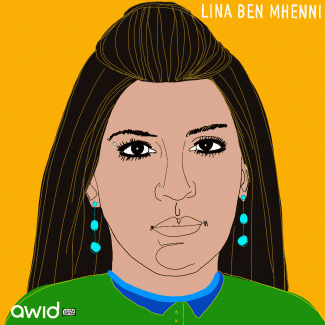
Lina Ben Mhenni

“I want to tell all Tunisians: We have to unite to say no to censorship and opinion trials.” - Lina Ben Mhenni (2013 interview)

Lina Ben Mhenni was a Tunisian blogger, activist and linguistics lecturer. She was vocal against internet censorship, defended the freedom of expression and was an advocate for women’s and human rights. Lina also fought for the release of students arrested under former President Zine El Abidine. 

“It’s true that information and the internet are important but being on the ground is crucial for a revolution. Some people here in Tunisia think that change can occur just by clicking like on the internet. I believe you have to be active on the ground. And of course, join actions on the field with the action on the web.” - Lina Ben Mhenni (Interview in POCIT)

In 2010, she co-organized a protest that challenged the government suppression of media and internet censorship. Lina was widely known for her blog “A Tunisian Girl and recognized for her work during the Tunisian revolution in 2011. In her blog, she reported on the news from the uprising, shared images documenting protests and was among the few voices who spoke about the killings and crackdown on protesters in Sidi Bouzid. Lina blogged using her real name instead of a pseudonym to protect her identity, one of only a few bloggers to do so. 

“Our freedom of expression is in real danger. I am afraid that we are losing the unique fruits of the revolution: the disappearance of fear and our freedom of speech. We have to keep on fighting to protect and preserve this right.” — Lina Ben Mhenni (2013 interview)

Lina was only 36 years old when she passed away on 27 January 2020, as a result of complications from an autoimmune disease. 


"Freedom, better education and health - that's all we wanted. When we failed, she pushed us." Lina’s school teacher Hala.


¡Somos quienes hemos estado esperando!

Estamos comenzando un nuevo año: 2023. El COVID-19 continúa infectando y re infectando a muchas, muchas personas en todo el mundo. Estamos siendo testigos del resurgimiento de gobiernos de derecha y fascistas, incluso en lugares que quizás no esperábamos, como Suecia. La guerra, los conflictos armados y el aumento dramático de la militarización, el militarismo y el gasto militar están permitiendo la acumulación descomedida de capital por parte de unos pocos, con la participación de alianzas aparentemente "extrañas" que se arman, tanto de manera visible como invisible, donde las élites económicas y políticas del Norte y el Sur Global se están beneficiando más allá de nuestra imaginación más desenfrenada. Mientras tanto, nuestra gente y el medio ambiente natural pagan enormes costos y sufren todas las esperadas e inesperadas consecuencias.
 
Como todes ustedes y todes nosotres en AWID sabemos, les feministas en múltiples movimientos alrededor del mundo están resistiendo y organizándose contra las múltiples caras de la tiranía, creando estructuras alternativas, implementando estrategias de base y construyendo alianzas transnacionales. Estamos generando alegría, inspirándonos unes a otres, cantando y bailando dentro y en contra de la cultura predominante de muerte y cinismo que parece haber envuelto a gran parte del mundo.
 
Nosotres, el personal y la Junta Directiva de AWID, estamos más preparades e inspirades que nunca para enfrentar los desafíos, fortaleciendo nuestras relaciones con nuestra membresía y organizaciones socias, reuniéndonos y conociendo a quienes aún tenemos que conocer y hacer lo que hacemos mejor: apoyar a los movimientos feministas globales. Aunque nos entristeció la partida de nuestras queridas ex-co-eds Cindy y Hakima, nuestras maravillosas nuevas co-eds Faye e Inna, junto con el personal comprometido y creativo, han aprovechado el momento que encapsula tanto las oportunidades como las amenazas.

Sin duda, todes nosotres en AWID y toda la gente de nuestro movimiento lo sabemos… como escribió la poeta y activista caribeña estadounidense June Jordan a las mujeres activistas sudafricanas durante el apogeo del régimen del apartheid: “¡Somos quienes hemos estado esperando!”

How can I fund my participation in the AWID Forum?

If your group or organization receives funding, you might want to discuss with your funder already now if they are able to support your travel and participation to the Forum. Many institutions plan their budgets for next year early in 2023, so better not delay this conversation for next year.

Bibliothèque de ressources « Nos droits en danger »

Bibliothèque de ressources « Nos droits en danger »

Collection évolutive de ressources en soutien aux mouvements féministes, aux décideur·euse·s et aux allié·e·s pour contrer les fascismes, les fondamentalismes et résister aux tendances antidroits.

agent in action

Snippet2 - WCFM type of funder - EN

Grid icon

Type of funder:

Filter your search by funders from different sectors i.e., philanthropic foundations, multilateral funders, women’s and feminist funds

Gloria Chicaiza

Gloria Chicaiza, una activista social y ambiental ecuatoriana, fue una ferviente defensora de la tierra y el agua. Desafió el statu quo, al luchar contra un modelo de desarrollo basado en la extracción, y trabajó incansablemente por la justicia ecológica y los derechos de las comunidades afectadas por la minería.

Gloria participó en las acciones de resistencia para la protección del ecosistema en distintas áreas de Ecuador. Con pasión y dedicación, Gloria apoyó al movimiento indígena y ambiental, a sus comunidades y a las organizaciones que se oponen a los proyectos de minería y protegen sus territorios y sus proyectos de vida colectivos. En foros locales e internacionales, se pronunció contra la criminalización del disenso y la resistencia, contra la presión y la violencia ejercidas contra lxs activistas comunitarixs (y, en particular, contra las defensoras de derechos humanos), y a favor de los esfuerzos comunitarios por la soberanía alimentaria y la sustentabilidad.

Fue Coordinadora del Área de Justicia Minera de Acción Ecológica, participó en la Red Latinoamericana de Mujeres Defensoras de Derechos Sociales y Ambientales, e integró la Junta Directiva del Observatorio de Conflictos Mineros de América Latina (OCMAL).

En octubre de 2010, la compañía minera Curimining/Salazar Resources S.A. (con sede en Vancouver, Canadá) acusó a Gloria de auspiciar un acto de terrorismo, sabotaje y asociación ilícita para delinquir. Acción Ecológica consideró que esto fue «en represalia por su trabajo de denuncia de los impactos de las actividades mineras en el país».

En 2014 Gloria apoyó la coordinación de una delegación a la Conferencia Internacional sobre Cambio Climático (COP 20) de la ONU. El grupo estuvo integrado por veinticinco mujeres indígenas de América Latina.

Gloria falleció el 28 de diciembre de 2019 por complicaciones de un trasplante de pulmón. Es recordada por su resistencia y su incansable trabajo.

«El camino más rápido para llegar a la sustentabilidad sigue siendo la resistencia.» - Gloria Chicaiza (entrevista de 2010)


Tributos:

«Para GLORIA. GLORIA Agua. GLORIA Tierra. GLORIA Madre. GLORIA Revolución. GLORIA Hermana. GLORIA Cielo. GLORIAmiga. GLORIAstral. Gracias por entretejernos.» - Liliana Gutiérrez

«Gracias Glorita, por sostener la esperanza, por mantener el tejido fuerte, por conectar la comunidad, por las manos unidas, por la solidaridad, gracias Glorita por  acompañarnos en los momentos más difíciles. Gracias por enseñarnos que, a lo largo de la vida, nadie se cansa.» - Chakana News

«Fue más intrépida, más audaz y más generosa que su cuerpo; ese cuerpo que enfrentó toletes y bombas lacrimógenas, que paseó bajo la cadencia de los tambores y las batucadas, que incubó otra vida, hermosa y digna, como la suya. Haz dejado de toser, querida amiga, pero hoy, más que nunca, tu voz me quema adentro.» - Pablo Ospina Peralta

«Gloria Chicaiza valoraba ser una de muchxs, y así prosperaba. Y, humilde como era, tenía una extraordinaria capacidad para llevar y mantener un ritmo sostenido y estruendoso, un pulso de afirmación de la vida que guiaba, movilizaba e inspiraba a las comunidades y a las redes para la protección de la Madre Tierra. Se oponía a toda forma de violencia contra los cuerpos-territorios. Apoyaba el buen vivir.» - Gabriela Jiménez, Coordinadora de Asociaciones para América Latina, KAIROS

«Gracias Gloria Chicaiza, desde el infinito estamos seguros de que seguirás apoyando nuestra lucha.. Tú, que continuaste acompañándonos en la lucha a pesar de que tu salud fallara. Vivirás en los bosques y en el agua que defendiste con tanta valentía, vivirás en nuestros corazones.» - Comunidad de Intag, Ecuador

Lee más Tributos a Gloria
 

¿Quién puede financiar mi trabajo por los derechos de las mujeres?

Nuestra base de datos de donantes y patrocinadores se encuentra actualmente en revisión. ¡Sabemos que los movientos feministas todavía necesitan y merecen más y mejores recursos!

Únete a nuestra lista de correo para mantenerte al tanto sobre esta actualización. 

También puedes afiliarte a AWID y encontrar y crear conexiones con feministas de todo el mundo.  

Afíliate

¿Cómo se conecta el Foro de AWID con espacios regionales y otros?

Estamos en comunicación con reuniones regionales, temáticas y de donantes planificadas para 2023-2024, para garantizar el flujo de conversaciones y conexiones. Si estás organizando un evento y deseas establecer una conexión con el Foro de AWID, ¡por favor contáctanos!

Rights at Risk: The Observatory on the Universality of Rights Trends Report 2017

Report:

Rights at Risk - OURs Trends Report 2017

The first report from the Observatory on the Universality of Rights acts as a compendium of information on anti-rights trends in international spaces. Find out about key anti-rights religious actors, discourses, and tactics within the UN.

Get the report

Clone of Snippet - Intro WITM - EN

Where is the Money for Feminist Organizing? Survey Results

Thanks to our global feminist community! From May to August 2024, nearly 1,200 organizations working for Women's rights, gender justice, and LBTQI+ equality shared their experiences in the WITM survey. The results offer a unique picture of how feminist movements are resourced and where gaps remain.

Stay tuned for the upcoming report for more analysis!
 

Learn more about the insights

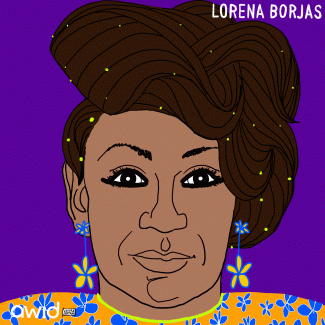
Lorena Borjas

Lorena Borjas, femme trans et activiste latino-américaine, travaillait et vivait dans le quartier de Jackson Heights dans le Queens, à New York. Dans ces rues, pendant des années, elle s’est occupée de sa communauté à plaider en faveur des droits des personnes trans et immigrées, soutenir les individus ayant survécu à la traite des êtres humains et à la maltraitance et défendre les droits des travailleures du sexe et des personnes vivant avec le VIH et le sida.

Lorena se battait avec force, sans relâche, afin d’aider, de défendre et de soutenir les personnes les plus marginalisées et discriminées par la transphobie, la misogynie et le racisme.  

« Elle nous a poussé·e·s à briller avec authenticité, à devenir le cri subversif qui affirme “ je suis là et je mérite moi aussi d’être heureux·se ” » - Cecilia Gentili, activiste trans et ami·e de Lorena 

Ayant elle-même fait face à de nombreux traumatismes et difficultés en tant qu'immigrée transgenre et victime de la traite des êtres humains, Lorena a puisé dans le puits de ses expériences des connaissances et d’une mémoire émotionnelle afin d'aider à construire et à renforcer la communauté dont elle faisait partie, et qui faisait partie d'elle. Pour ce faire, elle a notamment organisé et mobilisé des aides allant de la fourniture de préservatifs à la mise en relation de femmes trans avec différents services, en passant par la création d'une clinique de dépistage du VIH à son propre domicile.

« C’était une si belle âme qui aidait les autres alors que son parcours d’immigrée, et d’immigrée trans, était difficile et douloureux. Elle était convaincue que la communauté trans avait besoin d’amour, d’acceptation et de compassion, et elle a tout donné. » - Luchia Dragosh, superviseuse de production chez QPTV dans le cadre d’un documentaire sur Lorena 

En plus de 25 ans d'activisme, elle a également fondé le Fonds communautaire Lorena Borjas avec Chase Strangio (avocat et activiste des droits des trans), qui aide les nombreux·ses membres de sa communauté (et en particulier les personnes trans) confronté·e·s aux problèmes d'immigration à éviter le cycle arrestation-prison-expulsion. 

Lorena est décédée en mars 2020 des suites de complications liées à la COVID-19.  

Son oeuvre, gigantesque et merveilleuse, sera poursuivie dans les rues du Queens par le réseau et la communauté qu’elle a cocréés.  

« Nous reprendrons son travail là où elle l’a laissé, travail essentiel au bien-être de ses “ pajaras ” (oiselles), comme elle aimait appeler les filles trans du Queens qu’elle avait prises sous son aile. » - Cecilia Gentili 


Hommages : 

« Lorena nous a apporté de la lumière alors que nous vivions une période très sombre ici à New York. Elle nous a apporté sa lumière alors que nous faisions face à l’ ”épidémie de crack ”, à la crise du sida, aux changements dans les politiques d’immigration. » - Cristina Herrera, fondatrice et directrice générale de Translatina Network et amie de Lorena

« Lorena a fait plus que quiconque pour faire la lumière sur l’épidémie de traite dans les communautés transgenres et permettre à d’autres femmes trans d’échapper à l’exploitation. » - Lynly Egyes (a représenté Borjas pour le compte du Transgender Law Center)

Regardez un documentaire sur Lorena Borjas (seulement en anglais)

Lisez l'article sur Lorena Borjas dans la rubrique Postscript du New Yorker (seulement en anglais)

Lisez un article d'opinion de Cecilia Gentilin dans le New York Times (seulement en anglais)