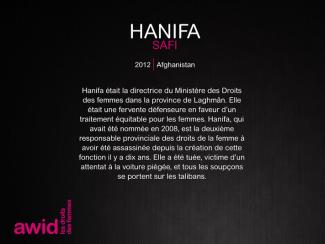
Hanifa Safi
Over the past few years, a troubling new trend at the international human rights level is being observed, where discourses on ‘protecting the family’ are being employed to defend violations committed against family members, to bolster and justify impunity, and to restrict equal rights within and to family life.
The campaign to "Protect the Family" is driven by ultra-conservative efforts to impose "traditional" and patriarchal interpretations of the family, and to move rights out of the hands of family members and into the institution of ‘the family’.
Since 2014, a group of states have been operating as a bloc in human rights spaces under the name “Group of Friends of the Family”, and resolutions on “Protection of the Family” have been successfully passed every year since 2014.
This agenda has spread beyond the Human Rights Council. We have seen regressive language on “the family” being introduced at the Commission on the Status of Women, and attempts made to introduce it in negotiations on the Sustainable Development Goals.
AWID works with partners and allies to jointly resist “Protection of the Family” and other regressive agendas, and to uphold the universality of human rights.
In response to the increased influence of regressive actors in human rights spaces, AWID joined allies to form the Observatory on the Universality of Rights (OURs). OURs is a collaborative project that monitors, analyzes, and shares information on anti-rights initiatives like “Protection of the Family”.
Rights at Risk, the first OURs report, charts a map of the actors making up the global anti-rights lobby, identifies their key discourses and strategies, and the effect they are having on our human rights.
The report outlines “Protection of the Family” as an agenda that has fostered collaboration across a broad range of regressive actors at the UN. It describes it as: “a strategic framework that houses “multiple patriarchal and anti-rights positions, where the framework, in turn, aims to justify and institutionalize these positions.”
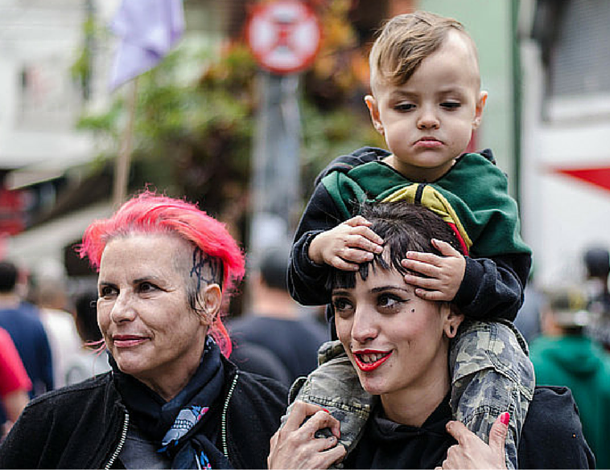
Al unirme a AWID, espero poder ayudar a la movilización del movimiento feminista. No solo para las mujeres privilegiadas, sino para TODAS las mujeres y activistas feministas.- Angelina Mootoo, feminista interseccional y caribeña, Guyana/EEUU
Cette information ne sera disponible qu’à l’ouverture de l’inscription.
Tem o direito de eliminar a sua resposta, por qualquer motivo e se assim o desejar. Queira entrar em contacto connosco através deste formulário, ao indicar "WITM Survey" ("Inquérito WITM") no título da sua mensagem, e iremos proceder à eliminação da sua resposta.
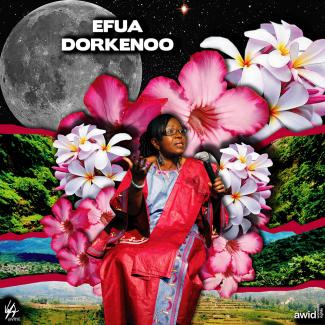
Affectionately known as “Mama Efua”, her work to end Female Genital Mutilation (FGM) movement spanned three decades and helped bring international attention and action to end this harmful practice.
In 1983 Efua co-founded FORWARD (The Foundation for Women’s Health, Research and Development), which became a leading organisation in the battle to raise awareness about FGM. Her 1994 book, “Cutting the Rose: Female Genital Mutilation,” is considered the first on FGM and, featured in Columbia University’s “Africa’s 100 Best Books for the 20th Century”.
Originally from Ghana and a nurse by training, Efua joined the WHO in 1995 and successfully pushed for FGM to go on the agendas of WHO member states. She also worked closely with the Nigerian government in formulating a comprehensive National Policy that laid the groundwork for Nigeria’s anti-FGM laws, still in place today.
Her ground breaking work culminated in an Africa-led campaign, “The Girl Generation,” which is committed to ending FGM within a generation. Efua demonstrated how one person can become the unifying voice for a movement, and her wise words - “shared identity can help bring activists from different backgrounds together with a common sense of purpose” – are more relevant than ever.
Vous avez des questions concernant le Forum de l’AWID ou les activités connexes ? Nous avons des réponses !
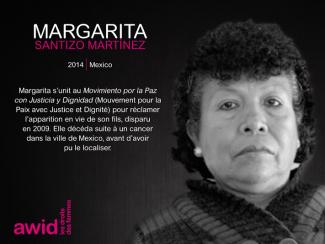
Anglais, français, espagnol et chinois mandarin.
نعم! الرجاء القيام بذلك! نشجعكم/ن على مشاركة رابط الاستطلاع في شبكاتكم/ن. سيسمح لنا جمع وجهات النظر أكثر تنوعاً، فهم البيئة التمويلية للحركات النسوية بشكل أكبر.
Through labor and union organizing, Sopo, Sabrina and Linda are not only fighting for the rights of essential workers, women workers, migrant workers and sex workers, but the rights of all workers.
The fight to end workers’ exploitation is a feminist struggle, and shows us that there are no feminist economies without feminist unions.
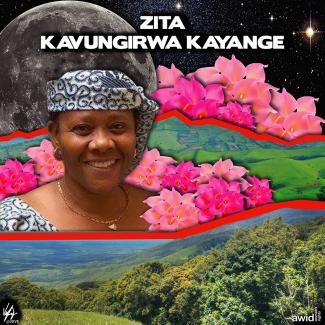
Zita fue una activista por los derechos de las mujeres que defendió los derechos de las mujeres rurales en el Gran Kivu.
Fue la primera directora ejecutiva de UWAKI, una organización de mujeres muy conocida. A través de su trabajo con la Red de Mujeres por los Derechos y la Paz (RFDP) y el Foro de Mujeres por la Paz de Kivu del Sur, dedicó su vida a ayudar a restablecer la paz en la zona oriental de la República Democrática del Congo. Se manifestó firmemente en contra del uso de la violencia sexual como arma de guerra.
En 2006, se propuso como candidata en las primeras elecciones democráticas del país. Aunque no ganó, siguió defendiendo los derechos de las mujeres y la comunidad de Kivu del Sur la recuerda con cariño.
Olajumoke ‘Jay’ Abdullahi and Kym Oliver are revolutionary feminists in more ways than one. (...)
artwork: “Bloomed” by Titash Sen >
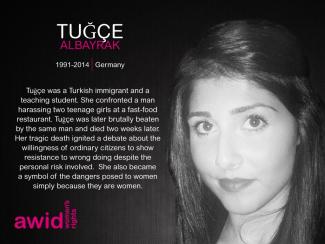
Nous mettrons le site à jour avec les informations pertinantes le moment venu.
J’ai l’intime conviction que des femmes puissantes peuvent donner à d’autres femmes la possibilité d’être puissantes, c’est pourquoi je suis ravie d’être membre de l’AWID. La visibilité que j’ai reçue en faisant partie de la Street Team de la communauté AWID a élargi mes connaissances et ma façon d’envisager le Féminisme et l’intersectionnalité. J’espère que davantage de femmes se joindront à nous et porteront des thématiques et des idées qui aideront d’autres femmes..- Loyiso Lindani, Afrique du Sud.
Bessy también fue integrante de Arcoíris, una organización que apoya a la comunidad LGBTI+. También fue una persona de referencia para la Plataforma Derechos Aquí y Ahora de Honduras, y abogó enérgicamente por la ciudadanía plena de las personas trans, y por la aprobación de una ley de identidad de género que permitiera a las personas trans cambiar su identidad de género legalmente.
"Desde principios de año [2019] la comunidad trans ha sufrido una serie de ataques, por defender, por reivindicar derechos". - Rihanna Ferrera (hermana de Bessy)
Bessy era una trabajadora sexual, y a principios de julio de 2019, fue asesinada a tiros por dos hombres mientras trabajaba en las calles de Comayagüela. Quienes la asesinaron fueron posteriormente arrestados.
Bessy es una de las muchxs defensorxs de los derechos LGBTI+ en Honduras que fueron asesinadxs por su identidad y su trabajo. Otras compañeras han sido: Cynthia Nicole, Angy Ferreira, Estefanía "Nia" Zúñiga, Gloria Carolina Hernández Vásquez, Paola Barraza, Violeta Rivas y Sherly Montoya.
El caso de Bessy es emblemático por su injusticia y por reflejar un problema mucho más amplio, que es el de la violencia sistemática a la que se enfrenta la comunidad LGBTI+ en Honduras, ya que el Estado ni garantiza los derechos que ofrece y ni brinda protección. Esto ha creado una cultura de impunidad.
A pesar de los riesgos a los que se enfrentan lxs defensorxs LGBTI+ en Honduras, continúan a diario con su trabajo para desafiar y resistir la violencia, y luchar contra el estigma y la discriminación.
"Si muero, que sea por algo bueno y no por algo inútil. No quiero morir huyendo, como unx cobarde. Si muero, quiero que la gente diga que morí luchando por lo que es mío". - integrante de Arcoíris.
por Prinka Saraswati
El ciclo menstrual habitualmente abarca entre 27 y 30 días. En ese lapso, el período en sí dura de 5 a 7 días. La fatiga, los cambios de humor y los espasmos son el resultado de la inflamación durante la menstruación.
< arte: «Movimiento feminista», Karina Tungari