Flickr/Leonardo Veras (CC BY 2.0)

Special Focus

AWID is an international, feminist, membership organisation committed to achieving gender equality, sustainable development and women’s human rights

Protection of the Family

The Issue

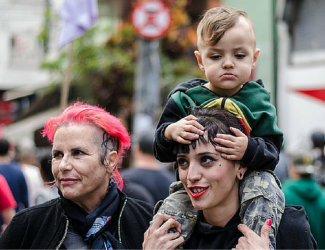
Over the past few years, a troubling new trend at the international human rights level is being observed, where discourses on ‘protecting the family’ are being employed to defend violations committed against family members, to bolster and justify impunity, and to restrict equal rights within and to family life.

The campaign to "Protect the Family" is driven by ultra-conservative efforts to impose "traditional" and patriarchal interpretations of the family, and to move rights out of the hands of family members and into the institution of ‘the family’.

“Protection of the Family” efforts stem from:

  • rising traditionalism,
  • rising cultural, social and religious conservatism and
  • sentiment hostile to women’s human rights, sexual rights, child rights and the rights of persons with non-normative gender identities and sexual orientations.

Since 2014, a group of states have been operating as a bloc in human rights spaces under the name “Group of Friends of the Family”, and resolutions on “Protection of the Family” have been successfully passed every year since 2014.

This agenda has spread beyond the Human Rights Council. We have seen regressive language on “the family” being introduced at the Commission on the Status of Women, and attempts made to introduce it in negotiations on the Sustainable Development Goals.


Our Approach

AWID works with partners and allies to jointly resist “Protection of the Family” and other regressive agendas, and to uphold the universality of human rights.

In response to the increased influence of regressive actors in human rights spaces, AWID joined allies to form the Observatory on the Universality of Rights (OURs).  OURs is a collaborative project that monitors, analyzes, and shares information on anti-rights initiatives like  “Protection of the Family”.

Rights at Risk, the first OURs report, charts a map of the actors making up the global anti-rights lobby, identifies their key discourses and strategies, and the effect they are having on our human rights.   

The report outlines “Protection of the Family” as an agenda that has fostered collaboration across a broad range of regressive actors at the UN.  It describes it as: “a strategic framework that houses “multiple patriarchal and anti-rights positions, where the framework, in turn, aims to justify and institutionalize these positions.”
 

Related Content

Lettre d’amour aux mouvements féministes #3

Lettre d’amour au féminisme

par Marianne Mesfin Asfaw
 

Enveloppes de scrapbooking qui disent Lettres d'amour aux mouvements féministes. L'enveloppe du dessus dit De Marianne Mesfin Asfaw

 
J’ai de nombreux souvenirs émotifs de mon aventure vers le féminisme, mais un en particulier me vient à l’esprit. Je suis alors en études supérieures, à une conférence dans le cadre d’un cours sur la théorie féministe. La conférence porte sur le féminisme africain et la professeure nous parle de l’histoire du panafricanisme et explique en quoi ce mouvement est patriarcal, centré sur les hommes, et comment les universitaires panafricanistes perpétuent l’effacement des femmes africaines. Elle commente la manière dont les contributions des Africaines aux luttes anticoloniales et décoloniales sur le continent ne sont que rarement, voire jamais l’objet de discussions et que l’on ne crédite que rarement les autrices. Nous lisons alors des textes sur des universitaires africaines féministes qui remettent en question cet effacement et mettent en lumière les récits de mouvements et efforts de résistance menés par des Africaines. Cela semble naïf, mais ce qui me paraissait le plus frappant était que l’on puisse juxtaposer les termes « africaine » et « féministe ». Et également que nous étions très nombreuses dans les différents coins du continent à nous débattre avec une histoire, des politiques et des normes sociétales compliquées, que nous envisagions cependant toutes selon le prisme du féminisme. Je suis sortie de cette conférence à la fois émue et complètement chamboulée. Trois de mes amies (toutes féministes africaines) et moi-même sommes sorties discuter du contenu de ce que nous venions d’entendre. Nous étions ébahies par l’excellence de la conférence et du contenu mais, plus que tout encore, nous nous sentions véritablement vues. Et c’est cette sensation qui m’est restée.
 
Tomber en amour avec le féminisme était époustouflant. C’était comme de finalement pouvoir parler à un coup de cœur de longue date, et de se rendre compte qu’on lui plaît aussi. Je parle de coup de cœur parce qu’au lycée je me disais féministe, tout en sentant que je n’en savais pas assez. Y avait-il une bonne manière d’être féministe? Et si je ne m’y prenais pas bien? Ma première conférence en Études féministes a répondu à toutes ces questions. C’était génial d’apprendre toutes ces histoires de résistance féministe et de démantèlement du patriarcat. Je sentais que je m’affirmais et que j’étais validée, mais je sentais également qu’il manquait quelque chose.
 
Approfondir ma relation avec le féminisme dans une institution universitaire où la majorité des élèves et du corps enseignant étaient blancs signifiait que pendant ces premières années, nous ne discutions que rarement de la place de la race ou du dénigrement des Noir·es dans les mouvements féministes traditionnels. Dans la plupart des cours, il y avait peut-être une semaine, ou pire une seule séance qui portait sur la race et nous lisions alors généralement un texte de bell hooks ou de Kimberly Crenshaw sur l’intersectionnalité, et peut-être un autre de Patricia Hill Collins. Et la semaine suivante, nous continuions à botter le sujet en touche. Je gérais cette situation en incluant la race et le féminisme noir dans presque tous mes travaux, en écrivant sur les cheveux des Noir·es et la politique de respectabilité, sur l’hypersexualisation du corps des femmes noires, et bien plus encore. Avec le temps, j’ai pris conscience que je tentais de combler une lacune, sans toutefois saisir laquelle.


Découvrir le féminisme africain et en apprendre davantage me permettait de boucler la boucle. Je comprenais que j’avais encore tant de choses à apprendre. Et principalement, que mon africanité et mon féminisme politique n’avaient pas à être écartés. Ils avaient en réalité tant à apprendre l’un de l’autre, et des féministes africaines faisaient déjà ce travail. C’était la pièce manquante et insaisissable lors de mon exploration du féminisme pendant mes années universitaires.


Pour moi, le féminisme est l’antithèse de l’apathie sociale et politique. Il signifie également que dès lors que l’on adopte une optique féministe, plus rien ne peut être pareil. Mes amies et moi parlions de ce que ça fait de mettre des lunettes qu’on ne peut plus jamais enlever, parce que l’on voit le monde pour ce qu’il est, avec tout son désordre. Un désordre qu’on ne peut pas simplement ignorer ou laisser tomber. J’ai donc fait la promesse aux mouvements féministes de ne jamais arrêter d’apprendre, de continuer à étirer les limites de mon empathie et de ne jamais vivre passivement. De dédier davantage de temps et d’espace dans ma vie aux mouvements féministes et de continuer à amplifier, célébrer, documenter et citer les travaux de féministes africaines. Je m’engage également à placer l’attention et le soin au centre de tout et à donner la priorité au plaisir dans cette aventure féministe, parce que nos mouvements en ont besoin pour durer.

Film club - intro

As part of AWID’s Feminist Realities journey, we invite you to explore our newly launched Feminist Film Club: a collection of short and feature films selected by feminist curators and storytellers from around the world, including Jess X. Snow (Asia/Pacific), Gabrielle Tesfaye (Africa/African Diaspora), and Esra Ozban (South West Asia, North Africa). Alejandra Laprea is curating the Latin & Central American program, which we’ll launch in September during AWID’s Crear, Résister, Transform: A Festival for Feminist Movements. In the meantime, look out for announcements on special films screenings and conversations with filmmakers!

WITM - Refreshed INFOGRAPHIC 3 ES

¿Cómo se autofinancian las organizaciones feministas?

Las organizaciones feministas y por los derechos de las mujeres no solo dependemos del financiamiento institucional, también nos autofinanciamos. Son la pasión, el compromiso político, la solidaridad y el cuidado colectivo lo que empuja a nuestras organizaciones.
Estos recursos se autogeneran y son autónomos y, aunque a menudo no se reflejan en nuestros presupuestos, son la columna vertebral de las organizaciones.

Consulta los datos sobre la gestión autónoma de recursos

Will you be opening a call for proposals?

Yes! Please read the Call for Activities and apply here. Deadline is February 1st, 2024.

Sara Hegazy

Sara Hegazy, a bold Egyptian LGBTQI+ rights activist, lived in a society where the members of her community, their bodies and lives often face lethal prejudice. The roots of Sara’s resistance were in the deconstruction of a dominant, oppressive and patriarchal system, and its anti-rights actors.

"[In Egypt], every person who is not male, Muslim, Sunni, straight, and a supporter of the system, is rejected, repressed, stigmatized, arrested, exiled, or killed. This matter is related to the patriarchal system as a whole, since the state cannot practice its repression against citizens without a pre-existing oppression since childhood." - Sara Hegazy wrote on March 6, 2020

The suppression of Sara’s voice by the Egyptian government reached its violent peak in 2017, when she was arrested for raising a rainbow flag at the Mashrou’ Leila (Lebanese band whose lead vocalist is openly gay) concert in Cairo. What followed were charges of joining an illegal group along with “promoting sexual deviancy and debauchery”. 

"It was an act of support and solidarity — not only with the [Mashrou' Leila] vocalist but for everyone who is oppressed...We were proud to hold the flag. We wouldn't have imagined the reaction of society and the Egyptian state. For them, I was a criminal — someone who was seeking to destroy the moral structure of society." - Sara Hegazy

Sara was jailed for three months, where she was tortured and sexually assaulted. In January 2018, after being released on bail, she sought asylum in Canada where she was safe but imprisoned by the memories of the abuse and violence her body and soul had gone through.

"I left this experience after three months with a very intense, serious case of PTSD [post-traumatic stress disorder]. Prison killed me. It destroyed me." - Sara Hegazy told NPR

Sara took her own life on 14 June 2020, leaving a handwritten note in Arabic: 

“To my siblings – I tried to find redemption and failed, forgive me.”
“To my friends – the experience [journey] was harsh and I am too weak to resist it, forgive me. 
“To the world – you were cruel to a great extent, but I forgive.”

Her legacy and courage will be carried forward by those who love her and believe in what she fought for.


Tributes:

“To Sarah: Rest, just rest, spared from this relentless violence, this state-powered lethal patriarchy. In rage, in grief, in exhaustion, we resist.”  - Rasha Younes, an LGBT rights researcher at Human Rights Watch. Read the complete text

Mashrou’ Leila’s lead vocalist sings tribute to Sara Hegazy

Tributes on Twitter 

Documentary about Sara Hegazy’s life

Website dedicated to Sara Hegazy and to those, especially LGBTQI voices, not able to grieve in public
 

Marianne Mesfin Asfaw

Biography

Marianne Mesfin Asfaw est une féministe panafricaine qui se consacre à la justice sociale et à la construction communautaire. Elle est titulaire d'une licence en études de genre et en relations internationales de l'Université de la Colombie-Britannique (UBC) et d'un master en études de genre et de droit de l'Université SOAS de Londres. Auparavant, elle travaillait dans l'administration universitaire et le soutien aux étudiant·e·s internationaux·ales, de même qu’à titre de chercheuse et d’animatrice dans des espaces féministes à but non lucratif. Elle a également travaillé et été bénévole auprès d'organisations non gouvernementales, notamment Plan International, dans des rôles administratifs. Avant d'occuper son poste actuel, elle a travaillé dans le soutien logistique et administratif à l'AWID. Elle est originaire d'Éthiopie, a grandi au Rwanda et est actuellement basée à Tkaronto/Toronto, au Canada. Elle aime lire, voyager et passer du temps avec sa famille et ses ami·e·s. Pendant les mois les plus chauds, on peut la trouver en train de se promener dans des quartiers familiers à la recherche de cafés et de librairies obscurs dans lesquels flâner.

Position
Coordonnatrice de l’Initiative de Construction d’Économies Féministes
Add to stories
Off

Love letter to Feminist Movements #6

On love to a movement

Kraft paper envelop that says Love letters to feminist movements from Sara AbuGhazal

How does a movement start?
we get expelled by ghosts from a house, a family, and a nation
we arrive fatigued to a space (sometimes an actual address) but mainly to a state of being
preceded by a fallen star 
perhaps our arrival isn’t accompanied by fatigue, 
maybe accompanied by fear 
perhaps our arrival isn’t accompanied by fear 
maybe accompanied by anger 
from issues that keep on repeating themselves: 
a stab in the heart (read heartache) 
a bullet in the back (read betrayal) 
forced disappearances 
bodies sentenced by marriage, disfiguration, and chronic fatigue 
yet when we arrive, we gather, whisper, speak and weep. 
This is how our movements begin when we arrive at each other 
We become seeds,
This is how our movements start when we plant each other
Becoming flowers, sometimes just thorns, sometimes fruits,
we are each other’s oasis
to sing for the battles 
to make remedies 
to place the faces of our lovers, the shape of their smiles, the sound of their laughter 
the secret of turning silences into language
the detailed instructions of witches
our movement is: for all of us
when we arrive as seeds with the purpose of flowering. 

Sara AbuGhazal
www.badiya.blog

OURS 2021 - Parcourir les chapitres

Parcourir les chapitres

Snippet - COP30 - Radical Democracy - ES

Democracia radical y justicia climática: el debate ausente en la COP30

Modelos de gobernanza alternativos como vías para salir de la crisis climática.

📅 Miércoles 12 de noviembre de 2025
📍 Seminario Mar Nossa Sra Da Assunção, Pará, Brasil

Más información aquí

¿Es necesario ser afiliadx de AWID para participar en el Foro?

No, no es necesario ser afiliadx de AWID para participar, pero lxs afiliadxs de AWID reciben una tarifa de inscripción con descuento, así como otros beneficios.

Obtén más información sobre cómo sumarte a la membresía de AWID.

Claudia Montserrat Arévalo Alvarado

Biography

Claudia is a feminist psychologist with a Masters degree in Development Equality and Equity. She has been a human rights activist for 30 years, and a women’s rights activist for the last 24.

Claudia works in El Salvador as the co-founder and Executive Director of Asociación Mujeres Transformando. For the past 16 years she has defended labour rights of women working within the textile and garment maquila sector. This includes collaborations to draft legislative bills, public policy proposals and research that aim to improve labour conditions for women workers in this sector. She has worked tirelessly to support organizational strengthening and empowerment of women workers in the textile maquilas and those doing embroidery piece-work from home.

She is an active participant in advocacy efforts at the national, regional and international levels to defend and claim labour rights for the working class in the global South from a feminist, anti-capitalist and anti-patriarchy perspective and class and gender awareness raising. She is a board member with the Spotlight Initiative and its national reference group. She is also part of UN Women’s Civic Society Advisory Group. 

Position
Co-President
Add to stories
Off

Annonce: Forum AWID 2024

Image avec les mots: annonce: forum awid 2024. L'arrière-plan a une photo pâle du public lors du forum précédent et a un dégradé qui va du violet à gauche au jaune à droite.

Il est temps pour le prochain forum de l’AWID en 2024.

Lorsque des milliers de féministes se réunissent, nous créons une grande force de solidarité qui a le pouvoir de changer le monde. Le Forum de l’AWID sera pour nous un moment de repos et de guérison ensemble, de connexion au-delà des frontières et de découverte de nouvelles orientations stratégiques courageuses.

La date et le lieu seront annoncés l'année prochaine, dès que possible. Nous sommes ravi.es et nous savons que vous le serez aussi. Restez à l'écoute!

Assurez-vous de nous suivre sur les médias sociaux et de vous inscrire à notre liste de diffusion pour rester informé!

Welcome to the Rights at Risk Resource Library

Rights at Risk Resource Library

A living collection of resources to support feminist movements, policy-makers, and allies to resist fascisms, fundamentalisms, and anti-rights trends.

agent in action

Snippet - COP30 - Actions - FR

Événements et actions à la COP30

Du 8 au 16 novembre 2025

Que se passe-t-il si je ne peux pas participer en personne ? S'agira-t-il d'un format hybride ?

Oui ! Nous explorons actuellement des technologies innovantes qui permettront une connexion et une participation considérables.

Sanyu Awori

Biography

Sanyu es una feminista que reside en Nairobi (Kenia). Ha dedicado los últimos 10 años a apoyar a los movimientos obreros, feministas y por los derechos humanos, promoviendo la rendición de cuentas empresarial, la justicia económica y la justicia de género. Ha trabajado con el Centro de Información sobre Empresas y Derechos Humanos, en International Women’s Rights Action Watch Asia y el Pacífico (IWRAW, Observatorio Internacional de los Derechos de las Mujeres) y la Iniciativa de Derechos Humanos de la Commonwealth. Posee una maestría en Leyes y Derechos Humanos y una licenciatura en Derecho de la Universidad de Nottingham. Sus escritos se han publicado en el Business and Human Rights Journal, Human Rights Law Review, y plataformas como Open Global Rights, Democracia Abierta, entre otras. En sus ratos libres, le gusta caminar por el bosque y perseguir mariposas.

Position
Gerente Construcción de Economías Feministas
Add to stories
Off

AWID at CSW67: a Portal to Feminist Power

Imagine opening a door which takes you into a conversation with feminist activists in other continents. This portal will transcend the barriers of UN CSW by pushing beyond language barriers, unaffordable travel, unequal protection from COVID19, and racist visa regimes.

This week, we’re putting a virtual spin on CSW by connecting and amplifying feminist activists' voices, to challenge the discriminatory barriers that limit participation and influence. By setting up connecting “portals” in New York City, Nairobi & Bangalore, we'll host a physical-virtual hybrid space for feminists to connect their struggles and build collective power.


Follow us to join the livestreams:

YouTube Facebook

And stay updated following us over:
Instagram Twitter


Graphic for the Announcement of AWID's participation in CSW 2023 with Portals

What are we covering? 

Day 1: March 6 - Accessibility

Day 2: March 7- Challenging Anti-Rights Actors And Corporations

Day 3: March 8 - Challenging Anti-Rights Actors And Corporations

Day 4: March 9- Reclaiming Multilateralism


Find the program for this week's activities here: 

Download full program here (PDF)

Bangalore Schedule (PNG)  Nairobi Schedule (PNG) New York City Schedule (PNG)