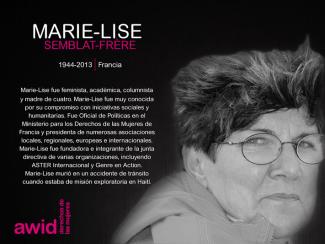
Marie-Lise Semblat-Frere
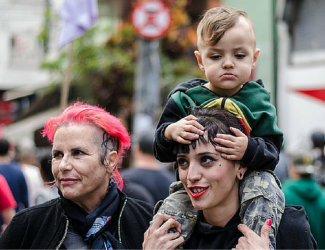
Over the past few years, a troubling new trend at the international human rights level is being observed, where discourses on ‘protecting the family’ are being employed to defend violations committed against family members, to bolster and justify impunity, and to restrict equal rights within and to family life.
The campaign to "Protect the Family" is driven by ultra-conservative efforts to impose "traditional" and patriarchal interpretations of the family, and to move rights out of the hands of family members and into the institution of ‘the family’.
Since 2014, a group of states have been operating as a bloc in human rights spaces under the name “Group of Friends of the Family”, and resolutions on “Protection of the Family” have been successfully passed every year since 2014.
This agenda has spread beyond the Human Rights Council. We have seen regressive language on “the family” being introduced at the Commission on the Status of Women, and attempts made to introduce it in negotiations on the Sustainable Development Goals.
AWID works with partners and allies to jointly resist “Protection of the Family” and other regressive agendas, and to uphold the universality of human rights.
In response to the increased influence of regressive actors in human rights spaces, AWID joined allies to form the Observatory on the Universality of Rights (OURs). OURs is a collaborative project that monitors, analyzes, and shares information on anti-rights initiatives like “Protection of the Family”.
Rights at Risk, the first OURs report, charts a map of the actors making up the global anti-rights lobby, identifies their key discourses and strategies, and the effect they are having on our human rights.
The report outlines “Protection of the Family” as an agenda that has fostered collaboration across a broad range of regressive actors at the UN. It describes it as: “a strategic framework that houses “multiple patriarchal and anti-rights positions, where the framework, in turn, aims to justify and institutionalize these positions.”
Salome est une activiste féministe originaire de Tbilisi, Géorgie, qui se consacre à la justice de genre et sociale. Titulaire d’une Maîtrise en études sur le genre, elle s’est impliquée auprès de mouvements féministes, queers et écologiques au cours des neuf dernières années, travaillant entre autres sur les questions de la violence liée au genre, la violence domestique, la santé sexuelle et reproductive et les droits afférents, les droits LGBTIQ et la sécurité et les droits holistiques et numériques.
Depuis 2014, elle travaille activement sur les questions de sécurité et de sûreté des activistes et des femmes défenseures des droits humains, organisant des ateliers sur la sécurité intégrée et la sécurité numérique spécialement pour les activistes de groupes défavorisés (personnes homosexuelles, minorités ethniques et religieuses, femmes et filles rurales, etc.) ainsi que pour de grandes organisations féministes. Salome est membre de l’Independent Group of Feminists (Groupe indépendant de féministes)- une initiative non-formelle, non hiérarchique et non enregistrée qui réunit des féministes géorgiennes ayant différents parcours. Elle travaille actuellement avec le Fonds pour les femmes de Géorgie, où elle est pleinement impliquée dans la construction de mouvements de femmes/féministes, tout en offrant un financement féministe et encourageant la philanthropie féministe locale.
Hospitals are institutions, living sites of capitalism, and what gets played out when somebody is supposed to be resting is a microcosm of the larger system itself.
Es exactamente el mismo proceso, con la misma fecha límite. Por favor utiliza el mismo formulario para presentar tu propuesta de actividad, ya sea esta presencial, en línea o híbrida (presencial y en línea).
Michelle is a Southeast Asian feminist who enjoys conspiring to bring people together and spark conversations for social change and feminist knowledge sharing, through art, poetry, music and games. With a background in digital advocacy and communications strategy development, she has contributed to initiatives in digital rights, human rights research, and civil society coalition building throughout Southeast Asia. She has an LLB from National University of Singapore, enjoys following her feet down random city streets and likes coffee a little too much.
|
Consejo editorial Co-editorxs Diseño e ilustración Estratega de las comunicaciones Editora de la versión árabe Responsable de la traducción
Corrección |
Traducciones árabes
Corrección
Corrección |
En un mot : oui ! L’AWID collabore actuellement avec un Comité d’accessibilité pour veiller à ce que le Forum soit aussi accessible que possible. Nous évaluons actuellement également l’accessibilité du lieu où se tiendra le Forum, des hôtels alentours et des transports. Des informations détaillées sur l’accessibilité lors du Forum de l’AWID seront disponibles dans cette section avant l’ouverture des inscriptions. Si vous avez des questions d’ici là, n’hésitez pas à nous contacter.
Eni Lestari es una trabajadora de casa particular (doméstica) que vive en Hong Kong y es activista por los derechos de lxs migrantes. Tras escapar de un empleador abusivo, dejó de ser víctima y se transformó en organizadora de lxs trabajadorxs de casa particular y de lxs migrantes en general. En 2000 fundó la Association of Indonesian Migrant Workers [Asociación de Trabajadoras Migrantes de Indonesia, ATKI-Hong Kong] que luego se expandió a Macao, Taiwan e Indonesia. Fue coordinadora y una de las voceras del Asia Migrants Coordinating Body [Organismo Coordinador de Migrantes de Asia, AMCB], alianza de organizaciones de base en Hong Kong que reúnen a migrantes de Indonesia, Filipinas, Tailandia, Nepal y Sri Lanka. Actualmente preside la Alianza Internacional de Migrantes, primera alianza global de migrantes de base, inmigrantes, refugiadxs y otras personas desplazadas.
Ha ocupado cargos importantes en distintas organizaciones como Asia Pacific Forum on Women, Law and Development [Foro de Asia-Pacífico sobre Mujeres, Derecho y Desarrollo, APWLD] cuyo Consejo Regional integra. También formó parte del Consejo Directivo de la Alianza Contra la Trata de Mujeres (GAATW), fue vocera de la Network of Indonesian Migrant Workers [Red de Trabajadrxs Migrantes de Indonesia, JBMI], consejera de ATKI-Hong Kong y Macao así como de la Association of Returned Migrants and Families in Indonesia [Asociación de Migrantes y Familias Retornadas en Indonesia, KABAR BUMI]. Ha sido ponente en foros organizados por la academia, grupos interreligiosos, sociedad civil, sindicatos y muchas otras entidades en espacios nacionales, regionales e internacionales.
También ha participado activamente en asambleas/conferencias de la ONU sobre desarrollo y derechos de lxs migrantes y fue elegida para hablar en la apertura de la Asamblea General de la ONU sobre Grandes Desplazamientos de Migrantes y Refugiados realizada en 2016 en la ciudad de Nueva York, Estados Unidos. Recibió nominaciones y reconocimientos como ser incluida entre las mujeres que inspiran de la serie 100 Women de la BBC; Heroína pública (RCTI), Mujer influyente en la categoría lideresa del sector sin fines de lucro (Cámara Estadounidense en Hong Kong), Hacedora de cambios (Cathay Pacific) y un premio del Club Indonesio.
عندما كنت في السادسة من العمر، علِمت أنّ جدّي كان يملك داراً للسينما. أخبرَتني أمّي كيف أنه افتتحها في أوائل الستينيّات، وكانت هي حينها في مثل عمري، إذ كان عمرها قُرابة الستّ سنوات. تذكّرتُ أنهم في الليلة الأولى عرضوا فيلم «صوت الموسيقى».

ندعوك للتواصل معنا بشأن طرق المشاركة الهادفة في المنتدى.
Jemimah Naburri-Kaheru is an accomplished international HR strategist with a profound impact within the Horn of Africa Region. Jemimah previously served as the Regional Human Resource and Office Manager at the Strategic Initiative for Women in the Horn of Africa (SIHA). Her influence extends to HR leadership for over 70 regional staff, as the organization experienced rapid growth with a 40% increase in annual revenues. Throughout her career, Jemimah has orchestrated successful recruitment efforts, introduced merit-based performance systems, and overseen employee relations and HR policies.. She played a pivotal role in supporting global workforce strategies. With an academic background in Development Studies from Makerere University (Uganda) and an ongoing MBA in Human Resource Management, Jemimah's commitment to professional development is evident. Her contribution to high-performance workforces and international HR leadership positions her as an invaluable asset to any global enterprise.
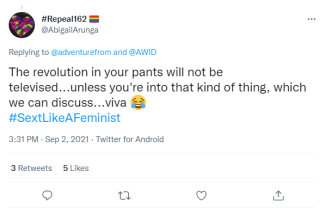
تَلفَزَتُنا للثورة تحت حزامك مشروطة بطبيعة رغباتك
سيقدم صندوق الوصول الخاص بنا عددًا محدودًا من المنح الدراسية لتمويل مشاركة النشطاء/ الناشطات الذين/ اللواتي لا يستطيعون القيام بذلك، وليس لديهم/ن علاقات مع الممولين/ات الذين/ اللواتي يمكنهم/ن تغطية مشاركتهم/ن. لذلك إذا كان لديك احتمالات أخرى، يرجى استكشافها. سنبذل قصارى جهدنا لتقديم أكبر عدد ممكن من المنح الدراسية، وسنشارك المزيد من المعلومات حول هذه العملية وكيفية التقديم لاحقًا في أوائل العام 2024.
Brenda Salas Neves es une estratega feminista queer nacide y criade en los Andes del Sur. Elle trabaja en la organización para el cambio de narrativas y movilizar recursos para apoyar los movimientos de justicia racial y climática en todo el mundo. Ha producido proyectos mediáticos para potenciar el poder de la población migrante y alzarse contra la intervención militar estadounidense en toda América Latina, con Deep Dish TV y el Comité de Solidaridad con Centroamérica de Portland. Elle es une orgullose integrante del Proyecto Audre Lorde y egresade del movimiento de los United World Colleges (UWC).
Upasana is a non binary illustrator and artist based out of Kolkata, India. Their work explores identity and personal narratives by using a visual remnant or evidence of the contexts they work with. They are especially drawn to patterns which to them communicate complex truths about the past, present and future. When Upasana is not illustrating they organise and run a queer and trans community art centre in the city.