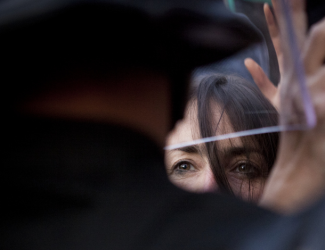
Philippe Leroyer | Flickr (CC BY-NC-ND 2.0)

Special Focus

AWID is an international, feminist, membership organisation committed to achieving gender equality, sustainable development and women’s human rights

Women Human Rights Defenders

WHRDs are self-identified women and lesbian, bisexual, transgender, queer and intersex (LBTQI) people and others who defend rights and are subject to gender-specific risks and threats due to their human rights work and/or as a direct consequence of their gender identity or sexual orientation.

WHRDs are subject to systematic violence and discrimination due to their identities and unyielding struggles for rights, equality and justice.

The WHRD Program collaborates with international and regional partners as well as the AWID membership to raise awareness about these risks and threats, advocate for feminist and holistic measures of protection and safety, and actively promote a culture of self-care and collective well being in our movements.


Risks and threats targeting WHRDs  

WHRDs are exposed to the same types of risks that all other defenders who defend human rights, communities, and the environment face. However, they are also exposed to gender-based violence and gender-specific risks because they challenge existing gender norms within their communities and societies.

By defending rights, WHRDs are at risk of:

  • Physical assault and death
  • Intimidation and harassment, including in online spaces
  • Judicial harassment and criminalization
  • Burnout

A collaborative, holistic approach to safety

We work collaboratively with international and regional networks and our membership

  • to raise awareness about human rights abuses and violations against WHRDs and the systemic violence and discrimination they experience
  • to strengthen protection mechanisms and ensure more effective and timely responses to WHRDs at risk

We work to promote a holistic approach to protection which includes:

  • emphasizing the importance of self-care and collective well being, and recognizing that what care and wellbeing mean may differ across cultures
  • documenting the violations targeting WHRDs using a feminist intersectional perspective;
  • promoting the social recognition and celebration of the work and resilience of WHRDs ; and
  • building civic spaces that are conducive to dismantling structural inequalities without restrictions or obstacles

Our Actions

We aim to contribute to a safer world for WHRDs, their families and communities. We believe that action for rights and justice should not put WHRDs at risk; it should be appreciated and celebrated.

  • Promoting collaboration and coordination among human rights and women’s rights organizations at the international level to  strengthen  responses concerning safety and wellbeing of WHRDs.

  • Supporting regional networks of WHRDs and their organizations, such as the Mesoamerican Initiative for WHRDs and the WHRD Middle East and North Africa  Coalition, in promoting and strengthening collective action for protection - emphasizing the establishment of solidarity and protection networks, the promotion of self-care, and advocacy and mobilization for the safety of WHRDs;

  • Increasing the visibility and recognition of  WHRDs and their struggles, as well as the risks that they encounter by documenting the attacks that they face, and researching, producing, and disseminating information on their struggles, strategies, and challenges:

  • Mobilizing urgent responses of international solidarity for WHRDs at risk through our international and regional networks, and our active membership.

Related Content

Forum Homepage Banner

¡Inscríbete en el Foro!

Cuando la gente se reúne a escala global, como personas individuales y como movimientos, se genera una fuerza arrolladora. Únete a nosotrxs en Bangkok, Tailandia, y de manera virtual, en diciembre de 2024.

Conoce más Inscríbete

CFA 2023 - Intro - FR

Italian Trulli

« Ma mission dans la vie n'est pas simplement de survivre, mais de prospérer; et de le faire avec un peu de passion, un peu de compassion, un peu d'humour et un peu de style. »


Bienvenue au 15e Forum international de l'AWID!

Le Forum international de l'AWID est à la fois un événement communautaire mondial et un espace de transformation personnelle radicale. Unique en son genre, le Forum rassemble les mouvements féministes, de défense des droits des femmes, de justice de genre, LBTQI+ et leurs allié.e.s dans toute leur diversité et leur humanité, afin qu'elles.ils se connectent, se soignent et s'épanouissent. Le Forum est un lieu où les féministes du Sud et les communautés historiquement marginalisées occupent le devant de la scène, élaborant des stratégies entre elles et avec les mouvements de justice sociale, afin de modifier le pouvoir, de créer des alliances stratégiques et d'ouvrir la voie à un monde différent et meilleur.

Lorsque les gens se rassemblent à l'échelle mondiale, en tant qu'individus et en tant que mouvements, nous générons une force considérable. Rejoignez-nous à Bangkok, en Thaïlande, en 2024. Venez danser, chanter, rêver et vous élever avec nous.

Quand : du 2 au 5 décembre 2024
Où : Bangkok, Thaïlande; et en ligne
Qui : Environ 2 500 féministes du monde entier participant en personne, et 3 000 participant virtuellement

En savoir plus sur le forum : Lisez notre foire aux questions

Snippet Kohl - Table ronde | Féminisme « non » inclusif : Les filles sans voix dans le mouvement féministe haïtien

Les filles sans voix dans le mouvement féministe haïtien

avec Naike Ledan et Fédorah Pierre-Louis

YOUTUBE |  Soundcloud

Fadila M.

Fadila M. was a Soulaliyate tribal activist from Azrou, the Ifrane region of Morocco. She fought against a specific form of land discrimination directed against tribal women.

As part of the Soulaliyate Women’s Land-Use Rights Movement, she worked towards overhauling the framework legislation relating to the management of community property through the 2019 adoption of three projects of laws guaranteeing the equality of women and men.

According to the customary laws in force, women had no right to benefit from the land, especially those who were single, widowed or divorced. The rights to collective land in Morocco were transmitted traditionally between male members of a family of over 16 years of age. Since 2007, Fadila M. had been part of the women’s movement, the first grassroots nationwide mobilization for land rights. Some of the achievements included that in 2012 for the first time Soulaliyate women were able to register on the lists of beneficiaries and to benefit from compensation relating to land cession. The movement also managed to get the 1919 dahir (Moroccan King's decree) amended to guarantee women the right to equality.

Fadila M. died on 27 September 2018. The circumstances of her death are unclear. She was part of a protest march connected to the issue of collective land and while authorities reported her death as being accidental, and her having a cardiac arrest on the way to the hospital, the local section of the Moroccan Association of Human Rights (AMDH) pointed out that Fadila was suffocated by a member of the police force using a Moroccan flag. Her family requested investigation but the results of the autopsy were not known.

Find out more about the Soulaliyate Women’s Land-Use Rights Movement


Please note: As there was no photograph/image of Fadila M. available to us, the artwork (instead of a portrait) aims to represent what she fought and worked for; land and rights to live and have access to that land and what grows on it.

Resourcing Feminist Movements

Banner image announcing that WITM Survey is live.


The “Where is the Money?” #WITM survey is now live! Dive in and share your experience with funding your organizing with feminists around the world.

Learn more and take the survey


Around the world, feminist, women’s rights, and allied movements are confronting power and reimagining a politics of liberation. The contributions that fuel this work come in many forms, from financial and political resources to daily acts of resistance and survival.


AWID’s Resourcing Feminist Movements (RFM) Initiative shines a light on the current funding ecosystem, which range from self-generated models of resourcing to more formal funding streams.

Through our research and analysis, we examine how funding practices can better serve our movements. We critically explore the contradictions in “funding” social transformation, especially in the face of increasing political repression, anti-rights agendas, and rising corporate power. Above all, we build collective strategies that support thriving, robust, and resilient movements.


Our Actions

Recognizing the richness of our movements and responding to the current moment, we:

  • Create and amplify alternatives: We amplify funding practices that center activists’ own priorities and engage a diverse range of funders and activists in crafting new, dynamic models  for resourcing feminist movements, particularly in the context of closing civil society space.

  • Build knowledge: We explore, exchange, and strengthen knowledge about how movements are attracting, organizing, and using the resources they need to accomplish meaningful change.

  • Advocate: We work in partnerships, such as the Count Me In! Consortium, to influence funding agendas and open space for feminist movements to be in direct dialogue to shift power and money.

Related Content

Snippet - CSW69 spaces to watch out for - FR

Les espaces de la CSW69 sur lesquels garder un œil

Apprenez-en davantage sur les prochains événements CSW69 co-organisés par l'AWID ci-dessous

CFA 2023 - Forum Theme - FR

S'élever ensemble : connecter, guérir, prospérer

Le thème du Forum − S'élever ensemble − est une invitation à nous engager avec tout notre être, à nous connecter les un.e.s aux autres de manière ciblée, bienveillante et courageuse, afin que nous puissions sentir le battement de cœur des mouvements mondiaux et nous élever ensemble pour relever les défis de notre époque.

Les mouvements féministes, de défense des droits des femmes, de justice basée sur le genre, LBTQI+ et autres mouvements apparentés du monde entier se trouvent à un tournant décisif, confrontés à un puissant revers/recul sur les droits et libertés précédemment acquis. Ces dernières années ont été marquées par la montée rapide des autoritarismes, la répression violente de la société civile et la criminalisation des femmes et des défenseuses.eurs des droits humains, l'escalade des guerres et des conflits dans de nombreuses régions du monde, la perpétuation des injustices économiques et les crises sanitaires, écologiques et climatiques qui s'entrecroisent.

Nos mouvements sont ébranlés et, en même temps, ils cherchent à construire et à maintenir la force et le courage nécessaires pour le travail à venir. Nous ne pouvons pas faire ce travail seul.e.s, dans nos bulles. La connexion et la guérison sont essentielles pour transformer les déséquilibres de pouvoir persistants et les lignes de faille au sein de nos propres mouvements. Nous devons travailler et élaborer des stratégies de manière interconnectée, afin de pouvoir prospérer ensemble. Le Forum de l'AWID favorise cet ingrédient vital qu'est l'interconnexion dans la pérennité, la croissance et l'influence transformatrice de l'organisation féministe à l'échelle mondiale.

Sexting Like a Feminist: Humor in the Digital Feminist Revolution | Content Snippet FR

Sextoter comme une féministe : humour et révolution féministe numérique

Le 2 septembre 2021, les géniales féministes et activistes pour la justice sociale du festival de l’AWID Crear | Résister | Transform se sont retrouvées, non seulement pour mettre en commun leurs stratégies de résistance, cocréer et transformer le monde, mais également pour parler crûment sur Twitter.

Nana Darkoa Sekyiamah, cofondatrice du blog Adventures From The Bedrooms of African Women et autrice de The Sex Lives of African Women,  menait l’exercice, épaulée par la plateforme numérique panafricaine womanist queer AfroFemHub, pour poser la question suivante : Comment pouvons-nous, de manière sûre et consensuelle, explorer notre plaisir, nos désirs et nos fantasmes par textos?

En deux mots : comment textote une féministe?

Je pense que c’est une question de très haute importance, parce qu’elle porte sur la question plus large de la navigation en ligne selon un point de vue féministe. Avec le capitalisme, le langage autour des corps et du sexe peut être déshumanisant et perturbant, et aborder le plaisir sexuel sur le numérique peut sembler devoir prendre une tournure performative. Donc, trouver des manières d’examiner comment nous faisons part de notre désir, qu’elles soient à la fois affirmatives et enthousiastes, peut repousser les modèles dominants de présentation et de consommation, et se réapproprier ces espaces comme autant de lieux d’un engagement authentique, prouvant que les sextos devraient tous être justement ça : féministes.
 
En outre, permettre aux conversations féministes d’incarner leur côté ludique dans les conversations en ligne contribue à recadrer le récit populaire selon lequel les interventions féministes sont tristes et austères. Mais nous le savons bien : s’amuser fait partie de notre politique, et est inhérent à ce qu’être féministe veut dire.
 
À l’aide du mot-dièse #SextLikeAFeminist des universitaires et des activistes du monde entier se sont donné rendez-vous pour partager leurs tweets féministes les plus affamés, et voici mes dix favoris.
 
Comme ces tweets le montrent, sextoter comme une féministe est à la fois sexy, drôle – et chaud. Mais sans jamais perdre de vue son engagement en faveur de l’équité et de la justice.

Rosa Candida Mayorga Muñoz

Rosa Cándida Mayorga Muñoz fue una trabajadora social guatemalteca, líder sindical y defensora de los derechos laborales. La llamaban cariñosamente «Rosita».

En la década de 1980, Rosa se convirtió en la primera mujer integrante del Comité Ejecutivo del Sindicato de Trabajadores del Instituto Nacional de Electrificación (STINDE), un sindicato al que se había incorporado originalmente para defender los derechos laborales de las mujeres. Para ella, esto significaba luchar por la igualdad de oportunidades en una empresa en la que muchas mujeres enfrentaban un sistema discriminatorio y violento creado por las autoridades de la compañía. Rosa también había sufrido acoso sexual en su lugar de trabajo, tanto por parte de sus compañeros de trabajo, como de los funcionarios. Sin embargo, no era alguien a quien se pudiera acallar.

Rosa continuó con su pelea y fue parte del esfuerzo por configurar la lucha en una forma más específica, la del «Pacto colectivo de condiciones de trabajo INDE -STINDE». Este pacto fue pionero: el primero en tipificar el concepto de acoso (sexual) en Guatemala. Sirve como referencia para la legislación guatemalteca en temas laborales, y es un estímulo para otros sindicatos.

«No tenía herramientas de lucha más que sus propios ideales... Muchas veces fue intimidada, hostigada para dejar por un lado la lucha, pero su valentía a enfrentar generaba la imagen de la esperanza para los sindicalistas de bases. Rosita se trazó una imagen de respeto, no solo dentro de su sindicato, sino ante las autoridades de la institución, ante el movimiento de mujeres; fue reconocida, como pionera, del movimiento de mujeres sindicalistas, en un espacio que había sido más desarrollado por hombres.» - Maritza Velasquez, ATRAHDOM

Rosa falleció el 4 de abril de 2018, a la edad de 77 años.

Snippet - Feminist Community Evening - FR

Une soirée communautaire féministe 

✉️ Sur inscription uniquement. Inscrivez-vous ici

📅 Mercredi 12 mars 2025
🕒 17.00h-19.00h EST

🏢 Chef's Kitchen Loft with Terrace, 216 East 45th St 13th Floor New York

Organisé par : Women Enabled International et AWID

AWID IN 2015: Building Collective Impact

In 2015 AWID grew and diversified.

We ramped up preparations for the 13th AWID international Forum, focused a lot of energy on the Post 2015 Development Agenda and Financing for Development processes, and continued the core work of our priority areas:


A sneak peak inside the report

The context

  • We continue witnessing the rapid breakdown in democracy and democratic institutions, with spaces for dissent shrinking.
  • Multiple and concurrent systemic crises (energy, food, finance and climate) continue to deepen inequalities and pose major challenges.
  • Corporations are a leading power in determining the development agenda.
  • Violence against WHRDs remains an urgent problem.
  • Religious fundamentalisms are pervasive and increasingly powerful.
  • New forms of online gender-based violence have emerged.

In response, we are moving out of our silos.

Increasingly, women’s rights and other movements worldwide are articulating the systemic and intersectional nature of these and other problems. We are making better connections with the agendas of other social and environmental movements for solidarity, alliance building and collective responses. We are also seeing greater visibility of these movements fighting for justice on the ground.


Our Impact

  • For effective strategizing and advocacy, we need facts
  • To exchange knowledge and join hands in solidarity, we need  a strong online community
  • To build our collective power, we need to work together
  • To influence international processes,  we need to increase our access and voice
  • To reposition power we need to give visibility and emphasize  the important role that feminist and women’s rights movements  are already playing
     

Our Members

As at 31st December, 2015 we had:


Read the full report


CFA 2023 - what you need to know - FR

Ce qu'il faut savoir

  • La priorité sera donnée aux activités qui facilitent et encouragent la connexion et l'interaction entre les participant.e.s. 
  • Si votre activité peut se dérouler en ligne ou de manière hybride (en connectant les participant.e.s sur place et en ligne), veuillez réfléchir à la manière de susciter un véritable engagement et une participation active de la part des participant.e.s en ligne.
  • Nous encourageons les rencontres, les dialogues et les échanges entre mouvements, régions et générations.
  • Veuillez concevoir votre activité de manière à permettre une certaine flexibilité quant au nombre de participant.e.s. Si certaines activités peuvent être limitées à de petits groupes, la majorité d'entre elles devront être adaptées à un plus grand nombre de participant.e.s. 
  • Si votre activité correspond à un certain nombre de formats, ou ne correspond à aucun, vous pourrez l'indiquer sur le formulaire de candidature.

Langues dans lesquelles vous pouvez soumettre votre activité 

  • Langues pour les candidatures : les candidatures seront acceptées en Anglais, Français, Espagnol, Thaï et Arabe
  • Langues au Forum : l'interprétation simultanée sera assurée lors des sessions plénières du Forum en Anglais, Français, Espagnol, Thaï et Arabe, ainsi qu'en LSI (Langue des Signes Internationale) et éventuellement d'autres langues. Pour toutes les autres activités, l'interprétation sera proposée dans certaines de ces langues — mais pas toutes — et éventuellement dans d'autres, comme le Swahili et Portugais.

Intro to tweets snippet

As these tweets show, it turns out that sexting like a feminist is sexy, funny – and horny. Yet, it never loses sight of its commitment to equity and justice.

Mirna Teresa Suazo Martínez

Mirna Teresa Suazo Martínez faisait partie de la communauté garifuna (afro-descendante et autochtone) Masca et vivait sur la côte nord des Caraïbes du Honduras. Elle était leader de sa communauté et fervente défenseure du territoire autochtone, une terre qui a été violée le jour où l'Institut national agraire du Honduras a accordé des licences territoriales à des personnes extérieures à la communauté. 

Ce fait déplorable a été à l'origine de harcèlements, d'abus et de violences répétés contre Masca, où les intérêts économiques de différents groupes se sont heurtés à ceux des forces armées et des autorités honduriennes. Selon l'Organisation fraternelle noire du Honduras (OFRANEH), la stratégie de ces groupes consiste à expulser et exterminer la population autochtone. 

« Masca, la communauté garifuna située près de la vallée du Cuyamel, se trouve dans la zone d’influence de l’une des villes présumées modèles, une situation qui a déclenché des pressions territoriales le long de la côte garifuna. » - OFRANEH, 8 septembre 2019

Mirna Teresa, présidente du conseil d'administration de la communauté de Masca à Omoa, avait elle aussi fermement rejeté la construction de deux centrales hydroélectriques sur la rivière Masca, qui porte le même nom que sa communauté.

« La communauté garífuna attribue l'aggravation de la situation dans leur région à son opposition à l'exploitation touristique, à la monoculture de palmiers africains et au trafic de drogue, tandis qu'elle cherche parallèlement à construire une vie alternative au travers de la culture de la noix de coco et d'autres produits d'autoconsommation ». - Voces Feministas, 10 septembre 2019 

Mirna Teresa a été assassinée le 8 septembre 2019 dans son restaurant « Champa los Gemelos ». 

Elle est l'une des six femmes défenseures garifunas à avoir été assassinées rien qu'entre septembre et octobre 2019. Selon l'OFRANEH, les autorités n'ont pas mené d'enquête sur ces crimes.

« En ce qui concerne les communautés garífuna, une grande partie des homicides sont liés au régime foncier et à la gestion des terres. Cependant, les querelles entre les organisations criminelles ont abouti à des meurtres, à l’instar de ceux ayant eu lieu récemment à Santa Rosa de Aguán ». - OFRANEH, 8 septembre 2019

Snippet - Homepage CSW69_EN

AWID at CSW69 Beijing+30 | #FreezeFascisms

Our collective presence disrupts institutional practices of exclusion in such spaces while supporting movements to organize around feminist alternatives to systems of oppression.

Join the conversations from March 10-21, 2025, as we collectively transform CSW69 into spaces for and about resistance and solidarity.

Learn more

Annual Report 2010

AWID 2010 Annual Report Cover

Our 2010 Annual Report highlights the major accomplishments of each of our strategic initiatives during the year.

Along with activity highlights, we include a brief analysis of the impact of our initiatives as well as reflections from our members and partners that further illustrate the relevance of AWID’s work and its connection to broader women’s rights movements. 

This interactive document is complete with links to our websites and recent publications with in-depth information on the issues we address in the report.

Read online

2023 - Hybrid like never before: in person - thai

การประชุมแบบผสมผสานอย่างที่ไม่เคยมีมาก่อน

นับเป็นครั้งแรกที่เวทีประชุม AWID จะเสนอรูปแบบการมีส่วนร่วม 3 รูปแบบ 

การเข้าร่วมด้วยตัวเอง ณ สถานที่จัดงาน

ผู้เข้าร่วมสามารถเดินทางเข้าร่วมด้วยตัวเอง ที่กรุงเทพฯ ประเทศไทย ซึ่งเราจะตั้งหน้าตั้งตาคอยท่านอยู่!