WHRDs are self-identified women and lesbian, bisexual, transgender, queer and intersex (LBTQI) people and others who defend rights and are subject to gender-specific risks and threats due to their human rights work and/or as a direct consequence of their gender identity or sexual orientation.
WHRDs are subject to systematic violence and discrimination due to their identities and unyielding struggles for rights, equality and justice.
The WHRD Program collaborates with international and regional partners as well as the AWID membership to raise awareness about these risks and threats, advocate for feminist and holistic measures of protection and safety, and actively promote a culture of self-care and collective well being in our movements.
Risks and threats targeting WHRDs
WHRDs are exposed to the same types of risks that all other defenders who defend human rights, communities, and the environment face. However, they are also exposed to gender-based violence and gender-specific risks because they challenge existing gender norms within their communities and societies.
By defending rights, WHRDs are at risk of:
Physical assault and death
Intimidation and harassment, including in online spaces
Judicial harassment and criminalization
Burnout
A collaborative, holistic approach to safety
We work collaboratively with international and regional networks and our membership
to raise awareness about human rights abuses and violations against WHRDs and the systemic violence and discrimination they experience
to strengthen protection mechanisms and ensure more effective and timely responses to WHRDs at risk
We work to promote a holistic approach to protection which includes:
emphasizing the importance of self-care and collective well being, and recognizing that what care and wellbeing mean may differ across cultures
documenting the violations targeting WHRDs using a feminist intersectional perspective;
promoting the social recognition and celebration of the work and resilience of WHRDs ; and
building civic spaces that are conducive to dismantling structural inequalities without restrictions or obstacles
Our Actions
We aim to contribute to a safer world for WHRDs, their families and communities. We believe that action for rights and justice should not put WHRDs at risk; it should be appreciated and celebrated.
Promoting collaboration and coordination among human rights and women’s rights organizations at the international level to strengthen responses concerning safety and wellbeing of WHRDs.
Supporting regional networks of WHRDs and their organizations, such as the Mesoamerican Initiative for WHRDs and the WHRD Middle East and North Africa Coalition, in promoting and strengthening collective action for protection - emphasizing the establishment of solidarity and protection networks, the promotion of self-care, and advocacy and mobilization for the safety of WHRDs;
Increasing the visibility and recognition of WHRDs and their struggles, as well as the risks that they encounter by documenting the attacks that they face, and researching, producing, and disseminating information on their struggles, strategies, and challenges:
Mobilizing urgent responses of international solidarity for WHRDs at risk through our international and regional networks, and our active membership.
Related Content
Agroecología y soberanía alimentaria
Contexto
La búsqueda de medios alternativos de producción alimentaria a partir de la sostenibilidad ambiental está ganando terreno en todas las regiones. Esta búsqueda mundial presenta una característica común: la necesidad de involucrar a la población rural y sobre todo a las mujeres, teniendo en cuenta sus prioridades y conocimientos locales, aplicando el principio de la agroecología.
Definición
La agroecología es una forma de practicar la agricultura o de utilizar tecnologías sin dañar el ambiente. Se propone quebrar el modelo hegemónico de desarrollo rural basado en los latifundios y monocultivos que beneficia sobre todo a las empresas agrícolas y afianza la exclusión social.
En la agricultura familiar, la agroecología se manifiesta como resistencia al modelo actual de desarrollo y sus problemas sociales, culturales, ambientales y económicos. Se opone a la falta de autonomía de la población campesina en cuanto a capital financiero y encarna una forma de resistencia al modelo de agronegocios actual.
Perspectiva feminista
Las iniciativas que se basan solo en la agroecología pueden no ser suficientes para resolver todos los problemas de marginación e invisibilidad de las mujeres. Por eso, una perspectiva feminista es fundamental para analizar las normas asociadas con la idea de familia que actualmente se postula como institución perfecta, así como con las condiciones de subordinación de las mujeres.
En términos más simples: para que la agroecología pueda liberar su potencial emancipatorio, es importante que los debates en torno a ella incluyan una reflexión sobre los roles de género socialmente construidos.
Snippet Intro The Feminist Realities Magazine (EN)
The Feminist Realities Magazine
Feminist Realities are embedded in the multiple ways that show us that there is a different way of living, thinking and doing - from the daily expressions of how we live and relate to each other, to alternative systems of governance and justice. Feminist Realities resist dominant power systems such as patriarchy, capitalism, and white supremacy.
These are powerful propositions that orient us toward a vision of what is possible, and show how feminist organizing is blazing a path toward justice in movements and communities around the world.
A AWID agradece sinceramente às várias pessoas cujas ideias, análises e contribuições moldaram a pesquisa e a defesa do “Onde está o dinheiro” ao longo dos anos.
Em primeiro lugar, os nossos mais sinceros agradecimentos aos membres da AWID e às ativistas que participaram nas colaborações com o WITM e testaram este questionário connosco, ao partilhar tão generosamente o seu tempo, análise e espírito.
Agradecemos aos movimentos feministas, aos aliados e aos fundos feministas, incluindo, mas não se limitando ao Black Feminist Fund, Pacific Feminist Fund, ASTREA, FRIDA Young Feminist Fund, Purposeful, Kosovo Women's Network, Human Rights Funders Network, CEECCNA Feminist Fund e PROSPERA, pelas suas investigações rigorosas sobre o estado de financiamento, pela análise perspicaz e pela defesa contínua de mais recursos de melhor qualidade e poder para a organização feminista e de justiça de género em todos os contextos.
Junte-se à comunidade global de feministas que se manifestam sobre o estado de financiamento, e exigem mais recursos de melhor qualidade e poder para feministas globalmente.
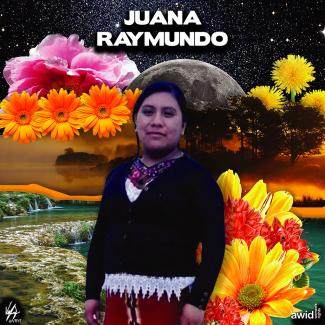
Juana was an Indigenous Mayan Ixil, professional nurse and coordinator of the Farmers’ Development Committee (Comité de Desarrollo Campesino – CODECA).
CODECA is a human rights organisation of Indigenous farmers dedicated to promoting land rights and rural development for Indigenous families) in the Nebaj Quiché micro-region. She first joined CODECA as a member of its youth branch (Juventud de CODECA). At the time of her death had been elected to be part of the Executive Committee of the Movement for the Liberation of Peoples (MLP).
Juana’s body was found by neighbours by a small river on the road near Nebaj and Acambalam Village, Guatemala. According to CODECA, her body showed signs of torture.
La participación de lxs afiliadxs de AWID en la CSW61
Los Estados miembros al igual que activistas y organizaciones por los derechos de las mujeres se reunirán en la sede central de las Naciones Unidas, en Nueva York, para la sexagésima primera sesión de la Comisión de la Condición Jurídica y Social de las Mujeres del 13 al 24 de marzo para abordar el tema «empoderamiento económico de las mujeres» en el contexto del Objetivo 5 para el Desarrollo Sostenible.
Aunque nos dará mucho gusto reunirnos en persona con aquellxs de ustedes que van a estar en Nueva York, también queremos interactuar con todxs aquellxs que no podrán asistir a la CSW y, en la medida que nos sea posible, amplificar sus voces en los espacios relevantes.
A continuación encontrarán información sobre las diferentes maneras en que pueden interactuar con AWID en relación con la CSW:
¡Participa en una toma del poder artística!
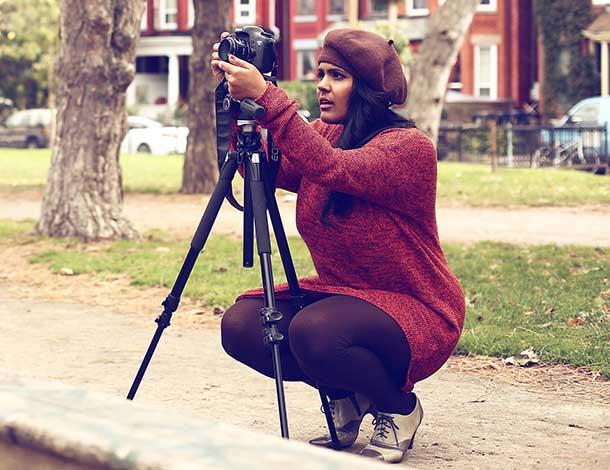
Nos complace anunciar que Nayani Thiyagarajah —afiliada de AWID— asistirá a la CSW este año y estará a cargo de la cuenta de Instagram de AWID. Nayani estará presente y disponible en Nueva York, para conectarse con otrxs afiliadxs, y posiblemente coordinar una presentación en nuestra cuenta de Instagram; también explorará la posibilidad de incluir a algunxs afiliadxs de AWID en un cortometraje sobre el tema «Lo personal es político», una historia de la participación de Nayani en la CSW de este año.
Nayani Thiyagarajah
¿Quién es Nayani?
Nayani Thiyagarajah es una realizadora, productora y escritora que se dedica a crear historias para la pantalla grande. Nayani es hija de la diáspora tamil, vive en Toronto y ha trabajado por más de diez años en las artes y la cultura. Su primer largometraje independiente Shadeism: Digging Deeper (2015) tuvo su estreno mundial en el Festival Internacional de Cine de Zanzíbar 2015, donde ganó un premio especial del jurado. Nayani realizó recientemente la película [RE]FRAME en asociación con la productora Camaro West, una compañía de producción con sede en Atlanta y Toronto, que se enfoca en reformular las historias de las personas negras, indígenas y otras personas de color a través de narraciones para la pantalla grande.
Hablando más seriamente, habría que señalar que Nayani se ríe de una manera extraña, es muy torpe, y su cabeza está siempre en las nubes. Nayani se siente extremadamente bendecida de poder crear historias para el cine, de ganarse la vida jugando a inventar historias y por encima de todo, Nayani cree en el amor.
(La misma Nayani nos envío estas líneas para su biografía)
¿Te interesaría conocer a Nayani y tener la posibilidad de ser incluidx en su película?
Envíanos un email dirigido a membership@awid.org con la línea de asunto «CSW: toma del poder artística»
Antes del 13 de marzo de 2017
Incluye tu nombre completo y tu país.
¿No puedes asistir? ¡Hazlo saber!
Si no puedes asistir a la CSW61 debido a una prohibición de viaje, ya sea impuesta por el gobierno de Trump o por tu propio gobierno, por favor comparte tu historia con nosotrxs.
Envíanos mensajes que quieres que sean escuchados en los espacios de las Naciones Unidas en lo que respecta al financiamiento, el impacto del restablecimiento de la Ley Mordaza Global y la necesidad de luchar en contra de todos los tipos de fundamentalismos religiosos. Puedes enviar tus mensajes en los siguientes formatos:
Video: Que no dure más de dos minutos y por favor envíalo a través de una carpeta de intercambio de archivos (por ejemplo, dropbox, google drive, etc.)
Audio: Que no dure más de dos minutos y por favor envíalo a través de una carpeta de intercambio de archivos (por ejemplo, dropbox, google drive, etc.)
Imagen: puedes enviarnos una foto o un cartel con tu mensaje.
Texto: Que no sea más largo de 200 palabras y por favor envíalo a través de un mail o en un documento Word.
Comparte tu mensaje con nosotrxs
Envíanos un email dirigido a membership@awid.org con la línea de asunto «CSW: ¡Hazlo saber!»
Antes del 15 de marzo de 2017
Reúnete con otrxs afiliadxs en la CSW61
Algunxs afiliadxs de AWID nos han dicho que les parece muy importante poder conectarse con otrxs afiliadxs en la CSW. En un espacio de incidencia tan grande, es útil conectarse con otrxs activistas que trabajan en temas similares, o que provienen del mismo país o región. Al reconocer la importancia de estas conexiones para la construcción de movimientos.
¿Te gustaría reunirte con otrxs afiliadxs de AWID mientras estás en Nueva York?
Envíanos un email dirigido a membership@awid.org con la línea de asunto «CSW: AWID Afiliadxs»
NOTE: Por favor envíanos tu nombre completo, país de origen y déjanos saber si te parece bien que compartamos tu dirección de mail con otrxs afiliadxs interesadxs en reunirse en la CSW.
Toma una fotografía
Si asistes a la CSW, nos gustaría ver lo que sucede a través de tus ojos. Puedes capturar un momento que, en tu opinión, hable de la energía en el espacio del evento, ya sea dentro o fuera de la sede. Tenemos pensado publicar algunas de tus «imágenes» en nuestros canales de redes sociales y compartirlas en awid.org.
Puedes enviarnos fotografías:
a color o en blanco y negro
un título (si lo deseas) y
una leyenda (de 100 palabras como máximo) sobre la historia que cuenta esa imagen.
Incluye además:
tu nombre completo
país de origen
infórmanos si podemos publicar en parte o por completo la información que nos hayas compartido.
Envía tus imágenes
Envíanos un email dirigido a membership@awid.org con la línea de asunto «CSW: fotografías»
Durante toda la duración de la CSW o poco después de haber concluido, hasta el martes 28 de marzo.
Snippet FEA Bauen Hotel (ES)
Solo un año después de su fundación, las integrantes de Nadia Echazú comenzaron a trabajar en la alta costura y organizaron un desfile de moda en el histórico Hotel Bauen.
Mostraron cinco modelos y algunas trabajadoras de la cooperativa textil desfilaron con sus propios diseños.
Esto fue revolucionario no sólo porque estaban diseñando alternativas a la moda convencional, sino también porque estaban creando ropa accesible e inclusiva para cuerpos trans y travesti.
¡No hay economías feministas sin ropa que nos haga sentir increíbles y cómodxs!
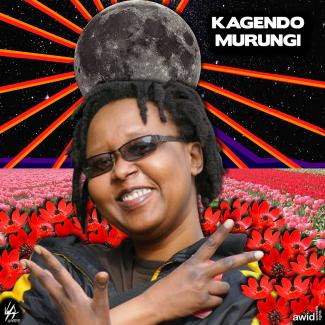
Kagendo es cariñosamente recordada por su familia y amigxs como una férrea activista feminista africana, artista y realizadora cinematográfica
Dedicó más de 20 años a defender los derechos y la dignidad de las personas LGBTIQ y de género no normativo de África. Lxs colegas de Kagendo la recuerdan como alguien con una personalidad jovial, convicciones férreas y amor a la vida. Kagendo murió por causas naturales en su hogar de Harlem, el 27 de diciembre de 2017.
Al producirse su fallecimiento, la escritora y activista keniata Shailja Patel destacó «el compromiso de toda la vida de Kagendo para establecer una relación entre todas las formas de opresión, mostrando de qué manera el colonialismo alentó la homofobia en el continente africano, para convertir así a Kenia en un país donde las personas queer y las mujeres libres puedan vivir y progresar».
Overview
This bibliography intends to contribute to the desire for learning and engagement identified by activists in the Middle East and North Africa region when reflecting on the aftermath of fast unfolding transitions in the region. Such transitions, while specific to the context of MENA, are not unique in their occurrences around the world. Experiences and practices of feminists from around the world engaged in similar, even if not identical, struggles towards the democratization of their countries with a gendered lens and a feminist politics constitute an important knowledge bank that activists can draw upon, learn from, and engage with. This resource mapping aims to fill the gap realized in various convenings and conversations of a lack of information sharing and knowledge bridging among feminists across the regions that experienced similar uprisings; particularly along south-south and east-south lines.
This publication represents a research mapping of key resources, publications and materials on transitions to democracy and women’s rights in different countries of the world that have undergone such processes, such as: Indonesia, Chile, South Africa, Nepal, Mexico, Argentina, Poland, Ukraine, as well as within the Middle East and North Africa (MENA). It provides bibliographic information and short summaries of resources which succinctly identify the contextual changes and challenges facing women in those particular transitional moments, as well as clearly delineates the ways in which women’s rights activists sought to confront those challenges and what lessons were learned.
We hope that this collection of ideas, research, analysis and experiences provides the kind of rich ingredients needed to create new recipes for confronting old and new challenges. By sharing these texts, our goal is to make links across borders, expand possibilities and knowledge, and invite debate, reflection, and inspiration for women’s rights organizations and activists in the MENA region. While every moment and space has its own unique flavor and history, highlighting connections to similar challenges and aspirations allows us all to bring things in conversation with one another, imagine a new vantage point into a problem, and increase our sense of belonging and purpose and thus our capacity to stay strong in the face of the seemingly impossible. It is the collective strength of a movement that gives it the power to create change. The goal with this publication is not that one specific text will necessarily help illuminate new solutions, but that the combined knowledge and analysis from a variety of sources will provide readers with an opportunity to expand their horizons and foster connections. In our small way, we hope to contribute to furthering the democratization of knowledge, and supporting women’s rights movements in the MENA to continue building an inclusive transition process that will result in advancements of social justice and gender equality.
Snippet FEA The fight for a world full of workplaces (FR)
La lutte pour un monde rempli de lieux de travail exempts de toute forme de discrimination, de stigmatisation et d'exclusion est une lutte noble. Un monde où le travail sexuel est décriminalisé et reconnu comme travail en fait partie intégrante.
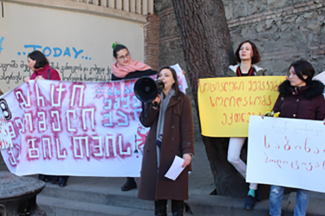
Un monde où tous·tes les travailleur·euses ont des conditions de travail sûres, des salaires décents et peuvent jouir des mêmes droits tels que l'accès à la santé, le droit à la retraite, aux congés maladie, aux vacances, à la sécurité de l'emploi et plus encore, quels que soient leur genre, leur race, leur origine ethnique, leur âge ou leurs capacités. Les droits du travail sont des questions féministes, et les syndicats féministes jouent un rôle clé dans la promotion des droits juridiques, du travail et économiques de tous·tes les travailleur·euses, en particulier les travailleur·euses migrant·e·s, les travailleur·euses domestiques, les travailleur·euses informel·les et les travailleur·euses du sexe. Ce sont ces personnes qui ont récemment été touchées de manière disproportionnée par la pandémie, sa crise des soins, les confinements, les couvre-feux ainsi que la surveillance et la répression policière accrue. Nous vous présentons ici les histoires de militantes féministes et syndicalistes qui se battent pour de meilleures conditions de travail et un monde meilleur pour tous·tes.
Опрос доступен на KOBO – открытой платформе для сбора, управления и визуализации данных. Чтобы принять участие, просто перейдите по ссылке здесь. Следуйте инструкциям, чтобы пройти опрос.
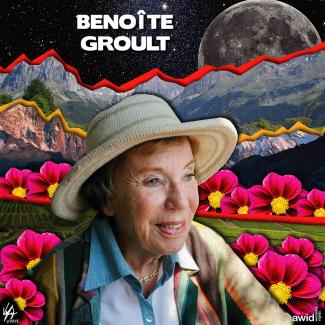
Benoîte était une journaliste, écrivaine et militante féministe française.
Elle a publié plus de 20 romans et de nombreux essais sur le féminisme
Son premier livre « Ainsi Soit-Elle » a été publié en 1975. Le livre explore l’histoire des droits des femmes ainsi que la misogynie et la violence à l’égard des femmes.
Son dernier livre, « Ainsi Soit Olympe de Gouges», a exploré la question des droits des femmes pendant la Révolution française, se concentrant sur la figure de l’ancienne féministe française Olympe de Gouges. De Gouges fut guillotinée en 1793 pour avoir défié l'autorité des hommes et publié la « Déclaration des droits de la femme et de la citoyenne » deux ans auparavant.
Administrative Office
For administrative purposes you can contact our office at:
+1 416 594 3773
192 Spadina Avenue, Suite 300 | Toronto, ON, M5T 2C2 | Canada
Snippet FEA Workers demonstrations in Georgia 1 (EN)
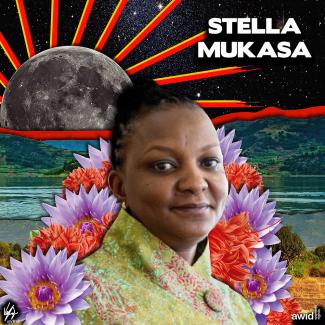
Stella began her career at the Ministry of Gender and Community Development in Uganda engaging with policymakers for law reform, including the 1995 Ugandan Constitution, which established some of the most progressive reforms for women in the region.
She is revered throughout the region for her tireless efforts to create and enforce gender-responsive laws and policies. She played a key role in drafting Uganda’s Domestic Violence Act and in mobilizing support for gender-responsive constitutions in both Uganda and in Rwanda.
Through her work with International Center for Research on Women (ICRW), she worked on violence against children, and worked to strengthen the capacities of grassroots organizations addressing gender-based violence. She was a lecturer on gender rights and the law at Makerere University and served on the boards of Akina Mama wa Afrika, ActionAid International Uganda and the Open Society Initiative for Eastern Africa.