Organizing creatively, facing an increasing threat
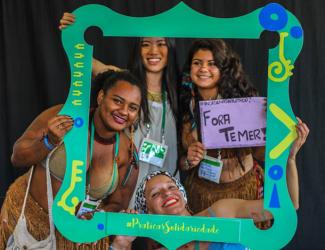
Young feminist activists play a critical role in women’s rights organizations and movements worldwide by bringing up new issues that feminists face today. Their strength, creativity and adaptability are vital to the sustainability of feminist organizing.
At the same time, they face specific impediments to their activism such as limited access to funding and support, lack of capacity-building opportunities, and a significant increase of attacks on young women human rights defenders. This creates a lack of visibility that makes more difficult their inclusion and effective participation within women’s rights movements.
A multigenerational approach
AWID’s young feminist activism program was created to make sure the voices of young women are heard and reflected in feminist discourse. We want to ensure that young feminists have better access to funding, capacity-building opportunities and international processes. In addition to supporting young feminists directly, we are also working with women’s rights activists of all ages on practical models and strategies for effective multigenerational organizing.
Our Actions
We want young feminist activists to play a role in decision-making affecting their rights by:
Fostering community and sharing information through the Young Feminist Wire. Recognizing the importance of online media for the work of young feminists, our team launched the Young Feminist Wire in May 2010 to share information, build capacity through online webinars and e-discussions, and encourage community building.
Researching and building knowledge on young feminist activism, to increase the visibility and impact of young feminist activism within and across women’s rights movements and other key actors such as donors.
Promoting more effective multigenerational organizing, exploring better ways to work together.
Supporting young feminists to engage in global development processes such as those within the United Nations
Collaboration across all of AWID’s priority areas, including the Forum, to ensure young feminists’ key contributions, perspectives, needs and activism are reflected in debates, policies and programs affecting them.
Related Content
Faut-il être membre de l’AWID pour participer au Forum ?
Non, vous n’avez pas besoin d’être membre de l’AWID pour participer, mais les membres de l’AWID bénéficient d’une réduction sur les frais d’inscription ainsi qu’un certain nombre d’autres avantages.
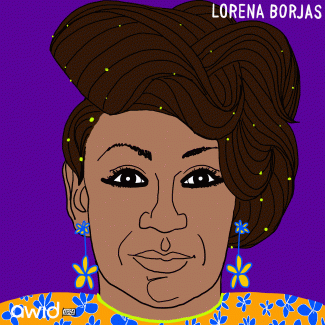
Lorena Borjas, una mujer trans latina y activista, vivía y trabajaba en el barrio de Jackson Heights de Queens, en la ciudad de Nueva York. En esas calles, cuidó de su comunidad durante años, defendiendo los derechos de las personas trans e inmigrantes, apoyando a lxs sobrevivientes del tráfico humano y del abuso, y haciendo campaña por los derechos de lxs trabajadorxs sexuales y de las personas que viven con VIH y SIDA.
Lorena era fuerte e incansable en su lucha por apoyar, defender y proteger a quienes son más marginalizadxs y discriminadxs por la transfobia, la misoginia y el racismo.
«Ella nos empujaba a brillar auténticamente, a convertirnos en un grito de subversión que dice “Aquí estoy, y merezco felicidad también”.» - Cecilia Gentili, activista trans amiga de Lorena
Luego de haber enfrentado ella misma numerosos traumas y dificultades como mujer trans inmigrante y víctima de tráfico humano, recabó conocimientos y memoria emocional de la fuente de sus propias experiencias para ayudar a construir y fortalecer la comunidad de la cual era parte, y que era parte de ella. Algunas de las formas en que llevó esto a cabo fue organizando y movilizando apoyo, que abarcaba desde proveer preservativos y conectar a las mujeres trans con distintos servicios sociales, hasta armar una clínica para el testeo de VIH en su propia casa.
«Era un alma tan bella que ayudaba a otrxs, aun cuando su propio camino era difícil y doloroso como inmigrante, como inmigrante trans. Creía que la comunidad trans necesitaba amor, aceptación, y compasión, y lo daba todo.» - Luchia Dragosh, supervisora de producción de QPTV de un documental sobre Lorena
En sus más de 25 años de activismo, también fundó con Chase Strangio (abogadx y activista por los derechos trans) el Lorena Borjas Community Fund. Este fondo ayuda a lxs diferentes integrantes de su comunidad (y en especial a las personas trans) que lidian con problemas de inmigración, para evitar el ciclo de arresto-cárcel-deportación.
Lorena falleció en marzo de 2020 por complicaciones derivadas del COVID-19.
Su enorme y hermoso legado será llevado adelante a través de las calles de Queens por la red y la comunidad que ella ayudó a crear.
« Continuaremos su trabajo desde donde ella lo dejó, un trabajo que es esencial para el bienestar de “mis pájaras”, como llamaba Lorena a las chicas trans de Queens que protegía bajo su ala.» - Cecilia Gentili
Tributos:
«Lorena nos trajo luz, cuando atravesábamos tiempos muy oscuros aquí en Nueva York. Nos trajo luz cuando tuvimos que enfrentar la epidemia del crack, cuando tuvimos que enfrentar la crisis del SIDA, cuando tuvimos que enfrentar los cambios en las políticas de inmigración.» - Cristina Herrera, fundadora y CEO de Translatina Network y amiga de Lorena
«Lorena ha hecho más que nadie que yo conozca para arrojar luz sobre la epidemia del tráfico en las comunidades transgénero y para ayudar a otras mujeres trans a escapar de la explotación.» - Lynly Egyes, representante de Borjas en nombre del Transgender Law Center
Una red compleja de actores anti-derechos, en constante evolución, está ejerciendo cada vez más influencia en los espacios internacionales y en las políticas nacionales. Respaldados a menudo por financiaciones poco transparentes, estos actores construyen alianzas tácticas sobre distintos temas y cruzando diferentes regiones y credos para aumentar su impacto.
Estamos viendo actores fascistas y fundamentalistas que, si bien tienen un discurso nacionalista, son completamente transnacionales en lo que respecta a sus basamentos ideológicos, sus alianzas políticas y sus redes de financiamiento. En algunos casos, estos grupos están respaldados por flujos financieros poco transparentes vinculados con grandes empresas o con partidos políticos de extrema derecha. Sin embargo, también crean alianzas estratégicas, que incluyen, en algunos casos, segmentos de los movimientos feministas y por los derechos de las mujeres, y se distancian de los elementos más evidentemente extremistas para parecer más legítimos. Los actores anti-derechos también se expanden y replican su estilo de organización antiderechos (ya sea a través de campañas y grupos de presión, o de litigios estratégicos) en todo el planeta.
Índice de contenidos
CitizenGo
Alliance Defending Freedom (ADF)
Financiación de actores antiderechos
Los vínculos entre feministas trans-excluyentes y fundamentalistas cristianxs
Ejercicio: Esquematicemos el panorama
Historia de movimiento de resistencia: Catolicadas, una poderosa herramienta de comunicación para promover la igualdad de género y los derechos sexuales y reproductivos
Does AWID provide scholarships to attend the Forum?
Our Access Fund will offer a limited number of scholarships to fund the participation of activists who cannot otherwise make it, and don’t have relationships with funders who could cover their participation. So if you have other possibilities, please explore them. We will do our best to offer as many scholarships as we can, and will share more information about this process and how to apply in early 2024.
Résumé : Identifiez les principaux groupes et réfutez leurs arguments
Résumé :
Identifiez les principaux groupes et réfutez leurs arguments
Décideur·se politique à l’ONU, vous souhaitez apprendre à repérer les principaux groupes et discours antidroits au sein de l’institution ? Vous êtes un·e féministe, à la recherche de contre-arguments éclairs ? Ce résumé vous propose les informations essentielles en 8 pages seulement.
Pour toute question sur le Forum, merci de nous contacter via notre formulaire de contact en choisissant « 14e Forum de l'AWID » comme sujet de votre message.
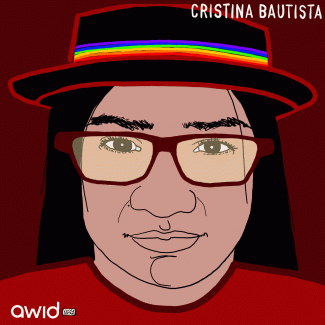
« Si nous nous taisons, ils nous tuent, et si nous parlons [ils nous tuent] aussi. Alors parlons. » - Cristina Bautista, 2019
Cristina Bautista était membre de la communauté autochtone du peuple Nasa, qui vit dans la région nord du Cauca en Colombie. Elle participait à la résistance en tant que leader, défenseuse des droits fonciers, travailleuse sociale et gouverneure de la réserve autochtone Nasa de Tacueyó.
Défenseuse infatigable des droits du peuple Nasa, Cristina s’est exprimée haut et fort contre la violence à l’égard de sa communauté. Dans un discours devant les Nations Unies, elle appelait à protéger les vies des femmes autochtones et à les impliquer dans différents domaines de la vie. En 2017, Cristina était membre du Bureau des Nations Unies pour les droits humains des personnes autochtones. Le Fonds de contributions volontaires des Nations Unies pour les populations autochtones lui a octroyé une subvention en 2019.
« J’aimerais mettre en lumière la situation actuelle du peuple autochtone en Colombie, le meurtre de leaders autochtones, la répression de la contestation sociale. Au lieu d’aider, l’accord de paix a renforcé la guerre et l’exploitation de territoires sacrés en Colombie… Actuellement, nous travaillons en tant que femmes, dans presque toutes les nations autochtones, à un avenir meilleur pour nos familles. Je ne veux pas voir plus de femmes vivre dans ces conditions en milieu rural. Il nous faut des opportunités qui permettent aux femmes autochtones de participer à la vie politique, à l’économie, à la société et à la culture. J’acquiers une réelle force aujourd’hui, en voyant toutes ces femmes ici, et en voyant que je ne suis pas seule. » - Cristina Bautista, 2019
Cristina a été assassinée le 29 octobre 2019, ainsi que quatre autres membres de la garde autochtone désarmée, dans une attaque potentiellement menée par des membres de « Dagoberto Ramos », un groupe dissident FARC.
D’après Global Witness, « le nombre d’assassinats de leaders communautaires et sociaux·les a terriblement augmenté en Colombie au cours de ces dernières années ».
« La communauté nasa a prévenu à maintes reprises les autorités au sujet des menaces qui pèsent sur leur sécurité. Malgré les efforts déployés par les gouvernements colombiens successifs, les peuples autochtones continuent de faire face à d'importants risques, surtout les dirigeants communautaires ou religieux comme Cristina Bautista.» - Point presse des Nations Unies, 1er novembre 2019
Incarnations Transnationales | Note des éditeurices
Des mots perdus
Chinelo Onwualu
Ghiwa Sayegh
« Lorsque nous avons désespérément besoin de changement, comme c’est le cas dans la maladie et l’insurrection, notre langage se vide de sa complexité et se réduit à l’essentiel... Mais à mesure que la maladie et la révolution persistent, le langage fabriqué en elles et à leur sujet s’approfondit, laisse entrer plus de nuances, absorbé par l’expérience profondément humaine qu’est de rencontrer de ses propres limites sur le site de la fin du monde. » Johanna Hedva
Lorsque nous avons commencé à imaginer un tel numéro avec Nana Darkoa, à l’approche du festival Crear | Résister | Transform : un festival dédié aux mouvements féministes ! de l’AWID, nous sommes parti·e·s d’une question qui relève davantage d’une observation de l’état du monde – un désir de déplacer le terrain : pourquoi nos sexualités et nos plaisirs continuent-ils d’être apprivoisés et criminalisés, alors même qu’on nous répète sans cesse qu’ils n’apportent ni valeur ni progrès? Nous sommes arrivé·e·s à la conclusion que lorsqu’elles sont incarnées, quelque chose dans nos sexualités va à l’encontre d’un ordre mondial qui continue à se manifester par des contrôles aux frontières, des apartheids vaccinaux, un colonialisme d’occupation, un nettoyage ethnique et un capitalisme rampant. Pouvons-nous donc parler du potentiel perturbateur de nos sexualités? Pouvons-nous encore le faire lorsque, pour être financé·e·s, nos mouvements sont cooptés et institutionnalisés?
Lorsque notre travail incarné devient un profit entre les mains de systèmes que nous cherchons à démanteler, il n’est pas étonnant que nos sexualités et nos plaisirs soient une fois de plus relégués à la marge – surtout lorsqu’ils ne sont pas assez rentables. À plusieurs reprises au cours de la production de ce numéro, nous nous sommes demandé ce qui se passerait si nous refusions de nous plier aux services essentiels du capitalisme. Mais pouvons-nous oser poser cette question, lorsque nous sommes épuisé·e·s par le monde? Peut-être que nos sexualités sont si facilement rejetées parce qu’elles ne sont pas considérées comme des formes de soins. Peut-être que ce dont nous avons besoin, c’est de réimaginer le plaisir comme une forme de soin radical – un soin qui est également anticapitaliste et anti-institutionnel.
Alors que nous entrons dans notre deuxième année complète de pandémie mondiale, notre approche des incarnations transnationales a dû se concentrer sur un seul constat politique : prendre soin est une forme d’incarnation. Et parce qu’à l’heure actuelle, une grande partie de notre travail se fait sans tenir compte des frontières entre nous et en nous-mêmes, nous sommes toustes incarné·e·s de manière transnationale – et nous échouons toustes. Nous ne parvenons pas à prendre soin de nous-mêmes et, plus important encore, à prendre soin les un·e·s des autres.
Cet échec n’est pas de notre fait.
Beaucoup de nos parents considéraient le travail comme une transaction, quelque chose à donner en échange d’une compensation et d’une garantie de soins. Et bien que cet échange n’ait pas toujours été respecté, nos parents ne s’attendaient pas à ce que leur travail les comble. Iels avaient leurs loisirs, leurs passe-temps et leurs communautés pour cela. Aujourd’hui, nous, leurs enfants, qui avons été conditionné·e·s à penser que notre travail est intimement lié à notre passion, n’avons pas de telles attentes. Nous considérons le travail et les loisirs comme une seule et même chose. Pour un trop grand nombre d’entre nous, le travail en est venu à incarner tout notre être.
Cependant, le capitalisme hétéropatriarcal ne nous valorise pas, et encore moins notre travail ou nos sexualités. C’est un système qui ne fera qu’exiger toujours plus, jusqu’à votre mort. Et quand vous mourrez, il vous remplacera par quelqu’un·e d’autre. L’attente d’être en ligne 24 heures sur 24 signifie que nous ne pouvons tout simplement pas nous échapper du travail, même lorsque nous le souhaitons. Cette commercialisation du travail, qui le dissocie de la personne, a infiltré tous les aspects de nos vies et se perpétue même dans les milieux les plus féministes, les plus radicaux et les plus révolutionnaires.
Les attentes capitalistes ont toujours été particulièrement pernicieuses pour les corps qui ne correspondent pas à leur idéal. Et celleux qui cherchent à consolider leurs pouvoirs ont utilisé la pandémie comme une occasion de cibler les femmes, les minorités sexuelles et toustes celleux qu’iels considèrent comme des moins que rien.
Ce numéro spécial existe à cause, et certainement en dépit, de cela.
Presque tous les contributeur·ice·s et membres du personnel se sont surpassé·e·s. Chaque article est le fruit d’une passion, mais aussi d’un incroyable épuisement. De manière très concrète, ce numéro est une incarnation du travail transnational – et dans le monde numérique dans lequel nous vivons, tout travail est devenu un travail transnational. Alors que nous devons faire face à de nouvelles frontières qui ne brisent pas un ordre ancien mais le réifient, nous avons fait l’expérience directe, aux côtés de nos contributeurs, de la façon dont le capitalisme épuise nos limites – comment il devient difficile de construire des arguments cohérents, en particulier lorsque ceux-ci sont soumis à une date limite. Nous avons collectivement perdu les mots – parce que nous sommes perdu·e·s pour les mondes.
Se sentir perdu et seul dans le monde du capitalisme hétéropatriarcal est exactement la raison pour laquelle nous devons réévaluer et repenser nos systèmes de soins. À bien des égards, nous avons transformé ce numéro en une mission visant à trouver du plaisir dans les soins. Parce qu’il est devenu plus difficile de construire des arguments cohérents, les moyens visuels et créatifs sont passés au premier plan. Nombreux·ses sont celleux qui, ayant l’habitude d’écrire, se sont tourné·e·s vers ces médias pour produire des connaissances et couper court au brouillard mental qui nous a toustes enveloppé·e·s. Nous avons fait intervenir d’autres voix, en plus de celles que vous avez entendues au festival, afin d’ouvrir de nouvelles conversations et d’élargir nos horizons.
Alors que nous sommes privé·e·s de nos mots, il est de notre devoir politique de continuer à trouver des moyens de nous maintenir et de prendre soin de nous-mêmes et des autres. Une grande partie de nos réalités actuelles tente de nous effacer et de nous déplacer, tout en continuant à exploiter notre travail. Notre incarnation, par conséquent, devient une forme de résistance; c’est le début de nous-mêmes trouvant notre voie en dehors et en dedans de nous.
¿Habrá encuentros regionales, temáticos o de otro tipo previos al Foro?
¡Creemos que sí! Todavía estamos en las etapas iniciales del proceso de planificación, así que mantente atentx mientras les vamos dando a estos planes.
Animation: Calling all Feminist Superheroes!
Animation:
Calling all Feminist Superheroes!
Follow our Superhero as she embarks on a quest to reclaim the narrative from anti-rights actors across the globe.
Taipei nous semble être l’emplacement de la région Asie-Pacifique qui nous permet au mieux de bâtir un espace sécurisé et désobéissant pour notre communauté féministe mondiale.
Taipei offre un certain niveau de stabilité et de sécurité aux divers·es participant·e·s du Forum que nous voulons rassembler. La ville dispose aussi de capacités logistiques importantes, en plus d’être accessible pour beaucoup de voyageurs·ses (avec une facilitation de procédure de visa électronique pour les conférences internationales).
Le mouvement féministe sur place est accueillant vis-à-vis du Forum et désire s’engager avec des féministes du monde entier.
Ever wondered what budgets for feminist organizations look like?
In 2023, feminist and women's rights organizations had a median annual budget of USD 22,000. Behind that median lies disparity and inequality: while a few groups access large-scale resources, the vast majority survive on shoestring budgets.
A closer look at actual budgets reveals major income diversity and inequality.
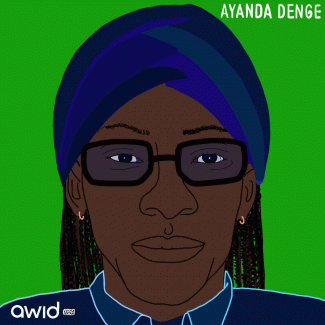
“I am a wonder… Therefore I have been born by a mother! As I begin to stutter, my life has been like no other…” - Ayanda Denge (read the whole poem below)
Ayanda Denge was a transwomxn, sex worker, activist, poet. She was Xhosa, from Port Elizabeth in the Eastern Cape of South Africa. After travelling through different cities of the country, she moved to Cape Town.
As a committed and fervent social justice activist, she fought for the rights of sex workers, trans persons, and for those of people living with HIV and AIDS. She was also a motivational speaker on cancer awareness, and campaigned for affordable and social housing, especially for poor and working-class people. Ayanda stood tall as a mountain against different and often abusive faces of discrimination.
“Being transgender is not a double dose, but it’s a triple dose of stigmatisation and discrimination. You are discriminated against for your sexual identity, you are discriminated against for your work, and you are discriminated against for your HIV status.” - Ayanda Denge, 2016
She was acting chairperson at the Sex Workers Education and Advocacy Taskforce (SWEAT) and also worked as an Outreach Coordinator at Sisonke, a national sex workers’ movement in South Africa.
“From us, from our regional head office, to SWEAT where I sit on the board, to Sisonke, a movement of sex workers in Cape Town. We all amalgamate, we have one cry and it’s a cry that is recognised internationally by international sex workers. We want decriminalisation of sex work.” - Ayanda Denge, 2016
She lived in the Ahmed Kathrada House, which was being occupied by the Reclaim the City campaign for social housing. In 2018, Ayanda was elected house leader. On 24 March 2019, she was stabbed to death in her room. The year prior, another resident was killed.
Reclaim the City draws a connection between the safety of the house residents and the Provincial Government withholding electricity and the human right to water:
“We cannot separate the safety of women and LGBTQI people living in the occupation from the refusal by the Western Cape Provincial Government to turn the electricity and water back on at Ahmed Kathrada House.
The house is pitch black at night. We need lights to keep each other safe. It is as if the Province wishes to punish poor and working class people, whose only crime is that we needed a home. While they may disagree with our reasons for occupying, they should be ashamed of themselves for putting politics before the safety and dignity of residents of this city.
Rest in Peace comrade Ayanda Denge, we shall remember you as we carry the torch forward in the struggle for decent well-located housing.”
Poem by Ayanda:
I am a wonder…
Therefore I have been born by a mother!
As I begin to stutter,
My life has been like no other.
Born in pain
Nourished by rain
For me to gain
Was living in a drain.
As I shed a tear
I stand up and hold my spear.
Voices echo, do not fear
Challenges within a year,
Challenges of hurt are on my case;
Community applauds as they assume I have won my race;
But in reality my work strides at a tortoise pace;
On bended knee I bow and ask for grace.
For the Lord
Is my Sword;
To remind humanity
That he provides sanity.
Why Lord am I this wonder?
The Lord answers me with the rain and thunder,
For questioning my father
Who has in the book of lambs
A name called Ayanda.
From the streets my life was never sweet
The people I had to meet;
At times I would never greet;
Even though I had to eat;
I’d opt to take a bow
Rather than a seat
“For my life represents that of a lotus flower, that out of murky and troubled waters I bloomed to be beautiful and strong...” - Ayanda Denge, watch and listen
Tributes:
“Ayanda, I want to say to you that you are still a survivor, in our hearts and minds. You are gone but you are everywhere, because you are love. How beautiful it is to be loved, and to give love. And Ayanda, that is the gift that you have given us. Thank you for all of the love, we truly did need you. Going forward, I promise to you that we will all commit to continue with the struggle that you have dedicated so much energy and your time to. And we will commit ourselves to pursuing justice in this awful ending to your life.” - Transcript of a message, in a farewell Tribute to Ayanda
“Ayanda was an activist by nature. She knew her rights and would not mind fighting for the rights of others. For me, it was no shock that she was involved with many organizations and it was known that she was a people’s person. It did not need to be the rights of LGBTI but just the rights of everyone that she stood for.” - Ayanda’s sister
الفرح للعالم: ستّة أسئلة مع نايكي ليدان
أجرت المقابلة تشينيلو أونوالو
ترجمة فيفيان عقيقي
نايكي ليدان، مدافعة عن العدالة الاجتماعية وناشطة نسوية ملتزمة، تتمتع بـ 20 عامٍ من الخبرة في مجال الدفاع عن حقوق الإنسان والعدالة الصحية وتمكين المرأة، والنضال من أجل الوصول الشامل إلى الخدمات الأساسية والإدماج الاجتماعي، فضلاً عن بناء قدرات المجتمع المدني. قامت بعمل مكثف في كندا وغرب وجنوب إفريقيا وهايتي في مجال الدفاع عن الحقوق المدنية، وبناء القدرات لمنظمات المجتمع المدني، مع التأكيد على المحددات الاجتماعية للإقصاء الهيكلي. إنها تقدر مبادئ القيادة المشتركة والمساحات المعادية للاستعمار والقمع والأبوية.
السؤال الأوّل: تُعَدّين ناشطة في قضايا حقوق العابرين/ات جنسياً؛ أشعر بالفضول لمعرفة كيف عبّدتِ مسيرتك.
نشأتُ في هايتي حتّى بلغت سنّ الثامنة عشرة، ثمّ عشتُ في مونتريال لمدّة 19 عاماً. في العام 2016 عدتُ إلى هايتي معتقدة أنني سوف أعود إلى الوطن، لكن المكان تغيّر، وكان عليّ التكيّف مجدّداً. لم أُعِدْ ربط الصلات مع العائلة وأصدقاء الطفولة بالطريقة التي كنت أتوقّعها. عدت كمُغتربة مع ظروف عمل مريحة، وبقيت أشعر أنني غريبة لفترة طويلة جداً. لكن في الوقت نفسه، شعرت أنني في وطني بسبب اللغة، وحتى الصمت المألوف، وعدم اضطراري إلى تبرير غنائي لشارة إعلان تجارية – تعلمين... تلك الأمور التي نتشاركها، تلك الطاقة، تلك المساحة، وتلك الروح.
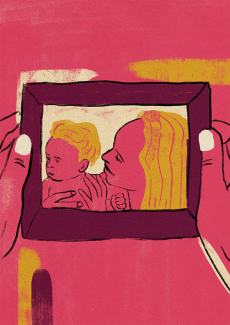
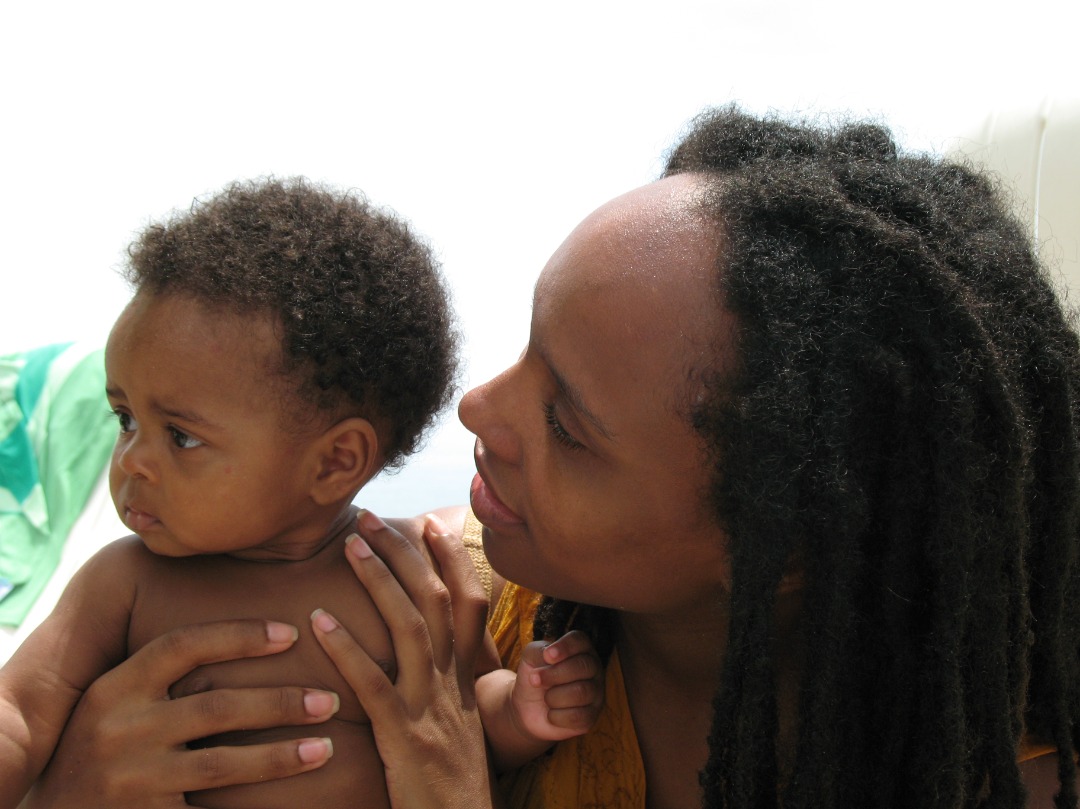
عودتي إلى حبّ الذات – أو ما أسمّيه "ولادة جديدة" – التي تتزامن مع ولادة طفلي الأوّل، وولادة نفسي، ووقوعي في حبّ حبيبتي الكويرية. (مصدر الصورة: نايكي ليدان)
ما ساعدني في ذلك هو حبّي للعمل في كافة أنحاء البلاد، وتوثيق معارف الناس. لذلك تركت مساحتى المريحة، وأصبحت مديرة قطرية لمنظّمة إقليمية كويرية. تركَّز معظم عملي على إيجاد الموارد وبناء قدرات المجتمع المدني. بنيتُ استراتيجيتي على الذهاب إلى الريف، والبحث عن كلّ المنظّمات الصغيرة، والمساعدة في بناء قدراتها وتمويلها. لم أكن مُهتمّة بالسياسيين وبمصافحتهم والتقاط الصور معهم <ضحكة>. كان لديّ حليف رائع: شارلوت جودي، الناشط الكويري الذي قُتِل قبل ثلاث سنوات في منزله. تقرّبنا كثيراً بعد حظر مهرجان أفلام أفرو كويرية في هايتي كنا نخطّط له. أحدث المهرجان ضجّة كبيرة، وأثار نقاشات عن الكويرية في كلّ مكان، لذلك قدّمني شارلوت إلى منظّمات المجتمع المدني الصغيرة، المُنتشرة في كلّ ركن من البلاد. كان عليّ أن أكون هناك لمساعدة المنظّمة (المنظّمات)، على التسجيل بشكل قانوني أو بناء خطّتها الاستراتيجية. جعلتني هذه الأعمال ناشطة كويرية، وبالتالي ناشطة في قضايا المتحوّلين/ات جنسياً. مع ذلك لا أسمّي نفسي ناشطة. إنّها كلمة ثقيلة كما تعلمين. لكنّها الصفة التي يناديك بها الناس. أعتقد أنني مجرّد عاشقة ومقاتلة <ضحكة>.
السؤال الأوّل: أخبريني عن ورشة العمل التي نظّمتها للمهرجان مع AWID. ما هو مضمونها وسياقها؟
وعيي الذاتي العميق خلال سنوات طفولتي، وانخراطي في البحث عن أسباب انعدام المساواة والظلم في سنّ مُبكرة جدّاً (في الرابعة من عمري تقريباً). (مصدر الصورة: نايكي ليدان))
ا تتحدّث وسائل الإعلام الدولية عن هايتي، لكن مع وجود بيئة سياسية سيّئة فإن البيئة الاقتصادية تكون أكثر كارثية. نظراً لانتمائي إلى الطبقة الوسطى في هايتي، وتحدّثي بلغات عدّة، وامتلاكي جوازات سفر مختلفة، تردّدت بدايةً في أخذ هذه المساحة. غالباً ما أرى نفسي كجسر، لا شخص يتحدّث عن نفسه. لذلك دعوت سيمي، شابّة لامعة متحوّلة جنسياً من خارج بورت أو برنس، لتأخذ المساحة وتتحدّث عن نفسها، وترشدنا إلى واقع النساء المتحوّلات في هايتي. انتهى بنا الأمر بعقد جلسة عن النسوية غير الشمولية – أو كما أسمّيها المساحات النسوية الرسمية – وكيف أن الفتيات المتحوّلات في هايتي لا يملكن مساحات للمساهمة في التعريف عن المرأة ومشاركة واقعها. من هنا، كان مهرجان AWID فرصة لي لإعطاء مساحة للنساء اللواتي يجب أن يحصلن على فرص. أمضينا وقتاً رائعاً؛ احتسينا النبيذ أثناء جلستنا عبر الإنترنت، وشاركتنا سيمي، التي ساعدتني في إدارة الجلسة، بما يعنيه أن تكوني طفلة/ فتاة/ امرأة متحوّلة في مراحل مختلفة من حياتها، وتحدّثت عن أخطار الشارع والفقر والإقصاء والفشل في ظهورها كامرأة بعد التحوّل، وأيضاً عن انتصاراتها.
السؤال الأوّل: ما علاقة النساء المتحوّلات بالمنظّمات النسوية في هايتي؟ كيف كانت تجربتك في هذا السياق؟
لقد كانت تجربة النساء المتحوّلات صعبة، وفي الواقع مفجعة. من عدم الاعتراف بوجودهن إلى التعامل معهنّ بأسلوب جنسي مُتطرّف، فضلاً عن تعرّضهن للقتل من دون حتّى الإعلان عن هذه الحالات في الإعلام. وهو ما يعبّر عن مدى عدم الاعتراف بوجودهن، وعن كيفيّة محوهن. إنهنّ موجودات في كلّ مكان، لكن ليس في أماكن العمل، ولا في البيئات النسوية، ولا في بيئات المؤسّساتية. ولا حتّى في منظّمات مجتمع الميم. في الآونة الأخيرة فقط، ونتيجة حملات المناصرة، صحّحت بعض المنظّمات نوعاً ما هذه الوضعيّة. لكن لا يزال الأمر غير وارد في المساحات النسوية. ما زلنا مضطرّات للتعامل مع الخطاب الإقصائي القديم بـ»إنهنّ لسنا نساء. بالطبع، إذا نجحن في الظهور كنساء بعد عمليّات التحوّل...». إن ثقافة الفشل أو النجاح في التحوّل ليست إلّا محادثة عن إدارة المخاطر – إلى أي درجة ينجح التحوّل، وما الذي يعنيه لجسمكِ، والعنف الذي يلحق به. في الواقع الإقصائي للمتحوّلين/ات الذي نعيش فيه، ويُعاد إنتاجه في الكثير من المساحات النسوية، قد تُعتبر فتيات، وإلى حدّ معيّن، أولئلك اللواتي ينجحن في الظهور بما يتوافق مع الجنس الذي تحوّلن إليه. لكن ماذا عن الوقوع في الحبّ، وإجراء محادثة، وإخفاء الهوية الجنسية، والرغبة في الحصول على مظهر معيّن، أو مهنة معيّنة؟ في الحقيقة، أصبح العلاج بالهرمونات حديثاً عن الحدّ من المخاطر كما عبّرت سيمي في ورشة العمل. لكن ليس لدينا خيار العلاج الهرموني، ولا الإطار الطبي أو النظام لدعم أولئك الذين يرغبون في متابعته.
السؤال الأوّل: عندما تتحدّثين عن الطريقة التي يُنظر بها إلى الأشخاص المتحوّلين/ا جنسياً والكويريين/ات في المجتمع، يبدو أنها مشابهة لنظرة المجتمع في نيجيريا، حيث يبرز رهاب المثلية بعمق.
هايتي بلد مُعقّد للغاية وبطريقة جميلة جداً. لا يوجد شيء بسيط، كما تعلمين، لا يوجد شيء يُمكن القيام به بطريقة واحدة فقط. الهايتيون متسامحون للغاية – لكنّهم وفي الوقت نفسه يعانون من رهاب المثلية. سوف تجد مناطق في الريف، لا يعاني المقيمون فيها من رهاب المثلية على الإطلاق نظراً لوجود معابد فودو فيها، وهذه ديانة تحترم الحياة. أحد المبادئ الأساسية لديانة فودو هو عدم وجود ما هو صحيح أو خطأ. لفترة طويلة، كان الناس يعتقدون أن هايتي ملاذ ومكان حيث يعيش أناس متسامحون – نحن نتحدّث عن السبعينيات والثمانينيات وقبل انتشار فيروس نقص المناعة البشريّة، وحتّى التسعينيات. من ثمّ وقع زلزال العام 2010 وقتل نحو 300 ألف شخص، وبعدها تدفّقت كلّ هذه الأموال من جنوب الولايات المتّحدة عبر الإنجيليين لإعادة بناء البلاد والعثور على يسوع. لذلك، يُعدّ رهاب المثلية حديث النشأة في هايتي. في العمق، في روحية الثقافة، لا أستطيع القول إنّ هايتي معادية للمثليين. لكن في الحياة اليومية، من المؤكّد أن هناك عنفاً يقع على المثليين، وكذلك على النساء، والنساء الفقيرات، والنساء داكنات البشرة أيضاً، خصوصاً أنّ التمييز العرقيّ بارز جداً في منطقة الكاريبي.
السؤال الأوّل: كيف تمكّنت من إدارة الأمر؟ ما كانت استراتيجيّتك
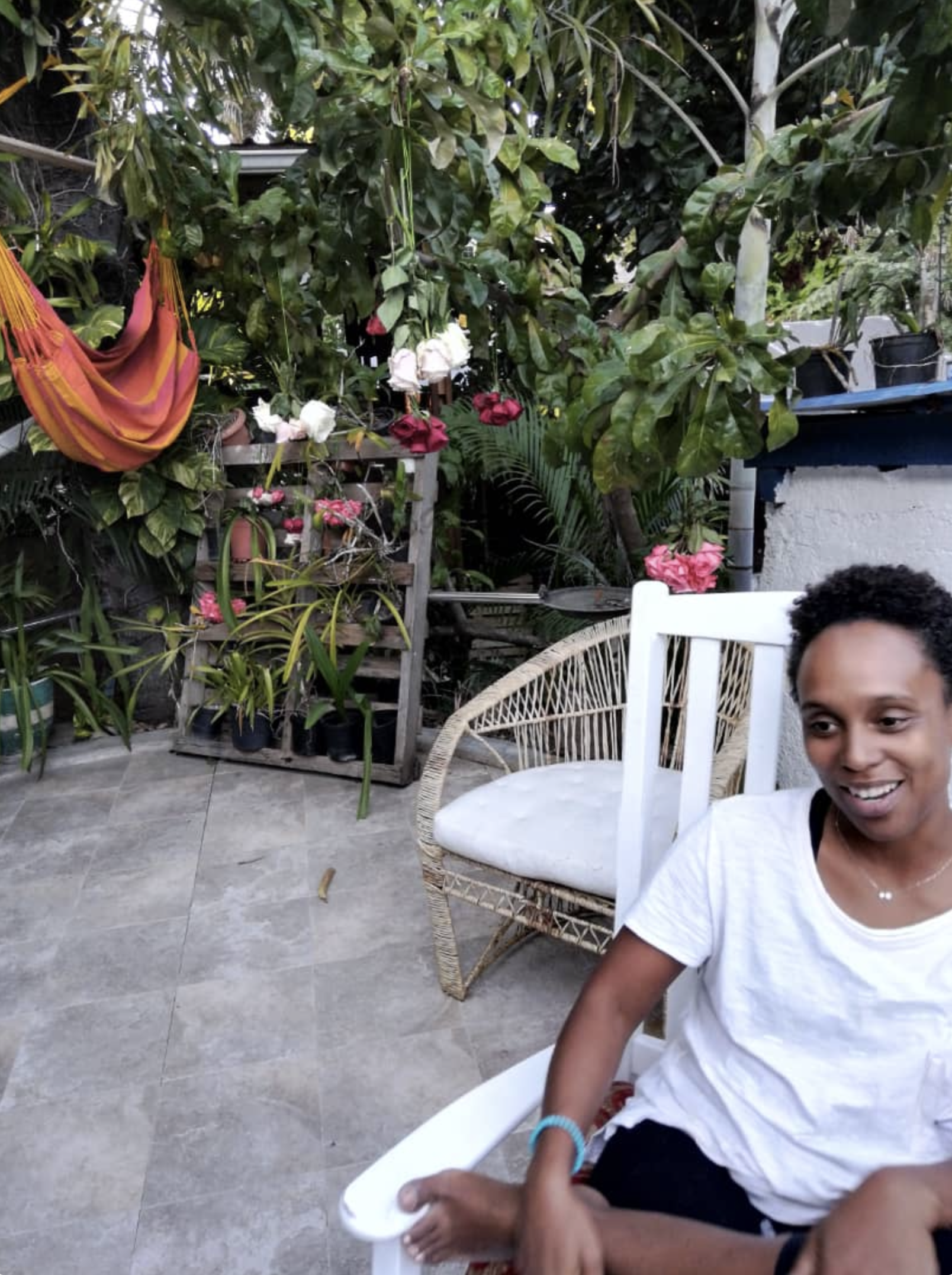
عودتي إلى هايتي كان جزءاً من مساري الهادف نحو التخلّص من الاستعمار، وكان محاولةً منّي لموضعة حواسي وحواس عائلتي ضمن فضاءٍ يحتوي قصص التمرّد على المعيارية وعلى واقع العنصرية ضد السود. (مصدر الصورة: نايكي ليدان)
أنا أحبّ عملي حقّاً. أحبّ العمل بشكل عام. عندما وصلت، عملت بداية مع تلك المنظّمة غير الحكومية الرهيبة لكنني قمت بعمل رائع. كنت موجودة دائماً في الريف، وأتحدّث وأتعلّم من الناس والنساء. وهو ما أسعدَ قلبي لفترة طويلة لأنني أحبّ ثقافتي بشدّة، وأحبّ الأشخاص السود، والنساء السود – النساء السود المُسنّات، والأطفال السود. يملأني الأمر بروحانية. عندما كنّا في كندا، ارتاد أطفالي مدارس البيض المرموقة. لم يتحدّثوا بلغة شعب الكريول ولا الفرنسية. أمّا الآن فإنّهم يركضون بحرّية في حديقة المنزل، ويتقاتلون بلغة الكريول. أيضاً وجدت مع الأشخاص الذين قابلتهم محاور للبقاء. خلقت روابط مع الكويريين/ات وغيرهم من غريبي الأطوار مثلي. كان الأمر رائعاً حقاً. لكنّي أعاني الآن. لم أعد أشعر بالأمان في هايتي. أسبوعياً تُسجّل نحو 40 عملية خطف في بورت أو برنس – وهو وضع مستمرّ منذ العام 2018. أصبت بنوبات من القلق والذعر. لقد حان وقت الذهاب، فيما أسأل نفسي: «أين هو الوطن؟». قضيت 19 عاماً في مونتريال لكنّني لم أشعر مطلقاً بأنني في وطني. عندما غادرت، لم أفتقدها أبداً، لذلك لا أريد العودة إليها. أيضاً بكيت كثيراً مؤخّراً كوني أشعر بأنني دخلت إلى منفى ثاني.
السؤال الأوّل: كيف هي علاقتك مع المتعة والترفيه والراحة؟
علاقتي مع المتعة والترفيه والراحة مماثلة وواحدة. إنها لحظة أعيشها عندما أدلّل نفسي بحرارة الشمس على وجهي على سبيل المثال. هي المتعة والترفيه والراحة في الوقت نفسه.
المتعة: مساحتى المُفضّلة، ملاذ للاحتفال بنفسي، حيث أحفظ لنفسي القوّة والحقّ في أن أكون هادئة أو صاخبة خلال لحظات المتعة التي أختبرها. أنغمس بكلّ لحظة متعة، بما في ذلك، متعة الوحدة والصمت.
الترفيه: ركوب الدرّاجة، والمهرجانات الموسيقية، والأكل، وتذوّق النبيذ، المشاركة في رقصات الفودو الهايتية التقليدية. كلّها من ضمن الأنشطة العديدة التي أشارك فيها حالياً.
الراحة: هو ما أعيش من أجله. بما أنني شخص متفوّق وأحبّ العمل، فمن المفارقة أن أكون كسولة أيضاً. لا أحد يعلم بالأمر، لأن ما يرونه هو أنني أعمل بجدّ وبأكثر من طاقتي. إنهم لا يعرفون كيف يمكنني الانغماس في الكسل بشكل عميق وبلا تردّد.
ExploreTransnational Embodiments
This journal edition in partnership with Kohl: a Journal for Body and Gender Research, will explore feminist solutions, proposals and realities for transforming our current world, our bodies and our sexualities.
نصدر النسخة هذه من المجلة بالشراكة مع «كحل: مجلة لأبحاث الجسد والجندر»، وسنستكشف عبرها الحلول والاقتراحات وأنواع الواقع النسوية لتغيير عالمنا الحالي وكذلك أجسادنا وجنسانياتنا.