Over the past few years, a troubling new trend at the international human rights level is being observed, where discourses on ‘protecting the family’ are being employed to defend violations committed against family members, to bolster and justify impunity, and to restrict equal rights within and to family life.
The campaign to "Protect the Family" is driven by ultra-conservative efforts to impose "traditional" and patriarchal interpretations of the family, and to move rights out of the hands of family members and into the institution of ‘the family’.
“Protection of the Family” efforts stem from:
rising traditionalism,
rising cultural, social and religious conservatism and
sentiment hostile to women’s human rights, sexual rights, child rights and the rights of persons with non-normative gender identities and sexual orientations.
Since 2014, a group of states have been operating as a bloc in human rights spaces under the name “Group of Friends of the Family”, and resolutions on “Protection of the Family” have been successfully passed every year since 2014.
This agenda has spread beyond the Human Rights Council. We have seen regressive language on “the family” being introduced at the Commission on the Status of Women, and attempts made to introduce it in negotiations on the Sustainable Development Goals.
Our Approach
AWID works with partners and allies to jointly resist “Protection of the Family” and other regressive agendas, and to uphold the universality of human rights.
In response to the increased influence of regressive actors in human rights spaces, AWID joined allies to form the Observatory on the Universality of Rights (OURs). OURs is a collaborative project that monitors, analyzes, and shares information on anti-rights initiatives like “Protection of the Family”.
Rights at Risk, the first OURs report, charts a map of the actors making up the global anti-rights lobby, identifies their key discourses and strategies, and the effect they are having on our human rights.
The report outlines “Protection of the Family” as an agenda that has fostered collaboration across a broad range of regressive actors at the UN. It describes it as: “a strategic framework that houses “multiple patriarchal and anti-rights positions, where the framework, in turn, aims to justify and institutionalize these positions.”
Related Content
¿Cómo se originó este proyecto?
Pensamos que la economía, el mercado, el sistema financiero y las premisas sobre las que se basan son todas áreas fundamentales para la lucha feminista.
Por eso, nuestra visión de una economía justa va más allá de promover los derechos y el empoderamiento de las mujeres en una economía de mercado, sino que busca evaluar el rol que juegan las opresiones de género en dar forma al modelo económico y ver como podemos transformarlo para garantizar la justicia de género y económica.
El proceso
No estamos comenzando de cero ni estamos solas en nuestro intento de presentar propuestas feministas para una economía justa. Muchas de nuestras propuestas ya han sido presentadas o existen en la práctica de las diversas comunidades que confrontan y desafían a los sistemas económicos dominantes basados en el mercado y el crecimiento.
También somos concientes de las limitaciones que algunas alternativas presentan para abordar las injusticias del actual sistema capitalista a escala global. No siempre las propuestas a nivel micro son la respuesta a los problemas macro, si bien representan espacios importantes de resistencia y construcción de movimientos.
Metas
Sin embargo, las alternativas feministas para una economía justa son fundamentales para socavar el sistema y para aprender a generar cambios transformadores y sistémicos. No podemos presumir de ofrecer un relato exhaustivo ni completo acerca de cómo crear un modelo económico feminista justo, o varios modelos de esa clase. Lo que sí podemos hacer es recoger elementos de diálogos con otros movimientos (sindicales, ambientales, rurales y de campesinxs) para formular propuestas que nos permitan acercanos a esa visión.
¿Qué queremos cambiar?
El modelo neoliberal que dirige la economía global ha demostrado una y otra vez su incapacidad para hacer frente a las causas estructurales de la pobreza, las desigualdades y la exclusión. Lo que en realidad ha hecho el neoliberalismo ha sido contribuir a crear y exacerbar esas injusticias.
En estas últimas tres décadas, las políticas dominantes para el desarrollo se han caracterizado por la globalización, liberalización, privatizaciones, financialización y ayudas condicionadas, y han destrozado los medios de vida de la población. El recorrido de estas políticas también ha estado marcado por la profundización de desigualdades, las injusticias con marca de género y la destrucción ambiental que el mundo ya no puede continuar soportando.
Hay quienes no dudan en sostener que el crecimiento económico, que debe ser facilitado dando plena libertad a las grandes corporaciones y empresas, puede generar y sostener una una marea alta que (con el tiempo) levante todos los barcos.
Sin embargo, la noción de desarrollo que ha prevalecido durante las últimas décadas, construida sobre la premisa de un crecimiento económico ilimitado, está atravesando una crisis ideológica.
El mito del crecimiento económico como panacea para todos nuestros problemas está perdiendo cada vez más prestigio.
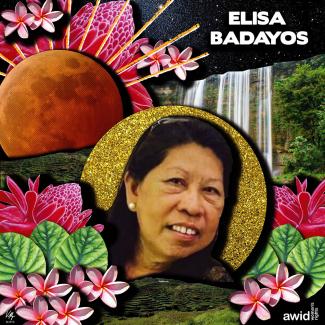
Elisa era coordinadora de la organización de derechos humanos Karapatan, en la Provincia de Negros Oriental de Filipinas.
También era organizadora de comunidades urbanas empobrecidas de la Provincia de Cebú, y trabajaba con Desaparecidos, una organización de familiares de personas desaparecidas.
Elisa y dos de sus colegas fueron asesinadxs el 28 de noviembre de 2017 por dos hombres no identificados en Barangay San Ramón, en la ciudad de Bayawan de la Provincia de Negros Oriental, durante una misión que investigaba presuntas violaciones de derechos territoriales en la zona.
L'une des dirigeantes fondatrices de la coopérative était Lohana Berkins, une militante, défenseuse et promotrice de l'identité trans. Lohana a joué un rôle crucial dans la lutte pour les droits des personnes trans et travestis.
Grâce à sa lutte, entre autres choses, l'approbation de la loi sur l'identité de genre a été obtenue. C'est l'une des lois les plus progressistes au monde, garantissant les droits fondamentaux des personnes trans et des travestis. Désormais, les personnes peuvent changer de nom et de sexe avec un affidavit et ont accès à des soins de santé complets sans intervention/approbation judiciaire ou médicale (Outright International, 2012).
La recherche de moyens alternatifs de production alimentaire fondés sur la durabilité environnementale gagne du terrain dans toutes les régions du monde. Cette quête mondiale présente une caractéristique centrale : la nécessité de mobiliser les populations rurales, en particulier les femmes, tenant compte de leurs priorités et de leurs connaissances locales par le truchement de l’agroécologie.
Définition
L’agroécologie est une façon de pratiquer l'agriculture ou de faire appel aux technologies qui ne nuit pas à l'environnement. Cette approche propose de rompre avec le modèle de développement rural hégémonique reposant sur les grandes exploitations et la monoculture qui profitent essentiellement aux entreprises agricoles et renforcent l'exclusion sociale.
Dans le contexte de l'agriculture familiale, l'agroécologie représente une forme de résistance au modèle de développement actuel et aux problèmes sociaux, culturels, environnementaux et économiques que ce modèle implique. L’agroécologie se pose en alternative face au manque d'autonomie financière des agriculteur-trice-s et symbolise une résistance face au modèle d'agroentreprises actuel.
Perspective féministe
Il se pourrait que les efforts uniquement axés sur l'agroécologie ne suffisent pas à résoudre tous les problèmes de la marginalisation et de l'invisibilité des femmes. Il est alors crucial d’adopter une perspective féministe afin d'analyser les normes associées à la notion de famille telle qu'actuellement constituée en tant qu'institution parfaite, ainsi que les normes relatives à la condition de subordination des femmes.
Plus simplement, il importe d'inclure une réflexion sur les rôles de genre socialement construits pour faire avancer le potentiel émancipateur de l'agroécologie dans ce débat.
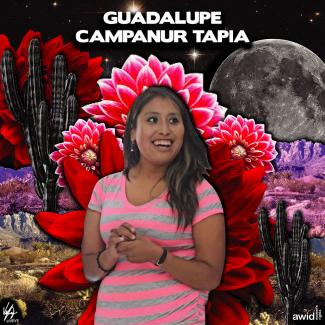
Guadalupe était une activiste environnementale impliquée dans la lutte contre le crime à Cherán, au Mexique.
En 2011, Guadalupe a aidé à renverser le gouvernement local. Elle participait à des patrouilles de sécurité locale, notamment dans les forêts municipales et faisait partie des dirigeant-e-s autochtones de Cherán qui ont appelé les gens à défendre leurs forêts contre l’abattage implacable et illégal. Son travail pour les aînés, les enfants, les travailleurs-euses a fait d'elle une icône dans sa communauté.
Elle a été assassinée à Chilchota, au Mexique, à environ 30 kilomètres au nord de Cherán, sa ville natale.
Body
Snippet FEA Bauen Hotel (EN)
Only a year after it was founded, the members of Nadia Echazú started to work in haute couture and organized a fashion show in the historic Bauen Hotel.
They showcased five models and some workers of the textile cooperative walked down the runway with their own designs.
This was revolutionary not only because they were designing alternatives to mainstream fashion, but also because they were creating accessible, inclusive clothes for all trans and travesti bodies.
Feminist economies should also be about feeling amazing and comfortable in the clothes we are wearing.
Les Etats membres et les défenseur-e-s et organisations des droits des femmes se réuniront au siège des Nations Unies à New York du 13 au 24 mars pour la 61ème édtion de la Commission de la condition de la femme, afin d’aborder le thème de l’« autonomisation économique des femmes » dans le cadre de l'objectif 5 pour le développement durable.
Alors que nous avons hâte de retrouver quelques un-e-s d'entre vous à New-York, nous souhaitons aussi impliquer celles et ceux qui ne peuvent pas être présent-e-s à la CSW et être votre porte-voix dans les espaces pertinents.
Poursuivez votre lecture pour savoir comment participer à la CSW aux côtés de l’AWID, que vous soyez sur place ou non.
Participez à une prise de contrôle artistique !
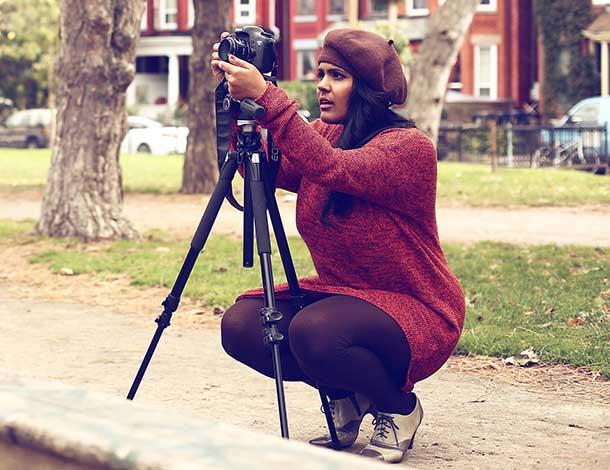
C'es un plaisir pour nous que Nayani Thiyagarajah, membre de l’AWID, assistera à la CSW cette année et qu’elle sera en charge du compte Instagram de l’AWID.
Là-bas, elle sera disponible pour rencontrer d’autres membres qui pourront éventuellement figurer sur notre Instagram. Elle explorera par ailleurs les possibilités d’inclure certain-e-s membres de l’AWID dans un court-métrage sur le thème ‘le privé est politique’, qui retracera l’histoire de la participation de Nayani à la CSW de cette année.
Nayani Thiyagarajah
Qui est Nayani?
Nayani Thiyagarajah est une directrice, productrice et écrivaine qui se consacre à porter des histoires à l’écran. Fille de la diaspora tamoule, elle appelle désormais Toronto sa ville. Pendant plus de 10 ans, Nayani a travaillé dans l’industrie des arts et de la culture. Son premier long-métrage documentaire indépendant, Shadeism: Digging Deeper (2015), fut présenté en première au Festival international du film de Zanzibar, où il obtint le Prix spécial du jury. Avec son partenaire de production Camaro West, Nayani a récemment lancé [RE]FRAME, une compagnie de production basée à Atlanta et à Toronto qui s’attache à reformuler les récits concernant les noir-e-s, les autochtones et d’autres personnes de couleur à travers des narrations portées à l’écran.
Plus sérieusement, il convient de mentionner que Nayani a un rire étrange, qu’elle est assez maladroite et qu’elle a toujours la tête dans les nuages. Pour elle, c’est une chance incroyable d’inventer des histoires pour l’écran et de s’amuser à faire croire, et de pouvoir en vivre. Elle croit en l’amour par-dessus tout.
Vous avez envie de rencontrer Nayani et d’être pris-e en compte pour figurer dans son film ?
Envoyez un e-mail à membership@awid.org en précisant dans la ligne d’objet « CSW: Prise de contrôle artistique »
Avant le 13 mars 2017
Merci d’inclure votre nom complet et votre lieu de résidence.
Vous ne pouvez pas assister à la CSW ? Exprimez-le !
Si vous êtes dans l’incapacité d’assister à la CSW61 en raison d’une interdiction de voyager, qu’elle ait été imposée par l’administration Trump ou par votre propre gouvernement, n’hésitez pas à nous faire part de votre histoire.
Envoyez-nous les messages que vous voulez voir diffusés dans les espaces des Nations Unies autour du financement, de l’impact du rétablissement de la règle du bâillon mondiale (Global Gag Rule) et de la nécessité de rejeter les fondamentalismes religieux. Vous pouvez adresser vos messages sous les formats suivants :
vidéo : elle ne devra pas durer plus de deux minutes et devra être envoyée via un partage de fichier en ligne (par exemple dropbox, google drive)
audio : il ne durera pas plus de deux minutes et sera envoyé via un partage de fichier en ligne (par exemple dropbox, google drive)
image : vous pouvez partager une photo ou une affiche de votre message
texte : il ne pourra pas faire plus de 200 mots et devra être intégré dans le corps d’un e-mail ou dans un document word
Envoyez-nous votre message !
Envoyez un e-mail à membership@awid.org, en précisant en ligne d’objet « CSW: Exprimez-le ! »
Avant le 15 mars 2017
Rencontrez d’autres membres à la CSW61
Les membres de l’AWID nous disent combien les rencontres qui se font entre membres à la CSW sont précieuses. Dans un lieu de plaidoyer tellement immense, il est utile de rencontrer et d’échanger avec les autres, y compris avec des activistes travaillant sur des questions semblables, ou venant du même pays ou de la même région. Nous reconnaissons que les rencontres sont fondamentales dans la construction des mouvements.
Vous souhaitez être mis-e-s en contact avec d’autres membres à la CSW61 ?
Envoyez un e-mail à membership@awid.org, en précisant en ligne d’objet « CSW: Membres de l’AWID »
NOTE : Veuillez nous transmettre vos coordonnées complètes (nom, pays) et nous indiquer si vous nous autorisez à communiquer votre adresse mail aux autres membres qui souhaiteraient entrer en contact à la CSW.
Prenez une photo !
Si vous participez à la CSW, partagez-nous ce que vous y voyez ! Montrez-le nous en capturant un instant qui reflète l'energie de l'espace de la CSW, que ce soit lors d'une conférence ou en dehors. Nous avons l'intention de publier vos images usr nos réseaux sociaux et de les partager sur notre site.
Vous pouvez nous envoyer :
des photographies en couleur ou en noir & blanc
avec leur titre (si vous souhaitez)
et une légende (pas plus de 100 mots) qui raconter l'histoire de votre photo.
Veuillez aussi inclure :
votre nom complet et votre pays d'origine
faites-nous aussi savoir si vous nous autorisez à partager tout ou partie de ces informations
Partagez vos images !
Envoyez un e-mail à membership@awid.org en précisant en ligne d’objet « CSW: Prenez une photo ! »
Pendant toute la CSW ou rapidement après, jusqu'au jeudi 28 mars 2017.
Snippet - WITM Why now_col 2 - RU
Обеспечение ресурсами феминистских движений имеет основополагающее значение для обеспечения более справедливого и мирного настоящего и свободного будущего.
В солидарности с движениями, которые по-прежнему остаются невидимыми, маргинализированными и не имеют доступа к основному, долгосрочному, гибкому и основанному на доверии финансированию, данный опрос освещает фактическое состояние ресурсного обеспечения, выявляет ошибочные решения и указывает на то, как необходимо изменить модели финансирования, чтобы движения процветали и решали сложные задачи современного мира.
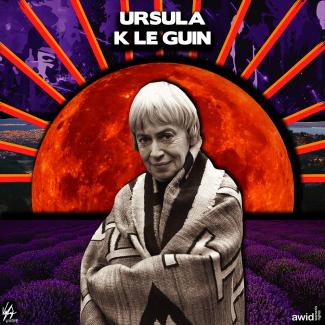
Ursula was an American novelist who worked mainly in the genres of fantasy and science fiction.
She found fame with The Left Hand Of Darkness, which imagines a future society where people are ambisexual – they have no fixed sex. It explores the effects of gender and sex in society, and was one of the first major feminist science fiction books. Ursula was inspiring in her subversive and original writing, and also for the themes of feminism and freedom she held so dearly.
In a 1983 address at Mills College in California, she told graduates: “Why should a free woman with a college education either fight Macho-man or serve him? Why should she live her life on his terms? I hope you live without the need to dominate, and without the need to be dominated.”
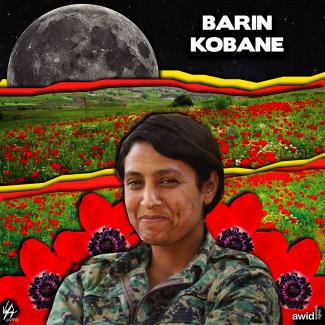
Barin integraba la unidad de batalla formada íntegramente por mujeres de la Unidad de Protección del Pueblo Kurdo (YPG).
La mataron cuando estaba en servicio activo.
La periodista libanesa Hifaa Zuaiter escribió: «Barin representa todo lo que hemos oído acerca del coraje de las combatientes kurdas, y su muerte es mucho más que el matar a un rival o el resultado de una lucha política o étnica. El horror de exhibir su cuerpo sólo porque es una mujer surge del hecho de que ella se atrevió a amenazar la hegemonía masculina al convertirse en una combatiente en un campo de batalla que se suponía era solo para hombres».






 За последнее десятилетие спонсоры выделили значительно больше средств на обеспечение гендерного равенства, однако лишь