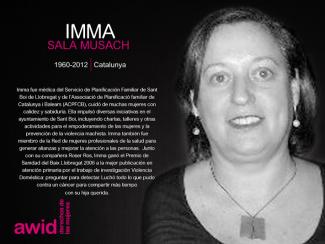
Imma Sala
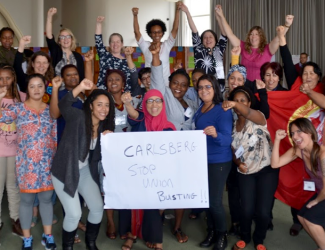
Women human rights defenders (WHRDs) worldwide defend their lands, livelihoods and communities from extractive industries and corporate power. They stand against powerful economic and political interests driving land theft, displacement of communities, loss of livelihoods, and environmental degradation.
Extractivism is an economic and political model of development that commodifies nature and prioritizes profit over human rights and the environment. Rooted in colonial history, it reinforces social and economic inequalities locally and globally. Often, Black, rural and Indigenous women are the most affected by extractivism, and are largely excluded from decision-making. Defying these patriarchal and neo-colonial forces, women rise in defense of rights, lands, people and nature.
WHRDs confronting extractive industries experience a range of risks, threats and violations, including criminalization, stigmatization, violence and intimidation. Their stories reveal a strong aspect of gendered and sexualized violence. Perpetrators include state and local authorities, corporations, police, military, paramilitary and private security forces, and at times their own communities.
AWID and the Women Human Rights Defenders International Coalition (WHRD-IC) are pleased to announce “Women Human Rights Defenders Confronting Extractivism and Corporate Power”; a cross-regional research project documenting the lived experiences of WHRDs from Asia, Africa and Latin America.
"Women Human Rights Defenders confronting extractive industries: an overview of critical risks and Human Rights obligations" is a policy report with a gender perspective. It analyses forms of violations and types of perpetrators, quotes relevant human rights obligations and includes policy recommendations to states, corporations, civil society and donors.
"Weaving resistance through action: Strategies of Women Human Rights Defenders confronting extractive industries" is a practical guide outlining creative and deliberate forms of action, successful tactics and inspiring stories of resistance.
The video “Defending people and planet: Women confronting extractive industries” puts courageous WHRDs from Africa, Asia, and Latin America in the spotlight. They share their struggles for land and life, and speak to the risks and challenges they face in their activism.
Challenging corporate power: Struggles for women’s rights, economic and gender justice is a research paper outlining the impacts of corporate power and offering insights into strategies of resistance.
AWID acknowledges with gratitude the invaluable input of every Woman Human Rights Defender who participated in this project. This project was made possible thanks to your willingness to generously and openly share your experiences and learnings. Your courage, creativity and resilience is an inspiration for us all. Thank you!
 |
Asamblea Placentera: Tejiendo Proyectos Feministas ColaborativosGhiwa Sayegh, Kohl: A Journal for Body and Gender Research De brujeria, chamanismo y otros conocimientos insurrectos contra el patriarcadoSofía Blanco Sixtos, Colectiva Feminista MAPAS |
Related content
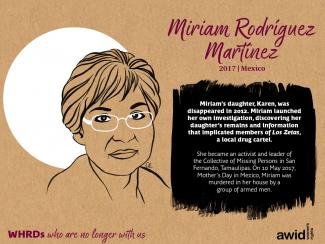
The Guardian: Mexican woman who uncovered cartel murder of daughter shot dead
The Economist: Obituary: Miriam Rodríguez Martínez died on May 10th
New York Times: Gunmen Kill Mexican Activist for Parents of Missing Children
United Nations Human Rights Office of the High Commissioner: Mexico: UN rights experts strongly condemn killing of human rights defender and call for effective measures to tackle impunity

Notre rapport annuel 2013 retrace les temps forts du travail que nous avons réalisé au cours de l'année, afin de contribuer à l'avancement des droits des femmes et de l'égalité des genres à travers le monde.
ندعوك للتواصل معنا بشأن طرق المشاركة الهادفة في المنتدى.
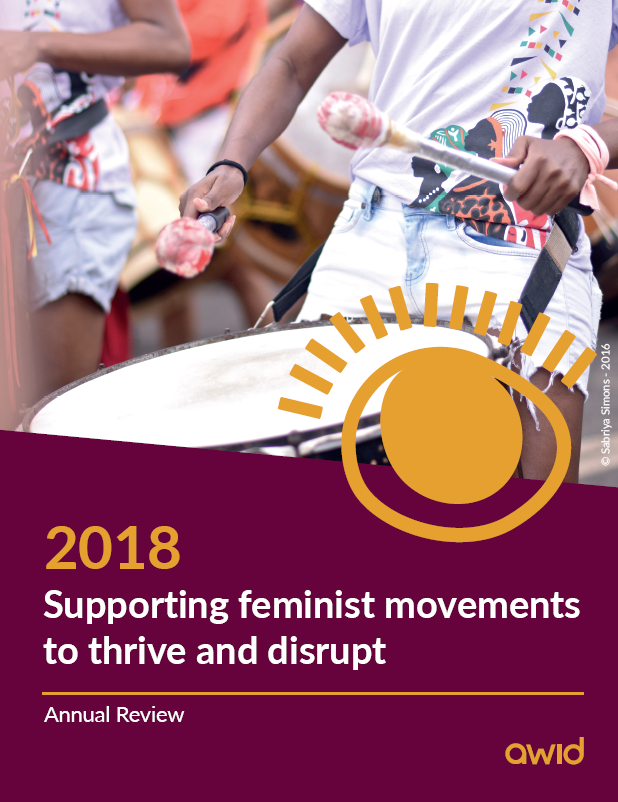
This report looks back and celebrates the first year of AWID’s new strategic plan as we took our first steps towards our desired outcomes of supporting feminist movements to thrive, challenging anti-rights agendas and co-creating feminist realities.
We worked with feminists to disrupt anti-rights agendas, achieving important victories fought and won within the United Nations system when ground-breaking language on structural discrimination, sexual rights, and states’ obligations were included in a number of resolutions. Yes, the multilateral system is in crisis and in need of serious strengthening but these victories are important as they contribute to the legitimacy of feminist demands, providing feminist movements with more pressure points and momentum to advance our agendas.
We tried and tested different ways to build knowledge with feminist movements through webinars, podcasts and ‘live’ conversations. We developed facilitation guides with popular educators to reclaim knowledge in the interest of social and gender justice, even about a topic as seemingly opaque as illicit funding flows. We commissioned blogs and opinions about how feminist groups fund and resource themselves and threw light on the threats facing our human rights systems.
Within AWID, we practiced and learned from our shared leadership approach, and told the story of the trials and tribulations of co-leading a global, virtual organization. We don’t have a definitive answer to what feminist leadership looks like, but we know, a year on, that a continued commitment to collective experimentation and learning has enabled us to keep building an organization that we are all excited to contribute to.
As we look back on this year, we want to thank all our friends and supporters, colleagues and companions, who have given their time and shared their wealth of knowledge and wisdom with us. We want to thank our members who helped frame our strategic plan and joined us to make feminist demands. We could not do this work without you.
سيقدم صندوق الوصول الخاص بنا عددًا محدودًا من المنح الدراسية لتمويل مشاركة النشطاء/ الناشطات الذين/ اللواتي لا يستطيعون القيام بذلك، وليس لديهم/ن علاقات مع الممولين/ات الذين/ اللواتي يمكنهم/ن تغطية مشاركتهم/ن. لذلك إذا كان لديك احتمالات أخرى، يرجى استكشافها. سنبذل قصارى جهدنا لتقديم أكبر عدد ممكن من المنح الدراسية، وسنشارك المزيد من المعلومات حول هذه العملية وكيفية التقديم لاحقًا في أوائل العام 2024.
.
Our strategic plan “Feminist Realities” completed its final year at the end of 2022. For the past five years, this bold framework pushed us to go beyond feminist futures and to recognize the feminist solutions and ways of life that already exist in the here and now. Realities that must be uplifted, celebrated, and popularized. The Feminist Economies We Love multimedia story project and Our:Resource knowledge hub on autonomous ways to resource feminist activism are just two examples of this visionary work, always deeply collective with diverse feminist movements.
Download the full 2022 Annual review
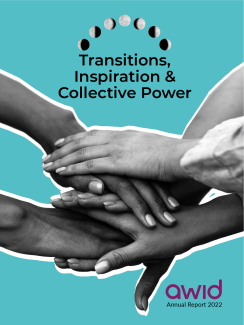
With this reflection on the year, we invite you to celebrate with us beautiful closures and promising beginnings. Change and transitions are an inseparable part of life and movements, which we seek to embrace with intention and care.
نعم من فضلك. لقد تغير العالم منذ عام 2021 ونحن ندعوك لتقديم مقترح يعكس واقعك وأولوياتك الحالية.
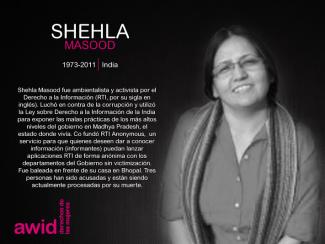
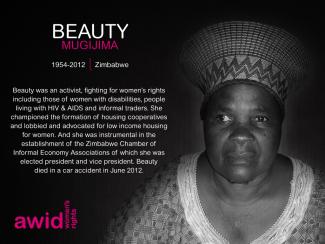
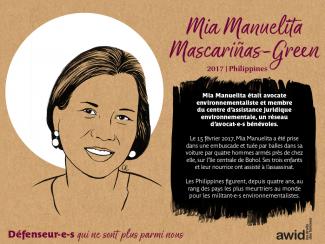
AWID honors feminists and Women Human Rights Defenders (WHRDs) who have died and whose contributions to the advancement of human rights are very much missed.
AWID’s WHRD Tribute is a photo exhibition featuring feminist, women’s rights and social justice activists from around the world who are no longer with us.
The Tribute was first launched in 2012, at AWID’s 12th International Forum, in Turkey. It took shape with a physical exhibit of portraits and biographies of feminists and activists who passed away. The initiative was described by Forum participants as being a unique, moving and energizing way to commemorate our collective history.
At the 13th International Forum in Brazil, we honored activists and WHRDs with a mural unveiling ceremony in four languages, a dance performance and a Brazilian ritual.
In between the events, the Tribute lives as an online gallery that is updated every year as part of the 16 Days Campaign Against Gender Based Violence (25 November – 10 December).
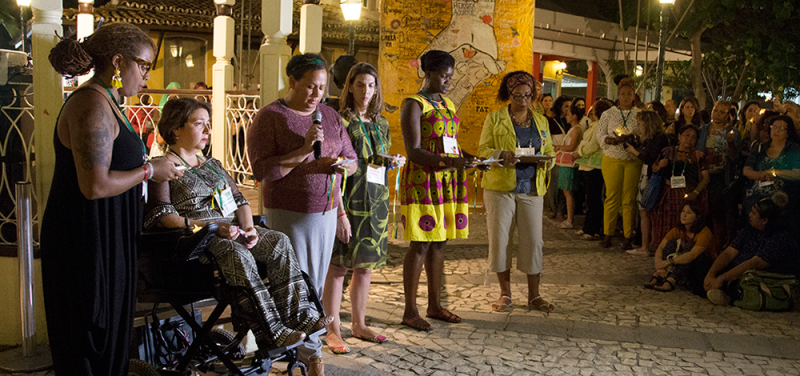
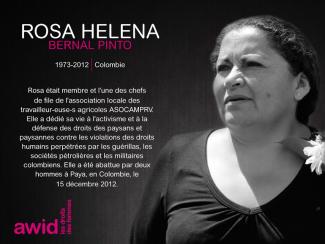
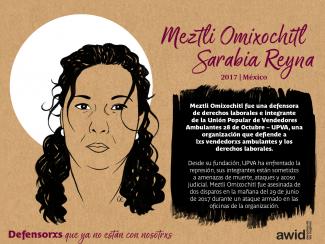
Since 2012, through our annual Tribute to Women Human Rights Defenders (WHRDs) no longer with us, over 400 feminists and WHRDs from 11 regions and 80 countries have been featured.
AWID would like to thank the families and organizations who shared their personal stories and contributed to this memorial. We join them in continuing the remarkable work of these women and forging efforts to ensure justice is achieved in cases that remain in impunity.
Visit the WHRD Tribute online exhibit
In addition to paying homage to these incredible activists, the Tribute particularly sheds light on the plight of WHRDs who have been assassinated or disappeared.
One third of those featured in the Tribute were activists who have been murdered or disappeared in suspicious circumstances. They were specifically targeted for who they were and the work they did to challenge:
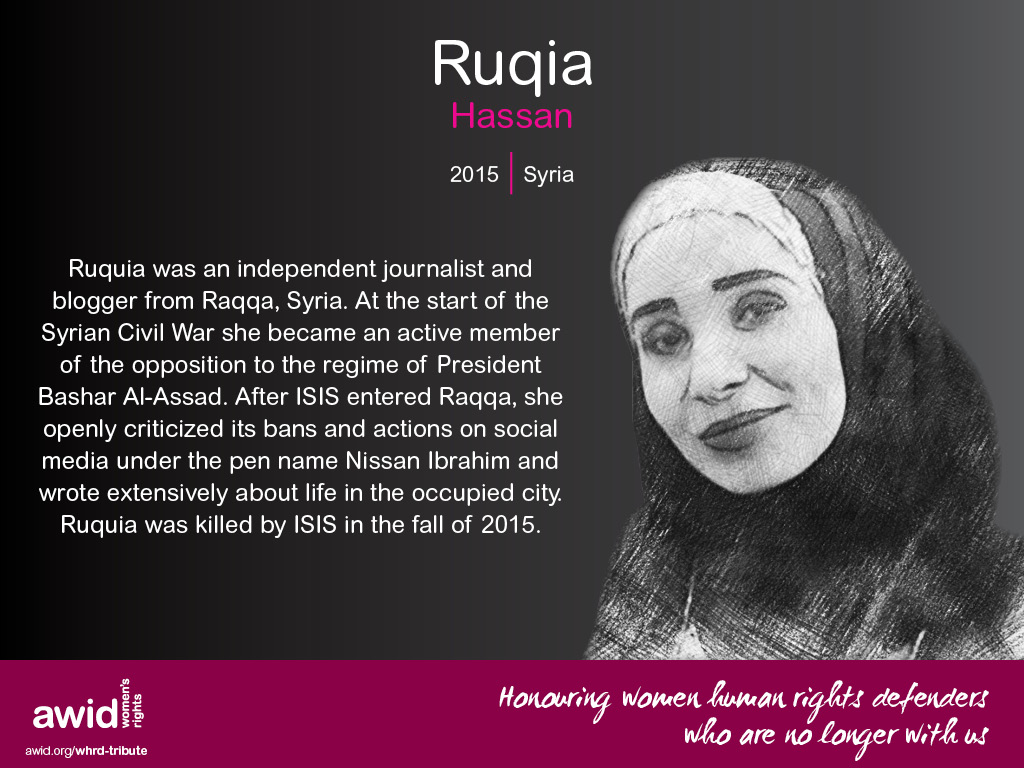
Women like Agnes Torres, from Mexico, was killed because of her gender identity and sexual orientation; or Cheryl Ananayo, an environmental activist from the Philippines was assassinated as she struggled against a mining company; or Ruqia Hassan, a Syrian independent journalist and blogger killed for her criticism of ISIS. And so many others.
With the WHRD Tribute, we bring them all into our collective memory and carry their legacy of struggle as our torch in the feminists’ and women’s rights movements. We recognize that security, safety and self-care must be a priority in all our political agendas. And we call on to governments and international bodies to collectively address violence against feminists and WHRDs.
For decades, feminist scholars and advocates have articulated important concepts related to gender to understand and challenge oppression and discrimination. Those concepts have now become the target of anti-rights actors who claim that oppressive patriarchal gender roles are “common sense”, strategically painting all other ideas, cultural norms, and forms of social life as a dangerous, conspirative ideology.
Read our Brief on “Gender Ideology” Narratives: A Threat To Human Rights