Confronting Extractivism & Corporate Power

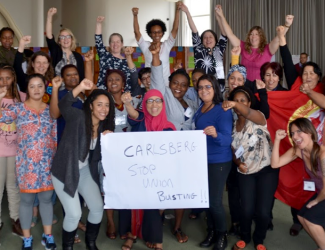
Women human rights defenders (WHRDs) worldwide defend their lands, livelihoods and communities from extractive industries and corporate power. They stand against powerful economic and political interests driving land theft, displacement of communities, loss of livelihoods, and environmental degradation.


Why resist extractive industries?

Extractivism is an economic and political model of development that commodifies nature and prioritizes profit over human rights and the environment. Rooted in colonial history, it reinforces social and economic inequalities locally and globally. Often, Black, rural and Indigenous women are the most affected by extractivism, and are largely excluded from decision-making. Defying these patriarchal and neo-colonial forces, women rise in defense of rights, lands, people and nature.

Critical risks and gender-specific violence

WHRDs confronting extractive industries experience a range of risks, threats and violations, including criminalization, stigmatization, violence and intimidation.  Their stories reveal a strong aspect of gendered and sexualized violence. Perpetrators include state and local authorities, corporations, police, military, paramilitary and private security forces, and at times their own communities.

Acting together

AWID and the Women Human Rights Defenders International Coalition (WHRD-IC) are pleased to announce “Women Human Rights Defenders Confronting Extractivism and Corporate Power”; a cross-regional research project documenting the lived experiences of WHRDs from Asia, Africa and Latin America.

We encourage activists, members of social movements, organized civil society, donors and policy makers to read and use these products for advocacy, education and inspiration.

Share your experience and questions!

Tell us how you are using the resources on WHRDs Confronting extractivism and corporate power.

◾️ How can these resources support your activism and advocacy?

◾️ What additional information or knowledge do you need to make the best use of these resources?

Share your feedback


Thank you!

AWID acknowledges with gratitude the invaluable input of every Woman Human Rights Defender who participated in this project. This project was made possible thanks to your willingness to generously and openly share your experiences and learnings. Your courage, creativity and resilience is an inspiration for us all. Thank you!
Related Content

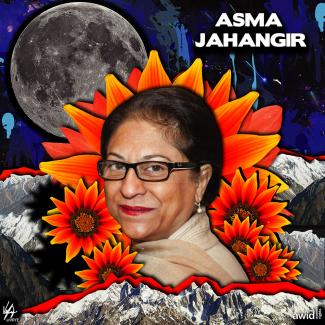
Asma Jahangir

Asma was a leading Pakistani rights activist, fearless critic of the military’s interference in politics and a staunch defender of the rule of law.

She was the founding chairwoman of the Human Rights Commission of Pakistan, an independent group, and was a trustee of the International Crisis Group. She won international awards and served as the United Nations rapporteur on human rights and extrajudicial killings.

She is remembered fondly by colleagues and friends at AWID

“With her life, Asma rewrote the history that many of us were told as women. Asma changed the world. She changed it in Pakistan, and she changed it in our imaginations."


Asma Jahangir, Pakistan

Snippet FEA Trans and Travesti people (ES)

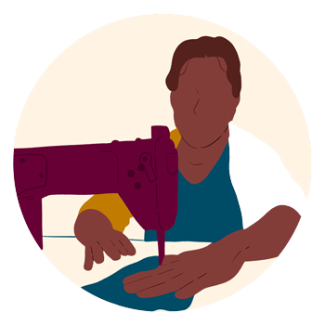
This image represents a faceless person with short dark hair, and dark skin, with a navy blue shirt, and yellow sweater, working behind a burgundy sewing machine on a navy blue piece of fabric

EL CUPO LABORAL TRANS
no está siendo respetado por las empresas

Snippet - Intro WITM - PT

Com base na nossa história de 20 anos de mobilização de mais fundos de melhor qualidade para a mudança social liderada por feministas, a AWID convida a participar da nova edição da nossa pesquisa principal:

"Onde está o dinheiro para a organização feminista?"

(WITM)

PARTICIPE NO INQUÉRITO!Veja o tutorial

Please select your language in the upper right corner of the page.

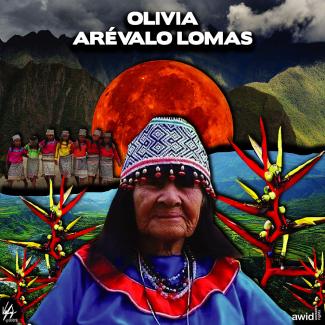
Olivia Arévalo Lomas

Olivia era la líder espiritual del pueblo indígena Shipibo Konibo.

Sabia mujer indígena y abuela, era conocida por practicar la medicina tradicional y cantar las canciones sagradas de su pueblo (Íkaros). Olivia Arévalo fue una activa defensora de los derechos culturales y ambientales de su pueblo. Su asesinato tuvo lugar en un contexto de conflicto territorial entre la comunidad shipibo y las empresas que quieren apropiarse de sus tierras para cultivar palma aceitera.

Integrantes de su comunidad han dicho: «Su muerte es una agresión contra toda la comunidad shipibo. Ella era la memoria viviente de su pueblo».


Olivia Arévalo Lomas, Peru

Snippet FEA Brisa Escobar Quote (FR)

« Mes rêves et mes objectifs ont toujours été les mêmes que ceux de Lohana Berkins : que la coopérative continue à exister et non à fermer. Continuez à offrir cet endroit à nos collègues travesti, à leur donner du travail et un lieu de soutien»

Brisa Escobar,
présidente de la Coopérative

Snippet - WITM To make - AR

لجعل الواقع المركّب لتمويل الأشكال المختلفة من التنظيم النسوي، مرئي

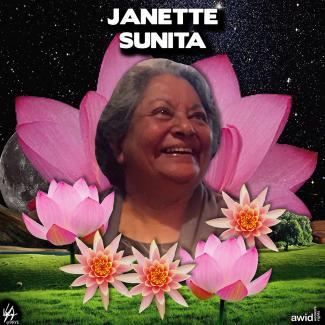
Janette Sunita

Originaire d'Inde, Janette était une personne formidable, fougueuse, bienveillante et aimante.

Son intolérance à l’égard de l’injustice et sa ferme volonté de défendre les droits de toutes les personnes l’ont amenée à travailler pour TARSHI (une ONG qui travaille sur la sexualité et la santé sexuelle et reproductive) pendant plus de 15 ans. Janette a géré et dirigé avec compétence les aspects financiers, les ressources humaines et les aspects opérationnels de TARSHI, naviguant adroitement dans la bureaucratie labyrinthique à laquelle sont soumises les ONG indiennes.

Son équipe se souvient « elle assurait nos arrières pour que nous puissions naviguer en eaux libres. Femme aux multiples talents, Janette nous a non seulement aidés à acquérir nos propres bureaux, mais elles les a également aménagés pour leur utilisation optimale. Elle aimait les voyages et les animaux et s'intéressait à la thérapie assistée par les animaux ».


Janette Sunita, India

Snippet FEA Who takes care of them S4 (EN)

...WHO TAKES CARE OF THEM?

Snippet - WITM About the survey - RU

Об опросе

  • Глобальный и разнообразный: Размышления о ресурсных реалиях феминистских организаций в глобальном и региональном масштабе.
  • Контекстуализированный: Объединение голосов, точек зрения и опыта феминистских движений во всем их богатстве, смелости и разнообразии.
  • Совместно созданный: Разработка и апробация опроса в тесном сотрудничестве с членами AWID и партнерками(-рами) по движению.
  • Дополняющий: С помощью активисток(-тов), феминистских грантодательниц(-телей) и союзниц(-ков), дополняет и усиливает имеющуюся информацию о состоянии ресурсов организаций, занимающихся вопросами феминизма, прав женщин и гендерной справедливости.
  • Многоязычный: Доступен на арабском, английском, французском, португальском, русском и испанском языках.
  • Конфиденциальность и безопасность прежде всего: Мы обязуемся обеспечить конфиденциальность и неприкосновенность ваших данных. Ознакомьтесь с нашей политикой конфиденциальности, чтобы понять, какие меры мы принимаем, чтобы защитить полученные от вас сведения.
  • Доступный: Доступен для людей с различными нарушениями слуха, зрения, движений и когнитивных способностей. Прохождение опроса занимает около 30 минут.
  • Воспроизводимый: Может быть воспроизведен различными организациями в специфических контекстах; инструменты для проведения опроса будут доступны для широкой аудитории для проведения дополнительных исследований и адвокации.

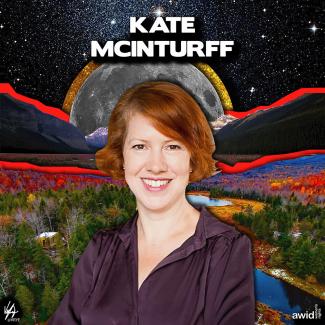
Kate McInturff

From Peacebuild to the Canadian Feminist Alliance for International Action, Amnesty International, and the Canadian Centre for Policy Alternatives (CCPA), Kate had a lifelong passion for women’s rights and gender equality and dedicated her career to fighting inequality and making the world a more compassionate place.

Kate was a member of the Coordinating Committee of Social Watch and a contributor to the Canadian National Social Watch reports.  As a Senior Researcher at the CCPA, Kate received national acclaim for researching, writing, and producing the annual “The Best and Worst Places to be a Woman in Canada” report.

Kate died peacefully surrounded by her family, following a three-year battle with colon cancer. She is described by loved ones as a “Funny, Fearless, Unapologetically Feminist.”


Kate McInturff, Canada

Snippet FEA collaborator and allies Photo 2 (ES)

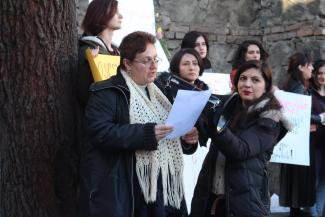
La foto muestra a ocho mujeres de pie juntas durante una protesta. Muchos sostienen pancartas mientras Sopo acerca el megáfono a la boca de una trabajadora de pelo corto y rojo, con bufanda blanca y abrigo negro, que lee un manifiesto.

Snippet - WITM FAQ - AR

الأسئلة الأكثر شيوعاً

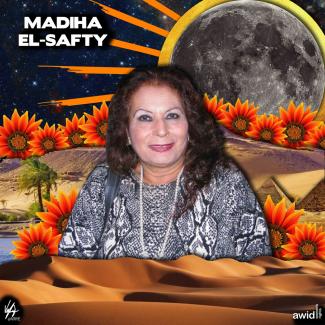
Madiha El Safty

Madiha fue una destacada profesora de Sociología con activa participación en la sociedad civil como defensora de los derechos de las mujeres en la región árabe.

Presidió la Alianza para las Mujeres Árabes y dentro del Consejo Nacional de Mujeres fue miembro del Comité de la Sociedad Civil y del Comité para el Desarrollo de la Gobernación de Minia. Fue autora de numerosas publicaciones en las que analizó y arrojó luz sobre las desigualdades de género y la discriminación contra las mujeres.

Es recordada con cariño por colegas, estudiantes y amigxs.


Madiha El Safty, Egypt

Snippet FEA Workers demonstrations in Georgia 3 (FR)

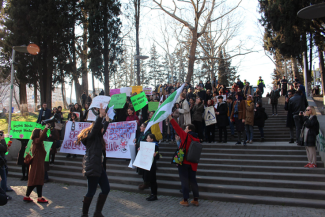
La photo montre une manifestation où une foule tient des affiches vertes et blanches.

أنا ناشط/ة فردي/ة ولا أعمل مع أي مجموعة، منظمة و\ أو حركة في الوقت الحالي. هل عليّ تعبئة الاستطلاع؟

كلا. نقدّر عملك لكننا لا نطلب من الأفراد تعبئة الاستطلاع في الوقت الحالي.