Confronting Extractivism & Corporate Power

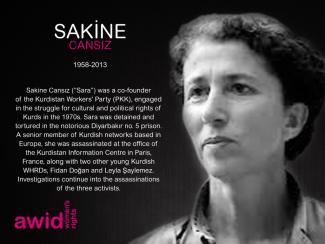
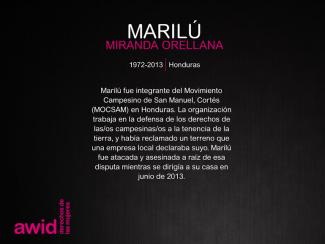
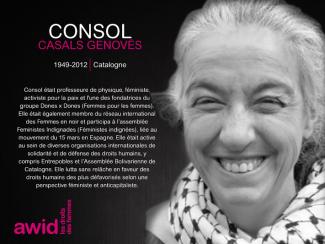
Women human rights defenders (WHRDs) worldwide defend their lands, livelihoods and communities from extractive industries and corporate power. They stand against powerful economic and political interests driving land theft, displacement of communities, loss of livelihoods, and environmental degradation.


Why resist extractive industries?

Extractivism is an economic and political model of development that commodifies nature and prioritizes profit over human rights and the environment. Rooted in colonial history, it reinforces social and economic inequalities locally and globally. Often, Black, rural and Indigenous women are the most affected by extractivism, and are largely excluded from decision-making. Defying these patriarchal and neo-colonial forces, women rise in defense of rights, lands, people and nature.

Critical risks and gender-specific violence

WHRDs confronting extractive industries experience a range of risks, threats and violations, including criminalization, stigmatization, violence and intimidation.  Their stories reveal a strong aspect of gendered and sexualized violence. Perpetrators include state and local authorities, corporations, police, military, paramilitary and private security forces, and at times their own communities.

Acting together

AWID and the Women Human Rights Defenders International Coalition (WHRD-IC) are pleased to announce “Women Human Rights Defenders Confronting Extractivism and Corporate Power”; a cross-regional research project documenting the lived experiences of WHRDs from Asia, Africa and Latin America.

We encourage activists, members of social movements, organized civil society, donors and policy makers to read and use these products for advocacy, education and inspiration.

Share your experience and questions!

Tell us how you are using the resources on WHRDs Confronting extractivism and corporate power.

◾️ How can these resources support your activism and advocacy?

◾️ What additional information or knowledge do you need to make the best use of these resources?

Share your feedback


Thank you!

AWID acknowledges with gratitude the invaluable input of every Woman Human Rights Defender who participated in this project. This project was made possible thanks to your willingness to generously and openly share your experiences and learnings. Your courage, creativity and resilience is an inspiration for us all. Thank you!

Related Content

Clone of Sexting Like a Feminist: Humor in the Digital Feminist Revolution | Title Snippet

Sexting como feminista: el humor en la revolución digital feminista

por Chinelo Onwualu

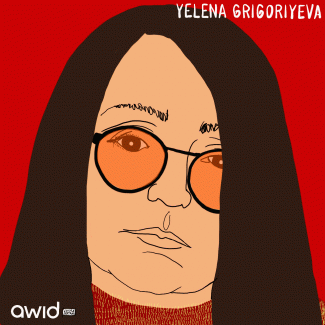
Yelena Grigoriyeva

Yelena Grigoriyeva, often called Lena by friends, was a prominent LGBT rights campaigner in Russia.

She was part of democratic, anti-war and LGBT movements. In her activism, Yelena was a fierce critic of President Vladimir Putin and his administration, expressing her opposition against Russia’s annexation of Ukraine’s Crimea peninsula and the ill-treatment of prisoners. 

Yelena came out as bisexual earlier in 2019.

"Her coming out was a surprise to me, and I didn't approve of it. I told her 'Listen, Lena, you already have a target painted on you because of your political activity. You've just pinned another to your chest."
- Olga Smirnova

Yelena did receive multiple death threats and according to some of her acquaintances, was listed on a homophobic website that called on its visitors to hunt down LGBT persons. She reported the threats to the police, however the Russian state failed to provide protection. 

But even in a society where political opposition, as well as members of the LGBT community and advocates for their rights, face continuous and increasing violence, Yelena kept campaigning for social justice and equality.

“She did not miss a single action. And they detained her so often that I already lost count,”
- Olga Smirnova (fellow opposition activist and friend).

Yelena was murdered on 21 July 2019, not far from home. A suspect was arrested but according to some sources, many friends and fellow activists believe that the suspect is a scapegoat and that this was a targeted political killing. 

For Yelena’s relatives and friends, her case remains unsolved even though the suspect confessed. 

In 2013, Russia passed legislation banning the spreading of what it described as ‘gay propaganda’. In 2014, Human Rights Watch published a report relating to this. 
2010: le quatrième Dialogue de haut niveau a lieu

  • Le quatrième Dialogue de haut niveau sur le financement du développement s’est tenu les 23 et 24 mars 2010 sur le thème Le Consensus de Monterrey et la Déclaration de Doha sur le financement du développement : état de la mise en œuvre et responsabilités futures. Dans ce cadre, quatre tables rondes ont été organisées sur les sujets suivants : la réforme des systèmes monétaires et financiers internationaux, l’impact de la crise financière sur les investissements étrangers directs, le commerce international et les flux financiers privés et enfin le rôle de la coopération financière et technique pour le développement – dont celui des nouvelles sources de financement du développement – dans l’optimisation de la mobilisation des ressources nationales et internationales en faveur du développement.
  • Un dialogue interactif informel a également permis à différentes parties prenantes de se concentrer sur le lien qui unit le financement du développement et les objectifs du Millénaire pour le développement.

#2 - Sexting like a feminist Tweets Snippet AR

ما الضير في وصف مُتقَن للمشهديّة؟

للجنسانيّة تدفّقات متعدّدة ومتبدّلة كحال الغمد الملتهب بين فخذَيّ

Y a-t-il des sujets à ne pas aborder, à éviter dans nos propositions ?

Les Forums de l’AWID ont toujours été des espaces où les difficiles mais nécessaires conversations ont lieu. Nous accueillons ces propositions dès lors que la personne ou organisation qui la suggère garantit un espace à la fois respectueux et sûr pour celles et ceux qui y prennent part.

Magaly Quintana

Magaly Quintana era conocida por muchxs en Nicaragua como 'La Maga'. Fue una historiadora feminista, activista y defensora inquebrantable de los derechos de las mujeres que exigía justicia para las víctimas de femicidio.

Magaly se comprometió a documentar y elaborar estadísticas sobre las mujeres y niñas que fueron asesinadas como resultado de la violencia sexual en el país.

"Ella reconstruyó la vida de cada una, de sus familias, para mostrar así las vidas que habían sido  destrozadas". - Dora María Téllez

Magaly también criticó al gobierno por la reforma de la Ley 779 que trata la violencia contra las mujeres.  Como resultado del arduo trabajo de los movimientos de mujeres nicaragüenses, esta ley, antes de su reforma, incluía importantes disposiciones para penalizar el femicidio. Magaly argumentó que estas reformas legislativas debilitaban la ley, y limitaban la definición de los femicidios a homicidios, invisibilizando, como resultado, los delitos violentos contra las mujeres.

La organización feminista de Magaly se fundó a principios de los ‘80. Fue la directora de Mujeres Católicas por el Derecho a Decidir, que defiende el derecho al aborto terapéutico tras su prohibición en 2006. En 2018, apoyó las protestas contra el gobierno de Daniel Ortega.

Magaly nació en mayo de 1952 y falleció en mayo de 2019.

"Hasta luego, mi querida Magaly Quintana. Muchas gracias, gracias por tu legado. Te veremos de nuevo, tan fuerte y poderosa como siempre."- Erika Guevara Rosas (Directora Americana de Amnistía Internacional).
 

April 2015: Interactive hearings with the business sector and civil society take place

Informal interactive hearings with the business sector and civil society took place on 8 and 9 April 2015 respectively at UN headquarters in New York.

  • Women’s rights organizations and other CSOs raised concern about the limited participation of Member States during the CSO hearings and thus the Addis Ababa CSO Coordinating Group (ACG) issued a letter to the Co-facilitators
  • The second drafting session of the Addis Ababa outcome document was held from 13 – 17 April 2015 at the UN Headquarters. The basis of discussion was the Zero Draft.
  • The WWG on FfD presented recommendations on the FfD themes to Member States in different official sessions and side events. Among the key areas of concern for women was the fact that the zero draft did not give sufficient emphasis to the enormous, negative impacts of financial crises caused by instability in international financial systems on development, equality and human rights, particularly women’s human rights.

Upasana Agarwal

Upasana Agarwal

Upasana est un·e illustrateurice et artiste non binaire basé·e à Kolkata, en Inde. Son travail explore l'identité et les récits personnels en partant d’un vestige visuel ou d’une preuve des contextes avec lesquels iel travaille. Iel est particulièrement attiré·e par les motifs qui, selon Upasana, communiquent des vérités complexes sur le passé, le présent et l'avenir.  Quand Upasana n'est pas en train de dessiner, iel organise et dirige un centre d'art communautaire queer et trans dans la ville.

Visiter l’exposition

Will there be accessibility measures at the Forum?

In short, yes! AWID is currently working with an Accessibility Committee to ensure that the Forum is as accessible as possible. We are also conducting an accessibility audit of the Forum venue, surrounding hotels and transportation. Detailed information about accessibility at the AWID Forum will be available in this section before the registration opens. Meanwhile, for any questions please contact us.

Janet Benshoof

Janet Benshoof était une avocate des droits humains oeuvrant aux États-Unis et défenseure de l’égalité des femmes et de leurs droits sexuels et reproductifs.

Elle a milité pour l’élargissement de l’accès à la contraception et à l’avortement dans le monde entier, et s’est battue contre des décisions anti-avortement dans le territoire américain de Guam. Arrêtée en 1990 pour son opposition à la loi anti-avortement la plus restrictive de son pays, elle a remporté une mise en demeure [MB1] au tribunal local à Guam qui a bloqué la loi, pour ensuite remporter l’affaire devant la Cour d’Appel de Ninth Circuit, décision qui devait supprimer définitivement celle-ci.

 « Les femmes à Guam sont dans une situation absolument dramatique. Je n’ai nullement l’intention d’arrêter d’en parler », Janet Benshoof pour People Magazine

Janet a créé plusieurs précédents juridiques, dont l’approbation par l’US Food and Drug Administration de la contraception d’urgence, ainsi que l’application du droit international afin de garantir leurs droits aux victimes de viol lors des poursuites pour crimes de guerre de l’époque de Saddam Hussein, devant la Cour Suprême iraqienne. 

Janet était présidente et fondatrice du Global Justice Center, ainsi que fondatrice du Center for Reproductive Rights, la première organisation internationale pour les droits humains, centrée sur le choix reproductif et l’égalité. Elle a siégé pendant 15 ans en tant que directrice du projet pour les droits reproductifs de l’American Civil Liberties Union, où elle a mené de nombreuses procédures juridiques qui ont contribué à façonner la loi constitutionnelle des États-Unis sur l’égalité de genre, la liberté d’expression et les droits reproductifs.

 « Janet était connue pour son brillant esprit juridique, son sens de l’humour vif et son courage face à l’injustice », Anthony D. Romero.

Nommée l’une des « 100 avocat·e·s les plus influent·e·s d’Amérique » par le National Law Journal, Janet a reçu de nombreux prix et distinctions. 

Née en mai 1947, Janet est décédée en décembre 2017. 

¿Qué está en juego en este proceso para los derechos de las mujeres?

La financiación para el desarrollo encierra amenazas y oportunidades concretas para los derechos de las mujeres y los derechos humanos de todas las personas. Una financiación y políticas para el desarrollo que sean transformadoras pueden constituir un aporte importante para los cambios sistémicos que se necesitan a fin de garantizar el respeto, la protección y la realización de los derechos humanos de las mujeres.

El año 2015 es importante en el proceso de la FpD. La tercera Conferencia Internacional sobre la FpD tuvo lugar del 13 al 16 de julio de 2015 en Adís Abeba, Etiopía, y los gobiernos están finalizando la Agenda de Desarrollo Post-2015 que incluye acuerdos acerca de cómo se van a financiar los Objetivos de Desarrollo Sostenible.

En su actual etapa, el proceso de la FpD ofrece una oportunidad importante para fijar un marco de financiación que garantice un apoyo financiero efectivo para la implementación de la Agenda Post-2015 y de los Objetivos de Desarrollo Sostenible (ODS). También constituye una oportunidad para abordar las condiciones estructurales y los cambios sistémicos necesarios para la plena implementación de otras agendas y compromisos como los tratados internacionales de derechos humanos y la Plataforma de Acción de Beijing.

En estos últimos trece años, organizaciones por los derechos de las mujeres y feministas han participado activamente en el proceso de la FpD.

Interesting References

Explore these projects put together by AWID teams to promote feminist advocacy and perspectives.

كان من المفترض أن أشارك أنا أو مجموعتي في المنتدى الذي تم إلغاؤه بسبب الجائحة، كيف يمكنني المشاركة في هذا المنتدى؟

سنعيد التواصل مع الشركاء/ الشريكات السابقين/ات لضمان احترام الجهود السابقة. إذا تغيرت معلومات الاتصال الخاصة بك منذ آخر عملية للمنتدى، فيرجى تحديثنا حتى نتمكن من الوصول إليك.

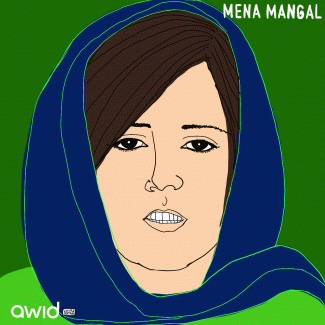
Mena Mangal

Mena Mangal was a prominent TV journalist, women’s rights advocate and cultural adviser to Wolesi Jirga, the lower house of Afghanistan's national parliament. 

For more than a decade, she worked for Ariana TV, Tolo TV's Pashto-language channel Lamar, and the private Afghan national television broadcaster Shamshad TV. As a presenter, Mena focused on women’s rights and cultural talk shows. 

"Women's rights activist Wazhma Frogh said Mangal "had a loud voice" and actively spoke out as an advocate for her people."

Off-screen, she also ran popular social media pages that advocated for the rights of Afghan girls and women to education and work. In terms of her private life, Mena wrote extensively about being forced into an arranged marriage in 2017 and the process she had to go through to finally obtain a divorce. 

In a Facebook post, Mena wrote she was receiving death threats from unknown sources but would continue to carry out her work.

On 11 May 2019, she was attacked by unknown gunmen and shot dead in broad daylight in a public space in Southeast Kabul. 

"We are concerned about the situation because it has a direct impact on women who work outside their homes...Female journalists are changing their professions due to the increasing risks they are facing." - Robina Hamdard, Kabul-based women’s rights activist.

I’m trying to submit a proposal but the online form is not working?

For any questions related to the Call for Forum Activities please contact us, selecting Forum Call for Activities as the subject of your email.

Contact us