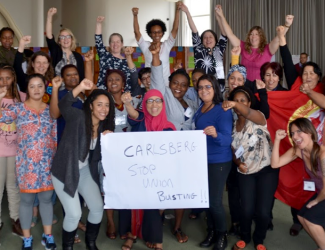
Confronting Extractivism & Corporate Power

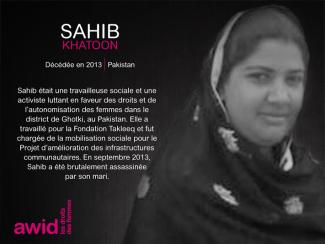
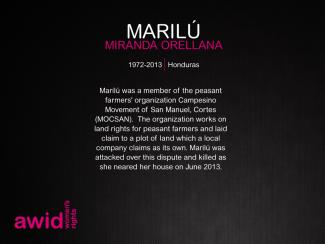
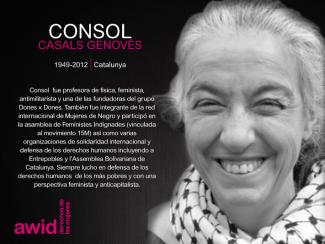
Women human rights defenders (WHRDs) worldwide defend their lands, livelihoods and communities from extractive industries and corporate power. They stand against powerful economic and political interests driving land theft, displacement of communities, loss of livelihoods, and environmental degradation.


Why resist extractive industries?

Extractivism is an economic and political model of development that commodifies nature and prioritizes profit over human rights and the environment. Rooted in colonial history, it reinforces social and economic inequalities locally and globally. Often, Black, rural and Indigenous women are the most affected by extractivism, and are largely excluded from decision-making. Defying these patriarchal and neo-colonial forces, women rise in defense of rights, lands, people and nature.

Critical risks and gender-specific violence

WHRDs confronting extractive industries experience a range of risks, threats and violations, including criminalization, stigmatization, violence and intimidation.  Their stories reveal a strong aspect of gendered and sexualized violence. Perpetrators include state and local authorities, corporations, police, military, paramilitary and private security forces, and at times their own communities.

Acting together

AWID and the Women Human Rights Defenders International Coalition (WHRD-IC) are pleased to announce “Women Human Rights Defenders Confronting Extractivism and Corporate Power”; a cross-regional research project documenting the lived experiences of WHRDs from Asia, Africa and Latin America.

We encourage activists, members of social movements, organized civil society, donors and policy makers to read and use these products for advocacy, education and inspiration.

Share your experience and questions!

Tell us how you are using the resources on WHRDs Confronting extractivism and corporate power.

◾️ How can these resources support your activism and advocacy?

◾️ What additional information or knowledge do you need to make the best use of these resources?

Share your feedback


Thank you!

AWID acknowledges with gratitude the invaluable input of every Woman Human Rights Defender who participated in this project. This project was made possible thanks to your willingness to generously and openly share your experiences and learnings. Your courage, creativity and resilience is an inspiration for us all. Thank you!

Related Content

My Queer Ramadan 

by Amal Amer, California, US

I pray with my family for the first time in six years while wrapped in a keffiyah I scavenged from a dumpster.

Since coming into myself, I have refused to pray in jamaat with my family. Joining in the ranks of hierarchy, “women” behind “men” irks me. It grates my skin and teeth to the degree where I can’t focus, and the standing, bowing, and kneeling feels like a battle against my true being. Each second listening, a betrayal of my nature. Instead, I pray by myself in my own way. 

Yet this Ramadan, I feel different. Back in my childhood home after many years, I am choosing to fast. I choose suhoor with my family, and praying together feels like a natural extension of eating together. After eating, my mother, father, brother and I line up for fajr. 

I pray behind Baba, but my prayer is my own. I close my eyes, staying with my breath and my body. 

My eyes closed, I open my inner sight to a wide open window on a vista of mountains, bright sun spreading over a light mist of clouds. This was the view I had while praying in jamaat at a queer Muslim wedding I attended in the mountains of the South of France last September. 

I lined up with the wedding guests, queer and trans folks of North and West African, Arab, and European descent. Folks of all faiths joined while some chose to stand in respect at the sides or behind. The groups did not fall along fault lines of “Muslim” or “non-Muslim,”  “religious” or “non religious.” The two lovers marrying each led us in prayer, and so did the Muslim woman officiating the nikkah. Each of the three led us in two rounds of prayers, two raqat.

I showed up as I was, my body uncovered. I had not washed. I only passed my camera to a friend who chose to stand at the side. 

In the first sujood, I broke down crying. I wore a jean dress that loves my body, one found at a thrift store my ex-girlfriend pointed me to.

The sobs come through my whole body during the prayer, and I put my head to the earth with my community like a homecoming. A return to the embrace of love both intensely personal and communal, and I am held.

It feels like swimming in the sea with multiple people:  joyful togetherness. But when you go beneath the water, it’s just you and the current. 

Like a dozen people buried in the same graveyard. Separate, but sharing the same soil. Becoming one with the growing earth. 

That was how it felt to pray in communion at a queer Muslim wedding.

I welcomed the light of acceptance while showing up as myself that day, with a group of people who had also chosen to claim all the parts of themselves in love. That light made a home in me, and it illuminates my heart in the dark living room at fajr this Ramadan morning. Though I pray with my birth family who do not accept all of me, I see myself praying in jamaat at that glorious wedding with all of my queer Muslim ancestors, my queer angels, my lineage, my soul family, my queer Muslim family, all standing in prayer. Bowing as one. 

My family’s home does not always feel like my own, though I am here now. I take the bukhoor from room to room, barefoot. Smolder from the censer, an incense that says, “Here I am.” Baraka, blessings from the source of all, Allah and the Goddess to each room in the house, bidding good and dispersing the unbidden. 

As I write this the sky turns the same royal blue I am familiar with from exiting the club and pulling all-nighters. It is the gradient of morning I step into as I go to sleep. 

Word meanings:

  • Ramadan: the Muslim holy month, traditionally observed with 29 days of fasting without food or water during daylight hours

  • Keffiyah: a patterned scarf common in the SWANA region. The black and white version referred to here is associated with the Palestinian liberation movement 

  • Pray in jamaat: Islamic ritual prayer in a group. Participants follow one person, traditionally male, who calls the prayer aloud.

  • Suhoor: the meal before the fast starts at dawn

  • Fajr: the dawn prayer

  • Baba: father

  • Raqat: one round of prayer consisting of standing, bowing, kneeling, and pressing the head to the ground

  • Sujood:the prayer position when one presses one’s head to the earth

  • Nikkah: the religious marriage ceremony 

  • Bukhoor: an Arabic incense, woodchips soaked in resin

  • Baraka: blessing


“Angels go out at night too”

by Chloé Luu (@Electrichildren), France

Pictures of angels in my life, just some women and non-binary people of color hanging out, taking care of themselves and expressing love to each other. It's these simplest moments that are the most empowering.

Chloé Luu (@Electrichildren)


< Freeing the Church, Decolonizing the Bible for West Papuan Women

Kunyit Asam: The Roots of Love and Resilience >

Y a-t-il des sujets à ne pas aborder, à éviter dans nos propositions ?

Les Forums de l’AWID ont toujours été des espaces où les difficiles mais nécessaires conversations ont lieu. Nous accueillons ces propositions dès lors que la personne ou organisation qui la suggère garantit un espace à la fois respectueux et sûr pour celles et ceux qui y prennent part.

Faye Macheke

Biography

Faye is a passionate Pan-African feminist, active in movements for women's rights, racial justice, migrant and labor rights, and environmental justice. Her activism builds on the legacy of the struggle against apartheid in South Africa and the aftermath of the apartheid era in Zimbabwe.

In 2019, Faye joined AWID as the Director of Finance, Operations and Development, and strived to ensure that AWID upholds the feminist principles and values in all of its operations. She brings over 20 years of experience in feminist leadership, strategy, and all aspects of finance and organizational development.

Faye is a committed Board Member of UAF-Africa and other women's rights organizations. She previously held a Head of Finance and Operations roles at Paediatric Adolescent Treatment for Africa and JASS - Just Associates Inc. in Southern Africa. She also held Directorship roles for International Computer Driving Licence (ICDL) in Central and Southern Africa. She holds a Bcompt in Accounting Science from University of South Africa and is a member of the Southern African Institute for Business Accountants.

Position
Co-Executive Director
Add to stories
Off

Disintegration | Content Snippet

On Wednesday a note arrives
with an address on the back.

    5 pm, tonight.

The handwriting on the invitation—
coily and brusque—
I’ve seen it five times in five years.

My body rouses,
feverish.

I need to fuck myself first.

The tide is high tonight and
I get 
off.

I want to slow everything down,
taste time and space, etch them 
into memory.

*

I’ve never been to this part of town before.
Unknown places excite me,
the way limbs and veins and bones
resist decay, 
their fate uncertain.

At the door, I think twice.
The hallway is pitch black 
and it makes me pause.

On the other side,
a portal of smell and color 
opens like a curse,  
into a sunny afternoon.

The breeze
makes my hair dance,
piques its curiosity,
compels it to move.

I hear the wheelchair whirring, 
shaping the shadows.
Then I see them:
a lynx face
and a body like mine
and I find myself desiring both
again.
 
The creature motions me closer.

Their gestures write a sentence;
as I move toward them,
I notice its details:


    wither, flesh, bliss

On their command, the vine that covers the hallway
hugging warm stones,
snakes up the wall.

It becomes a verb,
“to climb,”
and I’m reorientated when their claws point 
to the vine-bed in the center.

I hear the wheels behind me, 
then that sound. 
It reverberates
like no other.
Their long black wings
elevate toward the ceiling
then they lunge forward.

The feline vision scans every detail,
every change,
every longing.

Can desire liquefy your muscles? 

    Can it act sweeter than the strongest 
of tranquilizers?

A lynx sews the world
across our differences,
weaving lace around my knees.

Can desire crush the distance of the world, 
compressing the seconds?

They come closer still,
lynx eye meeting human eye,
sniffing the air,
turning body into
urgency.

They beat down their wings.
Stirred,
the vines tangle around my waist/waste.

Their tongue thins time,
shifting grounds,
soothes, with their magic,
what stirs beneath.

    I see the world in you, and the 
world is exhausted.

Then they plead:

    Let me feast on you. 
 

Principes d'engagement

Bienvenue à Crear | Résister | Transform : un festival dédié aux mouvements féministes !

Principes d'engagement

L'AWID s'engage à créer un espace en ligne qui nous invite et nous pousse tou·te·s à faire preuve de courage, de curiosité, de générosité et de responsabilité partagée. 

Nous vous invitons à créer à nos côtés des espaces sans harcèlement ni violence, où chacun·e est respecté·e dans son identité et son expression de genre, sa race, ses capacités, sa classe, sa religion, sa langue, son ethnicité, son âge, sa profession, son type d'éducation, sa sexualité, sa taille et son apparence physique. Des espaces où nous reconnaissons les inégalités de notre monde et où nous nous efforçons de les transformer au gré de nos propres interactions avec les autres.


Nous voulons créer un espace qui permette à tout·te·s :

  • d’être présent·e·s:

Soyez là les un·e·s pour les autres en étant activement à l’écoute. Essayons de nous sentir proches, même si tout est virtuel. Pour cela, vous aurez accès à l’interprétation de la discussion et à des moyens de communications ouverts (comme la boîte de dialogue et autres outils) pour réagir et échanger. Nous vous recommandons de porter des écouteurs ou un casque pendant la séance pour mieux entendre les autres et vous faire entendre. Dans la mesure du possible, essayez de fermer votre messagerie électronique ou toute autre distraction pendant que vous prenez part à la discussion.

  • de valoriser toutes les formes de savoirs:

Célébrons les multiples façons dont le savoir se manifeste dans nos vies. Nous vous invitons à aborder la conversation avec curiosité et ouverture d’esprit pour apprendre des autres, en se permettant de désapprendre et de réapprendre à travers ces  échanges, comme une manièrede commencer à construire collectivement des connaissances.

  • de se sentir accueillie·s: 

Nous nous engageons à adopter une approche holistique de l'accessibilité en tenant compte des différents besoins physiques, linguistiques, mentaux et de sécurité. Nous voulons un espace qui accueille des personnes d'origines, de croyances, de capacités et d'expériences différentes. Nous anticiperons au mieux mais vous demanderons également de nous communiquer vos besoins, et nous ferons de notre mieux pour y répondre.

  • de se sentir en sécurité et respecté·e·s :

Nous nous engageons tou·te·s individuellement et collectivement à respecter la vie privée de chacun·e· et à demander le consentement des autres avant de partager des images ou du contenu qui les concerne,  générés au cours de la conversation.


Créer un environnement sécurisé, respectueux et agréable durant ces conversations est la responsabilité de  tou·te·s .


Signalement

Si vous remarquez qu'une personne a un comportement discriminatoire ou offensant, veuillez contacter la personne de référence qui vous sera indiquée en début de session. 

Tout·e participant·e qui utilisera un langage ou des images abusives sera exclu·e de la conversation et ne sera pas réadmis·e. Nous n’aurons plus de relations avec cette personne de quelque manière que ce soit. 

Juhi

Biography

Juhi es una entusiasta de las tecnologías. Posee una licenciatura en Ingeniería Informática de la Universidad Tecnológica de Gujarat y formación de posgrado en Telecomunicaciones Inalámbricas y Gestión de Proyectos del Instituto Universitario Humber. Apasionada de la resolución de problemas y de mantenerse a la vanguardia en el panorama tecnológico en constante evolución, Juhi se ha encontrado recorriendo diversas industrias como técnica en Tecnologías de la Información. Ha tenido oportunidad de aplicar sus competencias técnicas en distintos entornos, siempre abrazando los nuevos desafíos con entusiasmo. Más allá de los códigos y los circuitos, le encantan las aventuras de la vida. Explorar nuevos lugares y culturas es para ella una bocanada de aire fresco. Ya sea que se trate de descubrir alguna joya oculta en la ciudad, de probar algún plato exótico o de embarcarse en algún deporte de aventura, Juhi siempre está predispuesta a vivir nuevas experiencias.

Position
Coordinadora, Apoyo en Tecnologías de la Información
Add to stories
Off

A Joy to the World: Six Questions with Naike Ledan | Small Snippet FR

La joie dans le monde : six questions à Naïké Ledan

Ce qui m’a aidée, c’est que j’adorais le travail qui consiste à aller dans les terres et à documenter les connaissances des gens. Donc j’ai quitté le confort...

Illustration of two hands holding a photo of mother and baby

Lire plus


Colectivo Morivivi

Colectivo Moriviví is an all women artistic collective. Our artistic production consists of muralism, community-led muralism, and protest performance/actions. Our work is about democratizing art and bringing the narratives of Puerto Rican communities to the public sphere to create spaces in which they are validated. We believe that through artivism we can promote consciousness on social issues and strengthen our collective memory.  

“Cacibajagua” 2017, Mural Project. Jiangxi, China
“Paz para la Mujer” 2015, collaboration with Coordinadora Paz para la Mujer Organization. Santurce,
“Paz para la Mujer” 2015, collaboration with Coordinadora Paz para la Mujer Organization. Santurce, Puerto Rico


“Paz para la Mujer” 2015, collaboration with Coordinadora Paz para la Mujer Organization. Santurce, Puerto Rico
“Paz para la Mujer” 2015, collaboration with Coordinadora Paz para la Mujer Organization. Santurce, Puerto Rico
Collectivo Moriri Artwork


As part of their participation in AWID’s Artist Working Group, Colectivo Morivivi gathered a diverse group of members, partners and staff to facilitate a collaborative process of dreaming into, informing, and deciding on the content for a community mural through a multi-stage co-creation process. The project began with a remote conceptualization with feminists from different parts of the planet brought together by AWID, and then it evolved to its re-contextualization and realization in Puerto Rico. We were honored to have the input of local artists Las Nietas de Nonó(@lasnietasdenono), the participation of local women in the Community Painting Session, the logistics support from the Municipality of Caguas, and FRIDA Young Feminist Fund’s additional support to the collective.
 
The mural explores the transcendence of borders by presenting bodies like a map, in an embrace that highlights the intersection of the different feminist manifestations, practices and realities. 
 
We also thank Kelvin Rodríguez, who documented and captured the different stages of this project in Puerto Rico:

Collectivo Moriri Artwork

About Colectivo Morivivi 

Colectivo Morivivi portrait

Moriviví is a collective of young female artists, working on public art since April 2013. Based in Puerto Rico, we’ve gained recognition for the creation of murals and community led arts.

The group started out in local Urban Art Festivals. As our work became more popular, organizations and community leadership started to reach out to us. We began as eight high schoolers who wanted to paint a mural together. However, in eight years of hard work, we’ve faced many challenges.  Now we are in a period of transition. During this following year, we aim to restructure the collective internally. Our goal is to open new opportunities for collaborators and back-up our decision making process with a new evaluation system.  In the long run, we aspire to become an alternative school of art practice for those interested in immersing themselves in community art production.

Patience Chabururuka

Biography

Patience est une professionnelle internationale des ressources humaines avec plus d'une décennie d'expérience dans la gestion des ressources humaines (RH) dans le secteur non lucratif. Elle a travaillé auparavant chez Mercy Corps en tant que responsable générale des ressources humaines pour l'Afrique. Elle y a appuyé le cycle de vie complet des employé·e·s expatrié·e·s dans la région de l'Afrique de l'Est et de l'Afrique australe et fourni des conseils techniques RH aux responsables des ressources humaines dans les bureaux nationaux de la région africaine. Avant de rejoindre l'équipe internationale des ressources humaines, elle agissait en tant que point focal national ressources humaines et protection, et faisait partie de l'équipe de direction qui traitait de toutes les questions de ressources humaines et de protection. Avant de rejoindre Mercy Corps, elle dirigeait le département des ressources humaines et des opérations de l'organisation de développement des Pays-Bas SNV et était membre de l'équipe de direction nationale. Elle possède également une expérience de consultance en ressources humaines qu'elle a acquise alors qu'elle étudiait encore pour sa licence spécialisée en gestion des ressources humaines. Elle est passionnée de RH, aime travailler avec les gens et considère le bien-être et la protection dans ses valeurs fondamentales et son travail professionnel. Amatrice de sport, Patience peut également être aperçue sur un terrain de basket, un court de tennis ou encore un terrain de football.

Position
Coordonnatrice des Ressources Humaines
Add to stories
Off

Moving Conversation | Small Snippet AR

عودةٌ إلى ذواتنا

بالنسبة إليّ، هذه الأنواع من الدردشات كانت ضمن تعابير الحبّ التي أتاحت لي الحياة أن أستمتع بها حديثًا فقط. ما كنت أعرف أن هذه الأشكال الأخرى ممكنة – تلك التي توجَد خارج نطاق ورشات العمل، أو أماكن الناشطين أو غرف الصفّ أو أماكن العمل.

اقرأ أكثر

Tácticas, estrategias e impactos anti-derechos

Capítulo 5

Los actores anti-derechos adoptan una estrategia doble. Además de atacar abiertamente al sistema multilateral, los actores anti-derechos también socavan los derechos humanos desde adentro. Se involucran con el fin de cooptar procesos, consolidar normativas regresivas, y erosionar responsabilidades.

Photo-OP // the first anniversary of the EU signature to the Council of Europe Convention to prevent and combat gender-based violence and domestic violence, the so-called Istanbul Convention
© ALDE Group/Flickr
Photo-OP // El primer aniversario de la firma de la UE del Convenio del Consejo de Europa para prevenir y combatir la violencia de género y la violencia doméstica, el llamado Convenio de Estambul

El involucramiento de los actores anti-derechos en espacios internacionales de derechos humanos tiene un objetivo principal: socavar el sistema y su capacidad de respetar, proteger y satisfacer los derechos humanos para todas las personas, y de exigir rendición de cuentas a los Estados miembro por su violación. Algunas tácticas anti-derechos operan por fuera de la ONU, e incluyen la deslegitimación y la presión política para desfinanciar a la ONU, o para que ciertos Estados miembro se retiren de acuerdos internacionales sobre derechos humanos. En los últimos años, algunos actores antiderechos han logrado una creciente influencia dentro de la ONU. Sus tácticas internas incluyen la capacitación de representantes, la distorsión de los marcos de derechos humanos, el debilitamiento de acuerdos sobre derechos humanos, la infiltración en comités de organizaciones no gubernamentales, las solicitudes de ingreso al Consejo Económico y Social bajo nombres neutrales, la infiltración en los espacios de la juventud, y las presiones para ubicar a actores antiderechos en posiciones clave.

Índice de contenidos

  • Institucionalización de actores anti-derechos en los mecanismos de la ONU
  • Exclusión y deslegitimación
  • Disminución de los estándares de derechos humanos
  • Cooptación - Construcción de un marco paralelo de derechos humanos
  • Ejercicio: Sí, ellos son fuertes, ¡pero también nosotrxs somos fuertes!
  • Ejercicio: Responsabilizar a los gobiernos

Leer el capítulo completo

Ȃurea Mouzinho

Biography

Ȃurea Mouzinho is a feminist economic justice organizer from Luanda, Angola, with a 10-year career in research, grant-making, advocacy, and movement-building for women's rights and economic justice across Africa and the global south. Currently the Program Manager for Africa at Thousand Currents, she also serves on the Feminist Africa Editorial Board and is a member of Ondjango Feminista, a feminist collective she co-founded in 2016. A new mom to a Gemini boy, urea enjoys slow days with her young family and taking long strolls by the beach.

She occasionally tweets at @kitondowe.

Add to stories
Off