Confronting Extractivism & Corporate Power

Women human rights defenders (WHRDs) worldwide defend their lands, livelihoods and communities from extractive industries and corporate power. They stand against powerful economic and political interests driving land theft, displacement of communities, loss of livelihoods, and environmental degradation.


Why resist extractive industries?

Extractivism is an economic and political model of development that commodifies nature and prioritizes profit over human rights and the environment. Rooted in colonial history, it reinforces social and economic inequalities locally and globally. Often, Black, rural and Indigenous women are the most affected by extractivism, and are largely excluded from decision-making. Defying these patriarchal and neo-colonial forces, women rise in defense of rights, lands, people and nature.

Critical risks and gender-specific violence

WHRDs confronting extractive industries experience a range of risks, threats and violations, including criminalization, stigmatization, violence and intimidation.  Their stories reveal a strong aspect of gendered and sexualized violence. Perpetrators include state and local authorities, corporations, police, military, paramilitary and private security forces, and at times their own communities.

Acting together

AWID and the Women Human Rights Defenders International Coalition (WHRD-IC) are pleased to announce “Women Human Rights Defenders Confronting Extractivism and Corporate Power”; a cross-regional research project documenting the lived experiences of WHRDs from Asia, Africa and Latin America.

We encourage activists, members of social movements, organized civil society, donors and policy makers to read and use these products for advocacy, education and inspiration.

Share your experience and questions!

Tell us how you are using the resources on WHRDs Confronting extractivism and corporate power.

◾️ How can these resources support your activism and advocacy?

◾️ What additional information or knowledge do you need to make the best use of these resources?

Share your feedback


Thank you!

AWID acknowledges with gratitude the invaluable input of every Woman Human Rights Defender who participated in this project. This project was made possible thanks to your willingness to generously and openly share your experiences and learnings. Your courage, creativity and resilience is an inspiration for us all. Thank you!
Related Content

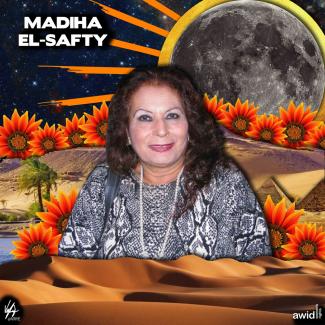
Madiha El Safty

Madiha fue una destacada profesora de Sociología con activa participación en la sociedad civil como defensora de los derechos de las mujeres en la región árabe.

Presidió la Alianza para las Mujeres Árabes y dentro del Consejo Nacional de Mujeres fue miembro del Comité de la Sociedad Civil y del Comité para el Desarrollo de la Gobernación de Minia. Fue autora de numerosas publicaciones en las que analizó y arrojó luz sobre las desigualdades de género y la discriminación contra las mujeres.

Es recordada con cariño por colegas, estudiantes y amigxs.


Madiha El Safty, Egypt
Body

Resources to support feminist movements, policy-makers, and allies!

Snippet FEA different lines of work FOR S4 (EN)

Lines of work:

FOR

Posso aceder a e realizar o inquérito no meu telemóvel?

Sim, o inquérito pode ser acedido através de um smartphone.

Join Us - old 5 Apr 2023 (changed by Ritu)

Join Us

By joining AWID, you are becoming part of worldwide feminist organizing, a collective power that is rooted in working across movements and is based on solidarity.

Become a member

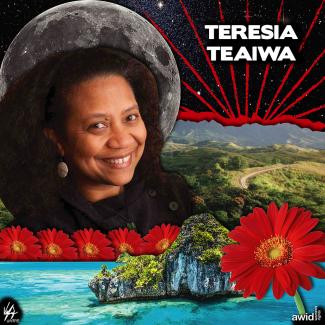
Teresia Teaiwa

Considérée par le Guardian comme l'une des icônes nationales de Kiribati, Teresia était une avocate téméraire.

Elle travaillait en étroite collaboration avec des groupes féministes aux îles Fidji. Ses travaux de recherche ont servi à aborder les problèmes du féminisme et de l'égalité de genre dans le Pacifique. Elle était également corédactrice de l’International Feminist Journal of Politics. En Océanie, son influence a traversé les frontières académiques, ainsi que les mouvements pour la justice sociale.


Teresia Teaiwa, Fiji

Aquí están tu guía práctica y las infografías «Hacia un ecosistema de financiamiento feminista»

Body

Snippet FEA Striking against all odds (ES)

Luchar contra viento y marea: la historia de la victoria sin precedentes de la Red de Solidaridad

En enero de 2022, la Red de Solidaridad organizó una huelga con 400 trabajadorxs. ¿Su principal demanda? Aumentar los salarios. La huelga fue convocada después de meses de conversaciones fracasadas con el Ministerio de Asuntos Sociales de Georgia como parte de un conflicto laboral.

Después de semanas de protestar, negociar, hablar con la prensa, resistir represalias y soportar el frío del invierno georgiano, lxs trabajadorxs obtuvieron concesiones sin precedentes del gobierno: aumento de los salarios, prestaciones por maternidad, cobertura de los costos de transporte, el cese de despidos, la compensación por los días de huelga, y más.

La huelga no solo resultó en ganancias materiales, sino que también hizo que lxs trabajadorxs se sintieran unidxs y empoderadxs para defenderse y luchar por condiciones de trabajo dignas ahora y en el futuro. Se convirtieron en una fuente de inspiración para todxs lxs trabajadorxs del país.

Puedes leer más sobre su victoria aquí.

هل ستكون لي الفرصة بمشاركة افكاري بأمور لا تغطيها أسئلة الاستطلاع؟

نعم. ندعوكم/ن لمشاركتنا بالأمور التي تجدونها مهمة بالنسبة لكم/ن عن طريق الإجابة على الأسئلة المفتوحة في نهاية الاستطلاع.

Reason to join 5

Expande tus fronteras. Lxs afiliadxs de AWID representan de forma creciente una intersección diversa y vibrante de feministas que trabajan, entre otras cosas, en temáticas asociadas a la tierra, los derechos de lxs trabajadorxs, los derechos sexuales y la autonomía corporal. Al afiliarte, puedes conectar tus luchas con las de otros movimientos.

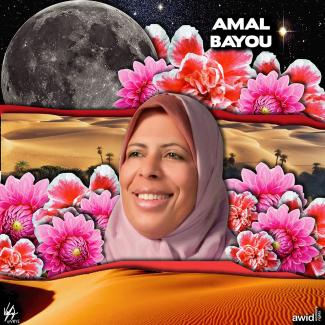
Amal Bayou

Amal was a prominent politician and parliamentarian in Libya. She was a faculty member at Benghazi University from 1995 until her death in 2017.

Amal was a civil society activist and a member of various social and political initiatives. She assisted the families of martyrs and the  disappeared, and was a founding member of a youth initiative called ‘’Youth of Benghazi Libya”. In the 2014 parliamentary elections, Amal was elected to the House of Representatives with more than 14,000 votes (the highest number of votes anyone received in the 2014 elections).

Amal will remain in the memories of many as a woman politician working to ensure a better future in one the most difficult and conflict-ridden contexts in the region.


Amal Bayou, Libya

Avertissement : communication avec l’équipe de l’AWID

Si vous recevez des emails d’une personne de l’équipe de l’AWID, nous aimerions que vous preniez en compte les points suivants : 

  • L’information contenue dans cette communication est confidentielle et exclusivement destinée à la personne à qui elle s’adresse.

  • Cette communication peut contenir des informations dont l’Association pour les Droits des Femmes dans le Développement (AWID) est propriétaire, et qui ne peuvent être reproduites ou partagées, en totalité ou en partie, sans le consentement écrit de l’AWID.

  • L’AWID ne garantit pas que toutes les informations contenues ici soient complètes ou correctes. Cette communication n’est ni une offre pour conclure un accord ni une confirmation d’accord présenté ici, sauf si le contexte l’indique clairement. 

  • L’AWID ne vous conseillera pas vis-à-vis d’un accord pouvant être proposé ici. Cette communication ne constitue en rien une recommandation, une orientation ou une proposition pour conclure un quelconque accord.   

  • L’AWID ne garantit en aucun cas les résultats attendus d’un accord. Cette communication peut contenir des perspectives et des opinions qui ne reflètent pas nécessairement celles de l’AWID.

  • Vous ne pouvez pas vous fier aux informations contenues dans cette communication dans l’optique de conclure un accord proposé ou autre. 

Body

Snippet FEA Union Otras (FR)

SYNDICAT OTRAS

L’Organisation Sindicale des Travailleur·euses du Sexe (Organización Sindical de Trabajadoras del Sexo, OTRAS) est le premier syndicat de travailleur·euses du sexe de l'histoire de l'Espagne. Le syndicat est née de la nécessité de garantir les droits sociaux, juridiques et politiques des travailleur·euses du sexe dans un pays où les mouvements d'extrême droite se renforcent au jour le jour.

Après des années de lutte contre le système juridique espagnol et les groupes abolitionnistes du travail du sexe qui ont appelé à sa fermeture, OTRAS a finalement obtenu son statut légal de syndicat en 2021.

Son objectif? Décriminaliser le travail du sexe et garantir des conditions et des environnements de travail décents pour tous·tes les travailleur·euses du sexe.

Le syndicat représente plus de 600 travailleur·euses du sexe, dont beaucoup de personnes immigrantes, racialisées, trans, queer, ou de genre non-conforme.

Является ли мое участие конфиденциальным?

Да. Ваши ответы будут удалены по окончании обработки и анализа данных и будут использованы исключительно в исследовательских целях. Данные НИКОГДА не будут переданы за пределы AWID и будут обрабатываться только сотрудниками AWID и консультантками(-тами), работающими с нами над проектом «Где деньги?». Для нас ваша конфиденциальность и безопасность– приоритет. С нашей политикой конфиденциальности можно подробно ознакомиться здесь.