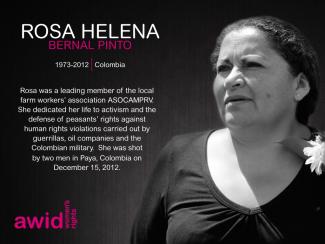
Rosa Helena Bernal Pinto
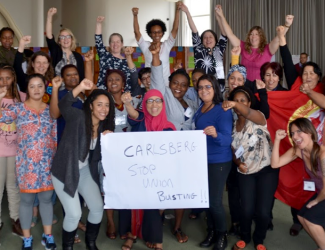
Women human rights defenders (WHRDs) worldwide defend their lands, livelihoods and communities from extractive industries and corporate power. They stand against powerful economic and political interests driving land theft, displacement of communities, loss of livelihoods, and environmental degradation.
Extractivism is an economic and political model of development that commodifies nature and prioritizes profit over human rights and the environment. Rooted in colonial history, it reinforces social and economic inequalities locally and globally. Often, Black, rural and Indigenous women are the most affected by extractivism, and are largely excluded from decision-making. Defying these patriarchal and neo-colonial forces, women rise in defense of rights, lands, people and nature.
WHRDs confronting extractive industries experience a range of risks, threats and violations, including criminalization, stigmatization, violence and intimidation. Their stories reveal a strong aspect of gendered and sexualized violence. Perpetrators include state and local authorities, corporations, police, military, paramilitary and private security forces, and at times their own communities.
AWID and the Women Human Rights Defenders International Coalition (WHRD-IC) are pleased to announce “Women Human Rights Defenders Confronting Extractivism and Corporate Power”; a cross-regional research project documenting the lived experiences of WHRDs from Asia, Africa and Latin America.
"Women Human Rights Defenders confronting extractive industries: an overview of critical risks and Human Rights obligations" is a policy report with a gender perspective. It analyses forms of violations and types of perpetrators, quotes relevant human rights obligations and includes policy recommendations to states, corporations, civil society and donors.
"Weaving resistance through action: Strategies of Women Human Rights Defenders confronting extractive industries" is a practical guide outlining creative and deliberate forms of action, successful tactics and inspiring stories of resistance.
The video “Defending people and planet: Women confronting extractive industries” puts courageous WHRDs from Africa, Asia, and Latin America in the spotlight. They share their struggles for land and life, and speak to the risks and challenges they face in their activism.
Challenging corporate power: Struggles for women’s rights, economic and gender justice is a research paper outlining the impacts of corporate power and offering insights into strategies of resistance.
AWID acknowledges with gratitude the invaluable input of every Woman Human Rights Defender who participated in this project. This project was made possible thanks to your willingness to generously and openly share your experiences and learnings. Your courage, creativity and resilience is an inspiration for us all. Thank you!
سنعيد التواصل مع الشركاء/ الشريكات السابقين/ات لضمان احترام الجهود السابقة. إذا تغيرت معلومات الاتصال الخاصة بك منذ آخر عملية للمنتدى، فيرجى تحديثنا حتى نتمكن من الوصول إليك.
En esta selección de películas encontrarán las voces de realizadoras que no solo se contentan con plasmar las realidades feministas que palpitan en cada rincón de este vasto y diverso territorio sino también trabajos que desde su gestación misma están cuestionando el para qué, quién y cómo se hace cine o audiovisual. Realizadoras o colectivos que entienden al cine como una herramienta de lucha, como algo más que imágenes que se disfrutan en una pantalla, que ven al cine y al audiovisual como instrumentos para potenciar una discusión o abrir un debate; en fin, como un recurso para la pedagogía popular y feminista.
إذا كانت مجموعتك أو مؤسستك تتلقى تمويلًا، فقد ترغب في مناقشة الأمر مع الممول/ة الخاص بك الآن إذا كان قادرًا على دعم سفرك ومشاركتك في المنتدى. تخطط العديد من المؤسسات لميزانياتها للعام المقبل في وقت مبكر من عام 2023، لذا من الأفضل عدم تأخير هذه المحادثة للعام المقبل.
Nous vous conseillons de demander conseil à un-e avocat-e, de communiquer avec un refuge pour femmes ou un centre d’accueil près de chez vous.
Les HotPeachPages, une ressource en ligne, contiennent des liens vers les refuges pour femmes dans le monde entier. L’AWID ne peut garantir l’exactitude ou la qualité de ces listes, mais elles peuvent constituer un bon point de départ si vous ne connaissez aucune organisation près de chez vous.
Consulta nuestra Guía Superbreve para organizar Festivales Feministas y otros eventos globales en línea.
ليس هناك اختلاف، نفس الطريقة ونفس الموعد النهائي. يرجى استخدام نفس النموذج لإرسال مقترحك سواء كان ذلك شخصيًا أو عبر الإنترنت أو كليهما (هجين).
Follow-up International Conference on Financing for Development, Doha, Qatar
Venez découvrir les économies féministes que nous ADORONS.
Quand nous parlons d'économie, nous parlons de comment nous organisons nos sociétés, nos foyers et nos lieux de travail. Comment vivons-nous ensemble? Comment est-ce que nous produisons la nourriture, organisons les soins, ou assurons notre santé et celle de nos communautés? L'économie concerne également la manière dont nous accédons et gérons les ressources, et nos relations avec les autres, avec nous-mêmes et avec la Nature.
Les féministes ont construit des alternatives économiques aux systèmes capitalistes d'exploitation depuis des lustres. Ces alternatives existent ici et maintenant, et elles sont les piliers des mondes plus justes et plus durables dont nous avons tant besoin et que nous méritons.
Nous sommes ravi·es de vous présenter certaines de ces alternatives économiques féministes et les collectifs à travers le monde qui nous inspirent.
نعم! نحن نستكشف حاليًا تقنيات مبتكرة للسماح بالاتصال والمشاركة الهادفين.
Contenu lié
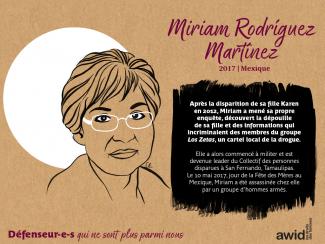
RFI: L'assassinat de la mère courage qui avait ému le Mexique
Octubre de 2014: Inicio del proceso preparatorio intergubernamental para la tercera Conferencia Internacional sobre la Financiación para el Desarrollo

 |
 |
 |
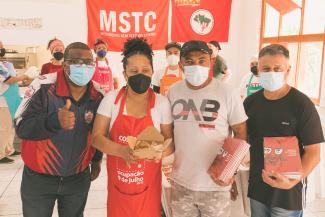 Women and collaborators at the occupation’s kitchen |
 |