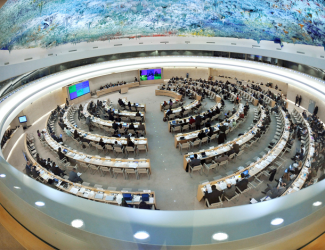
Jean-Marc Ferré | Flickr (CC BY-NC-ND 2.0)
A general view of participants at the 16th session of the Human Rights Council in Geneva, Switzerland.

Human Rights Council (HRC)

The Human Rights Council (HRC) is the key intergovernmental body within the United Nations system responsible for the promotion and protection of all human rights around the globe. It holds three regular sessions a year: in March, June and September. The Office of the UN High Commissioner for Human Rights (OHCHR) is the secretariat for the HRC.

The HRC works by:

  • Debating and passing resolutions on global human rights issues and human rights situations in particular countries

  • Examining complaints from victims of human rights violations or activist organizations on behalf of victims of human rights violations

  • Appointing independent experts (known as “Special Procedures”) to review human rights violations in specific countries and examine and further global human rights issues

  • Engaging in discussions with experts and governments on human rights issues

  • Assessing the human rights records of all UN Member States every four and a half years through the Universal Periodic Review

Learn more about the HRC


AWID works with feminist, progressive and human rights partners to share key knowledge, convene civil society dialogues and events, and influence negotiations and outcomes of the session.

With our partners, our work will:

◾️ Monitor, track and analyze anti-rights actors, discourses and strategies and their impact on resolutions

◾️ Raise awareness of the findings of the 2017 and 2021 OURs Trends Reports.

◾️Support the work of feminist UN experts in the face of backlash and pressure

◾️Advocate for state accountability
 
◾️ Work with feminist movements and civil society organizations to advance rights related to gender and sexuality.
 

Related Content

Salome Chagelishvili

Biography

Salome est une activiste féministe originaire de Tbilisi, Géorgie, qui se consacre à la justice de genre et sociale. Titulaire d’une Maîtrise en études sur le genre, elle s’est impliquée auprès de mouvements féministes, queers et écologiques au cours des neuf dernières années, travaillant entre autres sur les questions de la violence liée au genre, la violence domestique, la santé sexuelle et reproductive et les droits afférents, les droits LGBTIQ et la sécurité et les droits holistiques et numériques.

Depuis 2014, elle travaille activement sur les questions de sécurité et de sûreté des activistes et des femmes défenseures des droits humains, organisant des ateliers sur la sécurité intégrée et la sécurité numérique spécialement pour les activistes de groupes défavorisés (personnes homosexuelles, minorités ethniques et religieuses, femmes et filles rurales, etc.) ainsi que pour de grandes organisations féministes. Salome est membre de l’Independent Group of Feminists (Groupe indépendant de féministes)- une initiative non-formelle, non hiérarchique et non enregistrée qui réunit des féministes géorgiennes ayant différents parcours. Elle travaille actuellement avec le Fonds pour les femmes de Géorgie, où elle est pleinement impliquée dans la construction de mouvements de femmes/féministes, tout en offrant un financement féministe et encourageant la philanthropie féministe locale.


Add to stories
Off

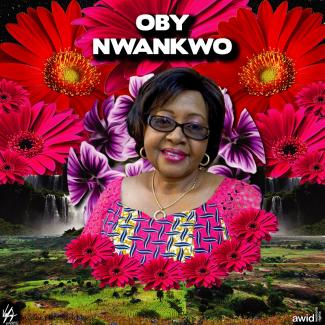
Obiageli “Oby” Nwankwo

Con una carrera jurídica que abarcó más de 30 años, Oby era conocida en toda África y en el mundo como una defensora de la justicia de género y los derechos humanos.

Fundó y fue Directora Ejecutiva del Civil Resource Development and Documentation Centre (CIRDDOC), una ONG nigeriana que patrocina capacitaciones y actividades de creación de redes para miembrxs de la sociedad civil, parlamentarixs y otrxs actores clave, para promover los derechos humanos, la buena gobernanza y el acceso a la justicia y el estado de derecho.

Oby es afectuosamente recordada por lxs activistas de Nigeria como una «extraordinaria activista que mostraba energía y pasión por la lucha por la igualdad de género y la justicia de género en Nigeria y en toda África».


Obiageli “Oby” Nwankwo, Nigeria

Forum 2024 - FAQ - Other Questions EN

Other Questions

Snippet - WITM FAQ - FR

Foire aux questions - FAQ

Ester Lopes | Snippet FR

Ester Lopes Portrait

Ester Lopes est une danseuse et une écrivaine dont les recherches portent sur le corps, le genre, la race et les rapports de classe. Elle est professeure de Pilates et enseigne l’art. Ester est diplômée en théâtre contemporain – processus créatifs (à la FAINC) et en danse et conscience du corps (à l’USCS). Parmi ses spécialisations musicales figurent le chant populaire et les percussions. Elle a suivi une formation à Novos Brincantes avec Flaira Ferro, Mateus Prado et Antonio Meira à l’Institut Brincante en 2015 et 2016.

Patience Chabururuka

Biography

Patience is a global human resources professional with over a decade of experience in human resources (HR) management in the not-for-profit sector. Patience previously worked at Mercy Corps as the Global HR Officer for Africa supporting the full employee life cycle for expatriates in the Eastern and Southern African region and provided HR technical guidance to Human Resources leaders in country offices within the African region. Before joining the global people team, she was the Country Human Resources and Safeguarding Focal Point, she was part of the senior management team leading on all human resources and safeguarding matters. Prior to Mercy Corps she led the HR and Operations department at SNV Netherlands Development Organization and was a member of the country management team. She also has HR Consultancy experience which she gained while she was still studying for her BSc Honors degree in Human Resource Management. She has a passion for HR, loves working with people and she takes wellbeing and safeguarding as her core values and in her professional work. As someone who loves sports, you can also find Patience at the basketball court, the tennis court or on the soccer field.

Position
Human Resources Coordinator
Add to stories
Off

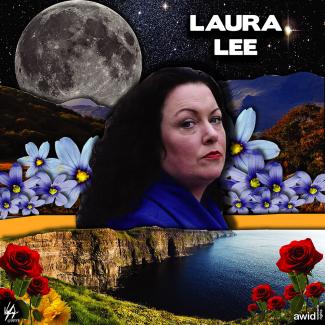
Laura Lee

Laura était une activiste et une avocate de premier plan qui a mené une campagne courageuse en faveur de la dépénalisation du travail du sexe en Irlande.

On se souvient d'elle comme « une combattante de la liberté pour les travailleurs et les travailleuses du sexe, une féministe, une mère pour certainEs et une amie nécessaire pour beaucoup ».

Laura militait pour que les personnes de l'industrie du sexe soient reconnu-e-s comme des travailleurs et travailleuses sujets de droits. Elle a activement milité en faveur de la dépénalisation, notamment en engageant une procédure judiciaire devant la haute cour de Belfast qui concernent des dispositions criminalisant l’achat de services sexuels. Laura a déclaré que son intention était de porter l'affaire devant la Cour européenne des droits de l'homme.


Laura Lee, Ireland

Snippet - WITM to claim - AR

لتجسيد قوتكم/ن كخبيرات عن وضع التمويل للحركات النسوية

Disintegration | Small Snippet ES

Desintegración

 El miércoles llega una nota con una dirección en el reverso.

Leer más

Debbie Stothard

Biography

Durante sus 38 años de carrera, Debbie Stothard ha trabajado con diferentes comunidades y activistas para involucrar en los derechos humanos y la justicia a los Estados, organizaciones intergubernamentales y otras partes interesadas a lo largo de Asia, África, Europa y las Américas. Su trabajo está enfocado en las prioridades temáticas de las empresas y en los derechos humanos, en la prevención de las atrocidades y en el liderazgo de las mujeres. Por ello, ha sido facilitadora o persona de referencia en casi 300 eventos de capacitación durante los últimos 15 años. La mayoría fueron talleres orientados a las bases, desarrollados en el terreno, centrados en la incidencia en derechos humanos, alfabetización económica, en empresas y derechos humanos, y en justicia transicional y prevención de las atrocidades. Su trabajo en justicia transicional y prevención de las atrocidades ha estado enfocado principalmente en Burma/Myanmar, aunque también ha proveído asesoramiento para responder a situaciones de otros países alrededor del mundo.

Entre 1981 y 1996, Debbie trabajó como periodista especializada en crímenes, activista estudiantil, analista política, académica, consejera de gobierno y proveedora de comida en Malasia y Australia, mientras era voluntaria en causas de derechos humanos. En 1996, fundó ALTSEAN-Burma, que encabezó una variedad de programas de innovación y empoderamiento en derechos humanos. Entre ellos, el programa intensivo permanente de liderazgo de ALTSEAN para diferentes mujeres jóvenes de Burma, que, durante los últimos 22 años, ha ayudado a fortalecer y ampliar el liderazgo de las mujeres en las zonas afectadas por el conflicto. Se desempeñó como integrante de la Junta de la Federación Internacional de Derechos Humanos (FIDH) durante 9 años como secretaria general adjunta (2010-2013) y secretaria general (2013-2019), durante los cuales promovió la misión y el perfil de la FIDH en, aproximadamente, 100 reuniones y conferencias por año.

Add to stories
Off

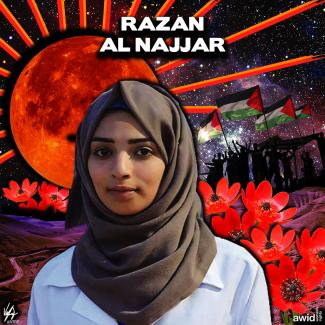
Razan Al-Najjar

Razan was a 21-year-old volunteer medic in Palestine.

She was shot as she ran toward a fortified border fence, in an effort to reach a casualty in the east of the south Gaza city of Khan Younis.

In her very last Facebook post, Razan said: “I am returning and not retreating,” adding: “Hit me with your bullets. I am not afraid.”


Razan Al-Najjar, Palestine

Snippet - WITM Survey will remain open - RU

Опрос будет открыт до 31 июля 2024 года

Пройти опрос!

Пожалуйста выберите язык, на котором вы хотите отвечать на вопросы в правом верхнем углу страницы

Если вы хотите узнать больше, присоединяйтесь к нашей встрече участников исследования «Где деньги?», которая пройдет 27 мая, понедельник, в 9:00 UTC – с синхронным переводом на французский и английский языки. 14:00 UTC – с синхронным переводом на испанский и английский языки.

Становиться участником (in English).

Hospital | Content Snippet EN

“Now might be a good time to rethink what a revolution can look like. Perhaps it doesn’t look like a march of angry, abled bodies in the streets. Perhaps it looks something more like the world standing still because all the bodies in it are exhausted—because care has to be prioritized before it’s too late.” 
- Johanna Hedva (https://getwellsoon.labr.io/)

Hospitals are institutions, living sites of capitalism, and what gets played out when somebody is supposed to be resting is a microcosm of the larger system itself. 

Institutions are set out to separate us from our care systems – we find ourselves isolated in structures that are rigidly hierarchical, and it often feels as if care is something done to us rather than given/taken as part of a conversation. Institutional care, because of its integration into capitalist demand, is silo-ed: one person is treating your leg and only your leg, another is treating your blood pressure, etc. 

Photographer Mariam Mekiwi had to have surgery last month and documented the process. Her portraits of sanitized environments – neon white lights, rows after rows of repetitive structures – in a washed-out color palette reflect a place that was drained of life and movement. This was one of the ways Mariam kept her own spirit alive. It was a form of protest from within the confines of an institution she had to engage with.

The photos form a portrait of something incredibly vulnerable, because watching someone live through their own body’s breakdown is always a sacred reminder of our own fragility. It is also a reminder of the fragility of these care systems, which can be denied to us for a variety of reasons – from not having money to not being in a body that’s considered valuable enough, one that’s maybe too feminine, too queer or too brown.  

Care experienced as disembodied and solitary, that is subject to revocation at any moment, doesn’t help us thrive. And it is very different from how human beings actually behave when they take care of each other. How different would our world look like if we committed to dismantling the current capitalist structures around our health? What would it look like if we radically reimagined it?
Simone Jagger

Biography

Simone has 20 years’ experience working in management support and administration in non-profit organizations, in particular post-graduate medical education and ICT training. She has qualifications in Management Support and Paralegal studies. She is based in South Africa, enjoys traveling and is an amateur Genealogist.

Position
Executive Assistant
Add to stories
Off

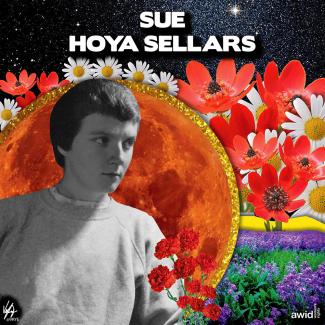
Sue Hoya Sellars

Sue fue artista, activista y maestra y nació en 1936 en Maryland, Estados Unidos.

Creó arte para mujeres y sobre mujeres. Como lesbiana feminista, y durante un tiempo también separatista, se dedicó a la creación de espacios sólo para mujeres. En 1976 compró tierras que todavía son conservadas por mujeres que van temporariamente a hacer arte. Sue mantuvo una apasionada posición en la protección de las mujeres y las niñas.

Con su innovador enfoque futurista, clásico y antropológico, llenaba cada habitación en la que entraba con su intelecto, su excentricidad auténtica, su ingenio implacable y su humor. Sus ideas acerca de la conciencia y la creatividad siguen inspirando a mucha gente.


Sue Hoya Sellars, USA

Snippet - WITM Acknowledgements - PT

Agradecimentos

A AWID agradece sinceramente às várias pessoas cujas ideias, análises e contribuições moldaram a pesquisa e a defesa do “Onde está o dinheiro” ao longo dos anos.

Em primeiro lugar, os nossos mais sinceros agradecimentos aos membres da AWID e às ativistas que participaram nas colaborações com o WITM e testaram este questionário connosco, ao partilhar tão generosamente o seu tempo, análise e espírito.

Agradecemos aos movimentos feministas, aos aliados e aos fundos feministas, incluindo, mas não se limitando ao Black Feminist Fund, Pacific Feminist Fund, ASTREA, FRIDA Young Feminist Fund, Purposeful, Kosovo Women's Network, Human Rights Funders Network, CEECCNA Feminist Fund e PROSPERA, pelas suas investigações rigorosas sobre o estado de financiamento, pela análise perspicaz e pela defesa contínua de mais recursos de melhor qualidade e poder para a organização feminista e de justiça de género em todos os contextos.

Junte-se à comunidade global de feministas que se manifestam sobre o estado de financiamento, e exigem mais recursos de melhor qualidade e poder para feministas globalmente.