Philippe Leroyer | Flickr (CC BY-NC-ND 2.0)

Women Human Rights Defenders

WHRDs are self-identified women and lesbian, bisexual, transgender, queer and intersex (LBTQI) people and others who defend rights and are subject to gender-specific risks and threats due to their human rights work and/or as a direct consequence of their gender identity or sexual orientation.

WHRDs are subject to systematic violence and discrimination due to their identities and unyielding struggles for rights, equality and justice.

The WHRD Program collaborates with international and regional partners as well as the AWID membership to raise awareness about these risks and threats, advocate for feminist and holistic measures of protection and safety, and actively promote a culture of self-care and collective well being in our movements.


Risks and threats targeting WHRDs  

WHRDs are exposed to the same types of risks that all other defenders who defend human rights, communities, and the environment face. However, they are also exposed to gender-based violence and gender-specific risks because they challenge existing gender norms within their communities and societies.

By defending rights, WHRDs are at risk of:

  • Physical assault and death
  • Intimidation and harassment, including in online spaces
  • Judicial harassment and criminalization
  • Burnout

A collaborative, holistic approach to safety

We work collaboratively with international and regional networks and our membership

  • to raise awareness about human rights abuses and violations against WHRDs and the systemic violence and discrimination they experience
  • to strengthen protection mechanisms and ensure more effective and timely responses to WHRDs at risk

We work to promote a holistic approach to protection which includes:

  • emphasizing the importance of self-care and collective well being, and recognizing that what care and wellbeing mean may differ across cultures
  • documenting the violations targeting WHRDs using a feminist intersectional perspective;
  • promoting the social recognition and celebration of the work and resilience of WHRDs ; and
  • building civic spaces that are conducive to dismantling structural inequalities without restrictions or obstacles

Our Actions

We aim to contribute to a safer world for WHRDs, their families and communities. We believe that action for rights and justice should not put WHRDs at risk; it should be appreciated and celebrated.

  • Promoting collaboration and coordination among human rights and women’s rights organizations at the international level to  strengthen  responses concerning safety and wellbeing of WHRDs.

  • Supporting regional networks of WHRDs and their organizations, such as the Mesoamerican Initiative for WHRDs and the WHRD Middle East and North Africa  Coalition, in promoting and strengthening collective action for protection - emphasizing the establishment of solidarity and protection networks, the promotion of self-care, and advocacy and mobilization for the safety of WHRDs;

  • Increasing the visibility and recognition of  WHRDs and their struggles, as well as the risks that they encounter by documenting the attacks that they face, and researching, producing, and disseminating information on their struggles, strategies, and challenges:

  • Mobilizing urgent responses of international solidarity for WHRDs at risk through our international and regional networks, and our active membership.

Related Content

Snippet FEA Lohana Berkins (ES)

Una de las líderes fundadoras de la cooperativa fue Lohana Berkins, activista, defensora y promotora de la identidad trans. Lohana jugó un papel crucial en la lucha por los derechos de las personas trans y travesti.

A través de su lucha se consiguió, entre muchas otras cosas, la aprobación de la Ley de Identidad de Género. Es una de las legislaciones más progresistas del mundo, garantizando derechos fundamentales a las personas trans y travestis. Ahora, las personas pueden cambiar sus nombres y géneros solo con una declaración jurada, y tener acceso a atención médica integral sin intervención/aprobación judicial o médica (Outright International, 2012).

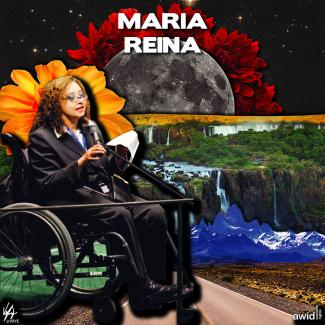
María Verónica Reina

María était reconnue au niveau mondial pour son leadership extraordinaire au sein de la communauté des personnes handicapées.

Elle a représenté l'International Disability and Development  Consortium (consortium international sur le développement et le handicap) lors de la négociation de la Convention des Nations Unies relative aux droits des personnes handicapées (2001-2006). Son travail a été consacré à la réalisation de l'objectif de la Convention, à savoir la réalisation des droits humains  universels par, pour et avec les personnes handicapées pour un monde inclusif, accessible et durable.

Selon ses propres mots, son leadership consistait à « … servir la communauté des personnes handicapées, en commençant par de petites tâches que d'autres pourraient ne pas vouloir faire».

Elle est décédée le 27 octobre 2017 dans sa ville natale de Rosario, en Argentine.

Pour en savoir plus sur María Verónica Reina, retrouvez son témoignage.


María Verónica Reina, Argentina

5. Conduct interviews

Interviews produce in-depth information that you cannot easily obtain from surveys. While surveys focuses mainly on quantifiable data and closed questions, interviews allow for expert opinions from activists and donors, and open-ended questions which can provide context to survey data results.

In this section

General tips

1. Before conducting your interviews

Send the interviewees a concept note with your objectives for the interview and for your overall research, as well as a list of questions.

This allows them to prepare answers for more complicated questions and look up information that they may not have immediately on hand.

2. During the interviews

  • You can conduct interviews while your survey is running, in order to save time.
  • Try to keep your interviews as consistent as possible in order to facilitate systematic analysis of results. This means asking the same questions. Coding identical responses to each question will allow you to uncover hidden trends.
  • The interviews can also be used to flesh out some of the survey findings

Do not base your questions on assumptions about your interviewees’ knowledge.
Instead, first clarify what they know – this will reveal information as well.

  • DON’T: “Given the current funding trends in Switzerland, do you know of any opportunities for collaboration? This question assumes that the interviewee knows current funding trends and that their understanding of funding trends matches yours.
  • DO: First ask “What is your understanding of current funding trends in Switzerland?”, followed by “Do you know of any opportunities for collaboration?” This will reveal what their understanding is, giving you even more information than the first question.

Back to top


Specialized interviews

1. Donor interviews

Interviews with donors will allow you to build deeper relationships with them, which will be useful when you conduct post-research advocacy. They will also provide you with deeper insight into funders’ decision-making processes.

Suggested topics of focus for donor interviews:

  • What are their funding priorities? Why and how did they select those priorities? For example, why do they choose project-funding over core support or vice versa?
  • What are annual amounts allocated to the advancement of women’s human rights? This will strengthen overall reliability of data collected.
  • Have they noticed any funding trends, and what do they believe are the origins and politics behind these trends?
  • What is their theory of social change and how does that impact their relationships with women’s rights organizations?
View samples of donor interviews

2. Women’s rights organizations and activists interviews

Interviews with women’s rights organizations and activists will provide you with insight into their on-the-ground realities. Again, these interviews will allow you to build deeper relationships that can be incorporated into your advocacy, particularly to encourage collaboration between donors and activists.

Suggested topics of focus for women’s rights organizations and activist interviews:

  • Long-term funding priority trends noted by women’s organizations and their impact.
  • Successful examples of feminist and collaborative resource mobilization strategies that build strong and complementary movements.
  • “Making the case” for why it is important to support women’s organizations and organizing.
  • How different actors understand the social change process and their role in advancing/achieving gender equality and women’s rights.
View samples of women’s organizations and activists interviews

Back to top


Preliminary findings

Through the course of your WITM research, we recommend analyzing your preliminary findings. Presenting your preliminary findings opens up opportunities to conduct more interviews and get feedback on your research process and initial results. This feedback can be incorporated into your final research.

AWID conducts “WITM convenings” to share preliminary results of survey data and interviews. These gatherings allow participants (activists, women’s rights organizations, and donors) to debate and discuss the results, clarifying the context, creating more ownership amongst members of the movement, and providing more input for final research.

For example, the Resource Mobilization Hub for Indigenous Women’s Rights at the World Summit on Indigenous Philanthropy was used as a space to debut preliminary results.

See the presentation given at the RMH

Back to top


Previous step

4. Collect and analyze your data

Next step

6. Conduct desk research

Estimated time:

• 1.5 - 3 months

People needed:

• 1 or more research person(s)

Resources needed:

• List of donors and women’s rights organizations and activists to interview
• Prepared interview questions
• Concept Note (You can use the research framing you created in the “Frame your research” section)

Resources available:

AWID Sample Interview Questions: Donors
AWID Sample Interview Questions: Activists & Women’s Rights Organizations


Previous step

4. Collect and analyze your data

Next step

6. Conduct desk research

Ready to Go? Worksheet

Download the toolkit in PDF

Snippet - WITM why - RU

Почему Мне Следовало Бы Пройти Этот Опрос?

Snippet FEA Exclusion and Stigma (FR)

Une illustration d'un mégaphone en bleu marine. Des lignes représentant des ondes sonores sortent de l'extrémité du haut-parleur, en bordeaux.

L'EXCLUSION, LA STIGMATISATION ET LES ABUS INSTITUTIONNELS
auxquels les personnes trans et les travestis continuent de faire face au quotidien

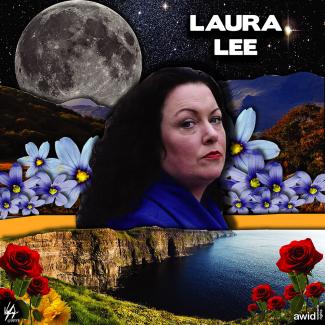
Laura Lee

Laura was a leading activist and lawyer who campaigned fearlessly for the decriminalisation of sex work in Ireland.

She is remembered as “a freedom fighter for sex workers, a feminist, a mother to a daughter and a needed friend to many.” 

Laura advocated for individuals in the sex industry to be recognised as workers deserving of rights. She advanced demands for decriminalisation, including initiating a judicial review at Belfast’s high court in respect of the provisions criminalising the purchase of sex.  Laura stated that her intention was to bring the case to the European Court of Human Rights.


Laura Lee, Ireland

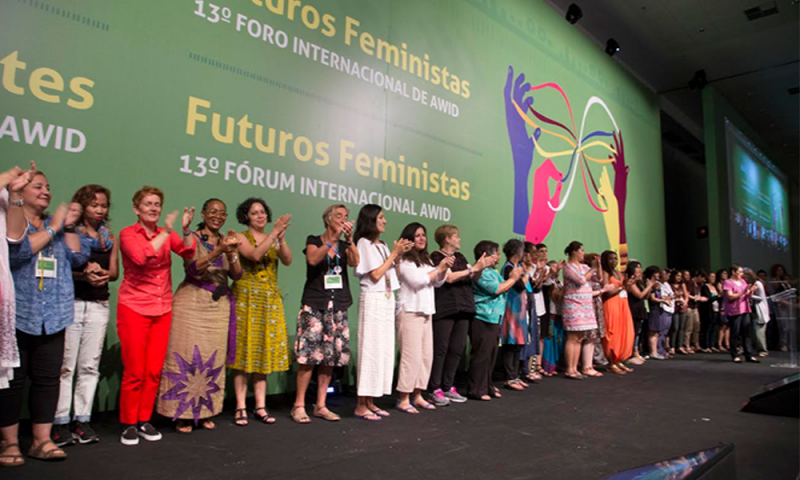
Gracias por participar en la creación de nuestros Futuros Feministas

¡Gracias por haber sido parte del Foro AWID 2016!

AWID agradece enormemente a todxs ustedes que han compartido con nosotrxs estos últimos cuatro días de aprendizaje, celebraciones, ideaciones, sueños y la construcción conjunta de nuestros futuros feministas en el Foro AWID 2016.

Nos sentimos muy inspiradxs, maravilladxs y llenxs de energía con todo el trabajo colectivo que hemos hecho para crear nuestros diversos futuros feministas.

Para más imagen, blogues y recursos:

Visite el sitio del Foro


Conéctate con #AWIDForum

Snippet - WITM To Strengthen - PT

Para fortalecer a nossa voz e poder coletivos para obter mais recursos de melhor qualidade para a organização feminista, de direitos das mulheres, de LBTQI+ e de aliados globalmente.

Snippet FEA The fight for a world full of workplaces (EN)

The fight for a world full of workplaces that are free from of all forms of discrimination, stigma and exclusion is  a worthy one. A world in which sex work is decriminalized and recognized as work is part of this.

A world where all workers have safe working conditions, dignified wages, and can enjoy the same rights like health care, pension pay, sick days, holidays, job security and more, no matter their gender, race, ethnicity, age or ability. Labor rights are feminist issues, and feminist unions play a key role in advancing the legal, labor and economic rights of all workers, especially migrant workers, domestic workers, informal workers and sex workers. These are folks who have most recently been disproportionately affected by the pandemic, its burdens of care, lockdowns, curfews and increased policing. Let us introduce you to the stories of feminists and union organizers that are fighting for better working conditions and better worlds for all.

Deborah Holmes

Al momento de su muerte, luego de una corta pero denodada batalla contra el cáncer, Deborah era la Jefa de Comunicaciones y Participación en la Women’s Funding Network (WFN, Red de financiamiento para mujeres).

Deborah también trabajó para el Fondo Global de Mujeres entre 2008 y 2017. Era sumamente querida y respetada por el consejo asesor, el personal y lxs colaboradorxs de la organización.

Kavita Ramdas, anterior directora ejecutiva del Fondo, acertadamente señaló que Deborah era un «pequeño paquete que explotaba de calidez, generosidad, inteligencia, estilo y un apasionado compromiso por unir la belleza con la justicia. Ella entendía el poder de las historias. El poder de la voz de las mujeres. El poder de la experiencia vivida. El poder de levantarse de las cenizas y decirle a otrxs que era posible. Y todavía nos levantamos».

Musimbi Kanyoro, actual directora ejecutiva del Fondo Global de Mujeres, añadió: «Hemos perdido a una hermana y su vida ilumina valores que nos unen y nos inspiran. Al reunirnos para llorar el fallecimiento de Deborah, recordemos y celebremos su notable, audaz y apasionada vida».


Deborah Holmes, USA

Les savoirs communautaires pour bâtir des futurs justes

Le contexte

Aujourd'hui, de nombreux systèmes de savoirs communautaires sont en danger.

Les changements qui surviennent à une vitesse effrénée sur le plan économique, politique et culturel détruisent les environnements, les pratiques et les moyens de subsistance. Diverses formes de connaissances sombrent dans l’oubli, sont marchandées et colonisées dans le cadre de la mondialisation massive, de la promesse de gains à court terme, ou encore contre des solutions de fortune.

Définition

Le Buen Vivir (le bien-vivre), un concept adapté à partir des connaissances des peuples autochtones andins, est décrit comme la réalisation collective d'une vie d'accomplissement fondée sur des relations harmonieuses et équilibrées entre les êtres humains et tous les êtres vivants, dans la réciprocité et la complémentarité. Cela implique de reconnaître que les êtres humains sont une partie intégrante de la nature, que nous dépendons de la nature et que nous sommes interdépendant-e-s entre nous.

La vision inhérente à la notion de Buen Vivir intègre la production et la reproduction comme processus indissociables de l'économie, de la production de richesse et des conditions de vie.

Perspective féministe

D’une perspective féministe, le Buen Vivir valorise les relations et les ressources mobilisées dans les cycles de production et de reproduction, favorisant l’équilibre (non seulement celui des marchés) afin de garantir la continuité et les changements, tant qu'ils sont compatibles avec la justice économique et la pérennité de la vie.

Certaines conceptions binaires liées au genre et à la complémentarité entre les hommes et les femmes ont été critiquées par les féministes puisqu’elles laissent peu de place à une discussion plus approfondie sur le patriarcat hétérocentrique et les relations de genre ‘non conformes’.

Cela dit, l'une des principales contributions de l’application du principe Buen Vivir aux cadres politiques, économiques et sociaux, consiste à ce que l'égalité ne représente plus le paradigme des droits individuels, ayant plutôt pour objet la transformation de l’ensemble de la société.


Pour en savoir plus sur cette proposition :

  • Buen Vivir: An introduction from a women’s rights perspective in Bolivia (Une perspective des droits des femmes sur le Buen Vivir en Bolivie : Une introduction, disponible en anglais). Dans son article, Martha Lanza conteste l'idée que le Buen Vivir est neutre en matière de genre et réclame le démantèlement des structures de pouvoir patriarcales qui persistent. Dans la même publication, Magdalena León analyse d’une perspective de genre la façon dont la cosmovision du Buen Vivir cherche à vaincre les idéaux d'expansion et de croissance permanentes, en plus de mettre en lumière les préjugés sexistes qui doivent être pris en compte.
  • Buen Vivir: Today’s Tomorrows (Les lendemains d’aujourd’hui) par Eduardo Gudynas (en anglais).
  • Indigenous Women's Visions of an Inclusive Feminism (Visions de femmes autochtones pour un féminisme inclusif), par Myrna Cunningham (en anglais). Un document qui met en évidence les contributions essentielles des femmes autochtones à la construction d'un mouvement féministe plus diversifié, inclusif et fort.

Snippet - WITM Why now_col 2 - PT

O financiamento dos movimentos feministas é fundamental para garantir uma presença mais justa e pacífica, e um futuro liberto.

Na última década, os financiadores investiram significativamente mais dinheiro na igualdade de género; no entanto, apenas 1% do financiamento filantrópico e de desenvolvimento foi efetivamente direcionado para apoiar diretamente mudanças sociais lideradas por feministas
Na busca da abundância, e para acabar com esta escassez crónica, o inquérito WITM é um convite para os defensores do feminismo e da justiça de género se envolverem no percurso da recolha coletiva de testemunhos e de casos para mobilizar mais recursos financeiros de melhor qualidade e recuperar o poder no ecossistema de financiamento neste momento. Em solidariedade com os movimentos que continuam invisibilizados, marginalizados e sem acesso a financiamento central, de longo prazo, flexível e baseado em fundos fiduciários, o inquérito WITM destaca o estado efetivo dos recursos, desafia soluções falsas e aponta.

Snippet FEA Georgia's minimum wage (ES)

El salario mínimo de Georgia se encuentra en un porcentaje inferior al de todos los países del mundo. Esta realidad afecta mayoritariamente a las mujeres.

El país no solo tiene una brecha salarial de género significativa, sino que las mujeres también trabajan más horas y más horas no reguladas antes de irse a casa para ocuparse de las tareas domésticas y de sus familias. No hay licencia por maternidad, no hay aumentos de salario por horas extras, no hay seguro de desempleo, y no hay licencias por enfermedad u otra protección social. Presionados por organizaciones occidentales, los partidos políticos oligárquicos georgianos han estado implementando reformas que están destruyendo el estado de bienestar, aumentando las medidas de austeridad y empeorando la explotación de lxs trabajadorxs, todo para los beneficios de grandes corporaciones que aplauden al país por su "facilidad para hacer negocios". Los medios de comunicación, cooptados por intereses privados y corporativos, están sesgados sobre estos temas o los silencian. La organización sindical sigue siendo una de las pocas opciones para luchar por los derechos humanos básicos y para hacer que el Estado y las empresas rindan cuentas ante las violaciones y persecuciones diarias y generalizadas contra lxs trabajadorxs, especialmente contra las mujeres.

Fuentes: Minimum-Wage y entrevista con Sopo Japaridze en Democracia Abierta

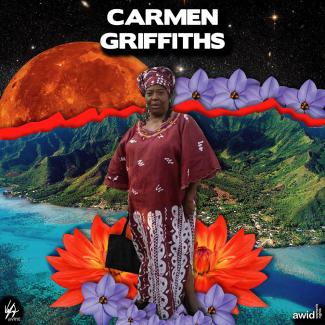
Carmen Griffiths

Carmen dirigeait le Construction Resource and Development Collective et a joué un rôle de premier plan en faveur de la participation des femmes dans l’industrie de la construction en Jamaïque.

Elle a également œuvré à la préparation aux catastrophes de femmes rurales et urbaines. Elle a travaillé en étroite collaboration avec les femmes (en particulier les mères célibataires) pour leur apprendre à utiliser les sangles anti-ouragan ainsi que d’autres technologies pour sécuriser leur foyer. Elle a travaillé dans le domaine de l’eau et de l’assainissement et a été une ardente défenseure d’une gestion durable de l’environnement et du développement.

Elle faisait partie de la Commission Huairou et plaidait en faveur des femmes de la base sur des questions telles que le logement, l'énergie et les moyens de subsistance durables.


Carmen Griffiths, Jamaica

Protection of the Family - Opposition Views

New conservative alliance:

Conservative organizing and policy

State supporters

Какую цель преследует опрос «Где деньги?»

Ключевая цель исследования – осветить финансовое положение различных феминистских движений, инициатив за права женщин, гендерную справедливость, ЛГБТКИ+ и смежных движений по всему миру и, основываясь на этом, еще больше усилить аргументы в пользу увеличения объема денежных средств и передачи власти феминистским движениям.