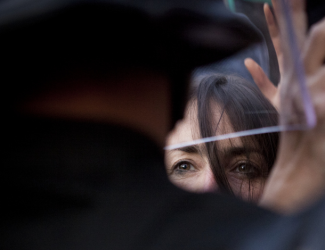
Philippe Leroyer | Flickr (CC BY-NC-ND 2.0)

Women Human Rights Defenders

WHRDs are self-identified women and lesbian, bisexual, transgender, queer and intersex (LBTQI) people and others who defend rights and are subject to gender-specific risks and threats due to their human rights work and/or as a direct consequence of their gender identity or sexual orientation.

WHRDs are subject to systematic violence and discrimination due to their identities and unyielding struggles for rights, equality and justice.

The WHRD Program collaborates with international and regional partners as well as the AWID membership to raise awareness about these risks and threats, advocate for feminist and holistic measures of protection and safety, and actively promote a culture of self-care and collective well being in our movements.


Risks and threats targeting WHRDs  

WHRDs are exposed to the same types of risks that all other defenders who defend human rights, communities, and the environment face. However, they are also exposed to gender-based violence and gender-specific risks because they challenge existing gender norms within their communities and societies.

By defending rights, WHRDs are at risk of:

  • Physical assault and death
  • Intimidation and harassment, including in online spaces
  • Judicial harassment and criminalization
  • Burnout

A collaborative, holistic approach to safety

We work collaboratively with international and regional networks and our membership

  • to raise awareness about human rights abuses and violations against WHRDs and the systemic violence and discrimination they experience
  • to strengthen protection mechanisms and ensure more effective and timely responses to WHRDs at risk

We work to promote a holistic approach to protection which includes:

  • emphasizing the importance of self-care and collective well being, and recognizing that what care and wellbeing mean may differ across cultures
  • documenting the violations targeting WHRDs using a feminist intersectional perspective;
  • promoting the social recognition and celebration of the work and resilience of WHRDs ; and
  • building civic spaces that are conducive to dismantling structural inequalities without restrictions or obstacles

Our Actions

We aim to contribute to a safer world for WHRDs, their families and communities. We believe that action for rights and justice should not put WHRDs at risk; it should be appreciated and celebrated.

  • Promoting collaboration and coordination among human rights and women’s rights organizations at the international level to  strengthen  responses concerning safety and wellbeing of WHRDs.

  • Supporting regional networks of WHRDs and their organizations, such as the Mesoamerican Initiative for WHRDs and the WHRD Middle East and North Africa  Coalition, in promoting and strengthening collective action for protection - emphasizing the establishment of solidarity and protection networks, the promotion of self-care, and advocacy and mobilization for the safety of WHRDs;

  • Increasing the visibility and recognition of  WHRDs and their struggles, as well as the risks that they encounter by documenting the attacks that they face, and researching, producing, and disseminating information on their struggles, strategies, and challenges:

  • Mobilizing urgent responses of international solidarity for WHRDs at risk through our international and regional networks, and our active membership.

Related Content

FRMag - Roots of Love and Resilience

Kunyit asam: Las raíces del amor y la resiliencia

por Prinka Saraswati

El ciclo menstrual habitualmente abarca entre 27 y 30 días. En ese lapso, el período en sí dura de 5 a 7 días. La fatiga, los cambios de humor y los espasmos son el resultado de la inflamación durante la menstruación. 

Leer

< arte: «Movimiento feminista», Karina Tungari

No puedo presentar una propuesta escrita, ¿aceptan otros formatos?

Como expresión de nuestro compromiso con hacer que todos los aspectos del Foro AWID sean accesibles, aceptaremos propuestas en forma de audio/video cuando se trate de personas/organizaciones/grupos que no puedan enviarlas por escrito. Si decides enviar tu propuesta en formato de audio/video, por favor responde las preguntas en el mismo orden en que aparecen en el Formulario para Presentar Actividades.

Para presentar un archivo de audio/video, por favor escríbenos utilizando nuestro formulario de contacto. Seleccione «propuesta de actividad» como asunto de mensaje.

Contactanos

Maritza Quiroz Leiva

Maritza Quiroz Leiva was an Afro Colombian social activist, a community leader and women human rights defender. Among the 7.7 million Colombians internally displaced by 50 years of armed conflict, Maritza dedicated her advocacy work to supporting the rights of others, particularly in the Afro Colombian community who suffered similar violations and displacement.

Maritza was the deputy leader of the Santa Marta Victim's Committee, and an important voice for those seeking justice in her community, demanding reparations for the torture, kidnapping, displacement, and sexual violence that victims experienced during the armed conflict. She was also active in movement for land redistribution and land justice in the country. 

On 5 January 2019, Maritza was killed by two armed individuals who broke into her home. She was 60 years old. 

Maritza joined five other Colombian social activists and leaders who had been murdered just in the first week of 2019. A total of 107 human rights defenders were killed that year in the country. 

Snippet - CSW69 - Feminist Solidarity Space - ES

Espacio de solidaridad feminista

✉️ Requiere inscripción previa para grandes grupos. Entrada libre para grupos reducidos. Reserven aquí

📅Martes 11 de marzo de 2025
🕒 de 12:00 a 02:00 p.m. y de 04:00 a 06:00 p.m., EST
🏢 
Chef's Kitchen Loft with Terrace, 216 East 45th St 13th Floor New York

Organiza: AWID

Snippet - Podcast Playlist Season 1 (FR)

Anti-Rights Trends in Regional Human Rights Systems

Chapter 6

In the African Commission and the Inter-American System, anti-rights actors push essentialist notions of culture and gender to hamper progress on rights and undermine accountability. As we see, anti-rights actors are exerting influence in regional human rights systems, as well as international spaces. 

2019 JUN 27 Meeting of the Summit Implementation Review Group in Colombia
© Juan Manuel Herrera/OAS/Flickr
2019 JUN 27 Meeting of the Summit Implementation Review Group in Colombia

The African Commission on Human and Peoples' Rights has begun framing women’s and sexual rights as jeopardising its ability to deal with “real rights” and contrary to “African values”,   setting a worrying anti-rights precedent. The withdrawal of the Coalition of African Lesbians’ observer status is an example of this trend, and points to the way space for feminist, Pan-Africanist engagement is being stifled. 

In the Organization of American States (OAS) and the Inter-American Human Rights System, anti-rights strategies include the NGOization of religious groups, the use of secular discourses, and the co-optation of discrimination frameworks. Anti-rights influence has materialized in a number of ways, including the intimidation of trans activists and the blocking the introduction of progressive language in resolutions.

Table of Contents

  • Silencing Feminists in the African Human Rights System
  • Anti-rights Groups in Latin America: Organization of American States (OAS) General Assembly and the Inter-American Human Rights System
     

Read Full Chapter >

FRMag - Mainstreaming The Invisible

Intégrer les réalités féministes invisibles

par Dr. Pragati Singh

En 2019, j’étais invitée par le réseau BBC pour intervenir lors de la conférence intitulée 100 women (100 femmes) à Delhi, en Inde, à propos de « L’avenir de l’amour, des relations et des familles ». (...)

Lire

illustration : « Les anges aussi sortent la nuit », par Chloé Luu >

¿Qué incluye el costo de inscripción?

El costo de inscripción para el Foro de AWID cubre, para todxs lxs participantes:

  •  Pleno acceso a los cuatro días del Foro
  • Almuerzos y pausas para café/té durante los días del Foro
  • Materiales de consulta
  • Interpretación simultánea durante las plenarias y algunas sesiones/actividades subsidiarias determinadas (inglés, francés, español e idioma local)
  • Participación en la cena/fiesta de celebración
  • Aplicación móvil con programa definitivo y función de chat
  • Servicio de wi-fi gratuito dentro del área de Foro
  • Traslados desde/al aeropuerto y transporte hotel-sede-hotel.

Roxana Reyes Rivas

Roxana Reyes Rivas, filósofa, feminista, lesbiana, poeta, política y activista por los derechos humanos de las mujeres y las personas LGBTI en Costa Rica. Dueña de una pluma afilada y un humor agudo, con la risa a flor de piel. Nació en 1960 y creció en San Ramón de Alajuela, cuando era una zona rural, y su vida entera rompería con los mandatos de lo que significaba ser mujer. 

Desde El Reguero (grupo de lesbianas en Costa Rica) organizó festivales lésbicos por más de 10 años, espacios lúdico-formativos de encuentro en momentos donde el gobierno y la sociedad costarricense perseguía y criminalizaba la existencia lésbica. Para cientos de mujeres los festivales lésbicos eran el único lugar donde podían ser ellas mismas y encontrarse con otras como ellas.

Roxana decía que fundar partidos políticos era uno de sus pasatiempos. “Es importante que en Costa Rica la gente entienda que hay otras formas de hacer política, que muchos temas es necesario resolverlos colectivamente”. Fue una de lxs fundadores de los partidos Nueva Liga Feminista y VAMOS, un partido centrado en los derechos humanos.  

“El oficio de la filosofía es meter la puya, ayudar a que la gente empiece a preguntarse cosas. La filósofa que no irrita a nadie, no está haciendo bien su trabajo”. Durante 30 años, Roxana fue profesora de filosofía en universidades públicas costarricenses. De su mano generaciones enteras de estudiantes reflexionaron sobre los dilemas éticos en la ciencia y la tecnología. 

La herramienta favorita de Roxana era el humor, ella creó el premio del Chiverre Incandescente, un reconocimiento a la estupidez que otorgaba vía redes sociales a diferentes figuras públicas, ridiculizando sus exabruptos y afirmaciones anti-derechos.

Un cáncer agresivo se llevó a Roxana a fines del 2019, antes de que alcanzara a publicar la compilación de sus poemas, un último regalo de la mente creativa de una feminista que siempre levantó la voz para denunciar la injusticia. 

Snippet - Resources to rally - ES

Recursos para movilizarnos durante la CSW69

Devenir membre

Devenir membre

En rejoignant l’AWID, vous intégrez l’organisation féministe mondiale, un pouvoir collectif qui se fonde sur la solidarité et puise ses racines dans le travail entre les mouvements.

L’adhesion a titre individuel

L’adhesion Organisationnelle

Suscríbete para recibir nuestras noticias

* indica un campo requerido
                  
                         
Seleccione los temas sobre los que desea recibir información:

FRMag - Dieula and the Black Dolls

Dieula and the Black Dolls

by Ana María Belique

The Naranjo Batey community is far from the city, but it’s full of hard-working people brimming with enthusiasm. A girl named Dieula lived there. (...)

Read

< artwork: “Fury” by Diana Manilla Arroyo

No puedo asistir al Foro en persona: ¿en qué otra forma puedo participar?

Más que un simple evento, el Foro de AWID es parte de nuestro Viaje de Realidades Feministas, con muchos espacios en los cuales reunirse, en línea o en forma presencial, para compartir, discutir, elaborar estrategias, y crear conjuntamente realidades feministas.

Infórmate sobre el Viaje de Realidades Feministas y sobre todo lo que sucederá en este Viaje antes del Foro. ¡Y mantente sintonizadx para los anuncios post-Foro!

Estamos estudiando opciones para la participación virtual en el Foro, y compartiremos la información cuando sepamos qué podemos ofrecer.

Dorothy Masuka

“Je n’avais pas prévu d’être chanteuse; c’est le chant qui avait prévu de m’habiter”  - Dorothy Masuka (interview avec Mail & Guardian)

Dorothy Masuka, née en 1935 à Bulawayo (alors en Rhodésie du Sud, aujourd’hui le Zimbabwe), a grandi en Afrique du Sud. Elle est devenue une auteure, compositrice, chanteuse de jazz et activiste renommée, et fervente partisane de la lutte contre l’apartheid. Qualifiée d’“architecte du discours de la musique populaire de libération africaine”, Dorothy a souvent chanté la politique dans des langues africaines autochtones et tout au long de son oeuvre, et s’est opposée aux politiques racistes du gouvernement sud-africain. 

L’une de ses chansons, intitulée "Dr Malan" (du nom de l'homme politique pro-apartheid D.F. Malan) a été censurée. Elle a poursuivi avec l’enregistrement de "Lumumba" (1961), une chanson sur l'assassinat du leader anticolonialiste Patrice Lumumba. Le travail et l'activisme de Dorothy ont alors attiré l'attention de la section spéciale de la police sud-africaine, ce qui la contraignit à un exil politique qui s’étendit sur plus de 3 décennies. Tout au long de cette période, elle travailla avec des groupes pro-indépendantistes, dont le Congrès national africain. En 1992, alors que l'apartheid commençait à s'effondrer et que Nelson Mandela fut libéré de prison, elle retourna en Afrique du Sud. 

Parmi ses autres œuvres, on peut citer sa première chanson, enregistrée en 1953 et intitulée "Hamba Notsokolo", qui fut un tube des années 1950 et un grand classique. Elle composa également "El Yow Phata Phata", une chanson adaptée par Miriam Makeba qui contribua à offrir une popularité internationale à "Pata, Pata"

Ancrés dans la résistance, la musique et l’activisme de Dorothy étaient entrelacés et laissent un merveilleux héritage inspirant. Elle était également très connue sous le nom de “Auntie Dot”.   

Le 23 février 2019, Dorothy s’est éteinte à Johannesburg à 83 ans des suites d’une maladie.


Regardez l'interview de Dorothy Masuka pour Mail & Guardian (seulement en anglais)

Écoutez sa musique :

Hamba Nontsokolo
El Yow Phata Phata

Snippet - Homepage CSW69_FR

AWID à la CSW69 Beijing+30 | #FreezeFascisms

Notre présence collective perturbe les mécanismes d’exclusion des institutions dans ces espaces tout en soutenant les mouvements qui s’organisent autour d’alternatives féministes aux systèmes d’oppression.

Participez aux conversations du 10 au 21 mars 2025 pour, collectivement, faire de la CSW69 un espace de résistance et de solidarité.

En savoir plus

Snippet Forum Quoate Sara Abu (EN)

The Forum is a live example of what the bigger WE can do. We go to the Forum, we are seeds, we then get sowed. This we have to celebrate.
- Sara Abu Ghazal, Lebanon