Organizing creatively, facing an increasing threat
Young feminist activists play a critical role in women’s rights organizations and movements worldwide by bringing up new issues that feminists face today. Their strength, creativity and adaptability are vital to the sustainability of feminist organizing.
At the same time, they face specific impediments to their activism such as limited access to funding and support, lack of capacity-building opportunities, and a significant increase of attacks on young women human rights defenders. This creates a lack of visibility that makes more difficult their inclusion and effective participation within women’s rights movements.
A multigenerational approach
AWID’s young feminist activism program was created to make sure the voices of young women are heard and reflected in feminist discourse. We want to ensure that young feminists have better access to funding, capacity-building opportunities and international processes. In addition to supporting young feminists directly, we are also working with women’s rights activists of all ages on practical models and strategies for effective multigenerational organizing.
Our Actions
We want young feminist activists to play a role in decision-making affecting their rights by:
Fostering community and sharing information through the Young Feminist Wire. Recognizing the importance of online media for the work of young feminists, our team launched the Young Feminist Wire in May 2010 to share information, build capacity through online webinars and e-discussions, and encourage community building.
Researching and building knowledge on young feminist activism, to increase the visibility and impact of young feminist activism within and across women’s rights movements and other key actors such as donors.
Promoting more effective multigenerational organizing, exploring better ways to work together.
Supporting young feminists to engage in global development processes such as those within the United Nations
Collaboration across all of AWID’s priority areas, including the Forum, to ensure young feminists’ key contributions, perspectives, needs and activism are reflected in debates, policies and programs affecting them.
Yelena Grigoriyeva, a menudo conocida entre sus amigxs como Lena, fue una destacada defensora de los derechos LGBT en Rusia.
Formó parte de movimientos democráticos, anti-guerra y LGBT. En su activismo, fue una crítica feroz del Presidente Vladimir Putin y su administración, y expresó su oposición a la anexión por parte de Rusia de la península de Crimea de Ucrania y al maltrato de prisionerxs.
Yelena se declaró bisexual a principios de 2019. "Su salida del armario fue una sorpresa para mí, y no la aprobé. Le dije: ‘Escucha, Lena, ya estás en la mira por tu actividad política. Te acabas de clavar otro blanco en el pecho’". - Olga Smirnova
Yelena, de hecho, recibió múltiples amenazas de muerte y, según algunxs de sus conocidxs, figuraba en un sitio web homofóbico que instaba a sus visitantes a que persiguieran a las personas LGBT. Yelena denunció las amenazas a la policía, pero el Estado ruso no le proporcionó ningún tipo de protección.
Sin embargo, Yelena, a pesar de vivir en una sociedad en la que la oposición política, así como lxs integrantes de la comunidad LGBT y lxs defensores de sus derechos, se enfrentan a una violencia continua y creciente, siguió haciendo campaña por la justicia social y la igualdad.
"No se perdió ni una sola acción. Y la detuvieron tantas veces que hasta perdí la cuenta", Olga Smirnova (compañera activista de la oposición y amiga).
Yelena fue asesinada el 21 de julio de 2019, cerca de su casa. Las autoridades detuvieron a una persona sospechosa pero, según algunas fuentes, muchxs amigxs y compañerxs activistas creen que es un chivo expiatorio y que, en realidad, se trata de un asesinato político deliberado.
Para los familiares y amigxs de Yelena, su caso sigue sin resolverse aunque la persona sospechosa haya confesado.
En 2013, Rusia aprobó una ley que prohíbe la difusión de lo que describió como "propaganda gay". En 2014, Human Rights Watch publicó un informe al respecto.
FRMag - Freeing the Church
Libérer l’église et décoloniser la bible pour les femmes de Papouasie occidentale
par Rode Wanimbo
Seigneur, nous sommes indignes. C’est nous qui avons péché car Ève a mangé le fruit dans le jardin d’Eden. (...)
Olajumoke « Jay » Abdullahi et Kym Oliver sont des féministes révolutionnaires à plus d'un titre.
Les deux amies se font appeler les Triple Cripples (invalides en triple) parce qu'elles subissent trois niveaux de discrimination en tant que femmes noires handicapées. Jay, aujourd'hui âgée de 31 ans, a eu la polio bébé et utilise une attelle de jambe et des béquilles pour se soutenir, tandis que Kym, âgée de 25 ans, a la sclérose en plaques et utilise un fauteuil roulant pour se déplacer. Le nom de leur duo découle d'une tentative de redéfinir le mot « invalide », qui, selon elles, « a été affligé aux personnes handicapées comme une insulte, une façon certaine de nous rappeler que nous étions « défectueuses » et allions toujours être moins que. »
En tant que femmes noires, Kym et Jay ont été victimes du stéréotype racial mondialisé qui hypersexualise les peaux foncées. Dans leur livre intitulé Heart of The Race: Black Women's Lives in Britain, Bryan, Dadzie et Scafe décrivent comment les femmes noires ont été historiquement décrites comme un « risque élevé de promiscuité » par les médecins en raison de leur libido et de leur fertilité. Jay explique que « les gens pensent que je suis toujours prête à tout faire, n'importe où n'importe quand, parce que je suis une femme noire. » Alors que les deux femmes ont été soumises à une fétichisation intense en raison de leur couleur de peau, leurs handicaps ont semé la confusion totale dans l'esprit de plusieurs. Kym décrit ainsi son expérience de femme à courbes : « J'ai le type de corps que les gens veulent malmener et ils ont l'impression que je devrais être capable de supporter cela, mais parallèlement, il y a cette idée que je ne devrais pas avoir de critères à cause de mon handicap. »
Sur les sites de rencontre en ligne, on a demandé à Jay si elle pouvait effectuer certaines positions sexuelles car des partenaires potentiel.le.s « ont décidé qu'ielles voulaient être avec vous de cette façon et savoir si votre physicalité pouvait permettre cela. » Lors d'un contrôle, Kym s'est même fait demander des excuses par un professionnel de la santé, remplissant un formulaire, pour lui avoir demandé combien de partenaires sexuel.le.s elle avait eu.e.s, avec une nuance sous-entendant « je sais que (ces questions) ne s'appliquent pas à vous, mais nous devons suivre le processus d'interrogation normé. »
L'idée fausse selon laquelle le manque d'autonomie physique équivaut à un manque de désir sexuel est omniprésente.
À l'école, Jay a été exclue des cours d'éducation sexuelle en raison de son incapacité présumée à avoir des relations sexuelles. Elle explique que même les organisations bien intentionnées qui militent pour l'accès aux services de santé sexuelle et reproductive ne tiennent souvent pas compte des besoins spécifiques des femmes handicapées. Par exemple, les pilules contraceptives sont souvent saluées comme une méthode efficace de contrôle des naissances, sans aucune mention qu'elles peuvent accentuer les risques de caillots sanguins pour les femmes en fauteuil roulant.
Basées à Londres, les Triples Cripples attendaient avec impatience leur participation aux côtés de l'équipe Décoloniser la Contraception à SexFest2020, un festival d'une journée créé pour les personnes racisées, dédié à la santé et au bien-être sexuels. Malheureusement, l'évènement a été annulé en raison de la pandémie de la COVID-19. Néanmoins, sans se décourager, Jay et Kym se sont tournées vers leurs plateformes de plaidoyer en ligne pour contrer la façon dont la sexualité est vue d'un point de vue strictement hétéronormatif et pour contester l'idée que la féminité est définie par la capacité de procréer. Le duo a lancé une chaîne YouTube et un podcast, également appelé The Triple Cripples, pour promouvoir la représentation des personnes subissant des discriminations multiples en tant qu'êtres humains holistiques. Leurs projets futurs comprennent un documentaire artistique et une exposition photographique consacrée à la lutte contre la discrimination et à l'amplification des voix des personnes handicapées racisées.
L'expérience de la discrimination fondée sur la race, le sexe et le handicap est plus que additive.
Bien que les femmes handicapées raciées partagent des expériences de capacitisme avec d'autres personnes handicapées, des expériences de sexisme avec d'autres femmes et des expériences de racisme avec d'autres personnes racisées, ces expériences interagissent et ne peuvent être séparées : les femmes handicapées racisées subissent une discrimination unique en tant que femmes handicapées racisées.
Alors que les Triple Cripples reconnaissent que les approches toutes faites et superficielles à la diversité ne se transformeront pas comme par magie en espaces inclusifs du jour au lendemain, elles restent confiantes que leurs petits coups de hache finiront par faire tomber les grands chênes que les pratiques discriminatoires représentent pour elles.
La joie de s’accepter soi-même et de grandir dans cette lumière.
Titash Sen (@unzeroed)
« Asignado Nderentendei Al Nacer » (“Assigné Nderentendei à la naissance”)
de Bastión Moral, Asunción, Paraguay (@basti0nmoral),
La féminité obligatoire est un dispositif de violence colonial hétéro-cis-patriarcal envers les corps assignés féminins à la naissance. Les corps trans continuent de résister malgré l’invisibilisation et le silencement historique. Je ne suis pas une
Magaly Quintana était connue de nombreuses personnes au Nicaragua comme « La Maga » (la magicienne). Historienne et activiste féministe, elle était une indéfectible défenseure des droits des femmes, réclamant justice pour les victimes de féminicides.
Magaly était fortement engagée dans la documentation et la collecte de statistiques sur les femmes et les filles tuées dans le cadre de la violence sexuelle dans le pays.
« Elle s’employait à reconstituer la vie de chacune d’entre elles, de leur famille, pour montrer ces vies qui avaient été détruites », Dora María Téllez.
Magaly avait également critiqué le gouvernement pour sa réforme de la loi 779 sur la violence à l’égard des femmes. Résultat du travail acharné des mouvements de femmes nicaraguayens, cette loi incluait – avant sa réforme – d’importantes dispositions criminalisant le féminicide. Elle avançait que les réformes législatives avaient affaibli la loi et restreint la définition des féminicides à des homicides, rendant ainsi « invisibles » les crimes violents perpétrés contre les femmes.
Magaly a commencé à mener des actions féministes au début des années 1980. Directrice du Catholic Women for the Right to Choose, elle a défendu le droit à l’avortement thérapeutique après son interdiction en 2006, de même que soutenu les manifestations contre le gouvernement de Daniel Ortega en 2018.
Née en mai 1952, Magaly est décédée en mai 2019.
« Nous nous reverrons plus tard, ma très chère Magaly Quintana. Merci beaucoup, merci pour l’héritage que tu nous laisses. Nous te reverrons, aussi forte et puissante que toujours. », Erika Guevara Rosas (Directrice américaine d’Amnesty International)
FRMag - Ashawo Work na Work
“Ashawo Work na Work”: How Young Ghanaian Feminists Are Making Feminist Futures A Reality
by Fatima B. Derby
In 2017, the AWID #PracticeSolidarity campaign highlighted how young feminists could build feminist futures by showing up for one another, being in cross-regional conversations with one another, marching in solidarity with other activists and collaborating between movements. (...)
Cartas de amor a los movimientos feministas: una carta de Inna y Faye
Queridos movimientos feministas,
El amor es lo que mantiene encendido nuestro fuego feminista. Junto con el cuidado de nuestras comunidades, la ira y la rabia ante la injusticia, y el coraje para actuar.
En septiembre de 2022, asumimos con gran entusiasmo nuestros roles de liderazgo en AWID, como Co-Directoras Ejecutivas. Sentimos el calor y el abrazo de la sororidad feminista cuando ustedes nos recibieron.
Reflexionando sobre nuestras memorias más preciadas como feministas, recordamos momentos poderosos de unión en protestas callejeras, análisis agudos y voces valientes que sacuden el status quo en las reuniones. Mantuvimos esas conversaciones íntimas hasta bien entrada la noche, nos reímos durante horas y bailamos juntes en fiestas.
Es necesario alimentar los fuegos feministas, especialmente en tiempos difíciles cuando no faltan los desafíos externos, desde la crisis climática y el ascenso de las fuerzas de derecha, hasta las economías explotadoras y los patrones persistentes de opresión dentro de nuestros propios movimientos sociales. Son estos fuegos, que arden por todas partes, los que iluminan nuestros caminos y nos mantienen calientes, pero no podemos ignorar los efectos agotadores de la violencia política y la represión dirigida contra muchas de nuestras luchas, movimientos y comunidades
Entendemos el deseo de cambiar el mundo como un ingrediente esencial de la organización feminista. Nunca podemos olvidar que somos quienes hemos estado esperando, en la construcción de alternativas y la configuración de nuestro futuro. Sin embargo, la vibrante energía feminista no puede darse por sentada y debe salvaguardarse de muchas maneras. En este sentido, seguiremos vigilantes. Mejor y más equitativo acceso a la atención y el bienestar, a la sanación y al placer, no son solo instrumentales para prevenir el agotamiento y sostener nuestros movimientos, aunque esa es una función importante; ante todo, son la forma en que esperamos vivir nuestras vidas.
Estamos encantades de arremangarnos y trabajar con ustedes. El nuevo plan estratégico de AWID "Fierce Feminisms: Together We Rise" (“Feminismos Osados: Juntos Nos Levantamos”) refleja nuestra convicción de que ahora es el momento de ser desenfadades y sin temores en nuestras agendas mientras hacemos un esfuerzo por conectar a través de los movimientos y llegar a conocer verdaderamente las realidades individuales, para que podamos ponernos en pie juntes, porque, para nosotres, este es el único camino.
¡Nuestros planes incluyen el tan esperado Foro de AWID! Esperamos conocerles a todes en persona y en línea en 2024. Escuchamos de ustedes la necesidad de conectarse y recargar energías, descansar y sanar, ser desafiados e inspirados, compartir buena comida y reír y bailar juntes. Pocas cosas en este mundo son tan poderosas y transformadoras, como la unión de feministas de todas partes del mundo, y realmente esperamos con ansias por este momento, porque sabemos la magia que podemos crear juntes.
Nuestra conexión con la membresía ha cobrado vida propia a través de la Comunidad AWID (nuestra plataforma en línea), y nuestro enfoque en construir conexión y solidaridad resuena con muches de ustedes. Únase y conéctese con nosotres y otras personas en los movimientos feministas de todo el mundo. Conocemos la importancia de la conexión en un tiempo y espacio donde las reglas no están hechas para nosotres, y mantenemos cerca nuestra comunidad, donde cada uno de nosotres importa.
Junto con nuestres fantásticas colegas de AWID, prometemos hacer todo lo posible para apoyar los movimientos feministas, como es la misión y el propósito de AWID. Por favor, observen y exijan lo mejor de nosotres.
Durante los últimos 40 años, ustedes, los movimientos feministas, han dado forma a la historia de AWID y nos han impulsado a ser más valientes, creatives y radicales. 40 es una edad fabulosa, y esperamos cumplir otros 40 años más junto a ustedes. Esperamos con ansias las asociaciones, los llamados a la justicia, la colaboración, la influencia política y el poder feminista genial que todes traen para navegar la resistencia cada vez mayor a la justicia de género, racial y ambiental. Tenemos mucho que aprender de ustedes y unes de otres, mientras construimos colectivamente los mundos en los que creemos.
Cindy Clark y Hakima Abbas, gracias por abrirnos el camino y prepararnos para llenar sus enormes zapatos. Siempre apreciamos a todes sobre cuyos hombros nos apoyamos y continuamos de pie. Nos entendemos como parte de un panorama de movimiento más amplio, historias feministas, presentes y futuros valientes.
A la Junta Directiva de AWID, les agradecemos el apoyo y el amor feminista que nos muestran, y su compromiso con el liderazgo del Sur Global y el modelo de co-liderazgo. Enviamos nuestro amor y respeto a todes y cada une de les compañeres de AWID, nos sentimos honradas de trabajar con un equipo feminista tan excepcional de profesionales dedicadas.
Esta es la primera vez que escribimos una carta de amor juntes, ¿cómo podríamos concluir sin expresar amor, cuidado y respeto mutuo? ¡Es una relación bastante intensa en la que hemos entrado! Ambas aportamos nuestras diferentes y diversas perspectivas y habilidades a nuestro trabajo y, de manera individual, también aportamos nuestras experiencias vividas y nuestras “yo” auténticas.
Junto con todes ustedes, somos una historia en desarrollo, una parte de un bello tejido, y a menudo hermosamente desafiante, un tapiz que continuará en el futuro. Nos divertimos al comenzar este viaje juntes y con ustedes, y tenemos muchas esperanzas de mantener vivo el romance.
En solidaridad, con amor y cuidado.
Inna y Faye
¡Reserva la fecha!
21 de febrero de 2023, Fiesta Feminista #5, sobre Políticas Feministas con Faye e Inna.
Que représentent les Forums de l’AWID pour celles et ceux qui y ont assisté ? Quelle est cette magie qui opère lorsque des féministes du monde entier se rassemblent pour célébrer, élaborer des stratégies, apprendre et partager leurs joies ?
L’AWID s’est entretenue avec plus de quarante participant·es aux Forums pour connaître le récit de leur transformation personnelle en tant qu’activistes, celle de leur organisation et des mouvements auxquels elles et ils appartiennent. Elles et ils nous ont également dit ce que nous devrions conserver et renforcer pour les prochains Forums, ce qui distingue les Forums de l’AWID, et ce que nous pouvons améliorer.
Ce rapport contient des enseignements et d’inestimables conseils pour toute personne prévoyant d’organiser des rassemblements régionaux et thématiques en personne, et pour nous-mêmes alors que nous planifions le 15e Forum international de l’AWID.
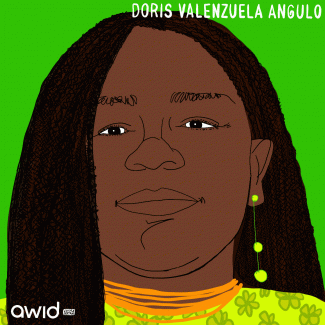
Doris Valenzuela Angulo was an Afro-descendant social activist, leader and human rights defender from Buenaventura, Colombia. She was part of Communities Building Peace in the Territories (CONPAZ), a national network of organizations in communities affected by armed conflict that advocate for non-violence and socio-environmental justice.
Doris defied constant paramilitary violence and pressures from mega projects to displace her community and state collusion. Faced with one of the most difficult contexts in her country, she played a leadership role in an unprecedented initiative of non-violent resistance called Puente Nayero Humanitarian Space, an urban place for community cohesion, safety, creativity and collective action.
This unique non-violent struggle of the families that belonged to Puente Nayero Humanitarian Space, attracted attention and support from both local and international agencies. By September 2014, the Inter-American Commission on Human Rights had granted precautionary protection measures to the community ordering the Colombian State to adopt necessary measures to preserve their lives and personal integrity. However, the threats and violence from the paramilitaries continued. Doris focused her energies on preventing forced recruitment of children and young people by the neo-paramilitaires, continuing on despite the murder of her son Cristian Dainer Aragón Valenzuela in July 2015. Doris also became a target, continuously receiving threats for her activism and the work she did.
The continued aggression and threats against her life forced Doris to leave Colombia. She was residing in Spain from February 2017 to February 2018, as part of the Amnesty International temporary protection program for human rights defenders at risk. In April 2018, Doris was murdered in Murcia, Spain by her ex-partner. She was only 39 years old.
Tributes:
"Doris, spending a whole year with you has taught us how a person can have the ability to transform and generate hope in the face of deeply negative and devastating events during your life...We continue with our commitment in the defense of all human rights. Your courage and your light will always guide us.” - Montserrat Román, Amnesty International Grupo La Palma
Excerpt from “Words for Doris Valenzuela Angulo” by Elsa López
"..You knew it. You always knew. And in spite of everything you stood firm against so many injustices, so many miseries, so much persecution. You stood up, haughty and fierce, against those who wanted to make you again abandon your hopes, humble yourself and surrender. Standing up you cried out for your freedom and ours that was yours. Nothing and no one paralyzed your efforts to change the world and make it more generous and livable. You, live among us, more alive today than ever among us despite death. Always live by your gestures, your courage, your greatness when crying for a promised land that you came to invoke with each of your cries for all the deserts you inhabited. You. Always alive. Doris Valenzuela Angulo.
They are only words. I know. I know it too. But the words unite us, protect us, give us strength and encouragement to continue walking towards the light that you defended so much…”
FRMag - The Story of An Unhappy Tale
Historia de un cuento no feliz
por Gabriela Estefanía Riera Robles
Juliana. ¡Cómo quisiera llamarme Juliana! Es un nombre lleno de poder y presencia, lleno de fuerza y vehemencia. (...)
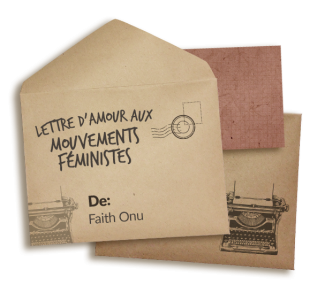
Je n'ai jamais su que j'avais une famille proche qui m'aime et qui veut que je m'épanouisse, Ma mère a toujours été là pour moi, mais je n'aurais jamais imaginé que j'aurais des milliers de familles qui ne sont pas liées à moi par le sang.
J'ai découvert que les familles ne sont pas seulement des personnes liées par le sang, mais des personnes qui vous aiment inconditionnellement, sans se soucier de votre orientation sexuelle, de votre état de santé, de votre statut social ou de votre race.
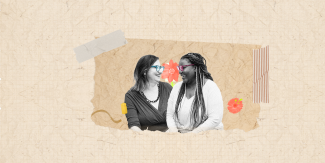
Je pense aux moments précieux où j'ai écouté toutes mes sœurs du monde entier qui sont des féministes fortes, des personnes que je n'ai pas rencontré.e.s physiquement, mais qui me soutiennent, m'enseignent, se battent pour moi : je suis à court de mots, les mots ne peuvent pas exprimer à quel point je vous aime, vous les mentor.esse.s et les autres féministes, vous êtes une mère, une sœur, une amie pour des millions de filles.
Vous êtes incroyables, vous vous êtes battu.e.s pour des personnes que vous ne connaissez pas - et c'est ce qui vous rend si spéciales.aux.
Cela me fait plaisir de l'exprimer par écrit.
Je vous aime tou.te.s et je continuerai à vous aimer. Je n'ai vu aucun.e d'entre vous physiquement, mais il me semble que nous nous connaissons depuis des décennies.
Nous sommes féministes et nous sommes fières d'être des femmes.
Nous continuerons à faire savoir au monde que notre courage est notre couronne.
Une lettre d'amour de FAITH ONUH, une jeune féministe du Nigeria.

![“Asignado Nderentendei Al Nacer” [Assigned Nderentendei at Birth] by Bastión Moral](https://web.archive.org/web/20210928161447/https://www.awid.org/sites/default/files/thumbnails/image/web_bastion-nderentendei.png "“Asignado Nderentendei Al Nacer” [Assigned Nderentendei at Birth] by Bastión Moral")