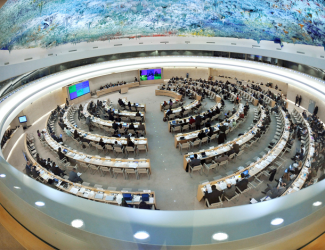
A general view of participants at the 16th session of the Human Rights Council in Geneva, Switzerland.
Análisis Especiales
AWID es un organización feminista internacional de membresía, que brinda apoyo a los movimientos que trabajan para lograr la justicia de género y los derechos de las mujeres en todo el mundo.
El Consejo de Derechos Humanos (CDH) es el cuerpo intergubernamental del sistema de las Naciones Unidas responsable de la promoción y protección de todos los derechos humanos en todo el mundo. El HRC se reúne en sesión ordinaria tres veces al año, en marzo, junio y septiembre. La La Oficina del Alto Comisionado para los Derechos Humanos (ACNUDH) es la secretaría del Consejo de Derechos Humanos.
El CDH trabaja de la siguiente forma:
Debate y aprueba resoluciones sobre cuestiones mundiales de derechos humanos y el estado de los derechos humanos en determinados países
Examina las denuncias de víctimas de violaciones a los derechos humanos o las de organizaciones activistas, quienes interponen estas denuncias representando a lxs víctimas.
Nombra a expertos independientes que ejecutarán los «Procedimientos Especiales» revisando y presentado informes sobre las violaciones a los derechos humanos desde una perspectiva temática o en relación a un país específico
Participa en discusiones con expertos y gobiernos respecto a cuestiones de derechos humanos.
A través del Examen Periódico Universal, cada cuatro años y medio, se evalúan los expedientes de derechos humanos de todos los Estados Miembro de las Naciones Unidas
Se está llevarando a cabo en Ginebra, Suiza del 30 de junio al 17 de julio de 2020.
AWID trabaja con socios feministas, progresistas y de derechos humanos para compartir conocimientos clave, convocar diálogos y eventos de la sociedad civil, e influir en las negociaciones y los resultados de la sesión.
Con nuestrxs socixs, nuestro trabajo será:
◾️ Monitorear, rastrear y analizar actores, discursos y estrategias anti-derechos y su impacto en las resoluciones
◾️ Desarrollar conjuntamente una labor de promoción conjunta para contrarrestar a los actores anti-derechos y debatir más a fondo las conclusiones del Informe de Tendencias de OUR de 2017
◾️ Apoyar, coordinar y desarrollar de manera colaborativa el Caucus feminista emergente en el CDH
Contenido relacionado
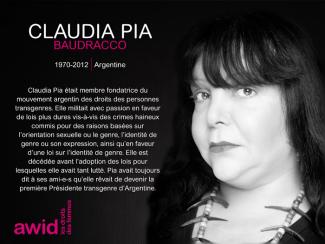
Snippet FEA Lohana Berkins (EN)
One of the founding leaders of the cooperative was Lohana Berkins, an activist, defender and promoter of transgender identity. Lohana played a crucial role in the struggle for the rights of trans and travesti people.
This brought about, among many other things, the passing of the Gender Identity Law. It is one of the most progressive legislations in the world, guaranteeing fundamental rights to trans and travesti people. Now, people can change their names and genders only with an affidavit, and have access to comprehensive healthcare without judicial or medical intervention/approval (Outright International, 2012).
I have responded to the survey but changed my mind and want our response to be withdrawn, what do I do?
If, for any reason, you want your response to be withdrawn and deleted, you have the right to do so. Please contact us via the form here, indicating “WITM Survey” as the title of your message, and we will withdraw and delete your response.
Merci d'avoir participé à la création de nos Horizons féministes
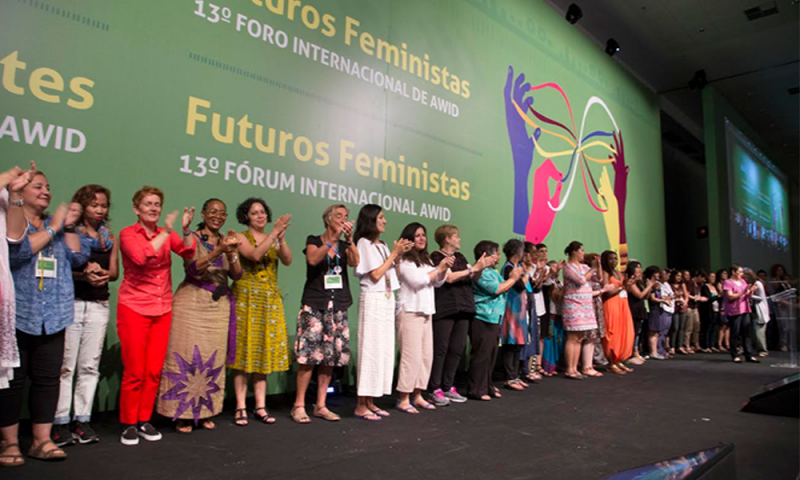
Un grand MERCI d'avoir pris part au 13ème Forum international de l'AWID !
Toute l'équipe de l'AWID vous remercie de nous avoir rejoint pour ces quatre jours d'apprentissage et de célébrations, pour envisager, rêver et co-créer nos Horizons féministes.
Nous avons été incroyablement inspiré-e-s et enthousiasmé-e-s par tout ce travail collectif que nous avons accompli ensemble !
Pour plus d'images, d'inspiration et de ressources :
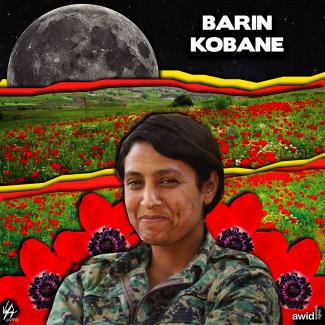
Barin était membre de l’unité de combat exclusivement féminine des Unités de protection du peuple kurde (YPG).
Elle a été tuée alors qu’elle était en service actif.
La journaliste libanaise Hifaa Zuaiter a écrit : « Barin représente tout ce que nous avons entendu à propos du courage des femmes kurdes et sa mort représente bien plus que le meurtre d’un-e rival-e ou une perte résultant d’une lutte politique ou ethnique. L’exhibition monstrueuse de sa dépouille par un groupe de rebelles syriens provient du fait qu’en tant que femme combattant sur un champ de bataille réservé aux hommes, elle a osé menacer l’hégémonie masculine ».
¡Sí, por favor! Te alentamos a compartir el enlace a la encuesta con tus redes. Cuanto más diversas sean las opiniones que recolectemos, más completa será nuestra comprensión del panorama financiero para las organizaciones feministas.
Agroecology and Food Sovereignty
Context
The search for alternative means of food production based on environmental sustainability is gaining ground across regions. This worldwide search comes with a common characteristic: the need to involve rural people and particularly women, building on their local priorities and knowledge by employing the principle of agroecology.
Definition
Agroecology is a way of practicing agriculture or using technologies that do not harm the environment. It proposes breaking with the hegemonic rural development model based on large landed estates and single-crop plantations that benefit mostly agricultural businesses and entrenches social exclusion.
In family farming, agroecology manifests as a resistance to the current development model and its social, cultural, environmental, and economic problems. It opposes the lack of the farmer’s financial capital autonomy; and it symbolizes a resistance to the current agribusiness model.
Feminist perspective
Efforts based solely on agroecology may not be sufficient to solve all problems of women’s marginalization and invisibility. A feminist perspective is then crucial to analyze the norms associated with the idea of family as currently constituted as the perfect institution, as well as with the condition of women’s subordination.
In simpler terms, it is important to include in this debate a reflection on socially constructed gender roles to advance the emancipatory potential of agroecology.
Anna grew up in Lewes, Sussex (UK) and, after deciding not to pursue her English degree at Sheffield University, she moved to Bristol and became a plumber.
She spent much of her time defending the marginalised and under-privileged, attending anti-fascist rallies, and offering support to the women of Dale Farm when they were threatened with eviction. A vegan and animal lover, she attended hunt sabotages and her name is honoured on PETA's 'Tree of Life' Memorial. Anna went to Rojava in May 2017 with a strong commitment to women's empowerment, full representation of all ethnicities and protection of the environment.
Anna died on March 15, 2018 when she was hit by a Turkish airstrike in the town of Afrin, northern Syria. Anna was fighting with the Women's Protection Forces (YPJ), when she was killed.
Чтобы поделиться опытом финансирования в вашей организации
AWID Members Engaging at CSW61
Member states and women's rights advocates and organisations are gathering at the United Nations Headquarters in New York from 13 - 24 March for the 61st Commission on the Status of Women to address ‘women’s economic empowerment’ in the context of Sustainable Development Goal 5.
Whilst AWID is looking forward to physically meeting those of you who will be in New York, we want to engage with all those who cannot attend CSW, and as much as possible, amplify your voices in relevant spaces.
Continue reading to find out how to engage with AWID around CSW, whether you are attending physically or not.
Participate in an artistic takeover!
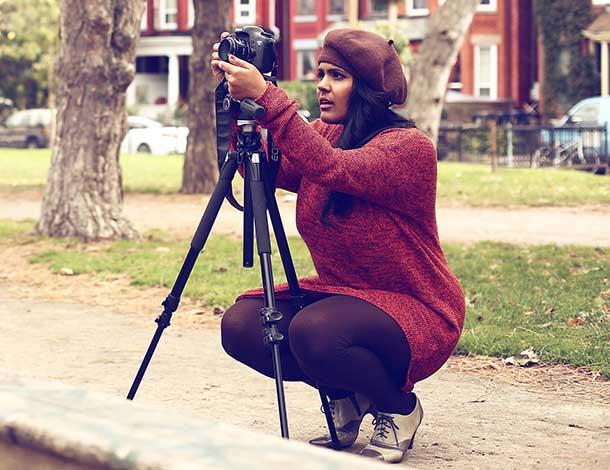
We are thrilled that AWID member Nayani Thiyagarajah is attending CSW this year and will take over the AWID Instagram. She will be available onsite to connect with other members for a possible feature on our Instagram. She will also explore possibilities of including some AWID members in a short film on the theme, ‘The personal is political’, a story of Nayani’s participation in this year’s CSW.
Nayani Thiyagarajah
Who is Nayani?
Nayani Thiyagarajah is a director, producer, and writer, dedicated to stories for the screen. A daughter of the Tamil diaspora, she calls Toronto home. For over 10 years, Nayani has worked in the arts and cultural industries. Her first independent feature documentary Shadeism: Digging Deeper (2015) had its World Premiere at the 2015 Zanzibar International Film Festival, where it won a Special Jury Prize. Nayani recently launched [RE]FRAME, with her producing partner Camaro West, a production company based out of Atlanta and Toronto, focused on re-framing the narratives around Black, Indigenous, and other people of colour through storytelling on screen.
On a more serious note, it should be noted that Nayani has a strange laugh, she's quite awkward, and her head is always in the clouds. She feels blessed beyond belief to create stories for the screen and play make believe for a living. Above all else, she believes in love.
Interested in meeting Nayani and being considered for inclusion in the film?
Send an email to membership@awid.org with the subject line “CSW Artistic Takeover”
By 13 March 2017
Please include your full name and country information.
Can't attend? Voice it!
If you are not able to attend CSW61 because of a travel ban, either due to the one imposed by the Trump administration or one you are facing from your own government, please share your story with us.
Send us messages you want heard in the United Nations spaces concerning funding, the impact of the reinstatement of the Global Gag Rule, and the need to push back against all types of religious fundamentalisms. You can send these in the following formats:
Video: no longer than two minutes and sent through a file sharing folder (for example dropbox, google drive)
Audio: no longer than two minutes and sent through a file sharing folder (for example dropbox, google drive)
Image: you can share a photo or a poster of your message
Text: no longer than 200 words and sent in the body of an email or in a word document
AWID members tell us that connecting with other members at CSW is valuable. In such a huge advocacy space, it is useful to connect with others including activists working on similar issues, or originating from the same country or region. Recognising the importance of connecting for movement building, we invite you to:
Interested in connecting with other members @CSW61?
If you are attending the CSW, we’d love to see what’s going on through your eyes!
Show us by capturing a moment you find speaks to the energy in the CSW space, be it on or off site. We hope to publish some of your ‘images’ on our social media channels and share on awid.org.
You can send us:
colour and/ or black and white photographs with a title (if you wish) and
a caption (no longer than 100 words) about the story your image tells.
Please also include:
your full name and country of origin and
let us know if we can publish the information you shared (in part or in full).
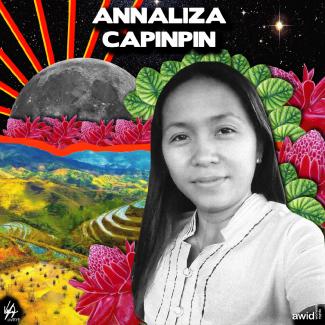
Conocida como «Ate Liza», Annaliza era la presidenta del Consejo de la Reforma Agraria para lxs Pionerxs de Mindanao, un grupo coodinador general en Tacurong City, Filipinas.
Querida madre de cuatro hijxs, maestra y líder comunitaria, Annaliza es recordada por su comunidad como «la que lidera cuando nadie quiere liderar, la que habla cuando nadie quiere hablar, la que se puso de pie con coraje para ayudar a lxs beneficiarxs de la reforma agraria a ser dueñxs de sus tierras».
Atacantes desconocidos la ultimaron a balazos en frente de la Universidad Estatal Sultán Kudarat (SKSU), mientras se dirigía a la Escuela Secundaria Nacional Salabaca, en Esperanza.
Su familia ha dicho: «Naghihintay pa rin kami ng hustisya para sa kanya» (todavía estamos esperando justicia para ella).
Georgia's minimum wage is in the bottom percent of all countries in the world. This reality affects mostly women.
The country not only has a significant gender pay gap, but women also work longer, more unregulated hours before going home to take care of housework and their families. There is no maternity pay, no wage increase for overtime work, no unemployment insurance, and no pay for sick leave or other social protection. Pressured by Western organizations, Georgian oligarchic political parties have been implementing reforms that are destroying the welfare state, increasing austerity measures, and worsening worker exploitation - all for the benefits of big corporations which are applauding the country for its “ease of doing business”. Mass media, coerced by private and corporate interests, either remain silent or biased on these issues. Union organizing remains one of the very few options to fight for basic human rights, and for holding the State and corporations accountable in the face of daily, pervasive violations and persecutions, especially against women.