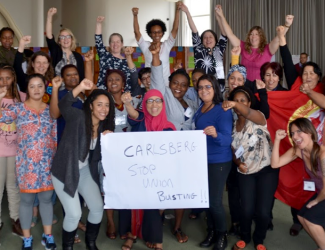
Women human rights defenders (WHRDs) worldwide defend their lands, livelihoods and communities from extractive industries and corporate power. They stand against powerful economic and political interests driving land theft, displacement of communities, loss of livelihoods, and environmental degradation.
Why resist extractive industries?
Extractivism is an economic and political model of development that commodifies nature and prioritizes profit over human rights and the environment. Rooted in colonial history, it reinforces social and economic inequalities locally and globally. Often, Black, rural and Indigenous women are the most affected by extractivism, and are largely excluded from decision-making. Defying these patriarchal and neo-colonial forces, women rise in defense of rights, lands, people and nature.
Critical risks and gender-specific violence
WHRDs confronting extractive industries experience a range of risks, threats and violations, including criminalization, stigmatization, violence and intimidation. Their stories reveal a strong aspect of gendered and sexualized violence. Perpetrators include state and local authorities, corporations, police, military, paramilitary and private security forces, and at times their own communities.
Acting together
AWID and the Women Human Rights Defenders International Coalition (WHRD-IC) are pleased to announce “Women Human Rights Defenders Confronting Extractivism and Corporate Power”; a cross-regional research project documenting the lived experiences of WHRDs from Asia, Africa and Latin America.
We encourage activists, members of social movements, organized civil society, donors and policy makers to read and use these products for advocacy, education and inspiration.
AWID acknowledges with gratitude the invaluable input of every Woman Human Rights Defender who participated in this project. This project was made possible thanks to your willingness to generously and openly share your experiences and learnings. Your courage, creativity and resilience is an inspiration for us all. Thank you!
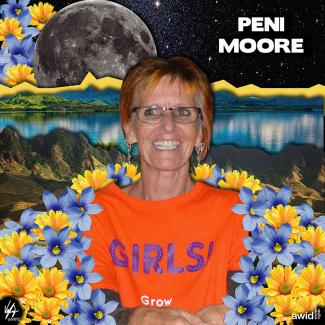
Peni fue una filósofa feminista radical, poeta, escritora, dramaturga y compositora.
Como primera coordinadora del movimiento por los derechos de las mujeres de Fiji, dejó un legado atravesado por su profundo compromiso con los derechos humanos de las mujeres, la justicia y la paz. La dedicación de Peni a la justicia social, económica y ecológica y su sobresaliente trabajo le valieron el respeto local e internacional. Fue una de las primeras participantes de los movimientos feministas hegemónicos en Fiji en trabajar junto a las personas LGBTQI como una verdadera aliada y brindó asistencia práctica durante la creación del movimiento de trabajadorxs sexuales.
Sus colegas la describen como una persona formidable y una líder con visión para el cambio. Inspiró a muchxs con su creatividad y coraje. Su trabajo significó una plataforma para que las personas sean escuchadas, adquieran nuevas habilidades y abran nuevos caminos tanto personales como comunitarios.
Qui nous sommes et ce que nous faisons
Nous sommes ravis de partager notre nouveau Plan stratégique (2023-2027) avec tout le monde. Bien tôt, AWID fera une annonce pour informer notre communauté et nos membres.
L’Association pour les droits des femmes dans le développement (AWID) est une organisation féministe, associative et internationale de soutien aux mouvements.
Depuis plus de 35 ans, l’AWID fait partie d’un incroyable écosystème des mouvements féministes qui oeuvrent en faveur de la justice de genre et des droits humains des femmes à travers le monde.
Notre vision
L’AWID imagine un monde où les réalités féministes prospèrent, où les ressources et le pouvoir sont partagés de façon à permettre à chacun-e, y compris aux générations futures, de s’épanouir et de réaliser leur plein potentiel dans la dignité, l’amour et le respect et où la Terre nourrit la vie dans toute sa diversité.
Notre mission
Notre mission est d’aider les mouvements féministes, en faveur des droits des femmes et de la justice de genre à s’épanouir, à être un élément moteur de l’opposition aux systèmes d’oppression et à co-créer des réalités féministes.
Nos stratégies
Nous promouvons notre travail au travers des stratégies suivantes:
Plaidoyer et campagnes
Nous tirons collectivement parti de notre portée, de notre pouvoir, de nos ressources et de nos relations afin d’influencer stratégiquement les politiques et les pratiques. Nous visons à promouvoir les programmes féministes à travers les collaborations que nous menons avec les décideurs politiques, les fonda-trices-teurs et les activistes au sein des espaces régionaux et internationaux. Dans le cadre des efforts que nous déployons pour renforcer notre pouvoir et influence collectifs, nous incitons également les mouvements féministes et de lutte pour les droits des femmes à accorder une place centrale aux mouvements historiquement opprimés.
Rassemblement et coopération
Nous nous servons de notre pouvoir mobilisateur pour faciliter le dialogue et élaborer des stratégies sur des questions clés. Nous connectons nos membres et nos allié-e-s les une-s- aux autres, et partageons et échangeons nos ressources, nos idées et nos actions sur des questions pertinentes. Nous organisons des rassemblements et mettons à disposition des espaces nous permettant de consolider nos mouvements et de nouer des rapports les un-e-s avec les autres, d’imaginer et d’envisager de nouveaux horizons, de développer des stratégies d’influence efficaces et de créer ensemble des programmes et des processus importants.
Solidarité et construction de liens
Nous mobilisons nos membres et les mouvements que nous soutenons pour consolider l’action collective en solidarité avec les causes et les défenseur-e-s féministes en danger. Nous créons des partenariats, pratiquons l’écoute active et tissons des liens de solidarité continus et sur le long terme. Aux côtés de défenseur-e-s, nous oeuvrons à établir une base de connaissances et à soutenir des réseaux de solidarité autour de la protection et du bien-être.
Arts et expression créative
Nous reconnaissons la valeur unique des stratégies culturelles et créatives dans la lutte contre les oppressions et l’injustice. Nous travaillons avec des artistes qui accordent une place prépondérante aux voix féministes et aux récits des communautés historiquement opprimées. Nous voyons en cette tactique émergente l’art et l’expression créative comme autant de moyens nous permettant d’imaginer un monde où l’on continue de célébrer des réalités féministes, et où ces dernières continuent de prospérer.
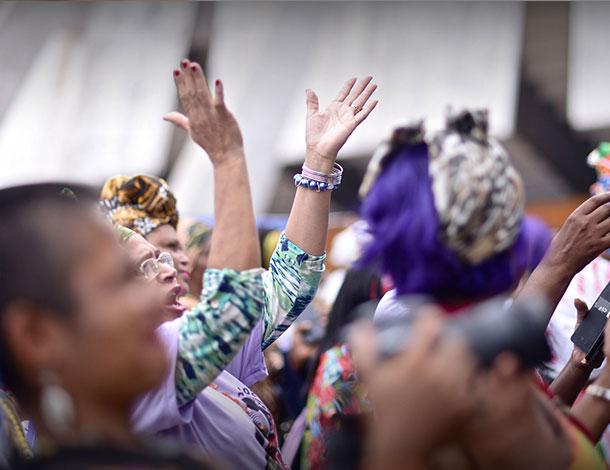
Marcha da Mulheres negras - 2016
Nos initiatives
Nos initiatives oeuvrent à l’intersection des zones de changement que nous abordons, des mouvements que nous priorisons et des stratégies que nous déployons:
Nous surveillons, documentons et visibilisons la façon dont les acteurs anti-droits opèrent et conspirent au sein des espaces multilatéraux, et soutenons les mouvements et allié-e-s féministes, oeuvrant en faveur des droits des femmes et de la justice de genre pour contrer leur influence et leur impact.
En travaillant sur l’extractivisme, la justice fiscale et la responsabilisation des entreprises, nous acquérons des connaissances sur le pouvoir des entreprises et leur influence; nous plaidons pour la responsabilisation des entreprises et la distribution équitable des richesses; et amplifions les propositions féministes en faveur d’économies plus justes.
Nous développons des analyses accessibles et orientées vers l’action concernant l’état des ressources attribuées aux mouvements féministes. Nous nous efforçons d’influencer les pratiques et politiques des donateurs, d’approfondir et maintenir les subventions en faveur de changements sociaux féministes et de soutenir les besoins et les stratégies des mouvements.
L’AWID s’engage expressément à avoir de l’impact dans le monde et à renforcer nos propres résiliences et apprentissages organisationnels afin de consolider davantage les mouvements féministes internationaux.
Nos donateur-e-s
Merci !
Sans le généreux soutien et le financement de nos donateur-e-s, notre travail ne serait pas possible.
La primera selección de actividades la realizará el personal de AWID.
A quienes propusieron las actividades que pasen esa primera selección lxs invitaremos a participar de un proceso de votación. Las propuestas más votadas se incluirán en el programa del Foro. AWID podrá hacer algunos ajustes a la selección final para garantizar que nuestro programa guarde un equilibrio adecuado entre regiones, colectivos, temáticas y metodologías.
El Comité de Contenidos y Metodología del Foro se pondrá en contacto con lxs organizadorxs de las actividades seleccionadas para apoyarlxs en el desarrollo de sus actividades.
Actualizaremos los resultados de este proceso en el sitio web a su debido tiempo.
Snippet FEA EoS The Ivy (FR)
Le lierre
Communauté et quartier
O inquérito WITM é acessível para pessoas com deficiência?
Sim, é acessível para pessoas com uma variedade diversificada de capacidades auditivas, de movimento, visuais e cognitivas.
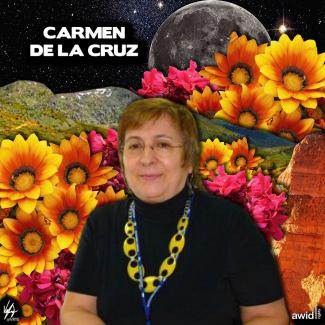
Carmen a consacré sa carrière à la défense des droits des femmes au sein de diverses ONG, ainsi qu’au sein des Nations Unies.
Elle a enseigné dans plusieurs universités espagnoles et latino-américaines et publié de nombreux articles et rapports sur les femmes, le genre et la paix dans les pays en développement. Ses écrits et ses réflexions critiques ont touché toute une génération de jeunes femmes.
Son dernier mandat auprès du centre régional du Programme des Nations Unies pour le développement (PNUD) de l'Amérique latine, fut comme responsable du département de mise en pratique des politiques de genre, lors duquel elle a soutenu de très précieuses initiatives en faveur de l'égalité de genre et des droits fondamentaux des femmes.
From “WID” to “GAD” to Women’s Rights: The First Twenty Years of AWID
In 2002 AWID celebrated its 20th anniversary. Given the challenging political, economic and funding environment in which women's organizations must survive, a milestone such as this is worthy of recognition.
In the past two decades the geo-political landscape has been transformed and development theories have come and gone, but approaches to ensure women benefit from development processes have endured.
In its twenty-year history, AWID grew from a volunteer organization for U.S. "Women in Development" (WID) specialists to an international network striving to support proactive and strategic gender equality research, activism and policy dialogue.
On the occasion of its 20th anniversary, this paper charts not only the changes in AWID's organizational structure and goals but also the shifts in policy approaches to gender equality in a changing global environment, through the lens of a membership organization committed to improving the lives of women and girls everywhere.
Si tienes pasaporte de alguno de los siguientes países (el tiempo de estadía permitido varía según el país), NO necesitas visa para asistir al Foro de Taipéi:
Alemania, Andorra, Australia, Austria, Bélgica, Belice, Bulgaria, Brunei, Canadá, Chile, Ciudad del Vaticano, Croacia, Chipre, Dinamarca, Eslovaquia, Eslovenia, Estados Unidos de América, Estonia, España, Esuatini, Filipinas, Finlandia, Francia, Grecia, Guatemala, Haití, Honduras, Hungría, Irlanda, Islandia, Israel, Italia, Japón*, Letonia, Liechtenstein, Lituania, Luxemburgo, Malasia, Malta, Islas Marshall, Mónaco, Nauru, Nueva Zelanda, Nicaragua, Noruega, Países Bajos, Palaos, Paraguay, Polonia, Portugal, Reino Unido, República Checa, República de Corea, República Dominicana, Rumania, Rusia, San Cristóbal y Nieves, San Marino, Santa Lucía, San Vicente y las Granadinas, Singapur, Suecia, Suiza y Tuvalu.
Las personas con cualquier otro pasaporte NECESITARÁN VISA para ir a Taipéi.
Por favor ten en cuenta:
Es probable que, una vez que te hayas inscripto para asistir al Foro, te llegue un código relacionado con el evento que te permitirá tramitar tu visa en forma electrónica, cualquiera sea tu ciudadanía.
Brindaremos más información sobre este tema cuando se abra el proceso de inscripción.
Snippet FEA We are living in a world (EN)
We are living in a world where the destruction of Nature fuels our current global economy.
Even in times of climate crisis, governments continue to encourage large-scale agriculture industries to expand. These activities poison the land, threaten biodiversity, and destroy local food production and livelihoods. Meanwhile, while women produce the majority of our food in the world, they own almost none of the land.
What if we perceived land and Nature not as private property to exploit, but as a whole to live in, learn from, and harmoniously coexist with? What if we repaired our relationships with the land and embraced more sustainable alternatives that nurture both the planet and its communities?
Nous Sommes la Solution (We Are the Solution, NSS) is one of many women-led movements striving to do this. This is their story.
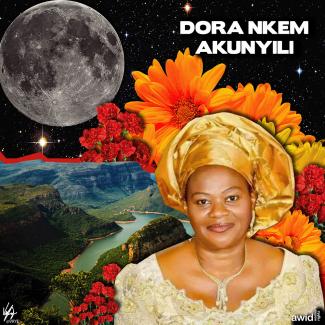
Dora was born in Benue State, Nigeria. She was a globally acclaimed pharmacist, technocrat, erudite scholar and community leader.
Dora’s revolutionary work created a paradigm shift in the Nigerian public service when she served as Director General of National Agency for Food and Drugs Administration and Control (NAFDAC) from 2001-2008. She spearheaded reforms in policy and regulatory enforcement that radically reduced the measure of fake drugs that plagued the Nigerian pharmaceutical sector during her tenure.
Having exemplified the reality of a courageous, competent woman who challenged the ills of a dominantly patriarchal society and drove change, she became an icon for women’s empowerment. She was appointed the Minister of Information and Communication between 2008 and 2010.
She died after a battle with cancer and is survived by her husband, six children and three grandchildren.
Mujeres indígenas por la defensa de los derechos
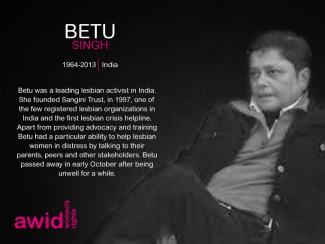
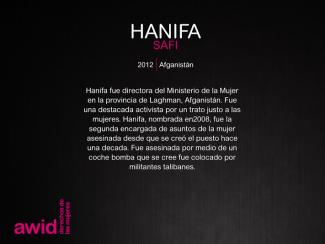
Estas defensoras lucharon por los derechos sobre la tierra, de las mujeres y de los pueblos indígenas; haciendo frente a las industrias extractivas, escribiendo poesía y promoviendo el amor. Una de ellas desapareció hace ya 19 años. Únete a nosotras para recordar y honrar a estas defensoras de derechos humanos, su trabajo y su legado, compartiendo los memes aquí incluidos; y tuiteando las etiquetas #WHRDTribute y #16Días.
Por favor, haz click en cada imagen de abajo para ver una versión más grande y para descargar como un archivo.
Today, large-scale industrial food production uses single-crop plantations, genetically modified organisms and other pesticides that destroy the land and knowledge of local communities.
The role of women, indigenous and rural communities and people of color from the Global South is absolutely essential when it comes to food systems. Feminist agroecologists are working to dismantle oppressive gender roles and systems of patriarchy embedded within food production. As shown by the heroines of NSS, they are generating a liberatory agroecology by strengthening community resilience, empowering women peasants and farmers, and preserving local traditions, territories, and knowledge of food-producing communities.
Я прошла(-шел) опрос, но передумала(-л) и хочу отозвать ответы – что мне делать?
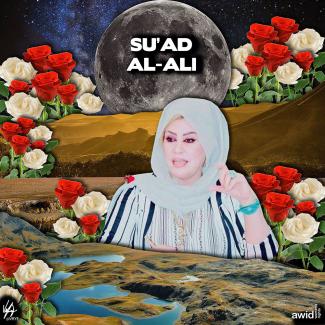
Su’ad fue una firme defensora de los derechos de las mujeres y lxs niñxs y estuvo al frente de Al-Weed Al-Alaiami, una organización de derechos humanos iraquí.
Participó en las manifestaciones que tuvieron lugar en julio de 2018 en Basra y en varias otras ciudades iraquíes, en protesta contra el desempleo y en demanda de trabajo y servicios públicos adecuados para la ciudadanía, y exigiendo también la eliminación de la corrupción generalizada.
Su’ad fue asesinada el 25 de septiembre de 2018, en el barrio de Al-Abbasiyah, en el centro de Basra. En un video del hecho, se veía a una persona que se le acercaba mientras ella se subía a su automóvil, le disparaba un tiro en la parte posterior de la cabeza y apuntaba el siguiente disparo a Hussain Hassan, su chofer, quien resultó herido en un hombro. Al-Ali tenía 46 años y era madre de cuatro hijxs.
Trans* rights require stronger protection
These transgender women were murdered because of their activism and their gender identity. There are insufficient laws recognizing trans* rights, and even where these laws exist, very little is being done to safeguard the rights of trans* people. Please join AWID in honoring these defenders, their activism and legacy by sharing the memes below with your colleagues, networks and friends and by using the hashtags #WHRDTribute and #16Days.
Please click on each image below to see a larger version and download as a file